Mouse Physical Traits And Behaviors: Care Guide
Discover the fascinating physical features and natural behaviors of pet mice to enhance their care and well-being.
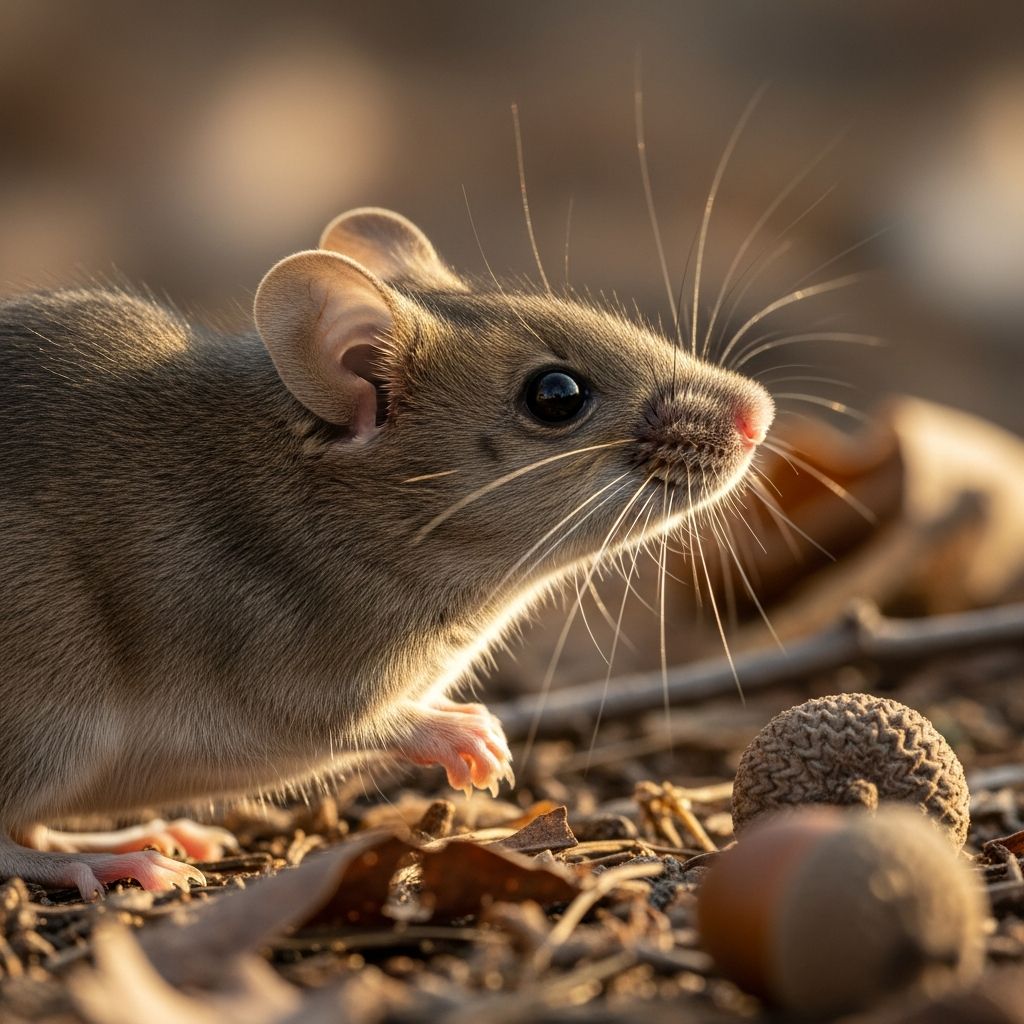
Pet mice, often kept as companions in homes, possess a range of physical adaptations and behavioral patterns that reflect their wild origins while making them suitable for captivity. Understanding these traits helps owners create enriching environments that promote health and happiness.
Anatomy of the Domestic Mouse
The typical pet mouse, derived from the house mouse species, measures about 3 to 4 inches in body length with a tail nearly as long, resulting in a total length of 6 to 8 inches. Adults weigh between 20 to 40 grams, varying by strain and sex, with males generally larger. Their slender, flexible bodies allow navigation through tight spaces, a survival trait from wild ancestors.
Fur covers their bodies in short, dense coats that come in diverse colors and patterns due to selective breeding in fancy mice varieties. Common hues include white, black, agouti (wild-type gray-brown), and mottled mixes. The coat provides insulation and camouflage in nature but serves aesthetic purposes in pets. Whiskers, or vibrissae, are prominent on the muzzle, aiding in spatial awareness due to limited eyesight.
Eyes are small and black in most strains, positioned on the sides of the head for wide peripheral vision, though acuity is poor. Ears are large relative to the head, rounded, and highly mobile, enhancing sound detection across ultrasonic frequencies. Limbs are delicate yet strong; front paws have four toes, hind paws five, enabling precise gripping and climbing. The continuously growing incisors, bright orange-yellow from iron deposits, are adapted for gnawing.
| Body Part | Function | Adaptation Notes |
|---|---|---|
| Tail | Balance, thermoregulation | Semi-prehensile, hairless or scaled skin |
| Whiskers | Navigation, sensing air currents | Highly sensitive mechanoreceptors |
| Teeth | Gnawing, wearing down growth | Open-rooted, self-sharpening |
| Ears | Hearing, communication | Detects high-frequency sounds |
Sensory World of Mice
Mice rely heavily on senses other than vision. Their olfactory system is acute, detecting pheromones for social recognition, territory marking via urine, and food location. Foot pads contain scent glands, leaving identifiable tracks. Hearing excels in ultrasonic ranges, used for echolocation-like navigation and pup calls. Touch, via whiskers and guard hairs, maps environments in darkness.
Taste distinguishes sweet, sour, bitter, salty, and umami, preferring seeds and grains. Poor color vision limits them to detecting light intensity and movement. These senses drive behaviors like whisker twitching during exploration.
Daily Activity Cycles
Mice exhibit crepuscular and nocturnal patterns, peaking at dawn, dusk, and night. Daytime brings deep sleep in nests, often curled or sprawled adorably. Owners should interact evenings to match activity. Noisy nighttime antics, like wheel running, suit night owls but may disturb light sleepers.
- Sleep Positions: Curled ball for warmth, side-lying relaxed, or piled with cagemates.
- Activity Peaks: Foraging, grooming, playing post-sunset.
- Rest Needs: Uninterrupted naps prevent stress.
Social Dynamics and Hierarchies
Wild-derived pet mice are communal, thriving in same-sex groups of females or small numbers. Males often require solo housing to avoid fights. Recognition via scent fosters bonds; intruders provoke rejection. Dominance establishes through posturing, chasing, or barbering (over-grooming subordinates).
Peaceful groups share nests and groom mutually, signaling affection. Submissive mice yield space or stand respectfully. Conflicts arise from overcrowding or introductions, manifesting as vocal squabbles or biting. Monitor for stress signs like fur loss.
Communicative Actions
Mice convey emotions via body language. Tail wagging signals irritation, akin to feline annoyance. Upright stance surveys surroundings or preps for confrontation, especially males. Ear positions reveal mood: forward for curiosity, flattened back for threat. Teeth grinding indicates contentment during rest, aiding dental maintenance.
- Playful chasing: Silent, no contact.
- Aggressive pursuit: Noisy, grabbing.
- Mutual grooming: Bonding or dominance.
Grooming and Hygiene Rituals
Self-maintenance occupies much waking time, promoting cleanliness and social bonds. Normal grooming follows eating; excessive becomes stress response, potentially barbering self or others. Provide dust baths or safe substrates to support this instinct.
Mutual licking reinforces hierarchies or friendships, targeting head, ears, or belly. Neglect leads to matted fur, impacting health.
Nesting and Exploratory Instincts
Nest-building satisfies burrowing drives, using shredded paper or cloth into cozy retreats. Mice rearrange bedding obsessively, signaling comfort needs. Tunnels mimic wild warrens; offer deep substrates for digging.
Exploration involves whisker sweeps, climbing, and scent-marking. Barren cages induce anxiety; enrich with levels, hides, and toys.
Physical Health Indicators
Observe traits for wellness. Shiny fur, bright eyes, active demeanor signal vitality. Select juveniles (3-5 weeks) with vibrant coats. Issues like bald patches suggest barbering or mites; overgrown teeth from poor diet impair eating.
| Healthy Sign | Problem Indicator | Action |
|---|---|---|
| Grinding teeth relaxed | Chattering aggressively | Check for pain or rivals |
| Social grooming | Excessive self-groom | Reduce stress sources |
| Active at dusk | Lethargy daytime | Vet check for illness |
Environmental Enrichment Tips
Replicate natural traits: Vertical cages for climbing, burrowing depths, chew toys for dentition. Group females sparingly; singles need interaction. Handle gently post-acclimation for tameness. Avoid mixing species; cats/dogs stress them.
Common Myths Debunked
- Myth: Mice are cuddly lap pets. Reality: Exploratory, tolerate brief holds.
- Myth: Solitary housing is cruel. Reality: Prevents fights in males.
- Myth: Daytime activity normal. Reality: Nocturnal misalignment causes issues.
FAQs
Why does my mouse wag its tail?
Tail wagging expresses annoyance or anger, often during mild conflicts.
Is teeth grinding bad?
No, relaxed grinding trims ever-growing incisors; provide chews.
Can I house multiple males?
Rarely; aggression common, better singly.
How do I know if my mouse is stressed?
Look for over-grooming, hiding, or vocal chasing.
What makes a good nest?
Soft, unscented materials like fleece or paper; deep layers for burrowing.
Advanced Care for Longevity
Pet mice live 1-3 years, influenced by genetics, diet, and habitat. Fancy strains may have health predispositions like tumors. Regular vet checks, balanced seed/pellet diets, and exercise wheels extend life. Breeding requires expertise; separate post-weaning.
Understand these creatures holistically: Their lithe forms, keen senses, and lively behaviors demand thoughtful husbandry. By aligning care with innate traits, owners foster thriving, engaging pets.
References
- 11 Common Mouse Behaviors Explained — Chewy. Accessed 2026. https://www.chewy.com/education/small-pet/rat-and-mouse/11-common-mouse-behaviors-explained
- Pet Mouse Care Sheet: Habitat, Diet, and Behavior — PetMD (Maria Zayas, DVM). Accessed 2026. https://www.petmd.com/exotic/mouse-care-sheet
- Mice Behavior: What Do Their Habits Mean? — Small Pet Select. Accessed 2026. https://smallpetselect.com/mice-behavior-what-do-their-habits-mean/
- Mouse Keeping: Understanding Mouse Behavior — AFRMA. Accessed 2026. https://www.afrma.org/mk-behavior.htm
- Understanding mouse behaviour — RSPCA. Accessed 2026. https://www.rspca.org.uk/adviceandwelfare/pets/rodents/mice/behaviour
- The House Mouse: Behavior and Traits — Westchester Wildlife. Accessed 2026. https://westchesterwildlife.com/blog/the-house-mouse-behavior-health-risks-removal/
Similar Articles








Read full bio of Sneha Tete