Mouse Breeding Essentials: Complete Guide For Pet Owners
Master the art of breeding pet mice with proven strategies for healthy litters, optimal care, and colony success.
Mice make excellent pets due to their small size, sociable nature, and rapid reproductive cycles, allowing enthusiasts to expand their colonies efficiently. Understanding the fundamentals of mouse reproduction is crucial for anyone interested in breeding these rodents responsibly. This guide draws on established veterinary and research insights to provide pet owners with practical knowledge on achieving successful breeding outcomes while prioritizing animal welfare.
Understanding Mouse Reproductive Biology
Mice exhibit a highly efficient reproductive system adapted for quick population growth. Females, known as does, are polyestrous, meaning they experience multiple estrus cycles throughout the year without a defined breeding season. The estrus cycle typically lasts 4 to 6 days, during which a female is receptive to mating. Exposure to male pheromones can synchronize or restart these cycles, which is particularly useful in controlled pet environments.
Sexual maturity occurs early, generally between 5 and 8 weeks of age. Males reach maturity slightly sooner, often by 6 weeks, while some strains like certain precocious lines can conceive as young as 23 days, though early breeding often results in smaller litters. Peak fertility for both sexes falls between 2 and 9 months, with an overall reproductive lifespan of about 7 to 8 months, during which a female can produce four or more litters.
Gestation lasts 19 to 21 days, one of the shortest among mammals. Litters average 10 to 12 pups, though this varies by strain, health, and environmental factors. Females enter postpartum estrus within 12 hours of giving birth, enabling continuous breeding if conditions are optimal.
Optimal Mating Strategies for Pet Colonies
Successful breeding hinges on appropriate mating configurations. For pet owners starting small, pair breeding—one male with one female—offers simplicity and control. This setup minimizes aggression and allows close monitoring of pregnancies. Trio breeding (one male, two females) or harem systems (one male, up to four females) can maximize pup production without compromising litter sizes or numbers, as studies show no significant differences in pups weaned per female across these methods.
To initiate mating, introduce compatible pairs during the evening, as mice are nocturnal and most active—and fertile—then. Transferring bedding from the male’s cage to the female’s can stimulate estrus via pheromones. Check for a copulatory plug the following morning, a vaginal mass indicating successful mating and marking embryonic day 0 (E0) for timing pregnancies.
| Mating Type | Pros | Cons | Avg. Pups/Litter |
|---|---|---|---|
| Pair (1M:1F) | Easy monitoring, low aggression | Slower colony growth | 4.7-10 |
| Trio (1M:2F) | Higher output, efficient space | Potential female rivalry | 5.8-12 |
| Harem (1M:4F) | Max production | Needs space, more management | 10-12 |
Select healthy, young adults (6-8 weeks) from vigorous lines. Avoid breeding mice over 8 months, as fertility declines sharply. Separate males and females post-weaning to prevent unplanned litters.
Environmental Factors Influencing Breeding Success
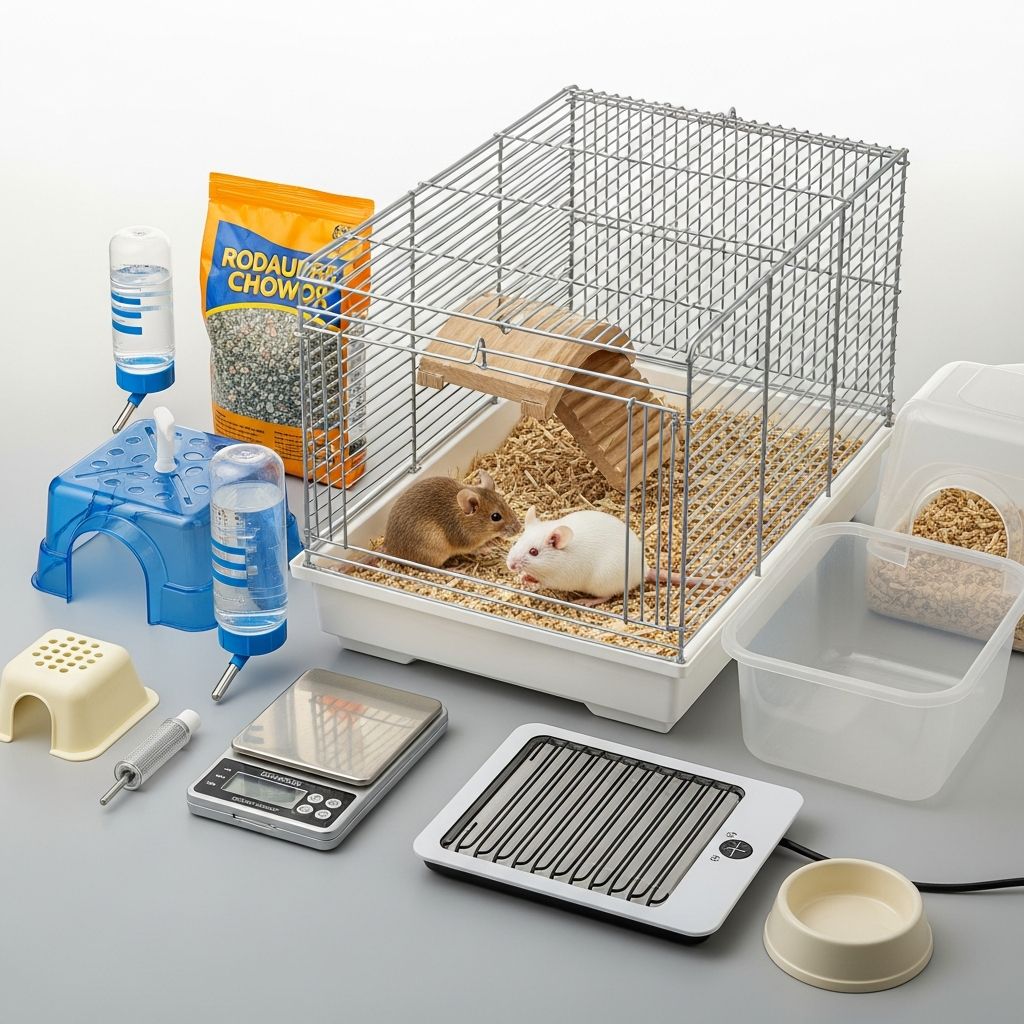
A stable environment is paramount. Maintain temperatures at 68-75°F (20-24°C) with 40-60% humidity, mimicking natural conditions. Provide 12-hour light-dark cycles to align with nocturnal rhythms. Clean, spacious cages (at least 75 square inches per adult) with ample nesting material like cotton squares or paper shreds reduce stress and promote maternal behavior.
Nutrition plays a key role: offer high-quality lab chow or pelleted feed rich in protein (18-24%), vitamins, and minerals, supplemented with fresh veggies and seeds. Continuous access to fresh water via bottles prevents dehydration, vital during lactation. High population densities can suppress breeding due to stress, so wean and disperse pups promptly.
- Cage Setup: Solid-bottom with bedding, hiding spots, chew toys.
- Disturbance Minimization: Handle sparingly during pregnancy; clean every 5-7 days.
- Health Checks: Monitor for signs of illness like lethargy or poor coat.
Gestation and Birth: What to Expect
Pregnancy progresses rapidly. From E0, the embryo undergoes cleavage, forming a blastocyst by E4 with an inner cell mass destined for the fetus and trophoblast for the placenta. By birth (E19-21), pups emerge hairless, blind, and deaf, weighing about 1 gram each.
Dams build elaborate nests in late gestation. Birth occurs at night; do not disturb for 24-48 hours post-partum to allow bonding. Pups open eyes and ears at 10-14 days, grow fur by 7 days, and explore by 2 weeks. Weaning happens at 21-28 days, when pups can survive independently.
Common issues include cannibalism from stress or malnutrition—ensure quiet and nutrition. Average litter survival is high (80-90%) under good care.
Caring for Newborn Pups and Weaning
Pup development is swift. From P0 to P21:
- P0-P7: Fully dependent; dam provides milk, warmth.
- P8-P14: Eyes open, initial solid food nibbling.
- P15-P21: Active eating, weaning prep.
- P22+: Separate sexes to avoid inbreeding.
Monitor dam’s milk production; supplement with puppy milk replacer if needed via syringe. Sex pups at weaning: males have visible testes, a scrotal distance; females show closer genital openings. Provide soft starter food transitioning to adult diet.
Maintaining Healthy Breeding Colonies Long-Term
For sustained colonies, track records: litter size, survival rates, inter-litter intervals (25-30 days). Rotate breeders to prevent exhaustion. Genetic diversity is key—avoid inbreeding by introducing unrelated stock periodically.
Common challenges:
- Low Fertility: Age, poor diet, overcrowding—address promptly.
- Aggression: Separate fighters; use larger cages.
- Disease: Quarantine new mice; vaccinate if applicable.
Retiring breeders humanely after 8-10 months; many make great pets post-breeding.
Strain-Specific Breeding Considerations
Pet mice vary by strain (fancy, lab-derived). Fancy mice may have smaller litters (6-10) but vibrant colors. Lab strains like C57BL/6 are robust producers. Research strain histories for fertility quirks—e.g., some need younger mating ages.
Frequently Asked Questions (FAQs)
How often can mice breed?
Females can produce 5-10 litters yearly under ideal conditions, with postpartum estrus enabling back-to-back pregnancies.
What is the best age to start breeding pet mice?
6-8 weeks for optimal litter sizes and health.
Do male mice need to be separated after mating?
No, they can stay unless aggression arises; monitor dynamics.
How do I know if mating was successful?
Look for a copulatory plug next morning, confirming E0.
Can I breed sibling mice?
Avoid inbreeding to prevent genetic defects; use unrelated pairs.
Ethical Breeding Practices for Pet Owners
Always prioritize welfare: only breed healthy mice, have adoption plans for offspring, and comply with local regulations. Overbreeding leads to overcrowding—plan capacities wisely. Consult vets for tailored advice.
By mastering these principles, pet owners can enjoy thriving mouse colonies, contributing to responsible pet husbandry.
References
- Retrospective Analysis of Reproductive Performance of Pair-bred and Trio-bred Mice — PMC/NCBI. 2017-03-15. https://pmc.ncbi.nlm.nih.gov/articles/PMC5361046/
- Development and Reproduction of the Laboratory Mouse — JoVE. 2014-01-01. https://www.jove.com/v/5159/reproduction-and-development-of-the-laboratory-mouse
- House Mouse Biology: Reproduction — ICWDM. 2023-01-01. https://icwdm.org/species/rodents/house-mice/house-mouse-biology/
- Breeding and Maintaining Mice — Case Western Reserve University. 2020-06-01. http://knockout.cwru.edu/info/musfrming.html
- Breeding Strategies for Maintaining Colonies of Laboratory Mice — The Jackson Laboratory. 2022-05-01. https://research.uci.edu/wp-content/uploads/JAX-breeding-strategies.pdf
Similar Articles








Read full bio of Sneha Tete