

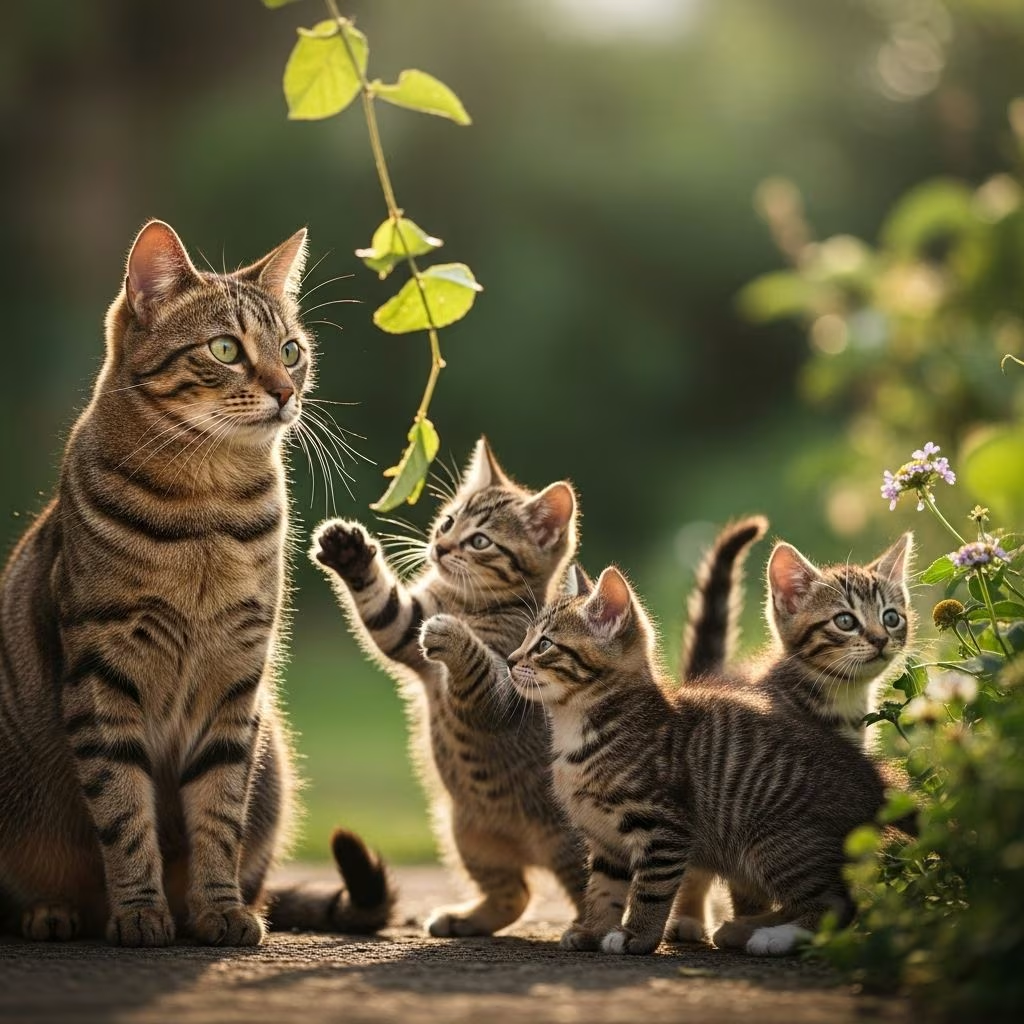
The journey from birth to independence is a critical period in a kitten’s life, marked by significant developmental milestones and behavioral shifts in both the young and their mother. Understanding when and why mother cats begin to distance themselves from their offspring provides valuable insight into feline biology, maternal instincts, and the natural progression of family dynamics in domestic and wild cat populations.
The Early Nursing Phase: Complete Maternal Dependency
During the first few weeks of life, newborn kittens are entirely dependent on their mother for survival. Kittens are born blind, deaf, and unable to regulate their own body temperature, making constant maternal contact essential. During this critical period, the mother cat remains largely confined to the nesting area, nursing her litter frequently throughout the day and night.
Mother cats experience hormonal changes that reinforce bonding and caregiving behaviors during this phase. The hormone oxytocin, which facilitates milk production and maternal bonding, reaches elevated levels when kittens are nursing. This biological mechanism ensures that mother cats are motivated to remain close to their offspring and respond promptly to their needs. The mother cat’s primary responsibilities during this early stage include nursing, grooming, and stimulating waste elimination in her young.
The Three-to-Four Week Transition: Early Changes in Maternal Behavior
Around three to four weeks of age, kittens begin experiencing significant physical and cognitive development. Their eyes and ears are now fully functional, allowing them to perceive their environment with greater awareness. During this period, the mother cat may start taking brief absences from the nesting area to attend to her own needs, such as eating, drinking, and using her litter box.
These early separations are normal and necessary, as the mother must maintain her own health and nutrition to continue producing adequate milk for nursing. Short absences lasting only minutes are typical behavior and indicate that the mother is managing her offspring’s needs appropriately. Kittens at this age begin demonstrating increased activity and curiosity, spending more time playing with siblings and exploring immediately around the nest.
The Five-Week Mark: A Crucial Developmental Milestone
By five weeks of age, kittens reach an important physiological milestone: they can now regulate their own body temperature effectively. This development significantly reduces their vulnerability to hypothermia and allows the mother cat to leave them for progressively longer periods. The ability to maintain internal heat means kittens no longer require constant maternal proximity for warmth.
At this developmental stage, kittens typically begin consuming small amounts of solid food in addition to mother’s milk. The introduction of wet food or specially formulated kitten food marks the beginning of the weaning process. As kittens become less dependent on nursing for complete nutrition, the mother cat’s role begins to shift from primary provider to guide and protector.
The Behavioral Shift: Mother Cat Boundaries and Independence
As kittens approach eight to ten weeks of age, significant hormonal changes occur in the mother cat. The production of oxytocin, which has been elevated throughout nursing, begins to decrease. This hormonal shift triggers noticeable changes in the mother’s behavior and her tolerance for her offspring’s demands.
Observable signs of this transition include:
- Increased time spent away from the kitten sleeping area
- Refusal to nurse for extended periods or limiting nursing sessions
- Physical positioning that prevents kittens from accessing nursing, such as standing or moving away
- Seeking elevated spaces or areas where kittens cannot follow
- Displaying irritation or defensiveness when kittens attempt to nurse
- Growling or gentle swatting when kittens become too playful or demanding
These behavioral changes are not signs of rejection or neglect; rather, they represent the natural progression toward independence. The mother is essentially establishing boundaries and communicating to her offspring that they must begin learning to function independently. In evolutionary terms, this maternal distancing encourages kittens to develop hunting skills, social independence, and territorial awareness.
Natural Separation in Feral and Wild Populations
In feral colonies and wild populations, mother cats follow similar developmental timelines but within the context of group living. Feral mother cats often leave their kittens to hunt for food that sustains not only themselves but also supplements nursing nutrition. These absences become progressively longer as kittens age and develop the ability to consume prey.
Feral colonies frequently demonstrate cooperative caregiving, where multiple females in the group may assist with caring for kittens when the mother cat is away hunting or attending to other colony needs. This communal approach to kitten rearing increases survival rates and ensures that young cats receive adequate nutrition and protection even during extended maternal absences.
By twelve to sixteen weeks of age, wild and feral kittens are typically weaned completely and begin participating in hunting activities with their mother. The mother cat actively teaches hunting techniques through demonstration and by bringing partially injured prey for kittens to practice on. This teaching phase can extend several weeks before the young cats achieve independence in acquiring their own food.
Factors Affecting the Timeline of Separation
While general developmental patterns remain consistent, several factors can influence the specific timing and pace of maternal separation:
| Factor | Impact on Separation Timeline |
|---|---|
| Litter Size | Larger litters may experience faster weaning as maternal resources become stretched |
| Mother’s Age and Health | Younger or healthier mothers typically maintain nursing longer; ill or older mothers may separate earlier |
| Environmental Conditions | Food availability and safety affect how quickly mothers encourage independence |
| Kitten Individual Differences | Some kittens develop faster than others, influencing maternal response |
| Domestic vs. Feral Status | Domestic cats may show different patterns based on human interaction and food availability |
Common Concerns About Early Separation
Many cat owners become concerned when they observe their nursing cats spending time away from kittens or appearing less interested in maternal duties. Understanding normal development can alleviate unnecessary worry about potential abandonment or neglect.
Normal maternal behavior includes brief absences to eat, drink, and use the litter box. As long as the mother returns regularly to nurse, the kittens remain healthy and are gaining weight appropriately, and the mother shows no signs of illness, the separation pattern is likely appropriate for the kittens’ developmental stage.
However, prolonged separation of very young newborns (under three weeks) or complete maternal abandonment warrants veterinary evaluation. Underlying health issues, psychological stress, or inadequate nutrition could cause a mother to abandon her litter prematurely. In such cases, human intervention becomes necessary to hand-rear the kittens or identify an alternative nursing mother.
The Role of Human Interaction in Separation Timing
For domestic cats, human interaction can influence separation patterns. Excessive handling, frequent visits from multiple people, or environmental disturbances may cause stress that pushes the mother cat to separate from her kittens earlier than typical. During the first two weeks, minimizing interference allows the mother to focus on bonding and nursing without anxiety.
After two weeks of age, gentle, brief handling becomes beneficial for kitten socialization but should not interrupt nursing patterns or cause stress to the mother. Owners should avoid removing kittens from the mother’s presence for extended periods or allowing numerous people to handle the young cats during critical early development.
The Complete Weaning Process
The weaning process typically spans from approximately four weeks to eight to ten weeks of age. Early weaning begins when kittens show interest in solid food, usually around three to four weeks. The mother cat may become less available for nursing as kittens consume more food independently.
Complete weaning, where kittens no longer rely on mother’s milk for nutrition, is usually achieved by eight to ten weeks of age. At this point, many mother cats demonstrate considerably reduced interest in their offspring and may actively discourage nursing attempts. This timing aligns with the age when kittens can be safely separated from their mother for adoption or independent living.
Post-Weaning Relationships Between Mothers and Offspring
After complete separation, the relationship between mother cats and their grown offspring varies considerably. Some mother cats and their adult children develop neutral or even affiliative relationships if they remain in the same household or environment. Others may treat their former offspring as unfamiliar cats or competitors.
In multi-cat households, the presence of the mother cat alongside her adult offspring generally requires careful management to prevent territorial conflicts. Many mother cats do not maintain special recognition of their own adult children and may respond with aggression if resources become limited or territorial boundaries are unclear.
Frequently Asked Questions
At what age can kittens survive without their mother?
By eight to ten weeks of age, kittens are nutritionally independent and can survive without mother’s milk. However, behavioral maturation and social development benefit from continued interaction with their mother until twelve to sixteen weeks of age. Separation at eight weeks is generally considered appropriate for domestic kitten adoption.
Is it normal for mother cats to ignore their kittens after weaning?
Yes, this is completely normal. As hormonal changes occur and kittens become less dependent on nursing, mother cats naturally lose interest in maternal caregiving. This behavioral shift is biologically driven and represents successful transition to independence rather than neglect or rejection.
What should I do if my cat is leaving her kittens for long periods?
If kittens are older than five weeks, the mother is eating and appears healthy, and kittens are thriving and gaining weight, extended absences are likely normal. However, if very young kittens are being left alone or the mother appears ill, veterinary evaluation is recommended.
Do mother cats miss their kittens after separation?
Research on feline maternal bonding suggests that mother cats do not experience prolonged emotional attachment to adult offspring in the same way that humans do. After weaning and separation, most mother cats show little recognition of or interest in their grown children.
References
- My Cat Keeps Walking Away From Her Kittens, Is It Normal? — Catster. 2024. https://www.catster.com/cat-health-care/mother-cat-leaves-kittens/
- 5 Reasons A Mother Cat Might Abandon Or Reject Her Young — CatTime. 2024. https://cattime.com/cat-facts/kittens/1955-five-reasons-a-mother-cat-might-abandon-or-reject-her-young
- Do Mom Cats Miss Their Kittens After Adoption? — YouTube. 2024. https://www.youtube.com/watch?v=sD9d4fSm_3Y
- Dear Pammy, Why does my mother cat reject her kitten? — Way of Cats. 2024. https://www.wayofcats.com/blog/dear-pammy-why-does-my-mother-cat-reject-her-kitten/21094



