

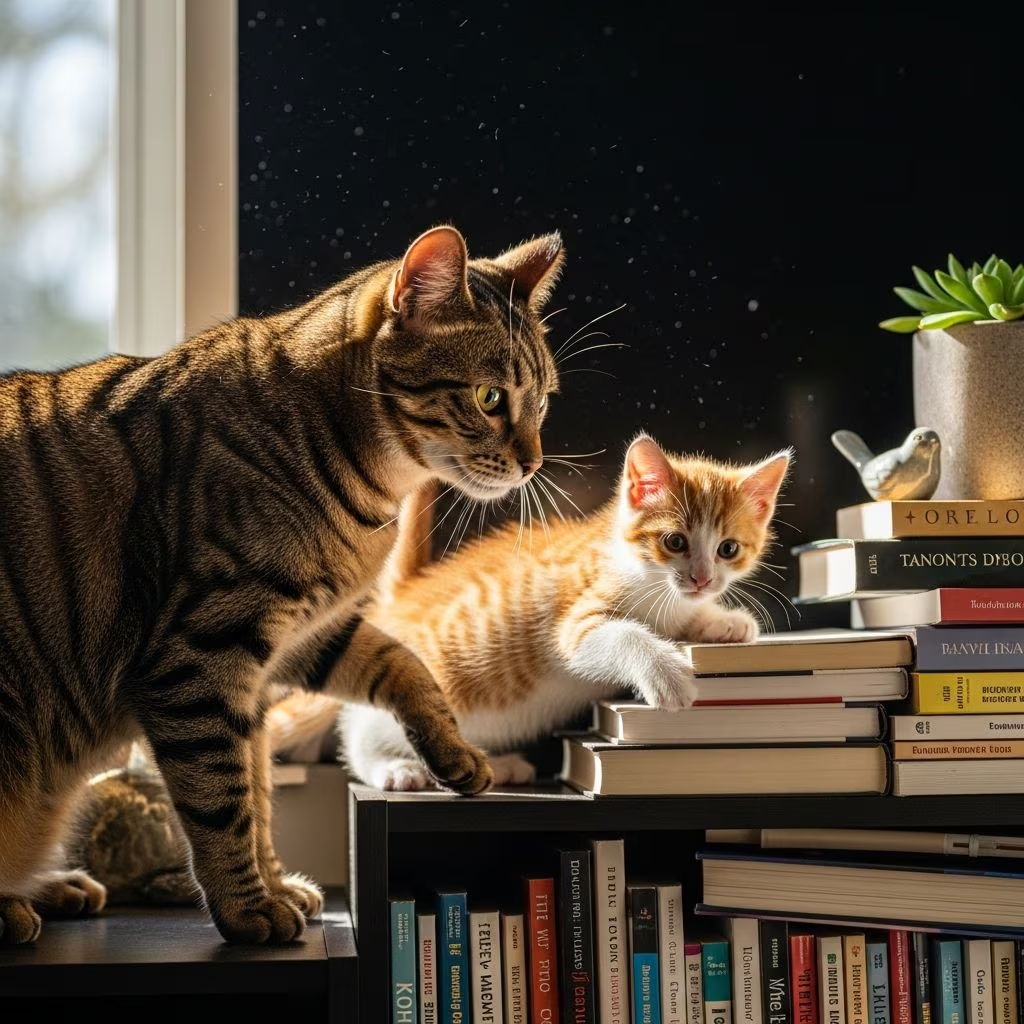
Mother cats employ instinctive, immediate strategies to guide their young away from unacceptable actions and toward proper conduct. These methods prioritize redirection over punishment, fostering social skills essential for adult life.
The Instinctive Role of Feline Maternal Guidance
In the wild or home, a queen cat assumes full responsibility for her litter’s behavioral development. From birth, she models survival skills, hygiene, and interpersonal boundaries. Her corrections occur precisely when missteps happen, interrupting the behavior and demonstrating alternatives. This timely intervention helps kittens internalize limits quickly, preventing future issues like aggression or poor littermate interactions.
Unlike human parenting, which may involve delayed consequences, feline teaching relies on instant feedback. Kittens, with their short attention spans, respond best to in-the-moment adjustments, learning cause-and-effect through repetition.
Primary Tools in a Mother Cat’s Correction Arsenal
Queens use a hierarchy of non-violent techniques, escalating only as needed. These tools communicate disapproval clearly while maintaining the bond.
Strategic Withdrawal: The Silent Lesson
The simplest and most common method involves the mother simply departing the scene. Kittens thrive on maternal proximity and attention; its sudden absence registers as a potent deterrent. For instance, when weaned kittens persist in suckling, the queen rises and leaves, signaling the end of nursing and the start of solid food independence. Repetition reinforces this shift, typically within days.
This approach proves highly effective because it leverages the kittens’ natural dependence. Without physical force, it teaches self-regulation and respect for boundaries.
Vocal Signals: Sounds of Disapproval
Audible cues form the next layer of communication. A sharp hiss, low growl, or staccato meow halts kitten antics instantly. Though these sounds alarm humans, they serve as neutral warnings in feline language—not threats, but firm ‘stop’ commands.
These vocalizations vary by context: a hiss for rough play, a growl for boundary violations. Kittens quickly associate the tone with behavioral shifts, refining their actions over time.
Physical Interventions: Bites and Scruffs
When subtler methods fail, gentle physical contact enters play. The queen may lightly swat or grasp the scruff—a fold of skin at the neck—delivered with precise, controlled force. This mirrors how she carried them as newborns, evoking submission without harm.
Biting the neck serves dual purposes: halting motion for grooming or ending play fights. Adult cats modulate bite strength instinctively, ensuring no injury while conveying authority. It’s a last resort, used when annoyance peaks, but always calibrated for teaching.
The Critical Role of Sibling Dynamics in Learning
Beyond maternal input, littermates provide peer-level socialization. Play-wrestling sessions teach bite inhibition—the ability to gauge and limit jaw pressure. A hard nip prompts reciprocal retaliation or maternal intervention, conditioning softer interactions.
Single kittens or early-weaned orphans miss this, risking adult behavioral deficits like excessive biting. They lack the feedback loop of mutual correction, underscoring the value of group rearing.
| Method | Purpose | When Used | Outcome |
|---|---|---|---|
| Withdrawal | Deny attention | First response to mild issues | Kittens self-correct for approval |
| Vocal Cues | Verbal warning | Persistent minor behaviors | Immediate halt via association |
| Scruff/Bite | Physical restraint | Escalated defiance | Enforces stillness, teaches limits |
Understanding Maternal Aggression in Context
Observers sometimes misinterpret queen behaviors as cruelty. Hissing or nipping appears harsh, yet it stems from protective instincts. These actions safeguard the litter, ensuring survival skills like conflict resolution.
Post-weaning, as independence grows, corrections intensify to prepare kittens for dispersal. This phase builds resilience and social savvy, vital for feral or multi-cat households.
Applying Feline Lessons to Human Homes
Orphaned or solo kittens benefit from human emulation of these techniques. Consistency mimics natural processes, curbing issues like hand-biting or furniture destruction.
- Withdraw attention promptly: Cease interaction during misdeeds, ignoring pleas until calm returns. This echoes the queen’s walk-away.
- Employ vocal deterrents: A loud ‘no,’ hiss, or yelp followed by departure reinforces boundaries without harm.
- Redirect actively: Swap forbidden objects for toys or posts mid-act, guiding to positives.
- Reward compliance: Praise and treats for good choices cement desired habits.
- Facilitate playmates: Supervised sessions with peers teach bite control organically.
Avoid punishment like spraying, which confuses or escalates fear-based responses. Positive, immediate redirection yields calmer, happier cats.
Common Misbehaviors and Targeted Fixes
Kittens test limits universally. Here’s how queens—and owners—address them:
- Overzealous nursing: Distancing enforces weaning.
- Rough play: Vocal cues or scruffing moderates intensity.
- Litter box errors: Swift relocation to the box pairs action with location.
- Human-directed bites: Withdrawal and toy substitution curbs hand aggression.
Developmental Timeline of Correction
Kitten learning evolves with age:
- Weeks 2-4: Basic grooming holds via scruff.
- Weeks 4-8: Weaning via distancing; sibling play ramps bite lessons.
- Weeks 8-12: Intensified vocal/physical cues for complex social rules.
- Post-12 weeks: Refinement for independence.
By adoption age (8-12 weeks), well-corrected kittens integrate smoothly.
FAQs: Kitten Correction Essentials
Why do mother cats bite their kittens?
It’s a controlled scruff grab to immobilize for teaching or grooming, not injury.
Can I hiss at my kitten like a cat mom?
Yes, a hiss or sharp ‘no’ followed by ignoring works well for redirection.
What if my kitten lacks littermates?
Mimic peer play with toys and controlled interactions; consider supervised playdates.
Is maternal growling dangerous?
No, it’s communicative correction, protective yet instructional.
How long until kittens learn?
Weeks with consistency; persistence varies by individual.
Long-Term Benefits of Natural Correction
Kittens raised under maternal guidance emerge confident, non-aggressive adults. They navigate households adeptly, respecting humans and peers. Owners adopting these methods raise balanced companions, minimizing vet visits for behavior.
Observing a queen at work reveals parenting’s elegance: firm, fair, and fond. Replicating it bridges the human-feline gap effectively.
References
- How Does a Mother Cat Discipline Her Kittens? Vet-Reviewed Cat Behavior — Catster. 2023-10-15. https://www.catster.com/cat-behavior/how-does-mother-cat-discipline-kittens/
- How Do Mother Cats Discipline Their Kittens? — YouTube (Senior Cat Wellness). 2023-05-20. https://www.youtube.com/watch?v=Kxdn-INFgCM
- Fostering Moms and Kittens — Best Friends Animal Society. 2024-02-10. https://bestfriends.org/pet-care-resources/fostering-moms-and-kittens
- Being the Mom to Your Cat — NutriSource Pet Foods. 2022-11-05. https://nutrisourcepetfoods.com/uncategorized/being-the-mom-to-your-cat/



