

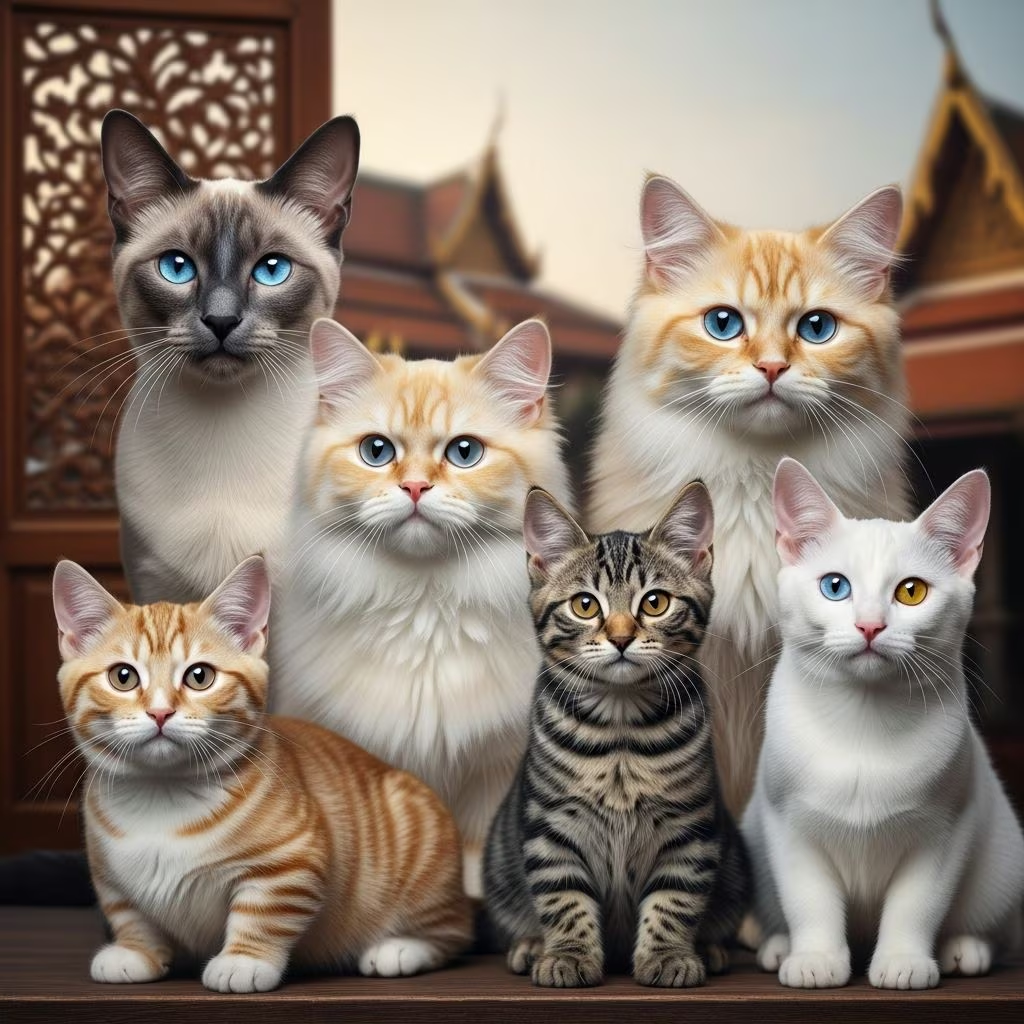
Thailand, historically known as Siam, boasts a rich feline heritage with cat breeds that have captivated people for centuries. These cats are not just pets; they are symbols of luck, prosperity, and royalty, deeply embedded in Thai culture and folklore. From the elegant Siamese to the rare Khao Manee, popular Thai cat breeds blend striking appearances, playful personalities, and ancient lineages. This article dives into the most beloved breeds, exploring their origins, characteristics, care needs, and cultural significance.
Why Cats Are So Popular in Thailand
Cats have roamed Thailand’s temples, palaces, and streets for over 700 years, mentioned in ancient manuscripts like the Tamra Maew (Cat-Book Poems). They are revered for bringing good fortune, warding off evil, and symbolizing wealth. Unlike Western breeds often selectively bred for shows, Thai cats are natural mutations from local black (non-agouti) cats, resulting in diverse colors and patterns through simple genetic shifts.
Today, these breeds thrive as companions in Thai homes, markets, and even as sacred guardians. Their popularity stems from affectionate natures, low-maintenance coats, and beliefs in their mystical powers—such as the Korat’s prosperity-bringing shimmer or the Konja’s protective black fur. Globally, they’ve influenced breeds like the Burmese and Tonkinese, but in Thailand, they remain everyday icons.
The Most Popular Thai Cat Breeds
Here are the standout breeds dominating Thai pet culture, based on local prevalence, cultural lore, and enthusiast reports. Each offers unique appeal, from vocal charmers to serene royals.
1. Siamese Cat
The **Siamese**, dubbed the “King of Thai Cats,” is Thailand’s most famous export and a top local favorite. Originating from ancient Siam, these sleek cats feature a lithe body, wedge-shaped head, large ears, and striking color points—dark ears, face, paws, and tail on a pale cream-to-fawn body. Their almond-shaped blue eyes exude intelligence and mystery, often with nine distinct dark spots symbolizing elegance.
Genetically, Siamese are black cats (aa) with two Siamese point genes (cscs), creating the pointed pattern via temperature-sensitive pigmentation. Variants include seal, chocolate, blue, and lilac points.
**Personality and Temperament:** Highly vocal with a distinctive meow, Siamese are affectionate, social, and demanding of attention. They bond deeply with owners, follow them everywhere, and enjoy interactive play. Great with families but can be jealous of other pets.
**Care Needs:** Low-maintenance short coat requires weekly brushing. They need mental stimulation to prevent boredom—puzzle toys and climbing trees are ideal. Feed high-protein diets; prone to dental issues and amyloidosis.
**Cultural Role:** Seen as wealth-attractors and protectors, Siamese were palace guardians.
2. Korat Cat
The **Korat**, or “Si Sawat” (meaning good fortune), hails from Thailand’s Korat Plateau. This medium-sized cat sports a shimmering blue-gray coat that glows like silver under light, paired with vivid green eyes. Its muscular yet elegant build reflects ancient purity.
Genetics: A black cat (aa) with two dilute genes (dd), producing the unique blue hue.
**Personality and Temperament:** Sweet, loyal, and playful, Korats adore their owners and children but reserve affection for “their” people. Intelligent hunters, they chirp rather than meow.
**Care Needs:** Minimal grooming for the short, plush coat. Provide scratching posts and toys; sensitive to cold, so warm spots are essential. Health issues include gangliosidosis.
**Cultural Role:** Gifted at weddings for prosperity; one of Thailand’s oldest breeds.
3. Khao Manee
The **Khao Manee**, “Queen of Thai Cats” or “Diamond Eye,” is a rare white beauty with odd eyes (one blue, one amber) or matching bright eyes. Its pure white coat and odd-eyed gaze mesmerize, tracing back thousands of years.
**Personality and Temperament:** Gentle, intelligent, and social, these cats form strong bonds and get along with kids and other pets. Playful yet calm.
**Care Needs:** Regular bathing to keep fur clean; ear checks for white cats prone to deafness. High-quality diet supports eye health.
**Cultural Role:** Royal palace cats symbolizing purity and fortune.
4. Suphalak
The **Suphalak**, recently revived from near-extinction, boasts glossy reddish-brown fur and amber eyes. Once in ancient poems, breeders like Nolan Betterly restored it. Genetics: Black cat (aa) with two champagne genes (bb).
**Personality and Temperament:** Clever, friendly, and sociable; loves interaction.
**Care Needs:** Short coat needs little grooming; active lifestyle suits it.
**Cultural Role:** Symbol of prestige; World Cat Federation-recognized pure Thai breed.
5. Konja (Thai Black Cat)
**Konja**, the “lucky black cat,” features sleek jet-black fur and yellow-green eyes. Thailand’s common street cat base.
**Personality and Temperament:** Independent, playful, mysterious; wards off evil.
**Care Needs:** Easy grooming; loves freedom and play.
**Cultural Role:** Boosts authority and protection.
6. Burmese Cat
The **Burmese** (or Tong Dak), Thailand’s most common alongside Tonkinese, has a rounded face, sable-to-lilac coats. Genetics: Black cat (aa) with Burmese genes (cbbcbb), plus modifiers.
**Personality and Temperament:** Playful, chatty, people-oriented.
**Care Needs:** Weekly brushing; prone to feline hyperesthesia.
7. Tonkinese Cat
**Tonkinese** (Tong Dai), the hybrid Siamese-Burmese, dominates Thai streets with mink points. Genetics: cbscs.
**Personality and Temperament:** Affectionate, energetic, social.
**Care Needs:** Moderate grooming; active play needed.
Other Notable Breeds
- Havana Brown: Rich brown coat, Siamese-like body; sociable.
- Bombay: Mini-panther black coat; family-friendly.
- Oriental Shorthair: Colorful coats, vocal.
- Thai Cat: Traditional Siamese with rounder features.
Thai Cat Genetics: A Quick Guide
Most Thai breeds derive from the black Konja (aa). Mutations create diversity:
| Breed | Genotype | Key Trait |
|---|---|---|
| Korat | aa dd | Blue-gray coat |
| Suphalak | aa bb | Reddish-brown |
| Burmese (Sable) | aa BB cbbcbb | Sable |
| Siamese (Seal) | aa cscs | Points |
| Tonkinese | aa cbscs | Mink |
Cultural Significance of Thai Cats
Thai cats feature in folklore as bringers of luck. Korats for weddings, Khao Manee for royalty, Konja for protection. Temples house them as sacred.
Caring for Thai Cat Breeds
General tips: High-protein diet, regular vet checks, enrichment. Most are healthy but watch for breed-specific issues like HCM in Siamese.
Frequently Asked Questions (FAQs)
Which cat breed is most common in Thailand?
Tonkinese and Burmese are ubiquitous on streets, temples, and homes.
Are Thai cats good luck?
Yes, breeds like Korat and Konja are believed to bring prosperity and ward off evil.
Do Siamese cats originate from Thailand?
Absolutely; they’re ancient Siamese palace cats.
How do I care for a Khao Manee?
Keep fur clean, monitor eyes/ears, provide companionship.
What’s the rarest Thai breed?
Suphalak and Khao Manee are among the rarest.
References
- Types of Thai Cats — The Thai Cat Center. Accessed 2026. https://thethaicatcenter.com/types-of-thai-cats
- Five Thai cat breeds that bring wealth, charisma to their owners — Nation Thailand. 2024-12-11. https://www.nationthailand.com/life/art-culture/40047639
- An Introduction to the Various Thai Cat Breeds — Pets4Homes. Accessed 2026. https://www.pets4homes.co.uk/pet-advice/an-introduction-to-the-various-thai-cat-breeds.html
- Breeds from Thailand — Animalia.bio. Accessed 2026. https://animalia.bio/pets/cats/breeds-from-thailand



