

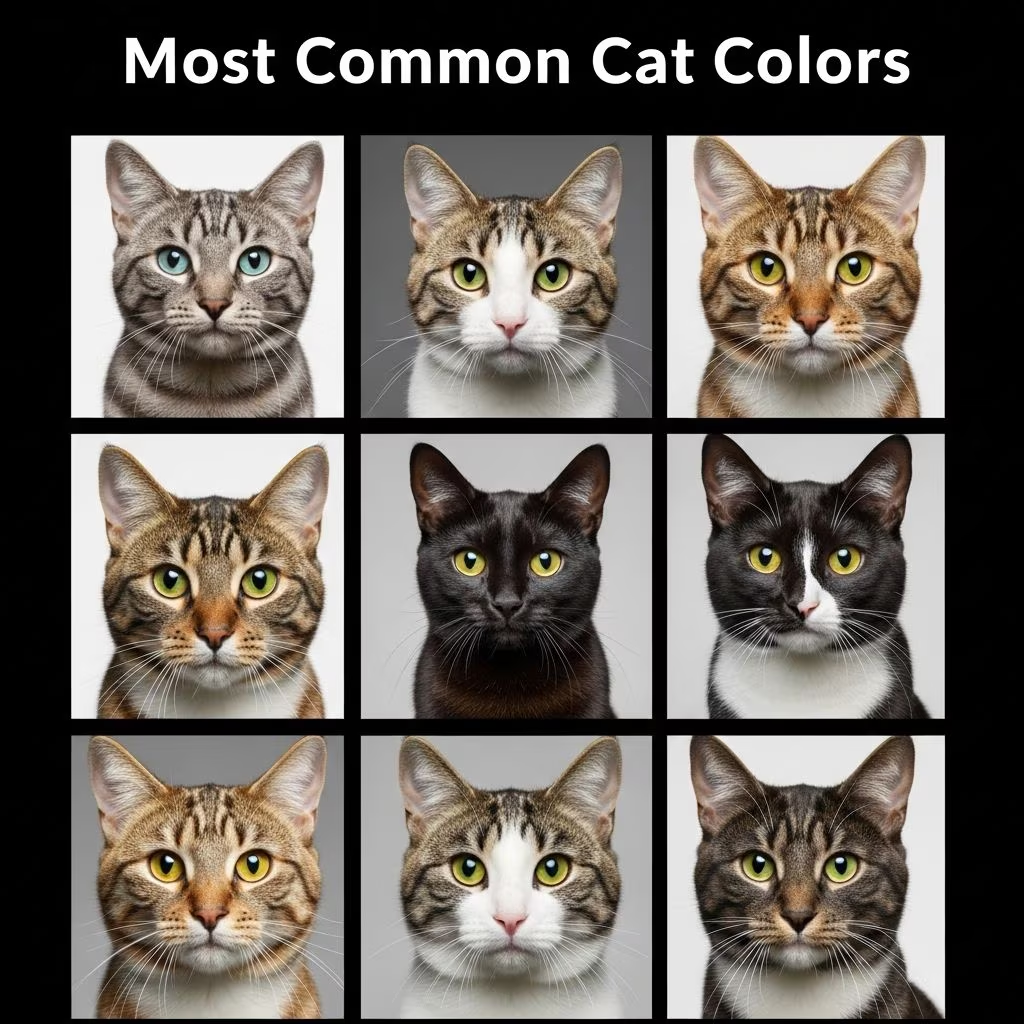
Cats come in a stunning array of colors and patterns, each one a result of complex genetics that have fascinated owners and breeders for centuries. From the classic stripes of tabby cats to the sleek solids and multicolored tortoiseshells, understanding these coat variations reveals the beauty and diversity of felines. This article explores the **most common cat colors**, their genetic foundations, distinctive patterns, and why certain hues dominate domestic cat populations worldwide.
Cat Coat Genetics: The Science Behind the Colors
The vibrant coats of cats are determined by a combination of genes that control pigment production, distribution, and intensity. At the core are two primary pigments: eumelanin (black or brown) and pheomelanin (red or yellow). These are influenced by several key genes.
The **primary coat color gene (B locus)** codes for black (dominant B), chocolate (recessive b), or cinnamon (b1). A dominant B allele produces black fur, while recessive combinations yield warmer brown tones.
The **red or orange gene (O locus)** is sex-linked on the X chromosome, explaining why orange cats are predominantly male (about 80%). Females need two O alleles for full orange, while males need just one.
The **dilute gene (D locus)** lightens colors: black becomes blue/gray, orange turns cream, chocolate dilutes to lilac, and cinnamon to fawn. This recessive trait (d/d) affects pigment transport via melanophilin.
Other genes include the **agouti gene (A locus)**, which allows banded hairs for tabby patterns (dominant A) or solid colors (recessive a); the **tabby gene (T locus)** for stripe, swirl, or spotted patterns; and **white genes** like KIT for spotting or dominant white (WD), which can mask other colors and link to deafness.
The **inhibitor gene (I locus)** creates silver or smoke effects by suppressing yellow pigment, resulting in cooler tones. These interactions produce endless variations, but a few colors and patterns prevail in domestic cats.
Tabby: The Most Common Cat Color and Pattern
**Tabby** is arguably the most widespread cat coat, appearing in over 80% of domestic cats due to its dominant agouti genetics. Not a color but a pattern, tabbies display stripes, swirls, spots, or ticks on backgrounds of brown, orange, gray, or blue.
- Classic Tabby: Bold, swirling patterns resembling a bull’s-eye on the flank, with a butterfly on the shoulders and oyster-shaped spots.
- Mackerel Tabby: Narrow stripes like a fish skeleton (mackerel), with thin lines running parallel down the spine—the most common subtype.
- Spotted Tabby: Round spots instead of stripes, popular in breeds like Bengals.
- Ticked Tabby: Evenly banded hairs without stripes, seen in Abyssinians.
All tabbies share ‘M’ markings on the forehead, leg bars, and tail rings. Brown tabby (black stripes on agouti brown) dominates, but orange, blue, and silver tabbies are common too. The agouti gene (A) enables yellow banding, while tabby alleles (T) define the motif.
Solid Colors: Sleek and Simple
Solid-colored cats lack agouti banding (a/a), appearing uniformly pigmented. These are among the most popular for their elegant, low-maintenance look.
- Black Cats: Deep eumelanin (B- D-), often with a rusty sheen from pheomelanin leakage. Symbol of mystery and luck in various cultures.
- White Cats: Produced by dominant white (W-) masking all colors or extreme spotting. Prone to deafness due to KIT gene effects on melanocytes in the ear.
- Chocolate and Cinnamon: Recessive brown variants (b/b or b1/b1), rarer but striking in warm tones.
Solids in dilute forms include blue (dilute black), lilac (dilute chocolate), and cream (dilute red). Black and white are staples in mixed-breed populations.
Tortoiseshell and Calico: Nature’s Patchwork
**Tortoiseshell (tortie)** cats blend black and orange in a mottled patchwork, almost exclusively female due to X-linkage. Females (XOXo) inactivate one X randomly per cell via Barr bodies, creating brindled patches. Males are rare (XXY Klinefelter’s or chimeras).
**Calico** adds white spotting (Ws gene) to tortie, forming distinct black, orange, and white patches. ‘Calico’ often implies tri-color with white; pure torties lack it.
Torties are feisty stereotypes aside, their genetics ensure uniqueness—no two have identical patterns. Dilute versions are blue-cream or lilac-cream.
Other Popular Cat Colors and Variations
Beyond basics, these hues add flair:
- Orange/Ginger Cats: Pheomelanin-dominated (O), males prevalent. Dilute to cream.
- Gray/Blue Cats: Dilute black, sleek and sophisticated.
- Silver and Smoke: Inhibitor (I) clears undercoat yellow, yielding smoky roots with colored tips.
- Bi-Color and Van Patterns: White with color on head/tail (Van: mostly white like Turkish Van breed).
Pointed patterns (colorpoints like Siamese) involve temperature-sensitive tyrosinase (c^s), darkening extremities—less common in random-bred cats.
Cat Color Popularity and Breed Associations
| Color/Pattern | Popularity Rank | Common Breeds |
|---|---|---|
| Tabby | 1 | Domestic Shorthair, American Shorthair |
| Black | 2 | Bombay, British Shorthair |
| White | 3 | Turkish Angora, Siberian |
| Orange | 4 | Maine Coon, Persian |
| Tortoiseshell | 5 | Japanese Bobtail, Calico mixes |
Tabby tops charts for camouflage advantages in wild ancestors. Shelter stats confirm tabby, black, and orange as most adopted.
Frequently Asked Questions (FAQs)
What is the rarest cat color?
True cinnamon or chocolate in non-pedigree cats; male torties are genetically rarest.
Why are most orange cats male?
Orange (O) is X-linked; males (XY) express it with one copy, females need two.
Do white cats have special health risks?
Yes, dominant white links to deafness; blue-eyed whites are at higher risk.
Can cats change color as they age?
Yes, sun exposure fades black to red tones; kittens’ patterns clarify with age.
What’s the difference between tabby and calico?
Tabby is striped/agouti pattern; calico is tri-colored (black/orange/white) with spotting.
Conclusion: Celebrating Feline Diversity
Cat colors reflect evolutionary ingenuity and genetic artistry. Whether tabby stripes or tortie mosaics, each coat tells a genetic story. Next time you admire your cat, appreciate the science shimmering beneath.
References
- From Tabby to Tortoiseshell: Understanding Cat Coat Patterns — Beverly Hills Vets. 2023. https://www.beverlyhillsvets.com/blog/from-tabby-to-tortoiseshell-understanding-cat-coat-patterns/
- The link between coat colour, disease and behaviour in cats — Vet Times. 2023. https://www.vettimes.com/news/vets/small-animal-vets/the-link-between-coat-colour-disease-and-behaviour-in-cats
- The Genetics of Cat Colours and Coat Types — Melbourne Cat Vets. 2023. https://www.melbournecatvets.com.au/post/the-genetics-of-cat-colours-and-types-unlocking-the-mystery-of-feline-fur-part-1
- Cat Genetics: A Progressive Look at Coat Colors & Patterns — Liz’s Kitty Bootcamp. 2020-08-24. https://lizskittybootcamp.com/2020/08/24/cat-genetics-a-progressive-look-at-coat-colors-patterns/
- Cat Genetics 2.0: Colours — Labogenvet. 2023. https://labgenvet.ca/en/cat-genetics-2-0-colours/
- COLOUR AND PATTERN CHARTS — Messybeast. 2023. http://messybeast.com/colour-charts.htm
- Feline Coat Color — Veterinary Genetics Laboratory, UC Davis. 2023. https://vgl.ucdavis.edu/resources/cat-coat-color



