

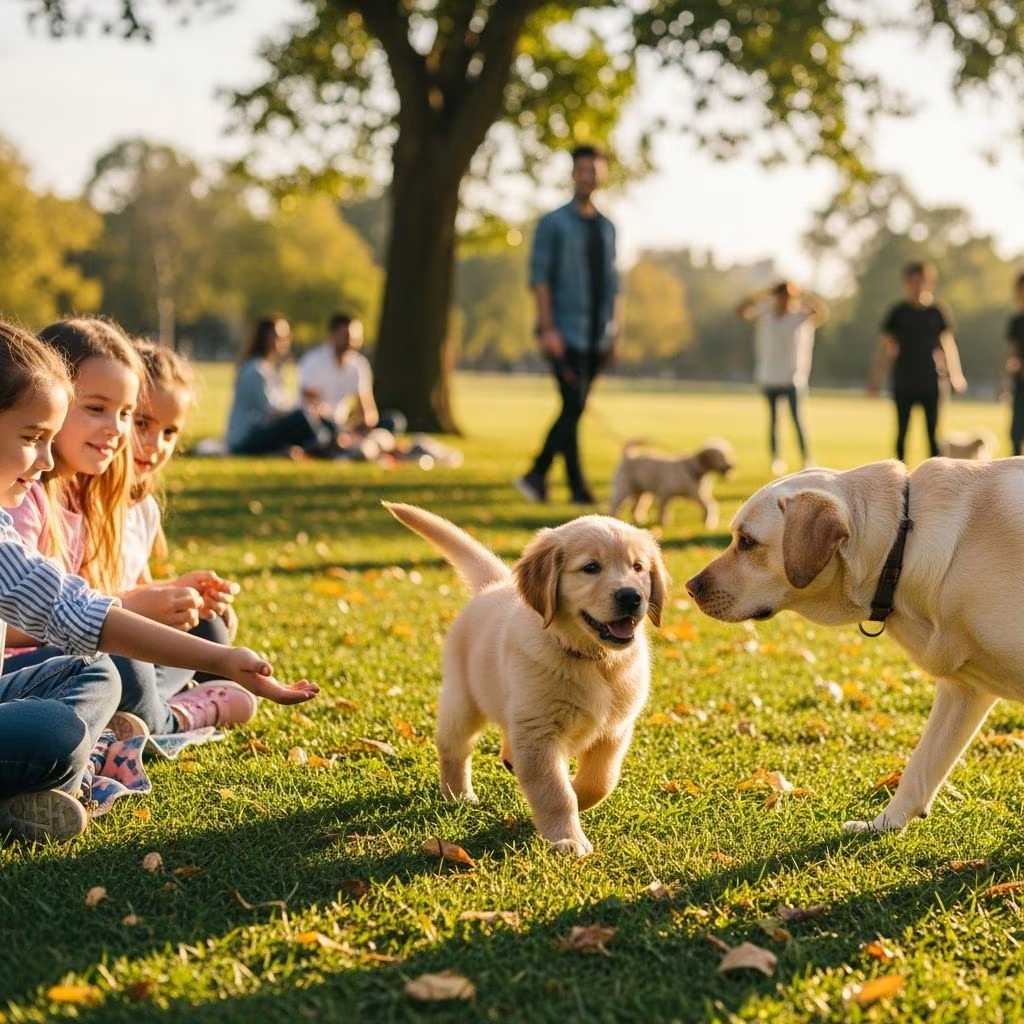
Thoughtful puppy socialization is one of the most powerful ways to shape your dog’s future behavior, emotions, and ability to handle the world with confidence. Instead of thinking only about meeting lots of dogs and people, it helps to view socialization more broadly: as a planned series of positive experiences with other beings and with the everyday sights, sounds, and sensations that make up your puppy’s world.
When you understand both interactive and observational socialization, you can guide your puppy toward a lifetime of feeling safe, curious, and adaptable—rather than anxious or overwhelmed.
Why Puppy Socialization Matters So Much
Puppies move through a sensitive socialization period that typically runs from about 3 weeks to 12–14 weeks of age, during which new experiences leave deep, lasting impressions on the brain. Experiences during this window strongly influence how dogs respond to people, other animals, noises, places, and handling for the rest of their lives.
Research and clinical experience show that inadequate or negative socialization in this early period is associated with increased fear, anxiety, and behavior problems later on, such as noise phobias, aggression, or difficulty coping with novelty. Conversely, careful and positive exposure during this time supports emotional resilience and ease in everyday life.
| Goal of Socialization | What Your Puppy Learns |
|---|---|
| Safety and trust | New people, dogs, sounds, and places are usually safe and predictable. |
| Optimism | Novel things are opportunities for fun, food, and connection, not danger. |
| Flexibility | Life can change and still feel manageable, because they’ve practiced handling variety. |
| Calm | They can settle and cope even when the environment is busy or noisy. |
Veterinary behavior experts emphasize that these early weeks are not about “toughening up” your puppy, but about helping them feel genuinely safe and confident in new situations.
Two Complementary Types of Puppy Socialization
Puppy socialization is often described as two basic tasks:
- Let your puppy meet many different people.
- Let your puppy meet many different dogs.
That advice has value, but it can be too narrow. A more complete and practical way to think about the process is to divide it into:
- Interactive socialization – direct social contact with people, dogs, and other living beings.
- Observational socialization – exposure to sights, sounds, surfaces, objects, and activity at a comfortable distance.
Both types are essential. You want your puppy to feel good about interacting with safe social partners, and to be able to calmly observe and accept all kinds of everyday stimuli without distress.
Interactive Puppy Socialization
Interactive socialization is what most people picture: your puppy greeting visitors, playing with other dogs, or being gently handled by the veterinary team. Done well, these encounters teach your puppy that new people and animals are rewarding, predictable, and worth trusting.
The Right Kinds of Social Interactions
The key to successful interactive socialization is making each meeting as positive and puppy-centered as possible. That means choosing partners and setups that keep your puppy within their comfort zone and allow them to opt out if they feel unsure.
Look for people who:
- Allow the puppy to approach instead of rushing in.
- Speak in a calm, friendly voice rather than shouting or squealing.
- Move slowly and gently, avoiding sudden grabs or looming over the puppy.
- Offer small, tasty treats or a favorite toy if the puppy seems interested.
- Respect signs of hesitation, fear, or fatigue and give the puppy space.
For dog-to-dog interactions, you want well-mannered canine role models. Ideal dog partners:
- Have a history of being friendly and gentle with puppies.
- Use soft body language—loose muscles, relaxed face, sweeping tail.
- Adjust their play style to match the puppy’s size and confidence.
- Take breaks and respond when the puppy pauses or moves away.
Structured environments, such as properly run puppy classes, can provide this kind of safe exposure with professional oversight and clear rules about interaction.
Social Interactions You Should Avoid
Not all exposure is helpful. Interactions that scare or overwhelm a puppy can create long-term negative associations, especially during the sensitive socialization period. You should avoid people who:
- Pick up or hug the puppy without warning.
- Shout, make loud sudden noises, or move erratically around the puppy.
- Lean over and stare directly into the puppy’s face.
- Ignore your instructions about how to greet or handle the puppy.
Likewise, avoid dogs who:
- Body-slam, chase, or pin the puppy, especially if the puppy freezes or squeals.
- Guard toys or food aggressively.
- Show stiff posture, hard stares, or raised hackles around the puppy.
- Are known to dislike puppies or play roughly without self-control.
Contrary to the old idea that puppies “need to learn to deal with it,” being forced into frightening contact can increase the risk of fear-based aggression or chronic anxiety later in life.
Making Interactive Socialization Puppy-Centric
Effective interactive socialization is planned, controlled, and guided by the puppy’s experience. A few practical principles:
- Plan ahead. Choose locations, people, and dogs who are likely to be calm, predictable, and cooperative.
- Supervise closely. Stay near your puppy so you can intervene, shorten a greeting, or add support if needed.
- End on a good note. Keep sessions brief and stop while your puppy is still comfortable and curious.
- Let your puppy choose. If they back away, hide, stiffen, or tuck their tail, create distance and do not insist on contact.
To do this well, it is helpful to learn basic canine body language—like noticing when ears, tail, posture, and facial expression shift from loose and happy to tense or worried. Many veterinary and behavior resources provide charts and diagrams to help you interpret these signals more accurately.
Observational Puppy Socialization
Observational socialization is about letting your puppy safely take in the world—without always directly interacting with it. This includes controlled exposure to:
- Everyday sounds: traffic, garbage trucks, sirens, vacuum cleaners, blenders, dishwashers, doorbells, and phone alerts.
- Visuals: people with umbrellas, hats, backpacks, wheelchairs, strollers, bikes, or skateboards.
- Surfaces: grass, gravel, tile, hardwood, metal grates, sand, and carpet.
- Environmental activity: kids playing at a distance, joggers passing by, crowds seen from a quieter corner.
Instead of pushing your puppy straight into the middle of the action, you start at a distance or low intensity where they remain relaxed, then gradually get closer or make things slightly louder or busier as their comfort grows.
How to Make Observational Socialization Positive
The goal of observational work is that your puppy learns to notice new sights and sounds without panicking or becoming overstimulated. A few strategies:
- Pair new stimuli with rewards. When your puppy hears a truck rumble or a door slam, calmly feed a few treats or engage in gentle play.
- Use distance wisely. If your puppy startles, move farther away until they can observe calmly, then resume rewarding.
- Normalize variety. Introduce many different machines, noises, and visual patterns—one or two at a time—so nothing stands out as uniquely scary later.
- Support, don’t pressure. Allow your puppy to look, sniff, or even briefly retreat behind you, and respond with reassurance rather than forcing them forward.
Evidence from behavior medicine suggests that gentle, repeated exposures like these help prevent sound sensitivities and fear of novelty, while harsh or overwhelming experiences can contribute to lasting phobias.
Balancing Interactive and Observational Socialization
When you combine both approaches, you get comprehensive puppy socialization:
- Interactive: Your puppy learns to enjoy polite contact and play with people, dogs, and other safe animals.
- Observational: Your puppy learns that all kinds of everyday noises, movements, and textures are normal background parts of life.
Together, these experiences help your puppy grow into a dog who can comfortably:
- Navigate busy streets, parks, and new environments.
- Visit grooming salons and veterinary clinics without extreme panic.
- Greet guests or pass strangers on walks politely and calmly.
- Rest and relax at home even when the washing machine, TV, or children are active.
Comprehensive socialization is not about exposing your puppy to everything as fast as possible—it is about exposing them to enough variety, at the right pace and intensity, so that they form a general expectation that the world is safe and manageable.
Practical Tips for Safe, Positive Puppy Socialization
To make socialization effective and safe, it helps to keep a few practical guidelines in mind.
1. Aim for (Almost) All Positive Experiences
Your target is for new experiences to feel positive for your puppy as close to 100% of the time as possible. That does not mean absolutely nothing unexpected will ever happen, but it does mean you:
- Err on the side of shorter, calmer, and more predictable sessions.
- Use high-value treats and toys to build positive associations.
- Step in quickly if your puppy looks worried or overwhelmed.
Professional guidelines from veterinary behavior organizations stress that socialization is only beneficial when the puppy is not experiencing significant fear or distress.
2. Respect Health and Vaccination Considerations
Because young puppies are still building immunity, veterinarians encourage a balance between disease prevention and timely socialization. Current consensus statements from veterinary associations suggest that, for healthy puppies, well-run indoor classes and controlled exposures after the first core vaccines can safely support socialization while minimizing infection risk.
Discuss your puppy’s specific situation with your veterinarian to design a plan that fits their age, vaccine status, and local disease risk.
3. Make a Simple Socialization Checklist
To stay organized, create a list of categories rather than a list of hundreds of specific items. For example:
- People: adults, children, people with hats, people using mobility aids.
- Dogs: friendly adult dogs, other puppies, different sizes and coat types.
- Places: quiet streets, busier sidewalks viewed from a distance, car rides, parking lots.
- Sounds: kitchen appliances, traffic, storms (at low volume via recordings), doorbells.
- Handling: gentle touching of paws, ears, tail, collar; being picked up briefly; wearing a harness.
Work through these gradually, checking off items only when your puppy seems genuinely relaxed or playful in that situation.
4. Watch Your Puppy’s Body Language
Each puppy has their own comfort level and pace. Learn to recognize signs that your puppy is:
- Comfortable: loose body, soft eyes, wagging tail, exploring or approaching willingly.
- Unsure: pausing, leaning away, lowering body slightly, yawning or lip-licking.
- Scared or overwhelmed: tail tucked, ears pinned back, cowering, freezing, trying to escape, or barking and lunging with stiff posture.
If you see signs of fear or distress, increase distance, reduce intensity, and add more support with calm praise and rewards. If signs persist, consult your veterinarian or a qualified behavior professional early; early intervention is associated with better outcomes than waiting for problems to worsen.
Comprehensive Puppy Socialization for Your New Best Friend
When you keep both interactive and observational socialization in mind, you help your puppy become a dog who:
- Feels safe meeting new people and other dogs in everyday life.
- Can handle new places, sounds, and routines without shutting down or overreacting.
- Is easier and more enjoyable to live with—at home, at the vet, and out in the world.
By thoughtfully planning experiences, staying attuned to your puppy’s feelings, and prioritizing positive encounters, you are not just teaching manners—you are shaping the emotional foundation that will guide your dog’s behavior for years to come.
There truly is more than one right way to socialize your puppy. What matters most is that you approach the process broadly, balancing interaction with observation, and always centering your puppy’s comfort and well-being.
Frequently Asked Questions (FAQs)
Q: When should I start socializing my puppy?
A: Socialization begins as soon as you bring your puppy home, usually around 8 weeks of age, and is most influential until about 12–14 weeks, though it should continue in a thoughtful way throughout adolescence and adulthood.
Q: How many new experiences does my puppy need?
A: There is no fixed number; it is more important that experiences are varied, controlled, and positive than that you reach a specific count. Focus on categories—different types of people, places, sounds, and surfaces—introduced gradually at a pace your puppy can handle.
Q: Can a bad experience during socialization be undone?
A: While early negative experiences can leave strong impressions, careful behavior work using desensitization and counterconditioning (gradual exposure paired with rewards) can often improve your dog’s responses. Early guidance from your veterinarian or a certified behavior professional increases the chances of success.
Q: Is puppy class necessary if I socialize on my own?
A: A well-run puppy class is not mandatory, but it can be very helpful. It offers structured exposure, coaching on reading body language, and supervised interactions with other puppies in a controlled environment, which many owners find hard to recreate on their own.
Q: Does socialization end after 14 weeks?
A: No. The earliest period is especially sensitive, but dogs continue to learn about safety and risk throughout life. Think of socialization as an ongoing process of maintaining positive associations with people, animals, handling, and environments.
References
- On Puppy Socialization — OnDogBehavior (citing developmental research summarized for practitioners). 2018-06-01. https://ondogbehavior.com/on-puppy-socialization/
- There Is More Than One \”Right\” Way to Socialize Your Puppy — Kinship. 2023-05-10. https://www.kinship.com/dog-behavior/socialize-your-puppy
- AVSAB Position Statement on Puppy Socialization — American Veterinary Society of Animal Behavior. 2019-10-15. https://avsab.org/wp-content/uploads/2019/01/Puppy_Socialization_Position_Statement_Download_-_10-3-14.pdf
- What to Expect at Puppy Socialization Classes — Kinship. 2022-08-20. https://www.kinship.com/dog-behavior/puppy-classes



