

Moorish Idol Care: Tips for Survival in Captivity
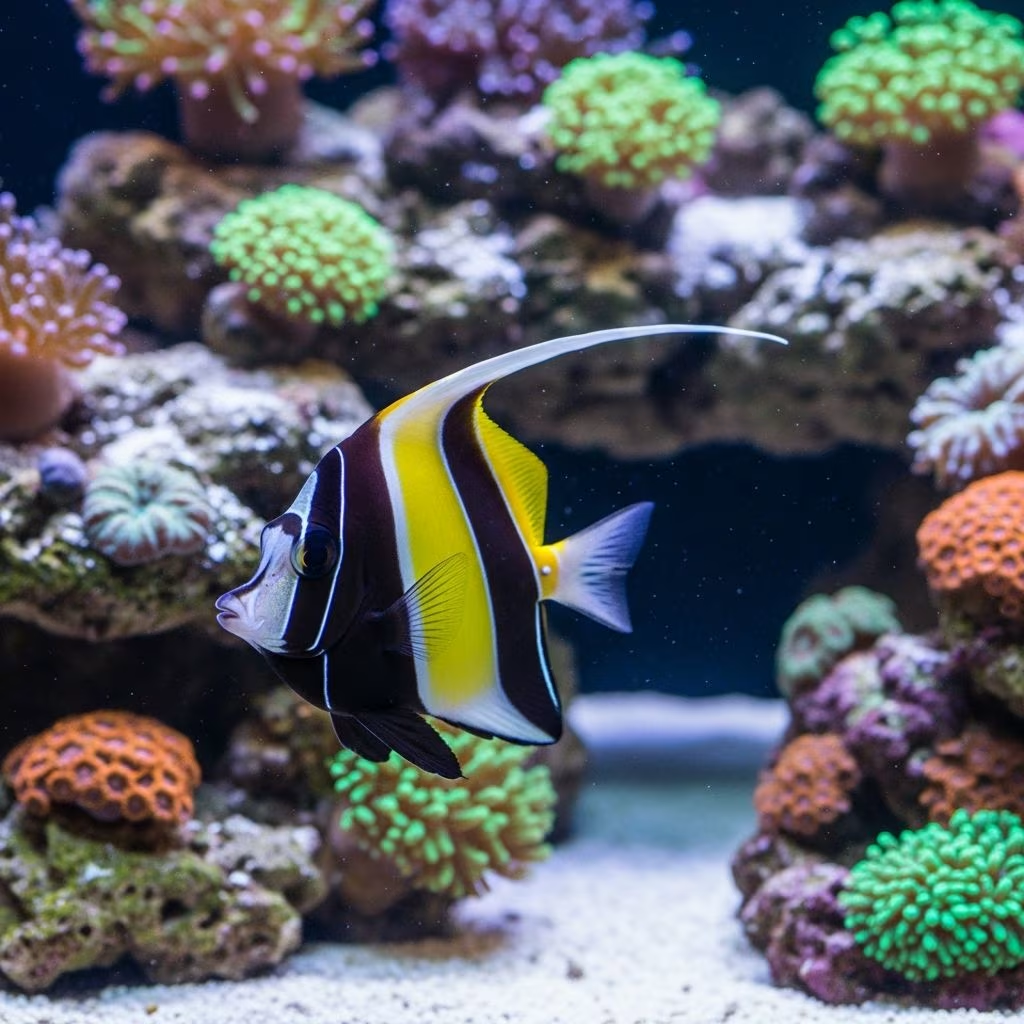
The Moorish idol is one of the most beautiful and captivating fish in the marine aquarium hobby, instantly recognizable by its striking yellow and black striped pattern and elongated dorsal fin. However, this visual splendor comes with a significant challenge: Moorish idols have a well-deserved reputation for being extremely difficult to keep in captivity. While many aquarists attempt to maintain these fish, the sad reality is that most fail within the first few months. Understanding the specific requirements of Moorish idols is essential for anyone considering adding one to their aquarium. This comprehensive guide provides practical tips and strategies to give your Moorish idol the best possible chance of survival in a captive environment.
Understanding Tank Size Requirements
One of the most critical factors in successfully keeping a Moorish idol cannot be overstated: tank size is paramount. Many aquarists make the mistake of purchasing these fish without adequate space, leading to inevitable failure. The absolute minimum tank size for a Moorish idol is approximately 200 gallons, and this is only acceptable for housing post-larval juveniles. However, a much better minimum target would be a tank that is twice this size, or around 400 gallons. These fish are not suited for smaller reef tanks or standard home aquariums that many hobbyists maintain.
The reason for such substantial space requirements relates to the natural behavior and environmental needs of Moorish idols. In their native reef environments, these fish roam freely across vast areas of the reef system, constantly grazing and swimming through currents. Confining them to limited spaces creates chronic stress, weakens their immune systems, and dramatically reduces their likelihood of long-term survival. When considering a Moorish idol, it is essential to honestly assess whether you have the physical space and resources to provide an appropriately sized aquarium before making the purchase.
Water Movement and Flow Requirements
Moorish idols are reef fishes that evolved in environments characterized by significant water movement and turbulence. Unlike some species that tolerate low-flow conditions, Moorish idols actually become stressed in sluggish water. Sluggish water can make these naturally active fish appear lethargic and contributes to their overall stress levels, which compromises their immune systems.
The total water flow rate in your aquarium should not be less than 20 times the tank volume per hour. This means that in a 200-gallon quarantine tank, you should achieve a flow rate of at least 4,000 gallons per hour. Beyond simply achieving this total turnover, it is equally important to ensure that water movement eliminates dead spots within the tank. Dead zones with stagnant water can accumulate detritus and become breeding grounds for harmful bacteria, leading to degraded water quality. High flow rates also improve water oxygenation, which is crucial for Moorish idol health. Aquarists who have successfully maintained these fish consistently report that highly oxygenated water is absolutely essential.
Maintaining Pristine Water Quality
Water quality represents another cornerstone of successful Moorish idol care. These fish possess notably weak immune systems and are particularly vulnerable to protozoan diseases such as ich and velvet. When water parameters fluctuate or decline, Moorish idols are among the first fish to succumb to illness. Perfect water parameters are not optional for this species—they are mandatory.
The challenge is that dead spots within the aquarium, which can result from inadequate water flow, lead to detritus accumulation in areas where cleanup crews cannot effectively manage the waste. This detritus decomposition rapidly increases bacterial levels, and both nitrate and phosphate levels can skyrocket. High bacterial concentrations have been reported to be particularly detrimental to Moorish idols. Additionally, fish stores commonly keep Moorish idols in low salinity water treated with preventative medications, often copper-based compounds. While this may be effective for short-term disease prevention in retail environments, it is highly detrimental for long-term health. Fish maintained under these conditions will experience color loss and become increasingly unlikely to thrive.
Copper treatment and low salinity also cause ulcerations on the fish’s body, appearing as if chunks of flesh have fallen away, and fins will rip and tear regardless of tank conditions. The Moorish idol may continue eating initially, but will progressively stop consuming food as damage accumulates. Therefore, it is essential to maintain stable, optimal water parameters from the moment your Moorish idol enters your aquarium.
Tank Setup and Environmental Considerations
Beyond size and flow, the physical structure of your aquarium matters significantly for Moorish idol success. These fish require substantial rockwork that provides caves and crevices for security and grazing opportunities. Moorish idols graze continuously throughout the day on natural biofilms, small crustaceans, and sponges present on reef structures. Creating an aquascape with abundant rock provides both psychological comfort and essential dietary supplementation.
When establishing a tank for a Moorish idol, include sponges and encourage algae growth on the rockwork. Many experienced hobbyists maintain nori sheets or other algae-based foods continuously available so the fish can graze throughout the day. This natural grazing behavior reduces the need for frequent manual feeding and provides important nutritional diversity. Additionally, maintaining a regular day-night light cycle, similar to the idol’s display tank conditions, helps regulate its natural behavior patterns.
The aquarium should be highly established before introducing a Moorish idol. An established tank with beneficial bacteria, natural food sources, and stable parameters provides the best foundation for success. A newly cycled tank with no biological cushion will struggle to handle the bioload that results from regular feeding and the fish’s grazing activities.
Quarantine Protocols and Acclimation
Never introduce a Moorish idol directly into a display tank. Instead, establish a dedicated quarantine tank of at least 200 gallons with identical or superior water parameters to your main system. Moorish idols require more time to adapt to captive conditions than virtually any other fish species. A minimum quarantine period of two months is strongly recommended, with longer durations being even better.
During quarantine, focus on acclimating the fish to captive foods and monitoring for signs of disease. Moorish idols are frequently afflicted with flukes, ich, or velvet immediately after capture, and these parasites spread rapidly in unsuitable conditions. To combat parasitic outbreaks, perform 100% water changes frequently and maintain hyposalinity in the quarantine tank. Before any full water changes, perform short freshwater baths (FWBs) to dislodge parasites from the fish’s body.
When performing water changes, replace all filter media with fresh, disposable media rather than relying on established biological media that may harbor parasites. Ich and velvet parasites can attach themselves to filter media and survive between hosts. By discarding old media and introducing new pieces during complete water changes, you effectively interrupt the parasite life cycle. To maintain bacterial colonization, seed new filter media by keeping it in your system’s sump prior to use.
Feeding Strategies and Nutritional Requirements
Feeding represents one of the most challenging aspects of Moorish idol care, as these fish are notoriously picky eaters in captivity. The key to success is offering highly palatable foods frequently and consistently. Begin by offering mysid shrimp, bloodworms, nori sheets, and halved freshwater clams daily. The more the idol eats, the more time you gain and the more likely it is to survive long enough to adapt to additional foods.
Angel formula containing sponge materials should be fed as part of the regular diet, as sponge is a critical nutritional component for these fish. Feed multiple times daily in small portions rather than once daily in larger amounts. Feed enriched brine shrimp and provide fresh algae on clips several times weekly to replicate natural grazing opportunities. While macroalgae are not a viable substitute for sponge as a primary diet, they can supplement nutrition and encourage grazing behavior.
Be aware that frequent feeding of palatable foods produces significant nutrient loads in the water column. Ensure your filtration system has adequate capacity to handle this increased bioload through protein skimming, regular water changes, and biological filtration.
Disease Prevention and Management
Moorish idols require a proactive approach to disease prevention due to their compromised immunity. Maintain a quarantine tank stocked with essential medications including copper, prazi, and formalin for treating parasitic infections. However, avoid constant reliance on medicated water, as Moorish idols perform significantly worse when maintained in continuously medicated environments. Use medications only when necessary to treat active infections.
Stable water parameters are the best disease prevention strategy. When water conditions remain consistent and optimal, stress levels decrease substantially and disease incidence drops dramatically. If your Moorish idol develops signs of ich, velvet, or other parasitic infections, immediately begin treatment with appropriate medications while performing frequent water changes and FWBs to reduce parasite loads mechanically.
Compatible Tank Mates and Behavioral Considerations
Moorish idols should be housed with compatible species carefully selected to minimize aggression and stress. Avoid housing multiple Moorish idols together, as they can be aggressive toward conspecifics. Similarly, avoid pairing them with aggressive species or numerous tang species that will harass the idol and increase stress. Adding the Moorish idol early in the tank’s population cycle, before other territorial fish establish dominance, can reduce aggression issues.
Regarding reef-safe status, if Moorish idols are well-fed with adequate nutrition, they generally cause minimal damage to corals. However, underfed specimens will pick at corals to supplement their diet, making proper feeding essential for reef compatibility.
Long-Term Viability and Realistic Expectations
It is important to acknowledge that even with perfect care, some Moorish idols may eventually stop eating and decline, particularly after extended periods of captivity. This appears to be a common occurrence even among very experienced aquarists who have maintained specimens successfully for two or more years. The species simply presents challenges that extend beyond our current understanding of their requirements. Success should be measured not by indefinite lifespans but by achieving healthy, thriving specimens for as long as possible within the constraints of captive care.
Frequently Asked Questions
Q: What is the minimum tank size for a Moorish idol?
A: The absolute minimum is approximately 200 gallons for juveniles, but 400 gallons (twice this size) is a much better target minimum. These fish require enormous space to thrive.
Q: How much water flow do Moorish idols need?
A: Water flow should be at least 20 times the tank volume per hour, meaning a 200-gallon tank needs 4,000+ gallons per hour of flow. Adequate oxygenation is critical.
Q: How long should I quarantine a Moorish idol before adding it to my display?
A: Quarantine for a minimum of two months, longer if possible. This allows the fish to adapt to captive conditions and acclimate to available foods.
Q: What foods do Moorish idols eat?
A: Feed mysid shrimp, bloodworms, nori sheets, freshwater clams, enriched brine shrimp, and angel formula containing sponge. Variety and frequency are important for success.
Q: Why do Moorish idols get ulcerations and torn fins?
A: Copper-based medications and low salinity water cause these conditions. Maintaining proper salinity and avoiding unnecessary medication prevents this damage.
Q: Can I keep a Moorish idol in a reef tank?
A: Yes, if the fish is well-fed with proper nutrition. Underfed idols will damage corals, so adequate feeding is essential for reef compatibility.
References
- An Opinion and Experience of Keeping Moorish Idols — Reef2Reef Community. Accessed 2025-11-28. https://www.reef2reef.com/threads/an-opinion-and-experience-of-keeping-moorish-idols.907389/
- Moorish Idol Care: Still a Challenge — Tropical Fish Hobbyist Magazine. Accessed 2025-11-28. https://www.tfhmagazine.com/articles/saltwater/still-impossible-after-all-these-years-keeping-moorish-idols
- Care Guide: Moorish Idol – Can It Be Done? — YouTube. Accessed 2025-11-28. https://www.youtube.com/watch?v=do__kfoSwWQ
- Advanced – Kent’s New Article on Moorish Idol Care — Humble.Fish Community. Accessed 2025-11-28. https://humble.fish/community/threads/kents-new-article-on-moorish-idol-care.23391/



