
Moluccan Cockatoo: Personality, Food & Care Guide
Complete guide to Moluccan cockatoo care, personality, diet, and behavior for pet owners.
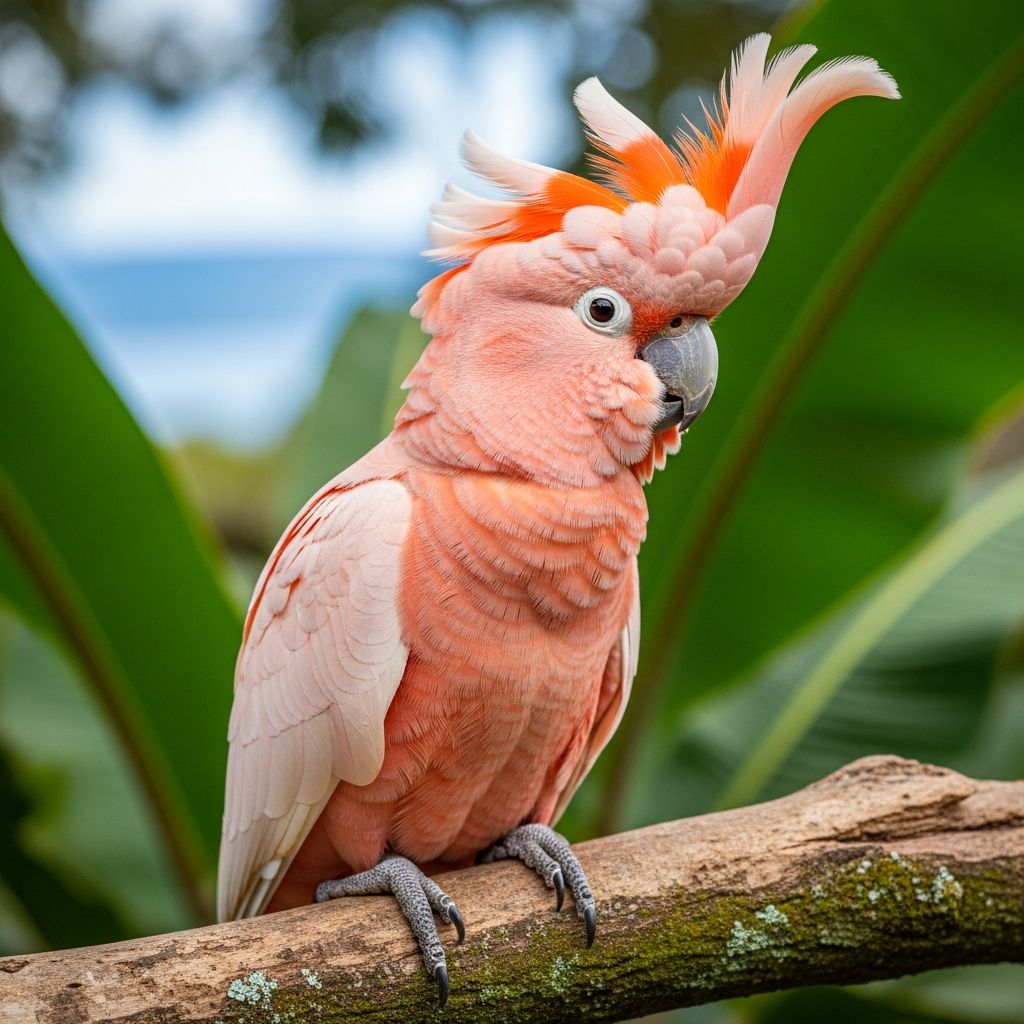
What Is A Moluccan Cockatoo?
The Moluccan cockatoo is a favorite among bird fanciers due to its striking appearance and wonderful temperament. Moluccans are also called salmon-crested cockatoos because of the salmon-pink feathers that comprise most of their head crest, which they will display when they are excited, angry, afraid, or thrilled with something. This magnificent bird represents one of the most captivating species in the parrot world, combining stunning aesthetics with a complex and engaging personality.
The Moluccan is a large bird, one of the largest white cockatoo species, but can range in size, reportedly because the region in which they are found in the wild is large enough to support subspecies. The Moluccan cockatoo is a rosy-pink color, with the depth of the pinkness varying per individual. The feet and beak are black, but are generally covered with powder down, which make them look gray—don’t worry, this is absolutely healthy. With a robust build, they can reach lengths of up to 20 inches from head to tail, and can weigh up to 35 ounces. Females are usually larger than males.
Physical Characteristics & Distinctive Features
One of the most captivating features of the Moluccan Cockatoo is its magnificent retractable crest. Unlike any other, this crest, when fully extended, reveals a stunning display of bright red-orange plumes. This dazzling spectacle is not just for show; the cockatoo uses it as a means of communication. When excited, threatened, or when trying to impress a mate, the Moluccan Cockatoo raises its crest to express its emotions or to intimidate potential predators. The strong, curved beak is not only a tool for cracking open hard nuts and seeds but also serves as a ‘third foot’ when climbing around their forested habitats. Their beak has a bite force of about 350 psi—equivalent to a Husky dog’s bite strength.
Moluccan cockatoos possess zygodactyl feet, with two toes pointing forward and two pointing backward. This unique foot structure gives them excellent dexterity, allowing them to hold food and navigate through trees with ease. These birds don’t have oil glands and instead release small particles that preserve their feathers and keep them clean, a trait shared across the cockatoo family.
Personality & Behavior
Moluccans would like nothing more than to be sewn to your body 24 hours a day. They crave attention and love, and can become obsessive because of this trait. They are not very good at “playing alone” and will constantly vie for your attention. If you have the attention to give, great—you will have a happy bird. They are the perfect bird for a shut-in, or someone who is home much of the day. All they want is to be held and cuddled all the time.
These highly affectionate birds build a deep bond with their owners as they love socializing and interacting with humans. They are highly intelligent and social creatures, known for their ability to mimic sounds and for forming strong, lifelong bonds with their mates. In the wild, Moluccan cockatoos are shy and cautious birds. They are generally seen either alone or in very small groups, and are most visible early and late in the day.
When excited, these cockatoos will raise their crest, stamp their feet and clack their bills. It’s important to note that Moluccan cockatoos may react to sudden changes in your appearance, such as wearing glasses or changing your hairstyle or color. Cockatoos are known to throw a fit of rage when they encounter such situations. The color yellow agitates them considerably more than other colors.
Speech & Sound Characteristics
In terms of noise, the Moluccan cockatoo can out-volume and out-yell any other bird. They seem to scream for no reason, whether they are happy or afraid, and even in the middle of the night! Their vocalizations can reach over 130 decibels—about as loud as a jet engine! Because of their loud voice, they seem to be given away or become neglected more than any other species of bird—it takes a very special household (and special neighbors) to be able to live peacefully with a Moluccan.
Moluccan cockatoos have loud, piercing calls that carry long distances. They tend to vocalize twice a day, once in the morning and once in the evening. Moluccan cockatoos use their powerful calls to communicate over long distances in the dense rainforests where they live. Though their vocalizations may seem jarring to us, they are essential for survival in their natural habitat.
They are not known to be great talkers, but they will mimic a few words—actually, they will be more likely to yell them. In addition to their impressive vocal range, Moluccan cockatoos can mimic human speech, and can enjoy saying their name and calling themselves a “pretty girl” on their talkative days. These birds don’t just rely on sound; they also use their feathers to communicate. Their crest and the feathers around their beak puff up to express emotions, much like a human’s facial expressions.
But talking is not why people love Moluccan cockatoos—this bird is most prized for its affectionate nature. Moluccan cockatoos can mimic many animals and people, which can be extremely amusing.
Diet & Nutrition
Moluccan cockatoos require a balanced and nutritious diet to maintain optimal health. In the wild, their diet consists of seeds, nuts, fruits, berries and occasionally insects. When kept in captivity, they should be provided with high-quality parrot food that mimics their natural diet as closely as possible.
A proper diet is crucial for preventing obesity and fatty liver disease, two common health conditions in captive Moluccans. Foods should be varied and include fresh fruits, vegetables, high-quality pellets, and limited amounts of nuts and seeds. It’s important to note that they are known to hold their food in one foot and break it using their beaks, so providing appropriately-sized food items is essential. Moluccan cockatoos are not popular birds in coconut plantations, as they attack young coconuts, chew through the tough outer layer, and reach the soft inner pulp, which they feed on.
Health & Common Conditions
Moluccan cockatoos are prone to picking at or pulling out their feathers if not offered sufficient mental stimulation. This self-destructive behavior, known as feather plucking or feather picking, is one of the most common behavioral and health issues seen in captive Moluccans. Providing adequate social interaction, enrichment activities, and mental stimulation is critical to preventing this condition.
Other diseases and conditions found in cockatoos include psittacine beak and feather disease (PBFD), fatty liver disease and obesity if fed a diet too high in fat. Regular veterinary check-ups, a balanced diet, and appropriate exercise are essential components of maintaining the health of your Moluccan cockatoo. An attack from a Moluccan can be very sudden and unexpected if you cannot read their behaviour, so understanding their body language and emotional states is important for safe ownership.
Care Requirements
Moluccan cockatoos require substantial care and commitment from their owners. They need regular social contact and are gregarious birds that gather in large flocks to feed in their natural habitat. In captivity, they need access to spacious caging, plenty of toys for mental enrichment, and daily interaction with their human caregivers.
These birds are considered extremely needy and constantly demand the affection of their human counterpart. Their intelligence level makes Moluccans notorious cage escape artists, so secure housing is imperative. They need access to natural light, proper humidity levels, and a temperature-controlled environment to thrive. Additionally, cockatoos are dusty, meaning they “shed” a fine particulate, so regular cleaning of their living space is necessary.
Lifespan & Long-Term Commitment
Moluccan cockatoos have a lifespan of 30+ years, making them a serious long-term commitment. Some individuals may live even longer, potentially 50+ years with proper care. This extended lifespan means that acquiring a Moluccan cockatoo is a decision that will impact the next several decades of your life. Owners must be prepared for this commitment and understand that these birds require consistent care, attention, and love throughout their entire lives.
Is A Moluccan Cockatoo Right For You?
Before acquiring a Moluccan cockatoo, potential owners should carefully consider their lifestyle, living situation, and commitment level. These birds are ideal for individuals who work from home, are retired, or have flexible schedules that allow for extended daily interaction. They are not suitable for apartment dwellers with noise-sensitive neighbors due to their exceptional volume. Additionally, being able to tolerate ear-splitting screeches of a magnitude seldom encountered in the avian world is essential.
Prospective owners must also be willing to love and care for the bird even when it is feather-plucked or self-mutilating, as behavioral issues can arise from stress or insufficient attention. Moluccan cockatoos require owners who can provide genuine affection, mental stimulation, proper nutrition, and veterinary care throughout the bird’s lengthy lifespan.
Frequently Asked Questions (FAQs)
Q: How loud are Moluccan cockatoos?
A: Moluccan cockatoos are among the loudest birds in the world, with vocalizations reaching over 130 decibels. They can out-volume and out-yell virtually any other bird species and vocalize twice daily, typically in the morning and evening.
Q: Do Moluccan cockatoos talk?
A: While not known as great talkers, Moluccan cockatoos can mimic some words, though they tend to yell them rather than speak clearly. They are primarily valued for their affectionate nature rather than talking ability.
Q: How long do Moluccan cockatoos live?
A: Moluccan cockatoos typically live 30+ years in captivity, with some individuals living 50 years or longer. This makes them a lifelong commitment requiring decades of dedication.
Q: What do Moluccan cockatoos eat?
A: In the wild, they eat seeds, nuts, fruits, berries, and occasionally insects. In captivity, they should be fed high-quality parrot food, fresh fruits, vegetables, and limited amounts of nuts to prevent obesity and fatty liver disease.
Q: Are Moluccan cockatoos good pets for apartment living?
A: No, Moluccan cockatoos are not suitable for apartment living due to their extreme noise levels. They require special households with understanding neighbors and are best suited for homes where noise is not a concern.
Q: What causes feather plucking in Moluccan cockatoos?
A: Feather plucking typically results from insufficient mental stimulation, inadequate social interaction, or stress. Providing plenty of attention, enrichment activities, and toys can help prevent this behavioral issue.
Q: How big do Moluccan cockatoos get?
A: Moluccan cockatoos can reach up to 20-21 inches in length and weigh up to 35 ounces, making them one of the largest cockatoo species. Females are typically larger than males.
Q: What is special about the Moluccan cockatoo’s crest?
A: The Moluccan cockatoo’s crest is salmon-pink and retractable, displaying bright red-orange plumes when fully extended. They raise it to communicate emotions, intimidate predators, or during excitement and mating displays.
References
- Moluccan Cockatoo Personality, Food & Care — Lafeber Company. Accessed November 2025. https://lafeber.com/pet-birds/species/moluccan-cockatoo/
- Moluccan Cockatoo — Dallas World Aquarium. Accessed November 2025. https://dwazoo.com/animal/moluccan-cockatoo/
- Moluccan Cockatoo: Communication, Loud, Clever, and Expressive — Saginaw Children’s Zoo. Accessed November 2025. https://www.saginawzoo.com/moluccan-cockatoo/
- What to Know About Moluccan Cockatoos — WebMD. Accessed November 2025. https://www.webmd.com/pets/what-to-know-about-moluccan-cockatoo
- Meet the Majestic Moluccan Cockatoo: Our Newest Birdorable — Birdorable. Accessed November 2025. https://www.birdorable.com/blog/moluccan-cockatoo-what-a-crest
- Moluccan Cockatoo – Profile & Care Guide — Parrot Essentials. Accessed November 2025. https://parrotessentials.co.uk/blog/moluccan-cockatoo-profile-care-guide
- Salmon-crested Cockatoo — Los Angeles Zoo and Botanical Gardens. Accessed November 2025. https://lazoo.org/explore-your-zoo/our-animals/birds/salmon-crested-cockatoo/
- Moluccan Cockatoo Fact Sheet — Northern Parrots. Accessed November 2025. https://www.northernparrots.com/blog/moluccan-cockatoo-fact-sheet/
Similar Articles








Read full bio of Sneha Tete


