

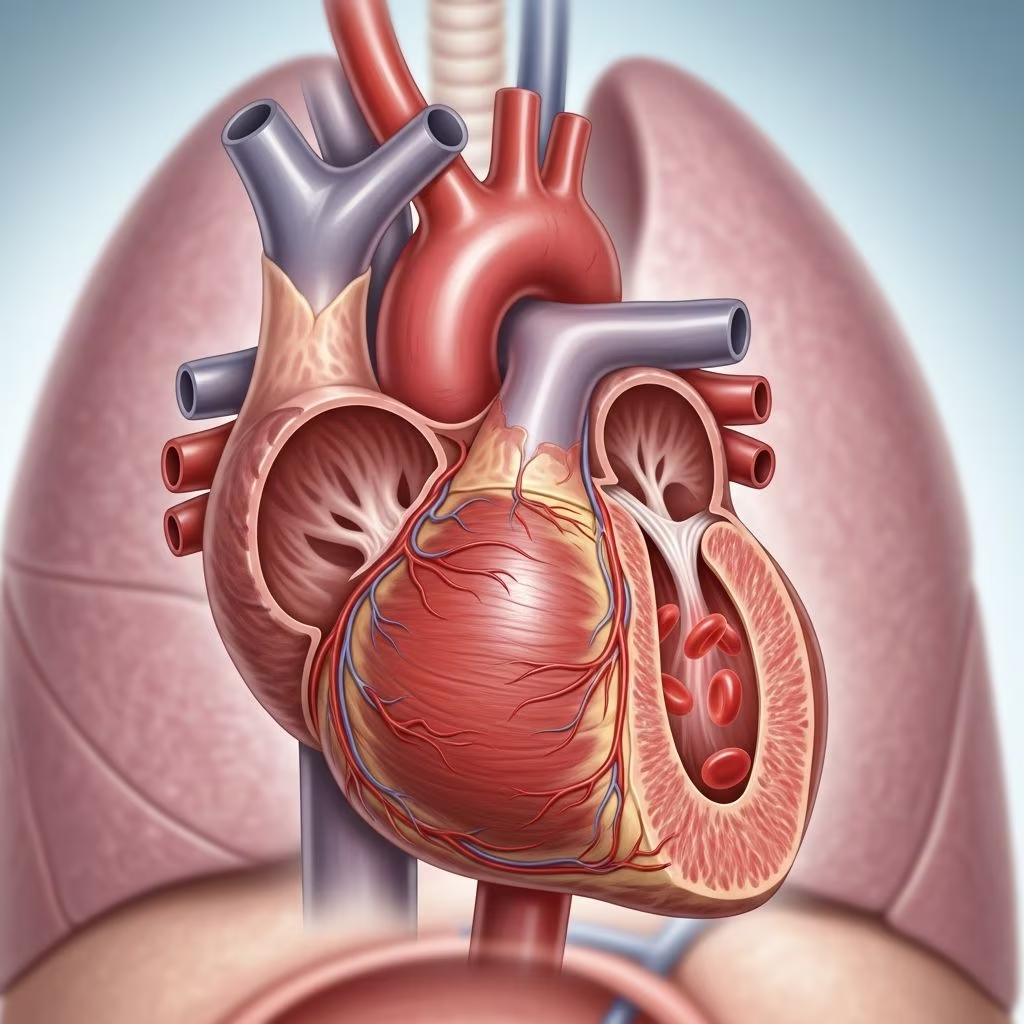
The most prevalent heart condition in canines, particularly small breeds, is myxomatous mitral valve disease (MMVD), often simply called mitral valve disease. This progressive ailment involves degeneration of the mitral valve, leading to blood leakage that strains the heart over time. While incurable, proactive management can significantly enhance a dog’s comfort and longevity.
Understanding the Heart’s Mitral Valve
The heart features four valves ensuring one-way blood flow. The mitral valve, situated between the left atrium and ventricle, prevents backflow during contractions. In MMVD, the valve leaflets thicken and weaken due to mucinous degeneration, causing regurgitation where blood flows backward into the atrium instead of fully pumping into the aorta.
This inefficiency prompts the heart to enlarge and work harder, potentially culminating in congestive heart failure (CHF). Small breeds like Cavalier King Charles Spaniels, Chihuahuas, and Pomeranians face higher risks, with incidence rising sharply after age 8.
Who Is at Risk? Breeds and Age Factors
- Predisposed breeds: Cavalier King Charles Spaniel (up to 80% affected by age 10), Chihuahua, Dachshund, Maltese, Miniature Poodle, Papillon, Pomeranian, Shih Tzu, Toy Poodle.
- Age profile: Rare in puppies; common in seniors over 7 years, peaking in those over 10.
- Gender and neuter status: No strong correlations, though some studies note slight male predisposition.
Genetic factors play a key role, making routine auscultation vital during senior wellness exams to detect early murmurs.
Recognizing Early Warning Signs
In initial phases, dogs often appear normal, with the only indicator being a heart murmur heard via stethoscope. As regurgitation worsens, clinical signs emerge:
- Coughing, especially nocturnal or post-exercise.
- Exercise intolerance: Tires quickly, resists play.
- Rapid or labored breathing (over 35 breaths/min at rest).
- Weakness, lethargy, or fainting (syncope).
- Restlessness: Unable to settle comfortably.
- Reduced appetite and weight loss in advanced cases.
Pulmonary edema from fluid buildup in lungs marks CHF onset, presenting as severe breathing distress requiring urgent care. Monitor resting respiratory rate (RRR) at home: consistently above 60 breaths/min signals emergency.
ACVIM Staging: Tracking Disease Progression
The American College of Veterinary Internal Medicine (ACVIM) classifies MMVD into four stages to guide treatment:
| Stage | Description | Typical Interventions |
|---|---|---|
| A | High-risk breed with no murmur or imaging changes. | Monitoring every 6-12 months. |
| B1 | Murmur present; normal heart size on radiographs/echo. | Regular monitoring; no meds. |
| B2 | Murmur with cardiomegaly; no CHF signs. | Pimobendan; consider ACE inhibitors. |
| C | Current or past CHF; responds to treatment. | Diuretics, pimobendan, ACE inhibitors. |
| D | Refractory CHF; poor response to standard therapy. | Hospitalization, aggressive dosing, oxygen. |
Staging relies on echocardiography, chest X-rays, and blood tests like NT-proBNP, which quantifies heart stress.
Diagnostic Approaches for Accurate Assessment
Veterinarians start with physical exams to detect murmurs graded 1-6 by intensity. Confirmatory tests include:
- Chest radiographs: Assess heart enlargement, lung fluid.
- Echocardiography: Gold standard; visualizes valve structure, regurgitation severity, chamber sizes.
- NT-proBNP blood test: Elevated levels indicate heart strain or failure.
- Electrocardiogram (ECG): Checks arrhythmias.
- Blood pressure: Monitors hypertension.
Referral to a veterinary cardiologist is recommended for echoes, enabling precise staging and tailored plans.
Medical Management Strategies
Treatment targets symptom relief, heart workload reduction, and progression delay. No cure exists, but therapies extend life:
- Pimobendan: Inotrope and vasodilator; strengthens contractions, improves blood flow. Initiated at B2.
- ACE inhibitors (e.g., enalapril, benazepril): Reduce afterload, prevent remodeling.
- Diuretics (furosemide, torsemide): Eliminate lung fluid in CHF.
- Others: Spironolactone (diuretic/anti-fibrotic), sildenafil (pulmonary hypertension).
Stage A/B1: Surveillance suffices. B2/C/D: Multi-drug regimens, adjusted via follow-ups. Acute CHF demands hospitalization with IV diuretics, oxygen, nitroglycerin.
Lifestyle Adjustments for Heart Health
Support meds with home care:
- Diet: Low-sodium prescription formulas; avoid table scraps, salty treats. Omega-3 supplements aid cardiac function.
- Exercise: Short, gentle walks; prevent overexertion.
- Monitoring: Daily RRR counts; weekly weights. Log coughs, energy levels.
- Weight control: Obesity exacerbates strain.
- Dental care: Prevent endocarditis from oral bacteria.
Re-checks every 3-6 months track progress; dose tweaks common as disease advances.
Prognosis: What to Expect Long-Term
Outcomes vary by stage at diagnosis:
- Stage B1/B2: Normal lifespan possible with pimobendan delaying CHF.
- Stage C: 1-2 years post-CHF with good response.
- Stage D: Months; palliative focus.
Early intervention via EPIC trial showed pimobendan extended B2 life by 60%. Sudden death risk exists from arrhythmias, but monitoring mitigates. Quality over quantity: Many dogs enjoy active lives years post-diagnosis.
FAQs on Mitral Valve Disease in Dogs
Can my dog live a normal life with a heart murmur?
Yes, many with mild murmurs (B1) thrive without meds, just monitoring.
Is surgery an option for MMVD?
Rarely; valve repair/replacement at specialized centers, not routine due to cost, risks.
How do I check my dog’s breathing rate at home?
Count chest rises for 60 seconds while resting/sleeping. Normal: <35/min.
Does diet alone manage MMVD?
No; low-sodium helps but meds essential for moderate/advanced stages.
When should I see a cardiologist?
If murmur grade 3+, echo recommended; always for CHF signs.
Emerging Research and Future Directions
ACVIM guidelines evolve; recent studies explore ARN inhibitors like sacubitril/valsartan. Gene therapies and anti-fibrotic drugs hold promise. Ongoing trials via Morris Animal Foundation advance understanding. Stay informed via vet consultations.
References
- Degenerative Mitral Valve Disease in Dogs: Symptoms & Treatment — Atlantic Coast Vet. 2024-01-15. https://www.atlanticcoastvet.com/site/blog-long-island-vet/2024/01/15/degenerative-mitral-valve-disease-dogs
- Mitral Valve Disease in Dogs – Morris Animal Foundation — Morris Animal Foundation. Accessed 2026. https://www.morrisanimalfoundation.org/article/mitral-valve-disease-dogs-understanding-and-managing-most-common-canine-heart-condition
- Mitral Valve Disease in Dogs — PetMD. Accessed 2026. https://www.petmd.com/dog/conditions/cardiovascular/mitral-valve-disease-dogs
- Myxomatous Mitral Valve Disease (MMVD) in Dogs — TACC Vets. Accessed 2026. https://taccvets.com/post/myxomatous-mitral-valve-disease-mmvd-in-dogs
- Mitral Valve Disease in Dogs — VCA Animal Hospitals. Accessed 2026. https://vcahospitals.com/know-your-pet/mitral-valve-disease-in-dogs
- ACVIM consensus guidelines for the diagnosis and treatment of myxomatous mitral valve disease in dogs — PMC/NCBI (NC State Vet Med). 2019-05-01. https://pmc.ncbi.nlm.nih.gov/articles/PMC6524084/



