

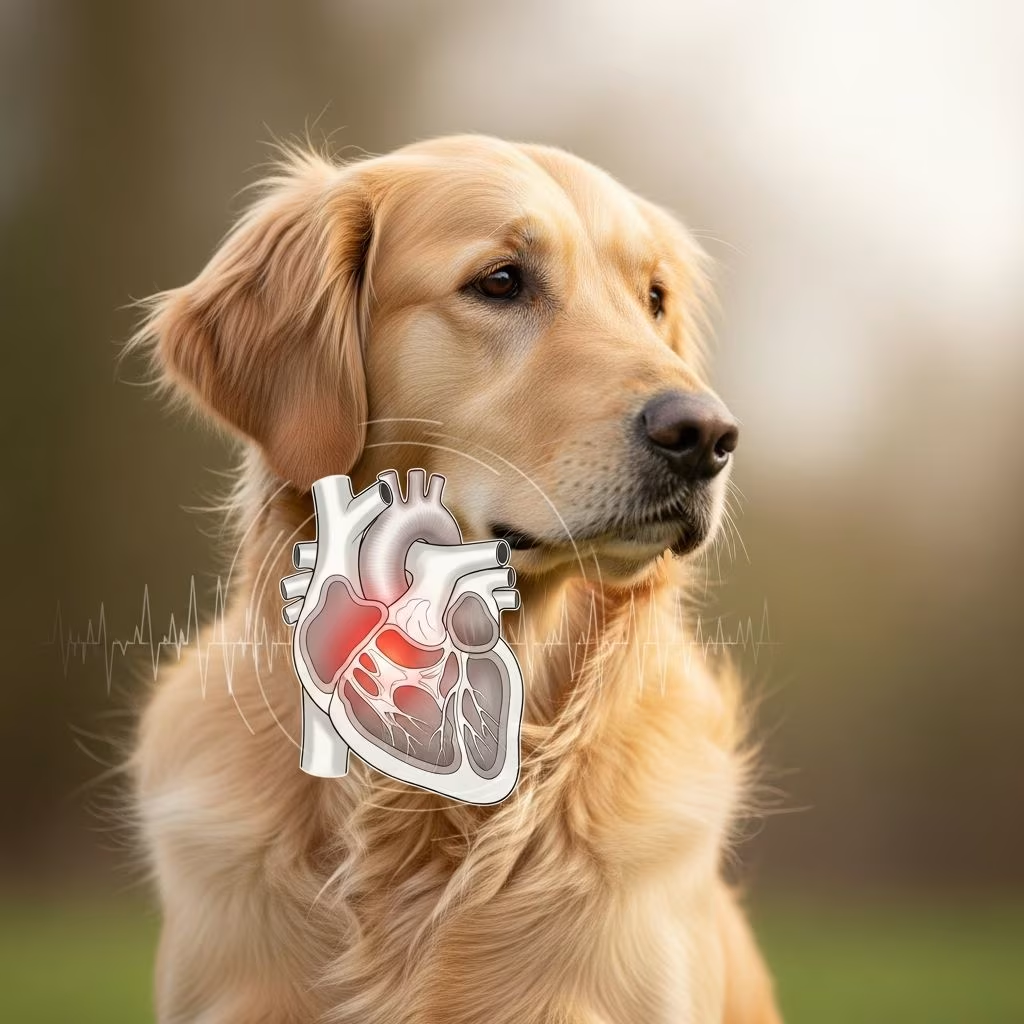
Mitral Valve Disease in Dogs: A Comprehensive Guide
Mitral valve disease (also known as degenerative mitral valve disease or myxomatous mitral valve disease) represents one of the most prevalent cardiac conditions affecting dogs today. This progressive heart condition occurs when the mitral valve—a crucial component of the heart’s pumping mechanism—begins to deteriorate over time. Understanding this disease is essential for dog owners, as early detection and proper management can significantly improve a dog’s quality of life and potentially extend their lifespan.
What Is Mitral Valve Disease?
The mitral valve is responsible for regulating blood flow between the left atrium and left ventricle of the heart. When this valve degenerates, it fails to close properly, allowing blood to leak backward into the atrium—a condition known as regurgitation. This backward flow reduces the heart’s efficiency as a pump, forcing it to work harder to circulate blood throughout the body. Over time, the heart muscle compensates by becoming thicker and enlarging, which can eventually lead to congestive heart failure if left untreated.
Mitral valve disease is particularly common in small dog breeds, with the Cavalier King Charles Spaniel being one of the most susceptible breeds. However, dogs of any age, size, or breed can develop this condition, though it is more prevalent in older dogs.
Understanding the Progression of Mitral Valve Disease
One of the most important aspects of mitral valve disease is recognizing that it is a progressive condition. In its early stages, the disease typically produces no obvious clinical signs, meaning your dog may appear completely healthy despite having a heart murmur detected during a veterinary examination. This asymptomatic phase is why regular veterinary check-ups are crucial, as veterinarians can identify heart murmurs before symptoms develop.
As the disease progresses, regurgitation becomes increasingly severe, and more blood flows backward into the atrium. The heart’s efficiency continues to decline, and the organ becomes further enlarged. Eventually, the heart can no longer keep up with the body’s demands, and fluid accumulates in the lungs—a condition called pulmonary edema. At this point, the dog develops congestive heart failure, which requires more intensive medical management.
It’s important to note that a heart murmur does not necessarily mean heart failure is imminent. From the time a murmur develops, it may take months to several years before congestive heart failure occurs. However, dogs with a heart murmur do carry an increased risk of sudden death, making ongoing monitoring essential.
Clinical Signs and Symptoms
While early-stage mitral valve disease often goes unnoticed, as the condition progresses, various clinical signs may become apparent. Dog owners should be alert to the following symptoms:
Common Symptoms of Mitral Valve Disease
- Persistent coughing, especially after lying down or during sleep
- Coughing that worsens at night
- Exercise intolerance and tiring easily after minimal exertion
- Rapid or labored breathing
- Increased respiratory effort or shortness of breath
- Panting more than usual
- Low energy and reluctance to engage in normal activities
- Slowing down during walks or play
- Weight loss
- Collapse or fainting episodes
- Difficulty resting comfortably and moving around excessively
- Decreased appetite
- Clear nasal discharge
- Heart murmur detected by a veterinarian
It’s crucial to understand that many young dogs with early mitral valve disease exhibit very few symptoms, and an owner might mistake subtle signs for the natural slowing down that accompanies aging. However, any persistent coughing, especially in older dogs, warrants immediate veterinary evaluation.
Diagnosis of Mitral Valve Disease
Accurate diagnosis is fundamental to developing an appropriate treatment plan. Veterinarians employ several diagnostic tools to assess the presence and severity of mitral valve disease:
Diagnostic Methods
Physical Examination and Auscultation
During a routine physical exam, a veterinarian listens to the heart using a stethoscope. A heart murmur—an abnormal sound caused by the regurgitation of blood—is often the first indication of mitral valve disease. The intensity and character of the murmur can provide information about the severity of the condition.
Radiography (X-Rays)
Chest X-rays provide valuable information about the internal structures of the heart and lungs. Radiography can reveal whether the heart has enlarged and whether fluid has accumulated in the lungs—a key finding that indicates congestive heart failure. X-rays are particularly useful for monitoring disease progression over time.
Echocardiography (Ultrasound)
Echocardiography is the gold standard diagnostic tool for assessing mitral valve disease. This ultrasound examination allows veterinarians to visualize the structure of the heart and its valves in detail, assess how blood is flowing through the chambers, measure the size of the heart, and determine the severity of valve dysfunction. Echocardiography is often performed by veterinary cardiologists and provides the most comprehensive assessment of heart function.
Blood Tests
Specific blood tests can help determine the severity of heart disease. The NT-proBNP test measures a hormone that the heart releases when stressed, helping to identify whether heart failure is present, particularly when significant blood regurgitation occurs. Additional blood work may assess kidney and liver function, which is important before starting certain medications.
Your veterinary cardiologist will determine which combination of these diagnostic tools is most appropriate for your dog’s specific situation to guide treatment decisions.
Staging of Mitral Valve Disease
Veterinarians classify mitral valve disease into stages to standardize diagnosis and guide treatment recommendations:
Stage A: Dogs at risk for developing the disease but with no structural heart disease detected.
Stage B1: Heart murmur is present, but no other structural changes are visible on imaging, and the dog shows no symptoms.
Stage B2: Significant cardiac enlargement is present on imaging, and more blood leakage is evident. This stage typically marks the beginning of medication therapy.
Stage C: Dogs have developed congestive heart failure and display clinical symptoms. Standard medication doses are used for treatment.
Stage D: Advanced congestive heart failure is present, and dogs are not adequately responding to standard medication doses. Very aggressive medication regimens are necessary, often requiring hospitalization with oxygen support and intravenous medications.
Treatment Options for Mitral Valve Disease
Currently, there is no cure for mitral valve disease in dogs. However, treatment focuses on managing symptoms, slowing disease progression, and maintaining the dog’s quality of life. Treatment strategies vary depending on the disease stage and severity of symptoms.
Medical Management Through Medications
Diuretics
Diuretic medications such as furosemide and torsemide are among the most commonly prescribed treatments. These drugs work by removing excess fluid from the body, reducing congestion in the lungs and alleviating the workload on the heart. Diuretics are typically prescribed when fluid accumulation becomes apparent or when the dog progresses to Stage B2 or later.
Angiotensin-Converting Enzyme (ACE) Inhibitors
ACE inhibitors like enalapril and benazepril help lower blood pressure and reduce the resistance to blood flowing out of the heart, making it easier for the compromised heart to pump effectively. These medications can help slow disease progression and are often prescribed early to prevent further deterioration.
Inotropes and Inodilators
Pimobendan is an inodilator medication that strengthens heart muscle contractions and improves cardiac function. Previously used primarily in advanced heart failure stages, pimobendan is now often recommended in earlier stages of mitral valve disease as research suggests it may slow disease progression, though this remains an area of ongoing clinical debate. Digoxin, a cardiac glycoside, is another inotropic medication historically used for rhythm disturbances such as atrial fibrillation, though it requires careful monitoring due to potential side effects.
Additional Medications
Depending on your dog’s individual circumstances, veterinarians may recommend additional medications to address specific complications. For example, sildenafil may be prescribed for pulmonary hypertension, and other diuretic options may be considered based on the dog’s response to initial treatment.
Dietary Management
Dietary modifications play an important supportive role in managing mitral valve disease. A low-sodium or low-salt diet can help prevent the excessive retention of fluid in the body, reducing strain on the heart. Many veterinary prescription diets specifically formulated for cardiac patients are available. Additionally, owners should avoid giving high-salt treats to dogs with mitral valve disease, as sodium intake directly impacts fluid retention and can worsen symptoms.
Activity and Lifestyle Modifications
While dogs with mitral valve disease should maintain appropriate activity levels, strenuous exercise should be limited, particularly as the disease progresses. Dogs should be allowed to exercise at their own pace and should have access to rest and recovery time. Stress reduction and maintaining a calm environment can also help minimize cardiac strain.
Monitoring and Follow-Up Care
Dogs with mild mitral valve disease that haven’t yet developed symptoms may not require medication initially but will need regular veterinary monitoring. One of the most helpful things owners can do at home is regularly record their dog’s resting breathing rate (the number of breaths taken per minute while sleeping). An abnormally elevated resting breathing rate may indicate progression of the disease and warrant a veterinary visit. Regular check-ups allow veterinarians to detect progression early and adjust treatment plans accordingly.
Hospitalization and Emergency Care
Dogs experiencing acute congestive heart failure (Stages C and D) may require hospitalization for stabilization. During hospitalization, dogs receive supplemental oxygen, injectable medications, and intensive monitoring to improve their condition. Once stabilized on oral medications, most dogs can transition to home care with their families, though ongoing veterinary management remains necessary.
Prognosis and Long-Term Outlook
The prognosis for mitral valve disease varies widely depending on the individual dog, the stage at which the disease is detected, and how well the dog responds to treatment. Some dogs remain in Stage B1 indefinitely, with their lifespan remaining unaffected by the disease. Other dogs progress steadily through the stages. Once a dog has advanced to Stage C (congestive heart failure), the prognosis becomes more guarded, though many dogs continue to live comfortably with appropriate medical management.
Early detection through regular veterinary examinations is one of the most significant factors affecting long-term outcomes. Dogs identified as having a heart murmur while still asymptomatic can begin preventative treatment, potentially slowing or delaying the onset of congestive heart failure.
Frequently Asked Questions About Mitral Valve Disease in Dogs
Q: Can mitral valve disease in dogs be cured?
A: No, there is currently no known cure for mitral valve disease in dogs. However, with appropriate medication, dietary management, and monitoring, most dogs can be well-managed, and their quality of life can be maintained for several years or more. Treatment focuses on slowing disease progression and managing symptoms.
Q: How long can a dog live with mitral valve disease?
A: The lifespan varies significantly depending on the stage at diagnosis and individual factors. Some dogs with early-stage disease live normal lifespans with minimal impact. Dogs diagnosed with congestive heart failure (Stage C or D) may live months to several years with appropriate treatment and management.
Q: Which dog breeds are most susceptible to mitral valve disease?
A: While any breed can develop mitral valve disease, small breeds are particularly susceptible, with Cavalier King Charles Spaniels being one of the most commonly affected breeds. Other small breeds also show higher prevalence rates.
Q: How often should dogs with mitral valve disease be examined by a veterinarian?
A: Dogs with mitral valve disease should be examined at least annually, though those showing symptoms or in advanced stages may require more frequent visits. Your veterinarian will recommend an appropriate examination schedule based on your dog’s individual condition and stage of disease.
Q: What should I do if my dog collapses or faints?
A: Collapse or fainting episodes require immediate veterinary attention, as they may indicate advanced disease or complications. Contact your veterinarian or emergency veterinary clinic promptly if your dog experiences syncope (fainting).
Q: Is mitral valve disease hereditary in dogs?
A: While genetic predisposition appears to play a role, particularly in certain breeds like Cavalier King Charles Spaniels, the exact inheritance pattern is not fully understood. Dogs with a family history of mitral valve disease should receive regular cardiac screening.
References
- Degenerative Mitral Valve Disease in Dogs: Symptoms & Treatment — Atlantic Coast Veterinary Conference. 2024-01-15. https://www.atlanticcoastvet.com/site/blog-long-island-vet/2024/01/15/degenerative-mitral-valve-disease-dogs
- Mitral Valve Disease in Dogs – Morris Animal Foundation — Morris Animal Foundation. https://www.morrisanimalfoundation.org/article/mitral-valve-disease-dogs-understanding-and-managing-most-common-canine-heart-condition
- Mitral Valve Disease in Dogs — PDSA (People’s Dispensary for Sick Animals). https://www.pdsa.org.uk/pet-help-and-advice/pet-health-hub/conditions/mitral-valve-disease-in-dogs
- Mitral Valve Disease in Dogs — PetMD. https://www.petmd.com/dog/conditions/cardiovascular/mitral-valve-disease-dogs
- Mitral Valve Disease in Dogs — VCA Animal Hospitals. https://vcahospitals.com/know-your-pet/mitral-valve-disease-in-dogs
- ACVIM Consensus Guidelines for the Diagnosis and Treatment of Myxomatous Mitral Valve Disease in Dogs and Cats — American College of Veterinary Internal Medicine. 2019. https://pmc.ncbi.nlm.nih.gov/articles/PMC6524084/
- Myxomatous Mitral Valve Disease in Dogs – Veterinary Cardiology — NC State University College of Veterinary Medicine. https://hospital.cvm.ncsu.edu/services/small-animals/cardiology/myxomatous-mitral-valve-disease-in-dogs/



