

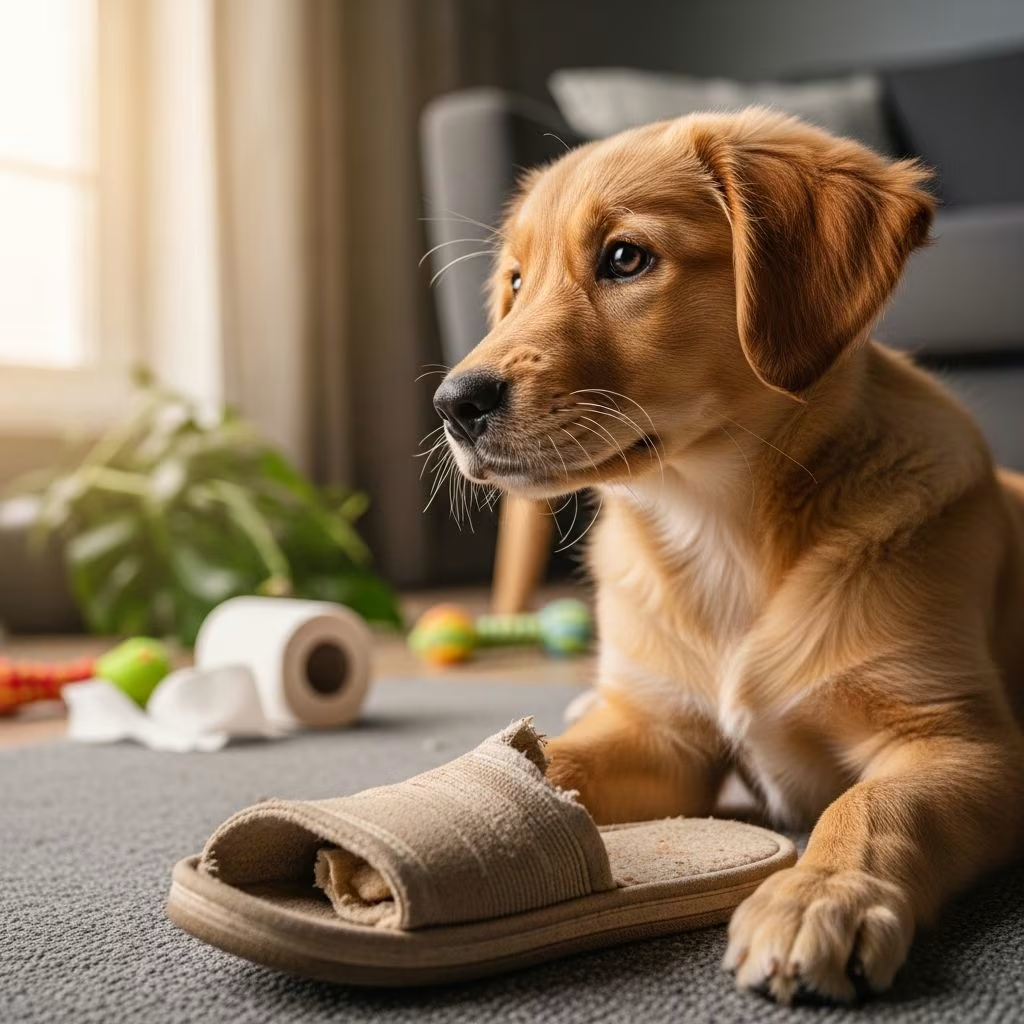
Common Mistakes New Puppy Parents Make
Bringing a new puppy home is an exciting and rewarding experience, but it also comes with significant responsibilities. New puppy parents often make well-intentioned mistakes that can negatively impact their puppy’s development, training, and behavior. Understanding these common pitfalls and learning how to avoid them is essential for establishing a strong foundation during your puppy’s critical early months. This guide covers the most frequent errors new puppy owners make and provides practical solutions to help your puppy thrive.
1. Lack of Early Socialization
One of the most critical mistakes new puppy parents make is postponing or neglecting socialization. Socialization is the process of exposing your puppy to various people, animals, environments, and experiences in a positive way during their early developmental months. Puppies have a critical socialization window that typically closes around 16 weeks of age, making early exposure paramount.
Puppies that lack proper socialization often develop fear, anxiety, and aggression issues later in life. They may become reactive to unfamiliar people, other dogs, or new environments. To avoid this mistake, enroll your puppy in a reputable puppy kindergarten or training class as soon as they’ve received their initial vaccinations. Gradually introduce them to different sounds, surfaces, people of various ages, and friendly dogs. Create positive associations with new experiences by pairing them with treats and praise.
2. Failing to Build Your Puppy’s Confidence
While keeping your puppy safe is important, overprotecting them can hinder confidence development. Puppies look to their owners for guidance and reassurance, and they need opportunities to experience manageable challenges to build self-assurance. When owners shelter puppies from new experiences and constantly comfort them during scary situations, they inadvertently reinforce fearful behavior.
To build confidence effectively, provide structured exposure to new experiences, engage in enrichment activities, and use relationship-based training methods. Puzzle toys, nose work games, and interactive play sessions encourage problem-solving and independence in safe contexts. Praise and reward your puppy for brave behavior rather than coddling them when they’re uncertain. This balanced approach helps develop a confident, adaptable adult dog.
3. Providing Too Much Freedom Too Soon
One of the biggest mistakes new puppy parents make is giving their puppy excessive unsupervised freedom. Puppies are naturally curious and lack impulse control, making them prone to getting into dangerous situations or developing bad habits when left unsupervised. Free-roaming puppies may access hazardous items, have potty accidents throughout the home, chew on inappropriate objects, or escape.
Instead of allowing complete freedom, use a structured approach that includes crate training and supervision. Puppies should only have access to puppy-proofed areas when monitored. When you cannot supervise, confine your puppy to a safe space such as a crate or playpen. This management strategy prevents problem behaviors from developing in the first place and makes training significantly easier. Gradually increase freedom as your puppy demonstrates reliable behavior and house training.
4. Delaying Basic Training
Many new puppy parents believe training should wait until their puppy is older, but this is a significant mistake. Puppies as young as eight weeks old are capable of learning basic obedience commands and understanding house rules. The earlier you establish training, the easier it is to shape behavior and prevent bad habits from forming.
Begin training from day one with simple commands such as \”sit,\” \”down,\” \”stay,\” and \”come.\” Keep training sessions short (5-10 minutes), positive, and fun. Use high-value treats and enthusiastic praise to motivate your puppy. Clear, consistent commands delivered in a calm tone are more effective than lengthy explanations. Remember that puppies don’t understand human language, so use single-word cues and reward the desired behavior immediately. Starting early establishes your role as a leader and creates a well-mannered pet from the beginning.
5. Repeating Commands Multiple Times
A common training mistake is repeating commands excessively, such as saying \”sit, sit, sit\” before praising your puppy. This practice actually desensitizes puppies to the command, teaching them that one instance of the cue isn’t sufficient. Your puppy learns to ignore you until you repeat the command enough times, making obedience training less effective.
Instead, give your command clearly and distinctly just once, then immediately reward compliance. If your puppy doesn’t respond, guide them into the correct position and reward the completed behavior. This one-command approach teaches your puppy to listen and respond on the first cue. Consistency is key—everyone in your household should follow this method to avoid confusing your puppy.
6. Using Inconsistent Commands or Cues
Another training error is using multiple words or phrases for the same behavior. For example, saying both \”down\” to mean lie down and \”get down\” to mean get off the couch confuses puppies. Similarly, using \”come here,\” \”come,\” and \”come on\” interchangeably can hinder learning.
Choose a single, clear cue for each behavior and use it consistently across all family members and training sessions. Write down your chosen commands and teach everyone in the household to use them identically. This consistency helps your puppy learn faster and prevents confusion that can undermine training progress.
7. Free Feeding Your Puppy
Free feeding—leaving food out all day for your puppy to eat whenever they want—is a mistake that undermines training effectiveness and complicates house training. When food is constantly available, puppies lose their food motivation, which is one of the most powerful training rewards. Feeding from a bowl also turns eating into a mundane routine rather than an exciting, engaging experience.
Instead, feed your puppy on a consistent schedule (typically three to four times daily for young puppies) and use their regular kibble as training rewards. Portion out your puppy’s daily food intake and use it for training sessions, enrichment toys, and puzzle feeders. This approach maintains your puppy’s food drive, making training more rewarding, and gives you better control over their food intake and bathroom schedule, which aids in house training.
8. Neglecting to Establish a Routine
Puppies thrive on routine and structure. Many new owners fail to establish consistent schedules for feeding, potty breaks, play, training, and sleep, resulting in unpredictable behavior and potty accidents. Without routine, puppies experience anxiety and confusion about what’s expected of them.
Establish specific times for meals, outdoor bathroom breaks, training sessions, play, and sleep from day one. Puppies typically need to eliminate within 15-30 minutes after eating or waking up. A consistent daily schedule helps puppies predict what comes next, reduces anxiety, promotes faster house training, and provides the structure they need to develop confidence and good behavior. Document your routine and ensure all family members follow it consistently.
9. Using Baby Talk and High-Pitched Voices
While it’s tempting to use baby talk with an adorable new puppy, excessive high-pitched voices can counteract training efforts. High-pitched tones may overstimulate anxious or nervous puppies, potentially increasing anxiety rather than soothing them. Additionally, using baby talk inconsistently with your regular training voice creates confusion.
Use a calm, normal tone when giving commands and during training sessions. Reserve enthusiasm for praise, but keep your voice measured and clear. This approach helps puppies distinguish between regular conversation and training cues, making them more responsive to commands. Save the excited cooing for playtime and affection.
10. Not Providing Enough Attention and Stimulation
Underestimating the amount of care and attention puppies require is a frequent mistake. Active, growing puppies need substantial playtime, walks, mental stimulation, training, and social interaction. Puppies left alone for extended periods often develop behavioral problems such as excessive barking, destructive chewing, and anxiety.
Ensure your puppy receives adequate daily exercise, play, and interaction. If you work full-time, consider taking time off after bringing your puppy home, arranging doggy daycare, or hiring a dog walker. Puppies typically shouldn’t be left alone for more than a few hours. Provide mental stimulation through training sessions, puzzle toys, nose work games, and interactive play. A well-exercised, mentally stimulated puppy is more likely to be well-behaved and develop into a balanced adult dog.
11. Skipping Crate Training
Some new owners avoid crate training because they feel it’s cruel, but when done properly, crate training is one of the most beneficial tools for raising a puppy. Dogs naturally den animals and appreciate having a safe space of their own. A properly introduced crate facilitates house training, prevents destructive behavior, keeps your puppy safe, and provides a secure place during travel or vet visits.
Introduce the crate gradually and positively, making it a comfortable, rewarding space. Never use the crate as punishment. Feed meals inside the crate, toss treats in periodically, and leave the door open so your puppy can explore freely. As your puppy becomes comfortable, close the door for short intervals while you’re present. Use the crate for naps and when you cannot supervise. Crate training is not about confinement; it’s about creating a safe haven your puppy willingly enters.
12. Allowing Rehearsal of Unwanted Behaviors
A critical training mistake is allowing puppies to repeatedly practice unwanted behaviors. Every time a puppy jumps on guests, nips, barks for attention, or engages in another undesired behavior and achieves a result (even negative attention), they learn that behavior works. Puppies don’t distinguish between positive and negative attention—attention is attention.
Prevent unwanted behavior rehearsal through supervision and management. Keep your puppy on a leash indoors to maintain control. When your puppy exhibits unwanted behavior, redirect them to an appropriate alternative. For example, if they nip, redirect to a toy. If they jump, teach \”sit\” and reward sitting for greetings instead. Never reward unwanted behavior with attention, even if it’s corrective. Make desired behaviors more rewarding than unwanted ones.
Essential Puppy Training Tips
Use Positive Reinforcement: Reward desired behavior immediately with treats, praise, or play. Positive reinforcement is far more effective than punishment for puppies.
Keep Sessions Short: Puppies have limited attention spans. Training sessions should last 5-10 minutes multiple times daily rather than long, single sessions.
Be Patient and Consistent: Puppies learn at different rates. Remain patient, celebrate small progress, and ensure consistency across all family members and training sessions.
Seek Professional Help: Consider enrolling in a puppy training class or consulting a certified professional trainer to ensure you’re using effective, evidence-based methods.
Frequently Asked Questions
Q: When should I start training my puppy?
A: Begin training from day one. Eight-week-old puppies are capable of learning basic commands and house rules. Starting early establishes good habits and prevents behavioral problems.
Q: How long should puppy training sessions be?
A: Keep sessions short—5 to 10 minutes maximum. Puppies have limited attention spans, so multiple short sessions throughout the day are more effective than one long session.
Q: Is crate training necessary?
A: Yes, crate training is highly beneficial when done properly. It aids house training, keeps your puppy safe, and provides a secure space. The key is introducing the crate positively and never using it as punishment.
Q: How much socialization does my puppy need?
A: Expose your puppy to various people, animals, environments, and sounds in a positive context during their first 16 weeks. Puppy kindergarten classes provide structured socialization opportunities in a safe environment.
Q: What’s the best reward for puppy training?
A: High-value treats, enthusiastic praise, and play are all effective rewards. Vary rewards to keep training interesting. Use your puppy’s regular kibble for training to maintain food motivation.
Q: How often should I take my puppy out for potty breaks?
A: Young puppies (8-16 weeks) typically need outdoor breaks every 2-3 hours, immediately after eating, after playtime, and after waking from naps. Consistency is essential for successful house training.
Q: Can I leave my puppy alone during the day?
A: Young puppies shouldn’t be left alone for extended periods. As a general rule, puppies can hold their bladder for one hour per month of age plus one (a 3-month-old can hold for about 4 hours). Arrange for midday breaks through doggy daycare or a dog walker.
Q: How do I prevent destructive chewing?
A: Provide appropriate chew toys, rotate toys to maintain interest, supervise your puppy closely, and redirect inappropriate chewing to appropriate toys. Use management strategies such as crating or confining to prevent access to household items.
References
- 8 Mistakes You’re Making With Your New Puppy — Pawz & Me. 2021-09-28. https://www.pawzandme.com.au/8-mistakes-youre-making-with-your-new-puppy/
- Common Puppy Training Mistakes New Owners Make — The Puppy Academy. 2020-01-06. https://www.thepuppyacademy.com/blog/common-puppy-training-mistakes-new-owners-make
- 10 Mistakes You’ll Want to Avoid When Raising A Puppy (Part 1) — How to Train a Dream Dog. https://www.howtotrainadreamdog.com/raising-a-puppy-10-mistakes-to-avoid-part-1/
- 10 New Puppy Parent Mistakes You Need To Avoid — dogIDs. https://www.dogids.com/blog/10-new-puppy-owner-mistakes-you-need-to-avoid/
- New Puppy? Here’s How to Prevent Bad Habits Before They Start — Susan Garrett Dog Agility. 2025-09-01. https://susangarrettdogagility.com/new-puppy-training-mistakes/



