

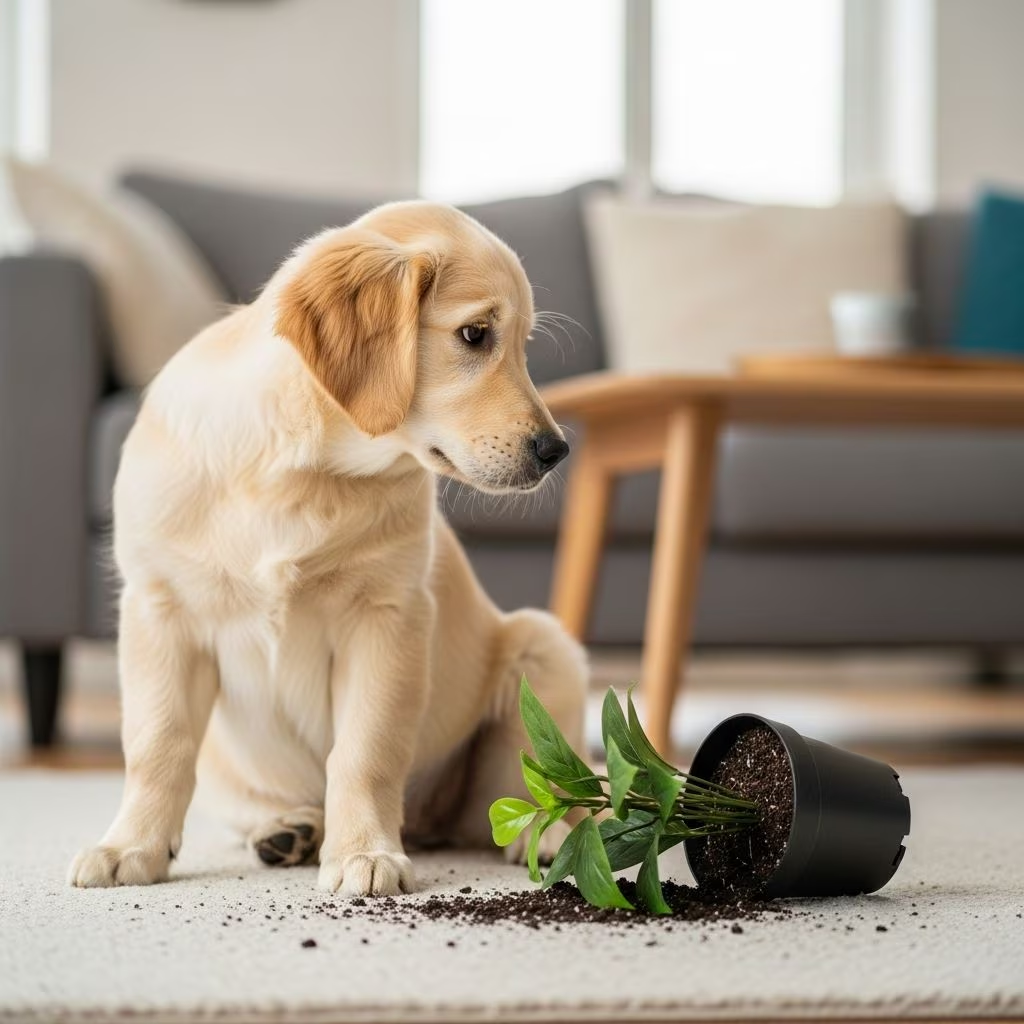
When your dog doesn’t follow commands or engages in unwanted actions like barking at strangers or ignoring recalls, it’s easy to feel frustrated and assume intentional defiance. However, dogs rarely misbehave out of spite; instead, underlying factors like insufficient training, environmental stressors, or unclear communication often play a key role. This comprehensive guide draws from expert insights to help you understand why dogs misbehave and provides actionable steps using positive reinforcement to foster better behavior and a stronger bond.
Consider Why Your Dog Is Misbehaving
Dogs who fail to respond to cues typically need more practice, clearer guidance, or emotional support rather than punishment. Common triggers include distractions in the environment, unfamiliar contexts, or emotional states such as fear, stress, anxiety, excitement, or even physical discomfort like pain. Blaming the dog overlooks the cooperative nature of training, where humans must teach behaviors explicitly.
Shift your mindset from ‘misbehaving’ to identifying gaps in your approach. For instance, a dog lunging at others on walks may be overwhelmed by triggers, not willful disobedience. Recognizing these factors prevents escalation and sets the stage for effective intervention.
- Distractions: High-value distractions like squirrels or other dogs pull focus away from commands.
- New Contexts: Skills learned at home may not transfer to parks or busy streets without practice.
- Emotional States: Stress or arousal impairs decision-making, similar to humans under pressure.
- Unclear Cues: Ambiguous signals confuse dogs, leading to non-compliance.
- Physical Issues: Pain from arthritis or injuries can cause irritability or avoidance.
Studies confirm these patterns: jumping up affects 33.2% of dogs, chasing 28.5%, territoriality 26.7%, and overexcitement 20.9%, often linked to owner management practices rather than inherent flaws. A Texas A&M study found 99% of dogs exhibit some behavior issues, with separation anxiety (86%), aggression (56%), and fear (50%) most prevalent, emphasizing context over character.
Build a Stronger Training Base
Positive reinforcement—rewarding desired behaviors with treats, praise, or toys—is the cornerstone of reliable training. Dogs operate on what benefits them, not an innate desire to please. Make compliance the gateway to good things: meals, walks, playtime.
For a dog resisting ‘down,’ practice frequently in low-distraction settings. Say the cue, lure with a treat to the floor, and reward immediately. Gradually fade the lure, requiring the behavior before rewards. This builds fluency across contexts.
| Behavior Challenge | Positive Reinforcement Strategy | Example Rewards |
|---|---|---|
| Resists ‘down’ | Cue before meals/walks | Treats, kibble, toys |
| Pulls on leash | Reward loose leash walking | Praise, small treats |
| Ignores recall | High-value rewards on return | Jackpot treats, play |
| Barks excessively | Quiet cue + rewards | Attention, chews |
Consistency amplifies results. Short, daily sessions (5-10 minutes) outperform marathon cramming. Track progress to stay motivated.
Set Your Dog Up for Success
Prevent failure by controlling environments. A reactive dog barking at passersby? Start training at a distance where they remain calm, rewarding focus on you. Gradually decrease distance as tolerance builds—this is desensitization and counterconditioning.
Example: For dog-reactive walking, position 50 feet from a stationary dog. Cue ‘sit’ or ‘look at me,’ reward heavily. Advance to moving dogs at safe range, only progressing on repeated successes. This aligns the dog’s natural motivations with your goals.
Management tools are vital: leashes prevent darting, baby gates block counter-surfing, crates manage alone time. Prevention while training reduces rehearsal of bad habits.
References
- My Dog Is Misbehaving. What Should I Do? — Kinship. 2023. https://www.kinship.com/dog-behavior/misbehaving-dog
- The role of dogs is associated with owner management practices — PMC (NCBI). 2024-10-15. https://pmc.ncbi.nlm.nih.gov/articles/PMC11557872/
- A New Study Says 99% of Dogs Have Behavior Issues — Kinship. 2023. https://www.kinship.com/news/dogs-behavior-issues-study
- The 4 Most Misunderstood Dog Behaviors — Kinship. 2023. https://www.kinship.com/dog-behavior/most-misunderstood-dog-behaviors
Building Up Skills with Challenges
Introduce controlled challenges to proof behaviors. For recall, practice in increasing distraction: empty room, then with toys, family members, mild outdoor stimuli. Always reward generously to outweigh temptations.
Address common pitfalls: A dog ignoring ‘come’ learns they can outrun you, risking danger. Use long lines for safety, never off-leash in unsecured areas until 95% reliable.
For door-dashing, tether or gate while teaching ‘wait.’ Reward staying put before opening. This proactive stance empowers dogs to succeed.
Common Misbehaviors and Solutions
- Leash Reactivity (Barking/Lunging): Train at threshold distance, use U-turns or emergency stops paired with rewards. Progress slowly.
- Poor Recall: Never chase; run away excitedly. Recall to freedom game: release to play after coming.
- Jumping Up: Turn away, reward four paws on floor. Teach ‘sit’ as alternative greeting.
- Counter Surfing: Manage access, teach ‘off’ or ‘leave it’ with rewards elsewhere.
- Separation Issues: Gradual alone time with toys; desensitize departures.
Peer-reviewed data shows owner-attributed roles influence behavior: ‘Child-like’ dogs may show more attention-seeking, underscoring tailored management.
The Power of Positive Reinforcement
Unlike punishment, which suppresses symptoms but risks fear/aggression, positive methods build confident, eager learners. Dogs repeat rewarded actions, aligning interests seamlessly.
Tools: High-value treats (chicken, cheese), clickers for precise timing, life rewards (walks, dinner). Vary to prevent satiation.
Addressing Emotional and Physical Factors
Rule out medical issues with vet checks—pain manifests as grumpiness or withdrawal. For anxiety, create safe spaces, pheromone diffusers, or consult behaviorists.
Exercise and enrichment reduce excess energy fueling mischief. Puzzle toys, scent games fulfill instincts.
Frequently Asked Questions (FAQs)
Q: Why does my dog ignore me on walks?
A: Distractions or incomplete training. Practice recalls in low-distraction areas first, using high rewards.
Q: Is punishment ever okay for misbehavior?
A: No—punishment can escalate fear-based issues like growling to biting. Use prevention and positives.
Q: How long until I see training results?
A: Varies; consistent short sessions yield progress in weeks. Patience and tracking key.
Q: What if my dog is aggressive?
A: Context matters—fear often underlies. Consult certified trainer; management first.
Q: Can older dogs change behaviors?
A: Yes, with positive methods. Neuroplasticity allows lifelong learning.
By taking responsibility, preventing errors, and reinforcing successes, you’ll transform ‘misbehavior’ into reliable responses. Your dog thrives with compassion and structure, enhancing your shared life.



