

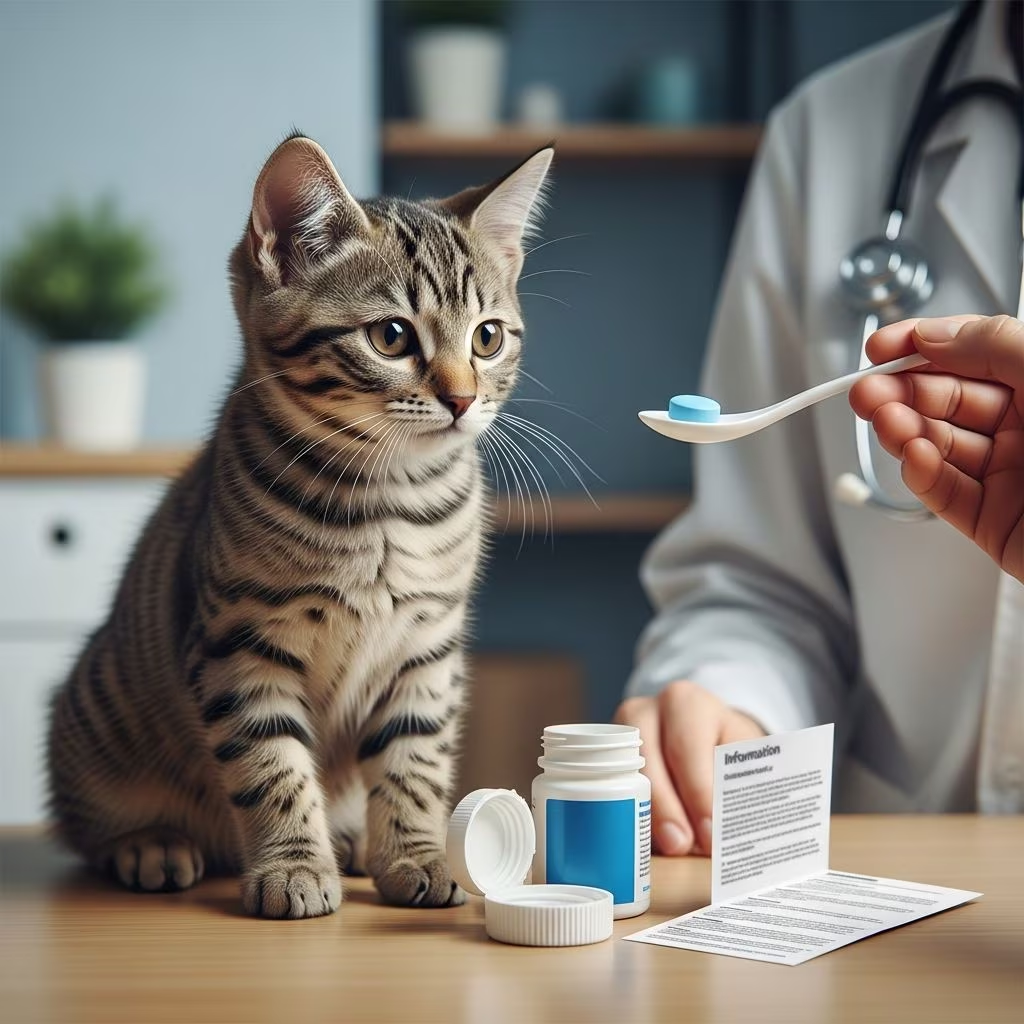
Mirtazapine for Pets: A Complete Guide to Uses, Dosage, and Safety
Mirtazapine is a medication commonly prescribed by veterinarians to help pets manage appetite loss, nausea, and vomiting. Originally developed as an antidepressant for human use, this drug has found valuable applications in veterinary medicine, particularly for cats and dogs experiencing loss of appetite due to illness or other medical conditions. Understanding how mirtazapine works, its proper dosage, potential side effects, and safety considerations is essential for pet owners whose animals have been prescribed this medication.
What Is Mirtazapine?
Mirtazapine is a tricyclic antidepressant medication that has been repurposed for veterinary use as an appetite stimulant and anti-nausea agent. While it functions as an antidepressant in human medicine, veterinarians have discovered that it produces beneficial side effects in pets, particularly increased appetite and reduced nausea. The medication works by altering the balance of chemicals that transmit signals between nerves in the body, affecting multiple nerve receptors throughout the nervous system.
The mechanism by which mirtazapine stimulates appetite in animals remains not completely understood by researchers. However, it is theorized that the drug’s effects on various neurotransmitter systems contribute to increased hunger sensations and improved food intake. Additionally, the medication can block the neural circuit responsible for triggering nausea signals between the digestive system and the brain’s nausea center, effectively reducing vomiting and gastrointestinal discomfort.
Primary Uses of Mirtazapine in Veterinary Medicine
Appetite Stimulation
The most common use of mirtazapine in veterinary practice is to stimulate appetite in cats and dogs that have stopped eating or are eating significantly less than normal. Pets suffering from chronic kidney disease, cancer, post-surgical recovery, or other serious illnesses often experience anorexia—a complete loss of appetite. Mirtazapine can help encourage these animals to eat by triggering hunger signals, which in turn promotes weight maintenance and supports overall recovery during treatment for their underlying conditions.
Nausea and Vomiting Management
Beyond appetite stimulation, mirtazapine has antiemetic properties, meaning it can reduce nausea and vomiting in pets. This is particularly valuable for cats undergoing chemotherapy or experiencing nausea related to kidney disease or gastrointestinal conditions. By blocking the nausea pathway in the brain, mirtazapine makes pets more comfortable and allows them to maintain adequate food and fluid intake, which is critical for recovery and managing chronic conditions.
Mirtazapine for Cats
FDA Approval and Formulations
Mirtazapine has received substantial study and approval in feline medicine. The FDA has approved Mirataz, a transdermal ointment formulation of mirtazapine, specifically for managing unintended weight loss in cats. This represents a significant advancement in feline medicine, as it provides veterinarians with an officially approved, feline-specific medication rather than relying on off-label use of human-approved products or compounded medications.
In addition to the transdermal ointment, oral mirtazapine tablets are commonly prescribed to cats. The approved oral dose for cats is 2 mg administered once every 24 hours. For geriatric cats, cats with chronic kidney disease (CKD), or cats with liver disease, a reduced dose of 1.88 mg every 48 hours is often recommended to minimize the risk of side effects while maintaining therapeutic benefit.
Transdermal Administration in Cats
Transdermal mirtazapine ointment has emerged as an effective alternative to oral tablets in cats. This formulation is applied directly to the skin, where it is absorbed into the bloodstream. Studies have shown that transdermal mirtazapine achieves clinically relevant serum concentrations without requiring higher doses than oral administration. The transdermal approach can be particularly beneficial for cats that are difficult to medicate orally or that have difficulty swallowing pills.
Mirtazapine for Dogs
Off-Label Use and Research Limitations
While mirtazapine is well-established in feline medicine, its use in dogs is considerably less researched and is considered off-label. This means that veterinarians may prescribe mirtazapine to dogs based on their knowledge of the drug’s effects in cats and humans, but the medication has not undergone the same extensive clinical trials in canines. Despite these research limitations, veterinarians believe mirtazapine can be effective in dogs for appetite stimulation, though anecdotal evidence suggests dogs may respond less reliably than cats to the medication.
Pharmacokinetics in Dogs
A significant difference between dogs and other species involves how quickly the body metabolizes mirtazapine. Pharmacokinetic studies in beagle dogs demonstrated that the mean half-life of oral mirtazapine administered at approximately 1.1 to 1.3 mg/kg was only 6.2 hours, considerably shorter than in other species. This suggests that twice-daily administration may be more effective for appetite stimulation in dogs compared to the once-daily dosing used in cats, though further studies are needed to confirm this approach.
Behavioral Applications in Dogs
Recent research has explored mirtazapine’s use beyond appetite stimulation in dogs. A retrospective study of 32 dogs with anxiety-related behavioral problems showed that 81 percent of dogs treated with mirtazapine demonstrated improvement in their behavioral symptoms, with only mild and tolerable adverse effects reported. This suggests that mirtazapine may have potential as a safe option for managing anxiety in dogs, though further comparative studies are needed.
Mirtazapine Dosage Guidelines
Cats
For healthy adult cats, the typical recommended starting dose of oral mirtazapine is 1.88 to 2 mg given orally once every 24 hours. Senior cats, geriatric cats, and those with kidney or liver disease should receive a reduced dose of 1.88 mg every 48 hours to minimize the risk of adverse effects. For FDA-approved transdermal mirtazapine ointment, the labeled dose is 2 mg once every 24 hours, and the formulation should not be used in cats weighing less than 2 kg or younger than 6 months of age.
Dogs
In dogs, the standard recommended dose of mirtazapine is 0.6 to 1.3 mg per kilogram of body weight taken by mouth once every 24 hours, with a maximum daily dose not exceeding 30 mg. However, due to the shorter half-life of mirtazapine in dogs, some veterinarians may recommend twice-daily dosing for improved effectiveness, though this approach requires veterinary guidance. Currently, no FDA-approved mirtazapine formulations specifically designed for dogs are available, so veterinarians prescribe human-formulated tablets adapted for canine patients.
How to Administer Mirtazapine
Mirtazapine tablets can be administered directly by mouth or placed in food to mask the taste if the pet is reluctant to take it as a pill. For cats, some tablets are designed to dissolve in the mouth without water. If a tablet has dissolved in the mouth, offering the pet water afterward can help with absorption. Pet owners should follow their veterinarian’s specific instructions regarding administration method and timing relative to meals.
For transdermal formulations, the ointment should be applied to a hairless or thinly haired area of skin, typically on the inner ear or inner thigh, and rubbed gently into the skin. Pet owners should wash their hands thoroughly after application and ensure that other pets or family members do not touch the application site immediately after treatment to avoid transferring the medication to other individuals or animals.
Side Effects and Safety Considerations
Side Effects in Cats
Mirtazapine may cause more noticeable side effects in cats compared to dogs. If side effects occur in cats, they typically appear within 90 minutes of a dose. Common side effects include sedation, behavioral changes, increased vocalization, drooling, and occasionally transient vomiting or diarrhea. More serious but rare side effects can include agranulocytosis (a significant drop in white blood cells), facial dermatitis, or other skin reactions. Side effects are dose-dependent, meaning that higher doses are more likely to produce adverse effects.
Side Effects in Dogs
Mirtazapine is generally well-tolerated in dogs, and side effects are rarely observed. When they do occur, they tend to be milder than in cats. Possible side effects in dogs may include sedation, behavioral changes, or gastrointestinal upset. Anecdotal evidence suggests that dogs are less likely to experience adverse reactions to mirtazapine than cats. As with cats, side effects are dose-dependent, and reducing the dosage or administering smaller doses more frequently may help limit unwanted effects if they do develop.
Safety Precautions
Mirtazapine should be used with caution in animals with pre-existing blood cell abnormalities, such as low white blood cell counts (leukopenia), low neutrophils, or low platelet counts (thrombocytopenia). The medication should also be used cautiously in animals that require full alertness for their work or role, such as guide dogs, police dogs, or search and rescue dogs, as sedation can be a side effect. Pets with liver or kidney disease may require dose adjustments or more frequent monitoring.
Additionally, the transdermal formulation should not be used in cats weighing less than 2 kg or those younger than 6 months of age due to safety and efficacy concerns in smaller or younger animals. Pet owners should inform their veterinarian of any other medications their pet is taking, as drug interactions are possible, and should report any unusual behavioral changes or health concerns that develop after starting mirtazapine.
Onset of Action and Effectiveness
Mirtazapine may begin to work relatively quickly in some pets. In cats, appetite stimulation and behavioral effects can be observed within 12 to 24 hours of administration, though individual responses vary. In dogs, the onset of action appears similar, with effects potentially noticeable within 12 to 24 hours, though mirtazapine is considered less reliable in stimulating appetite in dogs compared to its proven effectiveness in cats.
The duration of effect also differs between species. In cats, mirtazapine has a longer half-life, allowing for once-daily dosing, whereas the shorter half-life in dogs suggests that twice-daily administration might be necessary for sustained appetite stimulation, though this requires further clinical confirmation.
FDA Approval Status
Mirtazapine’s regulatory status varies depending on the species and formulation. The FDA has approved Mirataz transdermal ointment specifically for cats to manage undesired weight loss. However, mirtazapine is not currently FDA-approved for use in dogs as a veterinary medication in any form, whether as tablets, ointments, or other formulations. This means that when veterinarians prescribe mirtazapine to dogs, it is considered off-label or extra-label use. Despite not having official FDA approval for dogs, veterinarians may legally prescribe it based on their professional judgment and knowledge of its safety and efficacy from use in other species.
Comparison of Mirtazapine to Other Appetite Stimulants
| Characteristic | Mirtazapine | Capromorelin (Elura) |
|---|---|---|
| FDA Approval for Cats | Yes (Mirataz) | Yes (Elura) |
| FDA Approval for Dogs | No (off-label) | Limited |
| Primary Use | Appetite stimulation, nausea reduction | Appetite stimulation |
| Forms Available | Oral tablet, transdermal ointment | Oral suspension |
| Dosing Frequency in Cats | Once or twice daily | Once daily |
| Additional Benefits | Anti-nausea, possible anxiety reduction | Minimal side effects |
Frequently Asked Questions About Mirtazapine
Q: Can mirtazapine be used in both cats and dogs?
A: Yes, mirtazapine can be prescribed to both cats and dogs, though it is better studied and FDA-approved for use in cats. In dogs, it is prescribed off-label based on veterinary judgment. Dogs typically respond less reliably to mirtazapine for appetite stimulation compared to cats.
Q: How long does it take for mirtazapine to work?
A: Mirtazapine may begin working within 12 to 24 hours in both cats and dogs, though individual response times vary. Some pets may show improvement in appetite or reduction in nausea more quickly, while others may require several days of treatment.
Q: What should I do if my pet experiences side effects from mirtazapine?
A: Contact your veterinarian immediately if your pet experiences side effects. Your veterinarian may reduce the dose, change the dosing schedule, or discontinue the medication if side effects are severe. Do not alter the dose without veterinary guidance.
Q: Is mirtazapine safe for long-term use?
A: Mirtazapine can generally be used safely for extended periods when prescribed by a veterinarian and monitored appropriately. However, regular veterinary check-ups are recommended to monitor for any potential long-term effects, particularly in cats, where blood work monitoring may be advised.
Q: Can I give mirtazapine with food?
A: Yes, mirtazapine can be given with or without food. Some pet owners hide tablets in food or treats to make administration easier. However, follow your veterinarian’s specific instructions, as timing relative to meals may matter depending on your pet’s condition.
Q: Are there any drug interactions I should be aware of?
A: Mirtazapine can interact with certain other medications. Always inform your veterinarian about any other drugs, supplements, or medications your pet is currently taking before starting mirtazapine treatment.
Conclusion
Mirtazapine is an effective and relatively safe medication for managing appetite loss, nausea, and vomiting in cats and dogs. While it is well-established and FDA-approved for use in cats, its application in dogs remains off-label but is increasingly recognized as a potentially valuable therapeutic option. Pet owners whose animals have been prescribed mirtazapine should understand how the medication works, the importance of following dosage instructions precisely, and the potential side effects to watch for. Regular communication with a veterinarian ensures that mirtazapine treatment remains safe and effective for your pet’s specific condition.
References
- Mirtazapine for Dogs: Dosage and Safety — SingleCare. 2024. https://www.singlecare.com/blog/mirtazapine-for-dogs/
- Mirtazapine in Cats: Dosage, Side Effects, and Efficacy — Today’s Veterinary Practice. 2023. https://todaysveterinarypractice.com/pharmacology/mirtazapine-addressing-appetite-in-cats/
- Use of Mirtazapine in the Treatment of Canine Behaviour Problems — Veterinary Record. 2023. https://pubmed.ncbi.nlm.nih.gov/38083822/
- Information About FDA-Approved Mirataz, Elura, and Semintra for Cats — U.S. Food and Drug Administration. 2024. https://www.fda.gov/animal-veterinary/animal-health-literacy/helping-our-cats-live-healthier-lives-information-about-fda-approved-drugs-cats
- Mirtazapine for Dogs — PetMD. 2024. https://www.petmd.com/pet-medication/mirtazapine-for-dogs



