

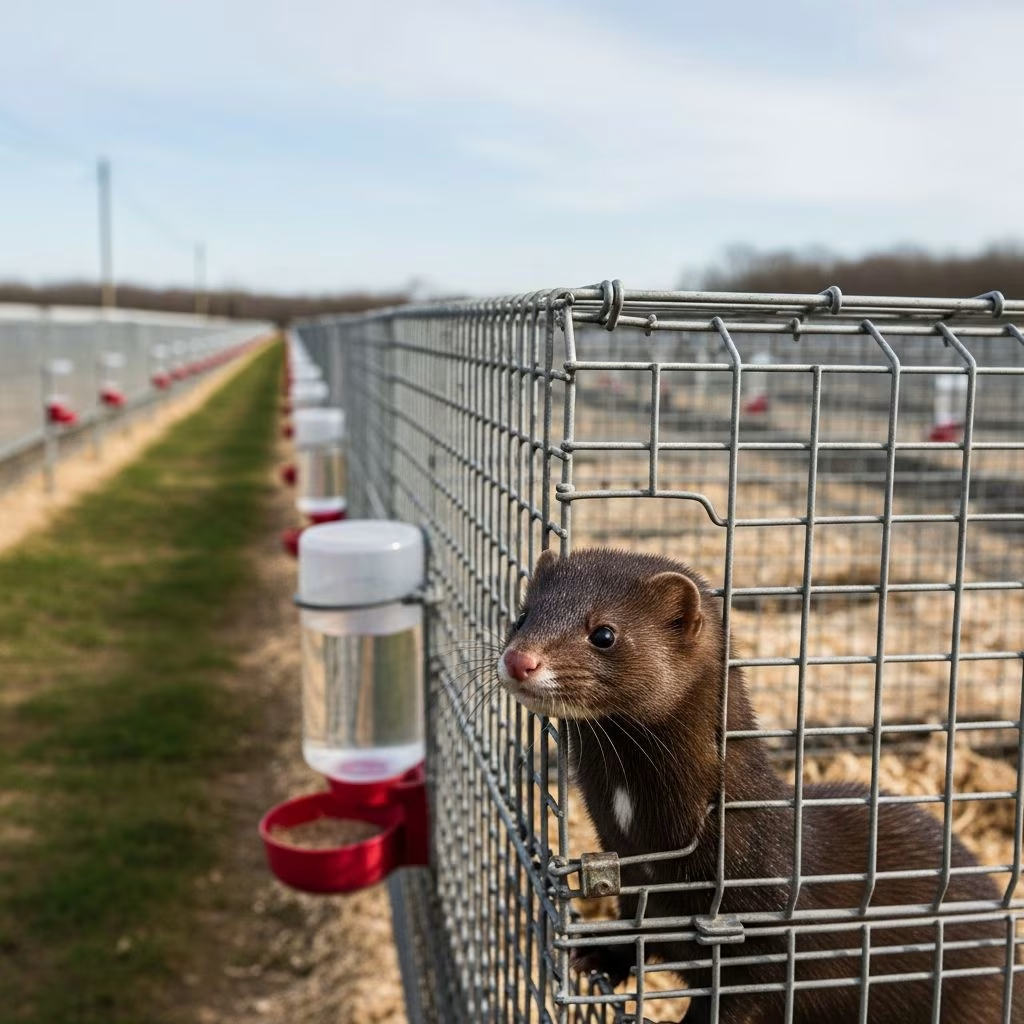
Mink farming represents a specialized agricultural sector requiring detailed knowledge of animal biology, facility design, and management practices. Success in this industry depends on understanding the unique needs of mink throughout their production cycle and implementing systems that support both animal welfare and operational efficiency. This guide examines the fundamental aspects of managing farmed mink operations, from initial facility setup through the completion of the production season.
Understanding the Mink Production Cycle
The annual mink production cycle divides naturally into three distinct phases, each with specific management requirements and nutritional demands. Recognizing these phases and adjusting farm operations accordingly is essential for maintaining animal health and maximizing productivity.
Phase One: Selection and Winter Maintenance
The production cycle begins in late fall when farmers identify and select animals destined for breeding during the upcoming season. These selected breeding animals must be maintained in good body condition throughout the winter months, though their overall nutrient requirements during this period are lower compared to other times of year. Farmers focus on maintaining stable populations and ensuring breeding stock enters the reproductive season in optimal physical condition.
Phase Two: Reproduction and Early Development
Breeding typically commences in early March, marking the transition into the reproductive phase. Mink exhibit a unique reproductive characteristic: implantation of fertilized eggs can be delayed, resulting in a gestation period ranging from 40 to 75 days rather than a fixed duration. Whelping (birth) occurs primarily at the end of April and continues into mid-May. During this critical period, lactating females remain with their kits until weaning occurs at approximately 6 to 10 weeks of age. This phase requires intensive management attention to ensure both maternal and offspring health.
Phase Three: Growth and Fur Development
Following weaning, mink enter the final production phase, which extends until pelting occurs in late fall. During this extended period, young mink develop their coat quality while being managed according to specific growth and conditioning protocols. This phase’s duration and management directly influence the final fur quality and commercial value of the harvest.
Facility Design and Housing Infrastructure
Appropriate housing forms the foundation of successful mink farming. Facilities must accommodate the animals’ natural behaviors while facilitating efficient farm operations and maintaining biosecurity standards.
Primary Housing Structures
Mink are maintained year-round in specialized sheds designed with semi-open construction to permit natural daylight penetration and provide natural ventilation throughout the facility. This design approach offers several advantages: it reduces operational costs associated with artificial lighting and climate control while supporting the animals’ natural photoperiod responses, which regulate reproductive cycles and seasonal coat development. The semi-open design must incorporate protective elements that shield animals from extreme weather while maintaining adequate air movement.
Climate Control and Environmental Management
Effective climate management becomes particularly important during warm months. Farmers must ensure good air circulation throughout shed structures and provide shaded areas to prevent heat stress. Temperature regulation is critical because mink can experience health complications during periods of elevated heat. Integrated pest control management systems must also be implemented throughout the facility to minimize disease vectors and parasitic infections that thrive in warm conditions.
Pen Configuration and Nesting Areas
Individual pens house mink throughout their production cycle. For pregnant females, nest boxes with entry holes are attached to the exterior of pens prior to expected whelping dates. Inside the pen, wire or plastic false bottoms are installed over the standard wire flooring to prevent newborn kits from falling through gaps. These false bottoms require regular cleaning to prevent manure accumulation, particularly as kits begin exploring outside the nest box.
Nest boxes themselves must be maintained with high standards of cleanliness. Bedding materials should be replaced regularly, with particular attention paid to the period immediately before whelping and throughout the nursing phase. Proper nest box maintenance directly influences kit survival rates and maternal health.
Nutrition and Feeding Systems
Mink have specific nutritional requirements that vary across the production cycle. Feed management systems must accommodate these changing needs while maintaining feed quality and safety.
Feed Composition and Preservation
Mink diets typically incorporate meat by-products as primary protein sources, combined with commercially prepared cereals and vitamin supplements. To minimize spoilage and extend shelf life, acetic acid, glacial acetic acid, or phosphoric acid is added to feed rations. The specific acid selection depends on regional availability and farm preferences, but all three options effectively inhibit microbial growth and maintain nutritional integrity.
On-farm feed preparation typically involves thawing a single day’s supply of meat by-products and mixing these with pre-formulated cereal and vitamin components. The combined mixture is ground and blended with water to achieve a semi-solid consistency that remains on the wire pen flooring without dropping through. Alternatively, many farms utilize commercially prepared complete wet feed delivered daily or every other day, depending on seasonal requirements. Some farms receive frozen feed blocks that are thawed as needed for distribution.
Feed Distribution and Water Systems
During late nursing, weaning, and post-weaning phases, food is provided through specialized feeding trays or placed on adjustable wire nest box covers that enable small kits to access nutrition independently. This approach supports the transition from maternal nursing to independent feeding.
Fresh water availability requires constant attention. Automatic, heated, recirculating watering systems featuring individual nipples represent the most commonly used approach in commercial operations. These systems provide climate-controlled water year-round and minimize disease transmission through individual animal access. Supplementary watering cups fastened to the exterior of pens may serve as backup water sources during equipment maintenance or malfunction.
Storage and Infrastructure Requirements
Proper feed management demands substantial cold storage infrastructure. Large freezers and specialized cold storage facilities are necessary to maintain frozen protein sources and preserve overall feed quality. Facilities must be designed to accommodate the volume required for the entire farm population while maintaining consistent temperature control throughout the storage period.
Breeding Management and Animal Genetics
Breeding constitutes a critical management function requiring understanding of mink reproductive biology and careful record maintenance.
Breeding Ratio and Population Structure
Commercial operations typically maintain one breeding male for every four to five breeding females. This ratio reflects both reproductive efficiency and the practical requirements of managing breeding populations. Mink demonstrate seasonal breeding patterns, with reproductive activity controlled by increasing daylight exposure. This photoperiod dependence means farm managers must carefully manage artificial lighting, if used, to avoid inadvertently disrupting normal reproductive cycles.
Kit Separation and Housing
Following weaning, kits are typically separated and housed in pairs, with various combinations possible: one male with one female, two males together, two females together, or individual male kits paired with adult females. Some operations employ single housing during portions of the growth period, though pair housing is more common. Despite selective breeding for over 100 years, mink retain wild characteristics: they remain strong, agile, and aggressive animals not fully domesticated like traditional livestock.
Handling and Animal Movement
Safe mink handling requires appropriate equipment and techniques. Bite-resistant leather gloves provide hand protection, but moving crates and cages represent the preferred method for relocating animals. These systems allow mink transfer between housing without direct manual handling, significantly reducing stress and injury risk for both animals and handlers. This equipment-based approach protects handler safety while minimizing physiological stress responses in the animals.
Health Management and Biosecurity
Maintaining herd health requires systematic monitoring, preventive protocols, and rapid response capabilities.
Disease Monitoring and Record Keeping
Farm managers must develop acute awareness of herd condition and the ability to recognize health abnormalities. Daily observation of all animals, systematic recording of health incidents, and mortality tracking provide essential data for early disease detection. These records support decision-making regarding treatment protocols and identify emerging health challenges before they spread throughout the population.
Sanitation and Environmental Management
Effective sanitation protocols prevent pathogenic contamination and reduce parasitic burdens. Spoiled feed must be removed from pens daily and disposed of according to farm waste management plans. Poor drainage can create conditions favoring pathogenic organisms and parasites, requiring corrective action. Shed design should prevent rainwater from contaminating stored manure, which can become a disease vector if improperly managed.
Pest Control Integration
Comprehensive pest management addresses both housing areas and feed preparation facilities. Summer months present particular challenges for fly population control, requiring systematic management approaches. Only EPA-approved insecticides should be employed in pest control programs, ensuring both efficacy and safety for the mink population.
Water Quality and Environmental Standards
Water quality profoundly impacts both animal health and environmental compliance.
Water Source Assessment
When surface water sources supply farm operations, regular water quality monitoring must be implemented. This testing ensures that the water meets standards for animal consumption and identifies potential contamination events requiring remediation. Municipal water sources should be verified to meet local and state standards.
Regulatory Compliance
Mink farms must observe all applicable state and federal laws protecting ground and surface water quality. Farmers should work collaboratively with local regulatory officials to ensure that management practices comply with all relevant regulations. Proper manure management, watering system maintenance, and drainage infrastructure all contribute to environmental protection.
Key Management Competencies for Mink Farmers
Success in mink farming requires farmers to develop and maintain several critical areas of knowledge and capability:
- Comprehensive understanding of mink natural life cycles, including normal behavioral patterns during breeding, whelping, lactation, weaning, and growth phases
- Working knowledge of nutritional requirements across different production phases and ability to evaluate feed quality
- Facility design and maintenance skills to ensure proper housing, water systems, and storage infrastructure
- Health monitoring capabilities and access to veterinary support for disease diagnosis and treatment
- Record-keeping systems for tracking mortality, health incidents, breeding outcomes, and production metrics
- Pest and manure management protocols appropriate to local environmental regulations
- Animal handling techniques that prioritize both human safety and animal welfare
- Continuous learning about emerging health challenges, nutritional advances, and industry best practices
Seasonal Considerations Throughout the Year
Different seasons present unique management challenges requiring proactive planning and response.
Winter Operations
Winter management focuses on maintaining breeding stock in appropriate condition while minimizing feed waste and preventing water system freezing. Heated watering systems become essential, and feed storage must protect supplies from moisture and contamination.
Spring Breeding Season
Spring demands intensive attention to breeding protocols, nest box preparation, and documentation of breeding dates. Facilities must support the natural photoperiod response that triggers reproductive activity.
Summer Growth Phase
Summer presents heat management challenges, pest control demands, and the critical period for kit development and weaning transitions. Adequate ventilation and cooling measures prevent heat stress while fly control becomes particularly important.
Fall Harvest Preparation
As fall approaches, farmers monitor coat development and prepare for pelting operations. Nutrition may be adjusted to support final fur quality development, and harvest logistics require planning.
Conclusion
Successful mink farming integrates knowledge of animal biology with practical management skills and facility infrastructure. The three-phase production cycle drives all management decisions, from breeding timing through feed formulation to facility maintenance schedules. Farmers must balance attention to individual animal welfare with operational efficiency and regulatory compliance. Continuous improvement in management practices, facility design, and health protocols directly contributes to both animal well-being and farm profitability. As the industry evolves, staying informed about emerging practices and regulatory requirements remains essential for sustained success.
References
- Management of Farmed Mink — Merck Veterinary Manual. Updated 2024. https://www.merckvetmanual.com/exotic-and-laboratory-animals/mink/management-of-farmed-mink
- Standard Guidelines for the Operation of Mink Farms in the United States — Fur Commission USA. 2021. https://www.furcommission.com
- Code of Practice for the Care and Handling of Farmed Mink — National Farm Animal Care Council (NFACC). 2021. https://www.nfacc.ca/codes-of-practice/farmed-mink
- Care Guidelines for Fur Farming — Fur Institute of Canada. https://fur.ca/fur-farming/care-guidelines-for-fur-farming/
- Farm Practices – Fur Farms — BC Ministry of Agriculture, Government of British Columbia. https://www2.gov.bc.ca/assets/gov/farming-natural-resources-and-industry/agriculture-and-seafood/agricultural-land-and-environment/strengthening-farming/farm-practices/870218-11_fur_farms.pdf
- Regulations — Fur Commission USA. https://www.furcommission.com/copy-of-mink-biology-1



