

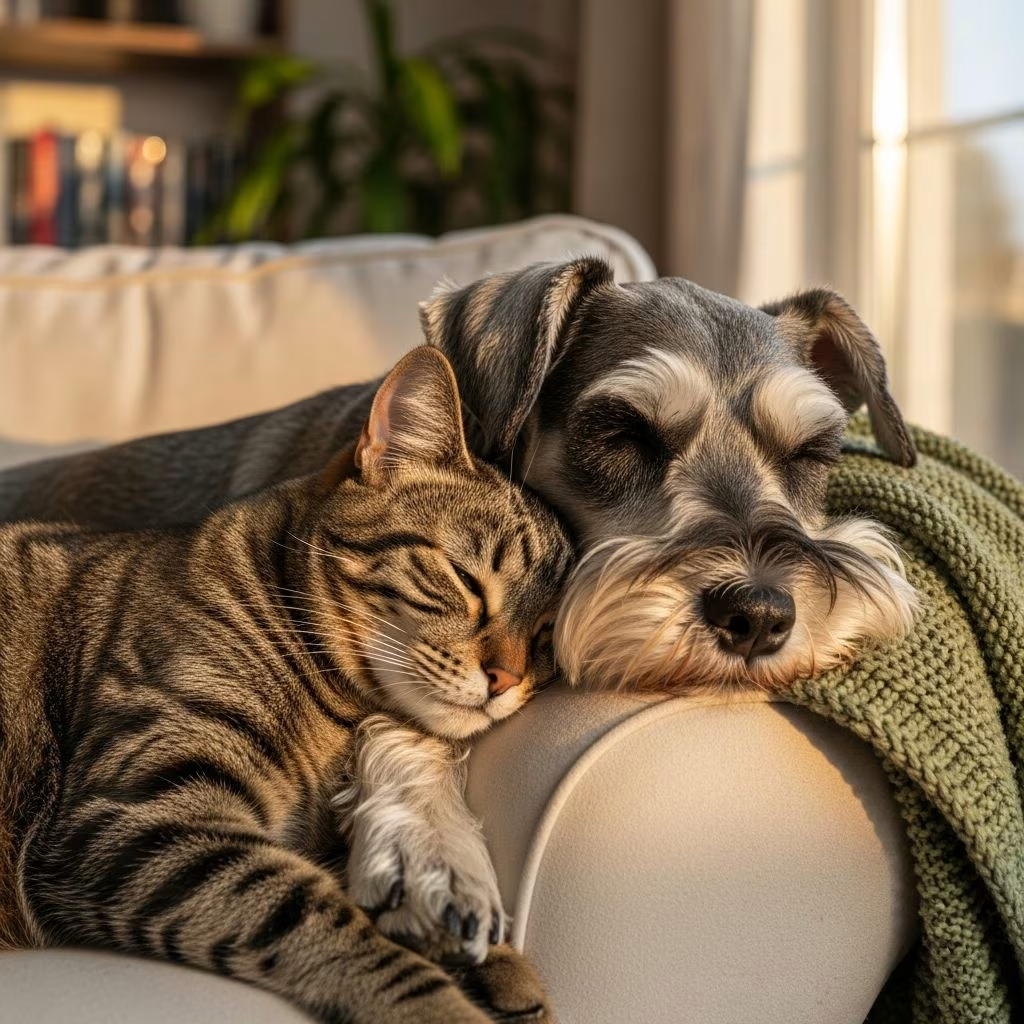
Miniature Schnauzers can form positive relationships with cats when introduced thoughtfully and socialized from a young age, though their innate hunting instincts require careful management.
Understanding the Miniature Schnauzer Breed
The Miniature Schnauzer emerged in Germany during the 19th century as a compact version of the larger Standard Schnauzer, selectively bred for tasks like ratting on farms and guarding properties. By crossing with breeds such as the Affenpinscher and perhaps elements of Poodle lineage, breeders achieved a smaller stature while preserving the alert, spirited nature of their ancestors.
Classified in the Terrier Group by major kennel clubs, these dogs stand about 12-14 inches tall at the shoulder and weigh 11-20 pounds. Their wiry double coat, typically in salt-and-pepper, black, or black-and-silver patterns, demands regular grooming to prevent matting. Beyond appearance, Miniature Schnauzers boast a lively temperament: intelligent, trainable, and deeply loyal to their families.
Owners often praise their adaptability to apartment living, moderate exercise needs (around 30-60 minutes daily), and minimal shedding. However, their terrier heritage instills a bold personality, marked by playfulness and occasional stubbornness that responds well to consistent, positive reinforcement training.
Temperament Traits Influencing Cat Interactions
Miniature Schnauzers are generally sociable, thriving in households with children, adults, and fellow dogs. Their outgoing demeanor makes them eager to please, but the key challenge with cats lies in their elevated prey drive—a genetic holdover from vermin-hunting duties.
This instinct triggers excitement toward fast-moving, small animals. Cats, with their agile darts and pounces, can mimic prey in a Schnauzer’s eyes, prompting chase responses. Not all individuals exhibit this strongly; temperament varies by genetics, early experiences, and training. Puppies raised in multi-pet environments often view cats as pack members rather than targets.
| Trait | Impact on Cat Compatibility |
|---|---|
| High Energy | Can lead to playful pursuits if not channeled |
| Intelligence | Excels in learning boundaries around cats |
| Prey Drive | May initiate chases; requires management |
| Affectionate Nature | Fosters bonding with calm, supervised intros |
Adult Schnauzers unexposed to cats previously might need more time to adjust, as established habits can complicate integration.
Factors Determining Successful Coexistence
Compatibility hinges on several elements. Early exposure is paramount: Schnauzers encountering cats as puppies—ideally before 12 weeks—build familiarity and reduce predatory impulses. Individual personality plays a role; some dogs are naturally laid-back, while others retain stronger hunting urges.
The cat’s disposition matters too. Confident, non-fearful felines that assert boundaries with hisses or swats can teach puppies respect swiftly, as anecdotal reports from owners indicate. Nervous cats may exacerbate tensions, necessitating extra precautions like elevated perches and escape routes.
Household dynamics influence outcomes. Homes with secure spaces for cats (e.g., cat trees, shelves, or flaps to outdoor areas) allow safe retreats, minimizing stress. Owner commitment to ongoing training sustains harmony.
Step-by-Step Guide to Introducing a Miniature Schnauzer to Cats
Gradual introductions prevent mishaps and build positive associations. Start with separation: Keep the dog leashed or crated and the cat in a safe room for scent familiarization via swapped bedding.
- Week 1: Scent Swap Exchange blankets or toys daily to acclimate smells without visual stress.
- Week 2: Visual Contact Use baby gates for supervised viewing sessions, rewarding calm behavior with treats.
- Week 3+: Controlled Meetings Leash the dog for short, positive interactions; end on good notes.
Monitor body language: Relaxed ears and wagging tails signal progress; stiff postures, fixated stares, or crouching warrant immediate separation. Employ treats liberally—high-value rewards like chicken reinforce tolerance. Sessions should last 5-10 minutes, increasing duration as comfort grows.
Never leave unsupervised until reliable calm is proven, potentially months later. Crate training aids management, providing a den for the dog during cat-free zones.
Training Techniques to Curb Prey Drive
Positive reinforcement trumps punishment. Teach core commands like “leave it,” “sit,” and “stay” in neutral settings before applying near cats. Practice impulse control with games: Roll toys away and reward ignoring them, gradually introducing cat-like movements.
Desensitization works wonders—expose the dog to cat videos or distant felines, praising disinterest. Professional trainers specializing in multi-pet homes can tailor programs, especially for high-drive individuals.
Exercise fulfills energy needs, reducing frustration-fueled chases. Daily walks, puzzle toys, and agility play keep minds occupied. Consistency across family members prevents mixed signals.
Real-Life Experiences from Schnauzer Owners
Many report triumphs. One owner introduced a Miniature Schnauzer puppy to senior cats; after initial curiosity, the cats’ dominance via claws established order, leading to playful companionship. Another noted their adult Schnauzer, cat-raised from puppyhood, now grooms the family feline.
Challenges exist: Some adults with unchecked prey drive pursued cats persistently, requiring rehoming or strict partitioning. Success rates climb with puppy introductions and proactive owners.
Potential Risks and Safety Measures
Dangers cut both ways. A Schnauzer’s strength (up to 20 pounds of muscle) can harm cats during chases, while feline claws inflict facial scratches on dogs. Prevent injuries with supervision, secure environments, and vet checks post-incidents.
For multi-pet homes, designate cat-only zones. Microchipping and ID collars aid if escapes occur. Health screenings ensure no underlying issues amplify aggression.
Alternatives if Compatibility Fails
Not every pairing succeeds. If persistent chasing endures, consider breeds with lower prey drives like Pugs or Labradors, though each has trade-offs (e.g., Pug health concerns). Rehoming to single-pet homes or cat-free environments prioritizes welfare.
FAQs
Can an adult Miniature Schnauzer learn to live with cats?
Yes, with patience and training, though puppies adapt faster due to malleable temperaments.
How long does socialization take?
Weeks to months; monitor indefinitely for regressions.
What if my cat is elderly or shy?
Provide ample escapes and slower intros; consult behaviorists if stress persists.
Are female Schnauzers better with cats?
No strong gender link; focus on individual history.
Does neutering reduce prey drive?
It may temper overall reactivity but doesn’t eliminate instincts.
References
- Are Miniature Schnauzers Good With Cats? Vet-Verified Facts — Dogster. 2023. https://www.dogster.com/lifestyle/are-miniature-schnauzers-good-with-cats
- Would a mini schnauzer puppy cohabit with older cats OK? — Schnauzer Forum UK. 2023. https://www.schnauzer-forum.co.uk/viewtopic.php?t=20692
- Good With Kids & Other Pets? — SoCal Mini Schnauzers. 2023. https://socalminischnauzers.com/good-with-kids-other-pets/
- Is a Miniature Schnauzer Right for Me? Temperament and Care — ASPCA Pet Insurance. 2023. https://www.aspcapetinsurance.com/resources/miniature-schnauzers/
- Introducing Cats and Dogs — I Love My Mini Schnauzer. 2023. http://www.ilovemyminischnauzer.com/introducing-cats-and-dogs.html



