
Mini Pig Breeding: A Complete Reproductive Guide
Essential facts on estrous cycles, mating timing, and pregnancy management for miniature pigs
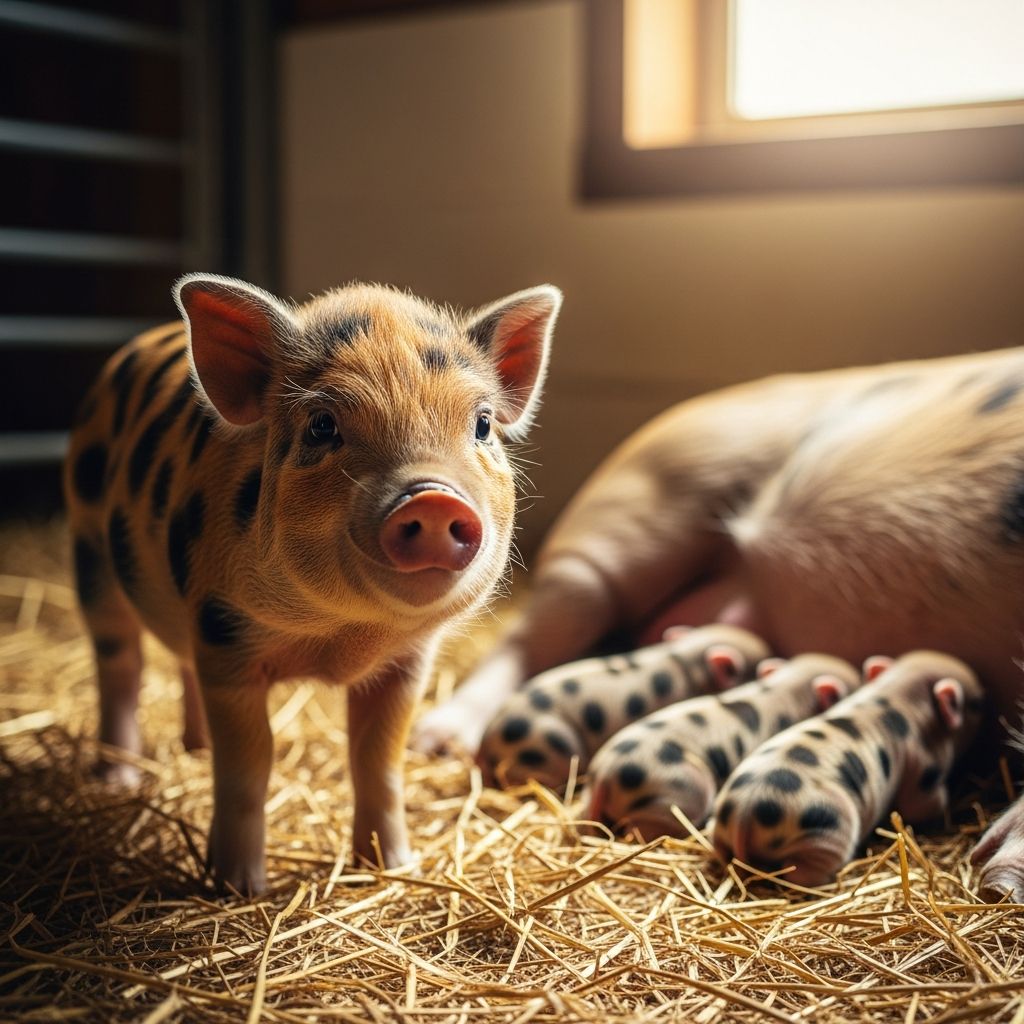
Miniature pigs have become increasingly popular as exotic pets, yet many owners lack fundamental knowledge about their reproductive biology and management. Understanding the reproductive cycles and breeding requirements of mini pigs is essential for responsible ownership and proper animal welfare. This guide provides detailed information about sexual maturity, estrous cycles, mating procedures, pregnancy management, and piglet care for those considering or currently breeding miniature pigs.
Sexual Maturity and Optimal Breeding Ages
Miniature pigs reach reproductive capacity at remarkably young ages compared to other domestic animals. Female mini pigs typically experience their first heat cycle at approximately four months of age, while males can begin producing viable sperm at the same developmental stage. However, biological capacity for reproduction differs significantly from physiological readiness and safety for breeding.
The American Mini Pig Association recommends that female pigs should not become pregnant before reaching one year of age, with an ideal breeding age of 18 months to two years. This recommendation exists because pigs that conceive earlier face substantial health risks, as their bodies are not sufficiently developed to support pregnancy and lactation. Growth plates continue developing until three to four years of age, meaning younger females still require nutrients for their own skeletal and organ development. Breeding females before full maturity can result in stunted growth, calcium depletion, and long-term health complications.
Male mini pigs used for breeding should similarly be mature enough to handle the physical demands of mating. While males can achieve fertility by four months of age, allowing them to develop fully ensures better breeding outcomes and reduces behavioral issues associated with premature sexual maturation.
The Estrous Cycle: Timing and Behavioral Indicators
Understanding the estrous cycle is fundamental to successful breeding management. The complete cycle in swine typically spans 18 to 21 days, during which hormonal fluctuations prepare the female’s reproductive tract for potential pregnancy. However, the period during which a female is receptive to mating, known as behavioral estrus, lasts considerably shorter—approximately 24 to 36 hours.
The estrous cycle operates through distinct physiological stages:
- Proestrus – Occurs around days 17 to 21 of the cycle, characterized by increasing estrogen and follicle-stimulating hormone (FSH) as follicles develop in the ovaries.
- Estrus – Takes place on days 0 to 1 when estrogen peaks, triggering ovulation, which typically happens within 24 to 48 hours of peak estrogen levels.
- Metestrus – Spans days 2 to 4 as hormone levels decline and the corpus luteum begins forming to produce progesterone.
- Diestrus – The longest phase, lasting days 5 to 18, during which progesterone maintains potential pregnancy or signals the return to heat if pregnancy does not occur.
Female mini pigs cycle regularly every 21 days throughout their reproductive years unless pregnant or nursing. Importantly, the presence of a male significantly intensifies signs of heat in females through olfactory, auditory, and visual stimulation. This biological reality means that detection of estrus may be more difficult in isolated females than those in proximity to males.
Recognizing Heat in Female Pigs
Identifying when a female is in heat requires careful observation of both behavioral and physical signs. The most reliable indicator is the
standing position
—a female in heat will remain motionless and accept the male’s mounting attempts, a behavior known as “standing for service.” This posture is the primary signal that mating should occur.Physical changes may accompany behavioral estrus. Some white-coated pig breeds display reddening and mild swelling of the vulva along with moisture, though this sign is more pronounced in first-time breeders and varies by breed. Behavioral changes can also occur; some females become noticeably more aggressive during heat periods, a transformation that can be alarming to owners, particularly those with children in the household. In such cases, spaying may become the only practical management option.
Accurate record-keeping helps owners predict subsequent heat cycles and plan breeding activities. Documentation of heat onset dates allows calculation of expected future cycles and ensures that mating or artificial insemination occurs during the optimal window of fertility.
Mating Procedures and Techniques
Successful breeding in miniature pigs requires understanding appropriate timing and methodology. Once a female displays the standing position indicating receptivity, the male should be allowed to mate naturally if available. Copulation typically lasts between 10 to 20 minutes and should not be rushed or interrupted.
For owners with a male and female housed separately, the standard procedure involves:
- Introducing the female to the male’s space when she displays clear heat signs and standing behavior
- Allowing natural mating to occur without interference
- Removing the female and returning her to her own pen after mating concludes
- Repeating the process the following day to maximize conception rates
This double-mating approach significantly increases the probability of pregnancy. The physical act of mating combined with proximity to the male enhances fertility outcomes compared to single breeding events.
Artificial Insemination Considerations
Owners without access to a suitable male or those preferring not to house intact males often utilize artificial insemination. This technique requires careful timing and typically necessitates semen collection and storage from external sources. The first insemination should occur between 12 and 24 hours after the female adopts the standing position. A second insemination follows approximately 12 hours later to coincide with ovulation and maximize fertilization success.
Successful artificial insemination depends on accurate heat detection and prompt action, making meticulous record-keeping essential. Owners must be prepared to arrange semen acquisition quickly upon observing first heat signs.
Managing Unplanned Breeding
One of the most critical aspects of mini pig reproduction is preventing unintended litters. When male and female pigs are housed together without careful supervision beginning at four months of age, mating occurs automatically, resulting in rapid population growth. This situation creates serious welfare concerns for both the animals and their owners, as managing multiple generations of pigs in household settings becomes logistically impossible.
Many pet pig owners address this challenge through spaying and neutering. Female pigs that are spayed (ovariohysterectomized) not only cannot become pregnant but also cease cycling. This prevents behavioral changes associated with heat cycles, particularly the tendency for some females to abandon litter-box training during estrus, creating household management problems. Spaying is often the most practical solution for pet owners who do not intend to breed.
Pregnancy Management and Duration
Once successful mating or insemination occurs, pregnancy in miniature pigs lasts approximately 112 to 120 days, with 115 days being typical—often remembered as three months, three weeks, and three days. This relatively short gestation period is one reason why pig reproduction can escalate rapidly if not managed carefully.
Pregnancy detection is possible through ultrasound examination after 24 days of gestation, allowing owners to confirm conception and plan accordingly. Following successful mating or insemination, pregnant females should be protected from stress for at least 28 days during critical early pregnancy establishment.
Preparing for Farrowing
As pregnancy progresses toward term, owners should prepare the farrowing environment carefully. Approximately one to two days before delivery, the pregnant female typically exhibits increased nesting behavior and activity levels. She may refuse food but must always have access to fresh water.
Providing ample dry, clean straw enables the female to construct an appropriate nesting area for her piglets. Just before labor begins, the female will settle in her nest and assume a restful position. This behavioral shift indicates that delivery is imminent.
Piglet Delivery and Neonatal Care
Miniature pig piglets are born at intervals, typically appearing approximately every 15 minutes, though some litters may have multiple piglets born in rapid succession. The small size of mini pig piglets is an advantage during delivery—they can present in either anterior (head-first) or posterior (tail-first) position without typically causing delivery complications. Dystocia (difficult delivery) is rare in mini pigs, but immediate veterinary attention is necessary if the female shows signs of distress or if delivery appears obstructed.
Immediately after birth, piglets require a warm environment. The air temperature in the farrowing area must be maintained at a minimum of 29°C (approximately 84°F) for at least the first seven days of life. Newborn piglets lack adequate thermoregulation and rapidly develop hypothermia in cool environments. After the initial week, temperature can be gradually reduced to normal room temperature of approximately 21°C (70°F) as piglets develop improved temperature control.
If the farrowing nest provides adequate insulation, the mother pig’s body warmth may meet temperature requirements. However, many owners establish a separate “creep” area—an enclosed space accessible only to piglets through a small opening—that maintains optimal warmth independent of the mother. This arrangement reduces the risk of piglet mortality from being crushed by the mother while ensuring adequate warmth.
Lactation and Weaning Timeline
Miniature pig females produce milk to nurse their litters throughout lactation. While nursing, females typically do not resume heat cycles due to the hormonal suppression caused by lactation. This natural spacing mechanism allows the mother to recover between reproductive cycles.
Piglets can begin consuming solid food at approximately four to six weeks of age. Weaning typically occurs between six to eight weeks, though some owners prefer allowing piglets to wean themselves naturally, a process that may extend to 12 weeks of age. The decision to extend nursing must consider the mother’s nutritional status, as prolonged lactation can result in excessive weight loss and calcium depletion that may compromise her long-term health and subsequent reproductive cycles.
Once piglets are separated and the mother ceases nursing, hormonal changes trigger a rapid return to estrous cycling. Most females resume heat cycles within approximately one week of weaning. At this point, if future breeding is planned, management of the new cycle becomes necessary to prevent unintended breeding.
Important Health and Welfare Considerations
Responsible breeding requires addressing several health and welfare factors beyond basic reproductive management. Breeding females that are too young face calcium depletion, developmental complications, and shortened productive lifespans. Uncontrolled breeding in household settings creates overcrowding and welfare crises.
Genetic diversity should also be considered by breeders. Selective breeding of miniature pigs for increasingly smaller sizes has resulted in health problems in some lines. Responsible breeding prioritizes the health and temperament of offspring over achieving the smallest possible size.
Regular veterinary care throughout pregnancy and after farrowing ensures that complications are identified and managed promptly. Veterinarians experienced with miniature pig reproduction can provide invaluable guidance on breeding decisions and management protocols.
References
- Reproduction – Pet Pigs — Carr’s Consulting. Retrieved from https://www.carrsconsulting.com/thepig/petpig/petpignotes/reproduction.htm
- Reproduction in Swine – Understanding the Estrous Cycle for Herd Management — Penn State Extension. Retrieved from https://extension.psu.edu/reproduction-in-swine-understanding-the-estrous-cycle-for-herd-management/
- Reproductive System — The Pig Site. Retrieved from https://www.thepigsite.com/anatomy-and-physiology/reproductive-system
- Frequently Asked Questions — American Mini Pig Association. Retrieved from https://americanminipigassociation.com/owners/ready-mini-pig-owner/frequently-asked-questions/
- Basic Information Sheet: Miniature Pig — LafeberVet. Retrieved from https://lafeber.com/vet/basic-information-sheet-miniature-pig/
- Overview of Miniature Pet Pigs — MSD Veterinary Manual. Retrieved from https://www.msdvetmanual.com/exotic-and-laboratory-animals/miniature-pet-pigs/overview-of-miniature-pet-pigs
- What Is A Micro-Mini Pig? — North American Pet Pig Association. Retrieved from https://petpigs.com/education/micro-micro-mini-teacup-pocket-pig-designer-apartment-pig-myth/potbellied-pig-size/what-is-a-mirco-mini-pig/
Similar Articles








Read full bio of Sneha Tete


