Mini Macaws: 5 Popular Species And Complete Care Guide
Discover the vibrant world of mini macaws: smaller size, big personalities, and endless companionship for dedicated bird lovers.
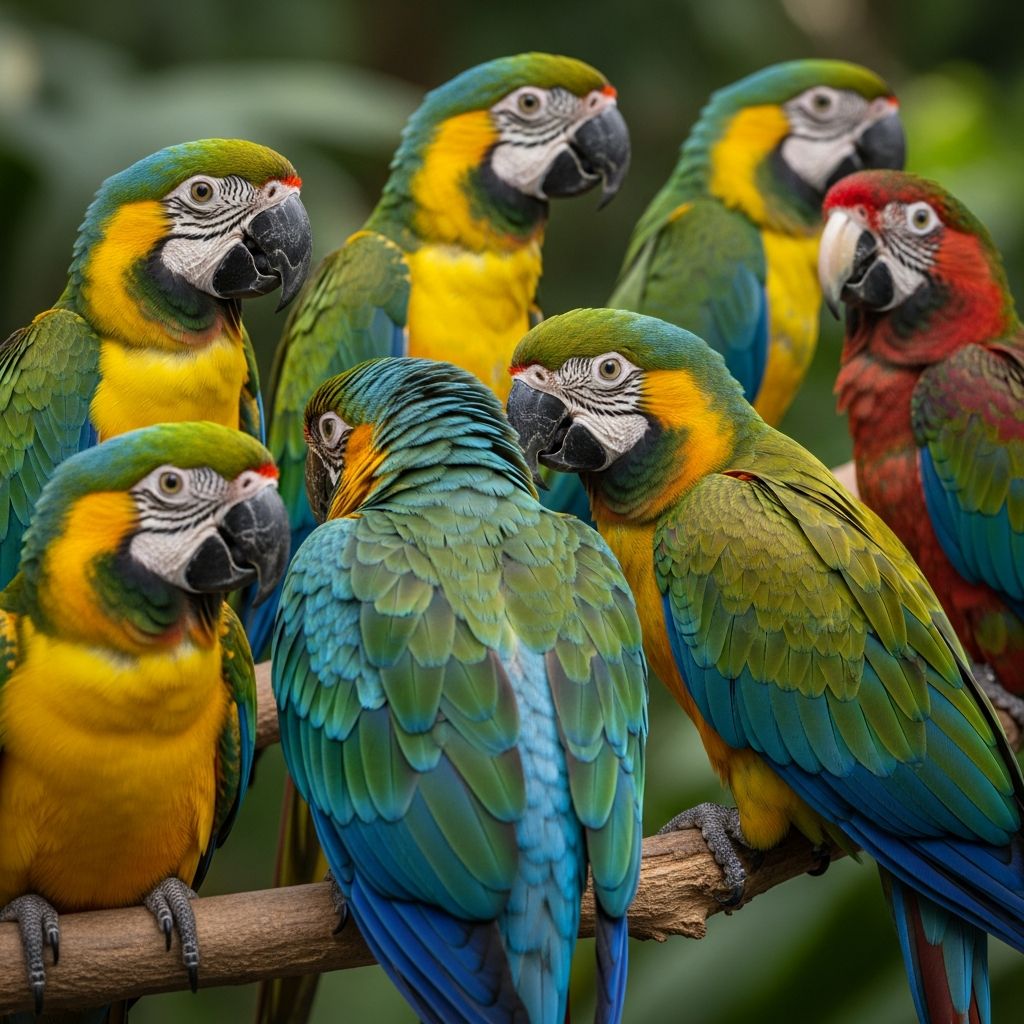
Mini Macaws: Compact Parrots with Giant Hearts
Mini macaws deliver the charisma and vibrancy of their larger relatives in a more manageable form, making them ideal for bird enthusiasts with space constraints. These birds combine striking plumage, sharp intelligence, and engaging personalities that thrive on interaction and stimulation.
Understanding the Appeal of Smaller Macaws
Macaws as a group are renowned for their bold colors, powerful builds, and social natures, originating from diverse habitats in Central and South America. Mini macaws, measuring roughly 10 to 20 inches in length, mirror these traits but scale them down, offering similar long tails, robust beaks, and bare facial patches without dominating living spaces. Their smaller stature—often weighing 200 to 400 grams—allows them to fit comfortably in apartments or family homes while demanding the same level of commitment as bigger species.
Native to regions like Venezuela, Brazil, Guyana, Colombia, Peru, and Bolivia, these parrots adapt to rainforests, savannas, swamps, and foothills. In captivity, they retain a need for expansive environments that mimic their wild territories, emphasizing the importance of dedicated owners who can provide both physical and mental enrichment.
Popular Varieties of Mini Macaws
Several species stand out in the pet trade for their availability, beauty, and companion qualities. Each brings unique feather patterns and behavioral quirks.
- Severe Macaw (Ara severa): Known also as the chestnut-fronted macaw, this is the largest mini macaw at around 18 inches. It features a blue-tinted crown, chestnut cheek borders, scarlet wing patches, and a reddish-brown tail tipped in blue. Native to northern South America, it’s highly social, affectionate, and loves cuddling.
- Hahn’s Macaw (Diopsittaca nobilis): The tiniest at 12 inches, also called red-shouldered or noble macaw, it sports green body feathers, a dark blue head, red wing edges, and an olive underside. Found in tropical lowlands from Venezuela to Peru, it’s noted for strong mimicry skills.
- Yellow-collared Macaw (Primolius auricollis): Hailing from central South America, this 15-inch bird displays a brightening yellow neck band with age, dark head, green body, blue flights, and wine-red tail bases. Highly adaptable to varied ecosystems like rainforests and savannas.
- Blue-headed Macaw (Primolius couloni): With a pale green body, blue head and wings, red upper tail fading to blue, and dusky yellow undersides, this species has a grey facial patch and medium grey beak.
- Red-bellied Macaw (Orthopsittaca manilata): Measuring 18 inches and 300-370 grams, it’s mostly green with a red belly, blue forehead, grey-breasted tint, and yellow underwings. It depends heavily on moriche palms in the wild.
Less common options like Illiger’s macaw exist but are rarer in captivity due to conservation concerns or specific needs.
Personality Traits and Vocal Abilities
Mini macaws boast bold, inquisitive temperaments that demand engagement. They excel at climbing, hanging upside down, and exploring, forming deep bonds with owners who match their energy. Social by nature, they crave daily interaction to prevent boredom-induced behaviors like feather picking.
Regarding speech, most exhibit moderate to good talking potential, though voices are higher-pitched and less resonant than large macaws. Hahn’s macaws lead as the most vocal mimics among minis, while Severe and Blue-headed types also impress with clear phrases. All produce loud calls—moderate for most, louder for some like red-shouldered—especially at dawn and dusk, so prospective owners should prepare for neighborhood consideration.
| Species | Talking Ability | Noise Level | Key Personality Note |
|---|---|---|---|
| Severe Macaw | Moderate to Good | Moderate | Outgoing, cuddly |
| Hahn’s Macaw | Moderate | Loud | Chatty mimic |
| Yellow-collared | Moderate | Moderate | Adaptable flock bird |
| Blue-headed | Moderate to Good | Moderate | Social explorer |
| Red-bellied | Good mimicry | Moderate (clear voice) | Palm-dependent |
Essential Daily Care Routines
Providing a thriving environment starts with spacious housing. A minimum cage size of 36x24x48 inches for singles allows wing-flapping and toy manipulation, but supervised out-of-cage time is crucial. Include perches of varying diameters and textures to promote foot health, plus swings, ladders, and shreddable toys to satisfy destructive beaks.
Diet should mimic wild foraging: 60-70% high-quality pellets, 20-30% fresh fruits and vegetables (apples, carrots, leafy greens), 10% nuts and seeds as treats. Avoid avocado, chocolate, and caffeine. Fresh water daily, with occasional foraging puzzles to engage their intelligence.
Bathing weekly via misting or shallow dishes supports feather condition. Handle young birds daily for taming, using positive reinforcement like treats for desired behaviors.
Health Monitoring and Common Concerns
Mini macaws can live 20-50 years with proper care, reaching sexual maturity at 4-7 years. Regular avian vet checkups are vital to spot issues early. Look for smooth beaks, clear eyes, even nails, bright feathers without breaks, and alert posture.
Prevalent conditions include neuropathic gastric dilatation, reproductive issues, feather picking from stress, papillomatosis, bacterial infections, and respiratory problems. Malnutrition exacerbates many, so balanced feeding prevents deficiencies. Watch for toe deformities in juveniles or acne-like facial ingrown feathers.
- Signs of illness: Fluffed feathers, tail bobbing, discharge from eyes/nares, weight loss.
- Prevention: Annual exams, quarantine new birds, parasite control.
Training and Behavioral Management
Intelligence shines in training; use clicker methods or target training for tricks like waving or retrieving. They can learn 20-50 words, whistles, and household sounds. Address beaking—common in minis—with firm, consistent redirection to toys. Territorial lunging requires understanding their boundaries, rewarding calm interactions.
Socialization prevents one-person bonding; expose to family and strangers gradually. Noise training involves rewarding quiet play over screams.
Choosing Your Ideal Mini Macaw
Assess lifestyle: Active homes suit their energy; quiet settings may clash with vocalizations. Buy from reputable breeders who hand-rear and provide health records. Observe parent behaviors for temperament clues. Budget for $1,000-$3,000 purchase, plus ongoing costs for food, toys, and vet care.
Frequently Asked Questions
Are mini macaws good for beginners?
They suit intermediate owners due to intelligence, noise, and longevity demands. First-timers should research extensively.
How loud are mini macaws compared to large ones?
Less intense due to size, but still capable of sharp screeches; minis produce moderate to loud calls.
Do mini macaws talk well?
Yes, with moderate success; Hahn’s excel, others vary by individual training.
What is the lifespan of a mini macaw?
Up to 50 years with optimal care; average 20-30 in homes.
Can mini macaws live alone?
No, they need daily interaction; pairs possible but monitor bonding.
Pros and Cons of Owning a Mini Macaw
| Pros | Cons |
|---|---|
| Stunning colors and personality | Loud vocalizations |
| Manageable size for homes | High maintenance (time, toys) |
| Good talkers and playful | Potential beaking/territoriality |
| Long lifespan for bonding | Vet costs and health vigilance |
References
- Macaw Birds: Types, Temperament, and Care Tips — PetMD. 2023-05-15. https://www.petmd.com/bird/breeds/macaw-birds-types-temperament-and-care-tips
- Macaws — Parrot Outreach Society. 2022-11-10. https://parrotoutreachsociety.org/resources/macaws/
- Mini Macaws | Madmaxmacaw’s Blog — WordPress. 2018-07-20. https://madmaxmacaw.wordpress.com/the-macaw-family/mini-macaws/
Similar Articles








Read full bio of Sneha Tete