

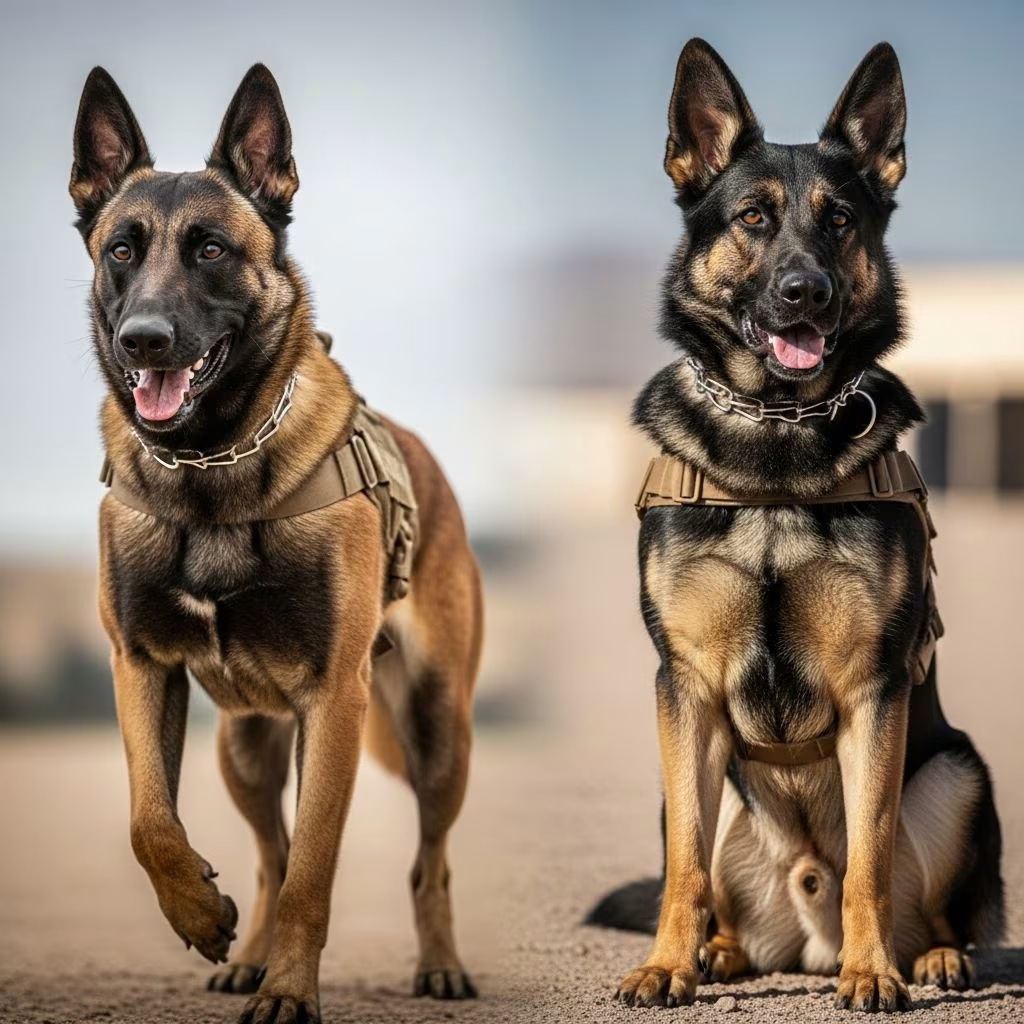
Military Working Dog Profiles: Essential Canine Partners in Defense
Military working dogs represent one of the most valuable assets in modern defense operations. These highly trained canines serve alongside soldiers and law enforcement personnel, performing critical tasks that range from explosive detection to search and rescue. The selection and training of military dogs is a rigorous process designed to identify animals with the perfect combination of intelligence, loyalty, and physical capability. Understanding the different breeds used in military service and their specific roles provides insight into how these remarkable animals contribute to national security and save lives in the field.
The Role of Military Working Dogs in Modern Operations
Military working dogs have served in combat and defense roles for over a century, evolving alongside military tactics and technology. Today, these canine soldiers perform specialized functions that would be impossible or impractical for human personnel alone. Their keen sense of smell, exceptional hearing, and natural athleticism make them uniquely suited for detecting threats, locating personnel, and conducting surveillance operations. Beyond their practical capabilities, military dogs provide psychological benefits to their handlers, reducing stress and improving morale in high-pressure environments.
The integration of working dogs into military units has demonstrated measurable improvements in operational effectiveness and personnel safety. These animals work in diverse environments, from urban areas to remote desert regions, adapting to challenging climates and terrain. Their contributions have been documented in numerous military operations, where their detection capabilities have prevented casualties and protected both military personnel and civilians.
Top Military Working Dog Breeds
German Shepherd: The Standard Bearer
The German Shepherd stands as the most common and recognizable military working dog breed worldwide. Renowned for their exceptional intelligence, strength, and versatility, German Shepherds have become the gold standard in military service. These large, agile dogs possess the ideal combination of traits required for military work: they are quick learners, form strong bonds with handlers, and can adapt to virtually any climatic condition.
German Shepherds excel in multiple roles within military operations. Their keen sense of smell makes them effective at detecting explosives and narcotics, while their intimidating presence and athleticism make them suitable for patrol and apprehension duties. Their protective instinct combined with trainability ensures they respond precisely to handler commands even in chaotic situations. The breed’s proven track record in military operations, including elite units such as the U.S. Navy SEALs, has cemented their position as the primary choice for military organizations worldwide.
Belgian Malinois: The Agile Powerhouse
The Belgian Malinois has gained prominence as a preferred breed for specialized military operations, particularly in elite units. Often confused with the German Shepherd due to their similar appearance, the Belgian Malinois is actually smaller and more compact, making them ideal for operations requiring speed and agility. These dogs are considered ideal for military service because of their high energy levels, exceptional sense of smell, outstanding trainability, remarkable agility, speed, and unwavering drive.
What distinguishes the Belgian Malinois in military applications is their exceptionally quick reaction time and fearless dedication to duty. Their compact size makes them more suitable for traveling in military vehicles and enables them to participate in specialized operations such as parachuting or rappelling alongside handlers. The breed demonstrates intense focus and determination once engaged in a task, making them particularly valuable for high-stakes missions. Military programs, such as those operated by the U.S. Department of Defense, have standardized Belgian Malinois breeding specifically for military applications, ensuring consistent quality and performance.
Labrador Retriever: The Versatile Detector
While Labrador Retrievers may not fit the stereotypical image of a military combat dog, these intelligent and friendly canines play crucial roles in military detection operations. Known for their exceptional sense of smell and natural retrieving instincts, Labradors excel in identifying explosives, drugs, and other target odors. Their gentle temperament makes them suitable for working in civilian areas where public interaction is necessary, such as airport security or military base perimeter checks.
Labrador Retrievers demonstrate remarkable focus and reliability in detection work. Their food motivation and desire to please make them highly trainable and consistent performers. The breed’s calm demeanor under pressure ensures they remain effective in stressful situations, maintaining focus on their detection tasks regardless of environmental distractions or activity levels around them.
Dutch Shepherd: The Emerging Specialist
Dutch Shepherds are gaining recognition and growing in popularity as military service dogs, rounding out the top three breeds currently preferred by the U.S. military alongside German Shepherds and Belgian Malinois. These hard-working, loyal, and highly active dogs possess similar size and appearance to German Shepherds, though they are often less recognizable to the general public. Dutch Shepherds demonstrate exceptional capability as general patrol and explosive-detection dogs, proving themselves in challenging military environments.
The breed’s intelligence, loyalty, and versatility make them trusted partners in military and law enforcement circles. While less commonly deployed than their German Shepherd or Belgian Malinois counterparts, Dutch Shepherds exhibit the same dedication to duty and trainability required for specialized military operations. Their emergence as preferred military dogs reflects ongoing efforts to diversify the canine workforce and identify breeds that may excel in specific operational contexts.
Historical Military Dog Breeds
Airedale Terrier: World War I Messenger
Though no longer active in military roles, the Airedale Terrier holds a distinguished place in military dog history. During World War I, Airedale Terriers served as one of the most common messenger dogs for the British military. These tough and loyal dogs were trained to carry messages attached to their collars, running between front-line handlers and command position officers. This crucial communication role made them invaluable before reliable mobile radio communications became standard, and their success led to widespread adoption throughout Allied forces.
Boxer: Historic Communications Dog
Boxers served as military communications dogs during earlier military conflicts, trained similarly to Airedale Terriers to run messages across battlefields. Their intelligence, independence, and playful nature made them suitable for this demanding role. Beyond messaging duties, Boxers have been employed in military search-and-rescue operations and as explosive-detector dogs, demonstrating the breed’s adaptability to various military tasks.
Doberman Pinscher: Multi-Purpose Warrior
The Doberman Pinscher earned considerable service recognition with the U.S. military during both World Wars. These large, easily trainable dogs served primarily as guard dogs but were also trained to find and rescue wounded soldiers, act as messengers, and perform patrol duties for detecting enemy locations and mines. Their combination of size, intelligence, and trainability made them valuable across multiple military applications.
Rottweiler: Loyal Messenger and Guardian
Rottweilers served the U.S. military during World War I and World War II in messenger and guard roles. Loyal, strong, and obedient, these dogs proved their worth by carrying important messages from front lines to command positions. Their significant contributions helped ensure success in numerous military operations and battles throughout these conflicts.
Training and Selection Process for Military Working Dogs
The transformation of a puppy into a military working dog follows a precise, scientifically-developed curriculum. Military organizations carefully select puppies that display the perfect balance of drive, intelligence, and temperament. Promising traits are identified early in puppies’ lives, including inquisitiveness, sociability, and eagerness to play with objects, while avoiding excessive aggression or fear responses to unfamiliar stimuli.
Military programs begin exposing young puppies to various stimuli while their mothers are still nursing them, allowing caregivers to assess personality and suitability for military service. This early developmental phase establishes foundations for the intensive training that follows. Puppies demonstrating appropriate combinations of working drive and stable temperament advance through structured training protocols designed to develop specific operational capabilities. The training process typically spans several years, with dogs undergoing specialized instruction tailored to their intended roles, whether explosive detection, patrol, search and rescue, or apprehension.
Breed Comparison: Military Working Dogs
| Breed | Size | Primary Strengths | Key Roles | Current Military Use |
|---|---|---|---|---|
| German Shepherd | Large | Versatility, intelligence, adaptability | Patrol, explosive detection, apprehension | Primary breed worldwide |
| Belgian Malinois | Medium-Large | Agility, speed, quick reaction time | Elite operations, explosive detection | Top choice for special forces |
| Labrador Retriever | Large | Scent detection, calm temperament | Explosive and narcotics detection | Detection operations, airport security |
| Dutch Shepherd | Large | Work ethic, loyalty, versatility | Patrol, explosive detection | Growing use in U.S. military |
Physical and Behavioral Requirements for Military Dogs
Military working dogs must meet stringent physical and behavioral standards. Dogs selected for military service typically possess strong, athletic builds with excellent cardiovascular capacity. They require superior sense of smell, acute hearing, and keen vision to perform detection and surveillance duties. Beyond physical attributes, military dogs must demonstrate stable, confident temperaments with appropriate levels of aggression that can be controlled and directed by handlers.
Trainability represents one of the most critical behavioral requirements. Military dogs must learn complex commands and perform tasks with precision, often in high-stress environments. They must show strong bonding capability with handlers while remaining focused on assigned duties. Additionally, military dogs require excellent health, stamina, and the ability to work in diverse climates and terrain. Successful military dogs exhibit natural prey drive and object focus, essential for detection work, while maintaining obedience and impulse control necessary for safe operations.
Frequently Asked Questions
Q: What is the most common military dog breed?
A: The German Shepherd is by far the most common military dog breed worldwide. Their combination of intelligence, strength, trainability, and versatility makes them the standard choice for military operations. However, Belgian Malinois are increasingly popular in elite and specialized units.
Q: How long does it take to train a military working dog?
A: Military dog training typically spans several years. Initial selection and early training begin when puppies are very young, with specialized instruction continuing through adulthood. The complete training process develops the specific skills required for the dog’s intended role within military operations.
Q: Why are Belgian Malinois preferred for elite military units?
A: Belgian Malinois are preferred for elite operations because their smaller, more compact size makes them suitable for parachuting and rappelling with handlers. Their exceptional agility, speed, and quick reaction time, combined with high energy levels and intense focus, make them ideal for specialized, high-stakes missions.
Q: Can military working dogs be adopted after retirement?
A: Yes, retired military working dogs can be adopted after their service concludes. Many military organizations and nonprofits facilitate adoption of retired military dogs to give them appropriate homes where they can enjoy their retirement with families or individuals.
Q: What roles do military dogs perform beyond combat?
A: Military dogs perform numerous non-combat roles including explosive detection at airports and military facilities, narcotics detection, search and rescue operations, patrol duties, suspicious package identification, and as companions for wounded service members during recovery and rehabilitation.
Q: How are military dogs selected as puppies?
A: Puppies are selected based on early personality assessments including inquisitiveness, sociability, and eagerness to interact with objects. Military handlers observe puppies’ responses to stimuli, looking for appropriate confidence levels, appropriate aggression indicators, and stable temperaments suitable for military training.
References
- 15 Military Dog Breeds (With Info & Pictures) — Hepper Pet Resources. 2024. https://articles.hepper.com/military-dog-breeds/
- Military Police Dog Breeds: Guardians of Security and Loyalty — K10 Working Dogs. 2024. https://k10workingdogs.com/military-police-dog-breeds-guardians-of-security-and-loyalty/
- Four-Legged Fighters — U.S. Department of War. 2024. https://www.war.gov/Multimedia/Experience/Four-Legged-Fighters/
- Inside the World of Military Working Dogs: Training, Deployment and Tracking — DogBase. 2024. https://www.dogbase.co/blog/inside-the-world-of-military-working-dogs-training-deployment-and-tracking



