

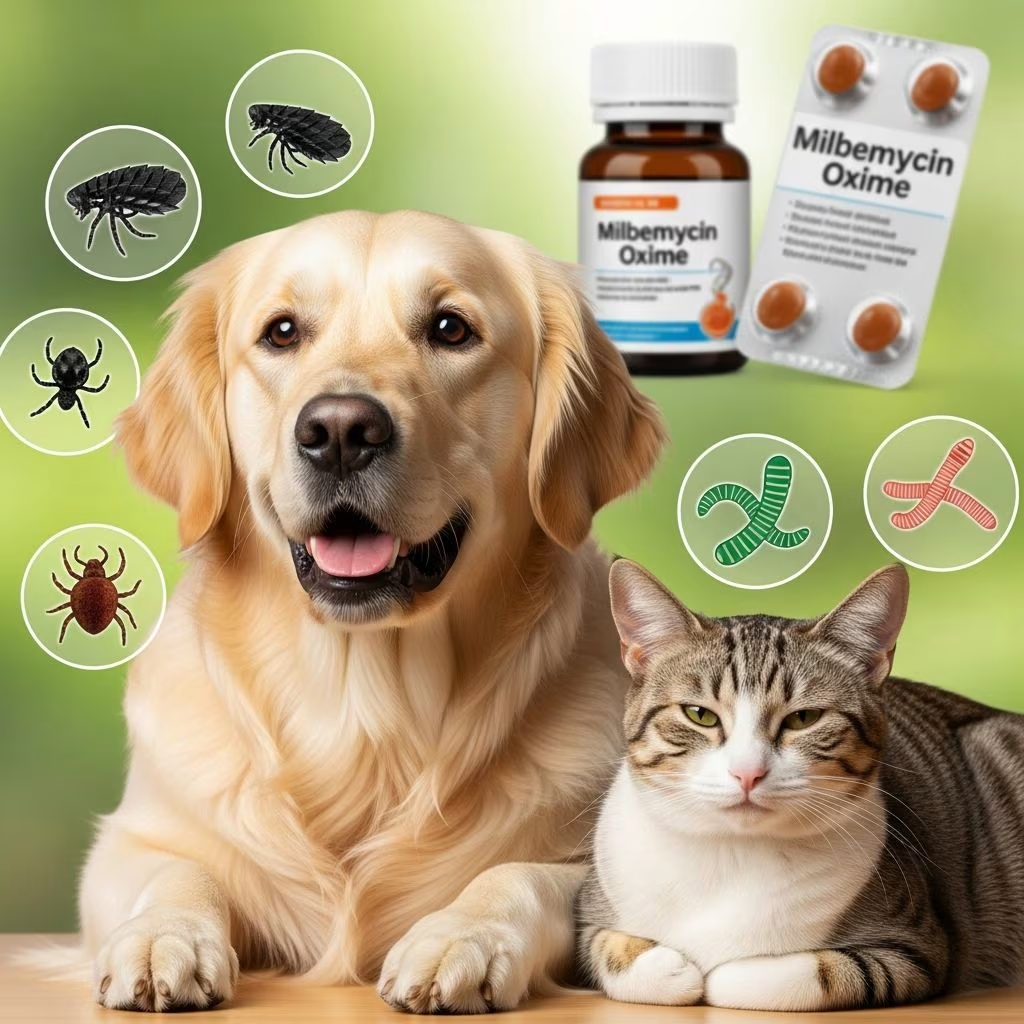
Understanding Milbemycin Oxime: A Comprehensive Pet Owner’s Guide
Milbemycin oxime is one of the most widely prescribed antiparasitic medications in veterinary medicine. Known by brand names such as Interceptor®, this prescription-only medication plays a crucial role in protecting pets from potentially serious parasitic infections. Whether you’re a first-time pet owner or an experienced caregiver, understanding how this medication works and when it’s appropriate can help you make informed decisions about your pet’s health and preventative care.
Parasitic infections remain a significant health concern for dogs and cats worldwide. These infections can range from mildly uncomfortable to life-threatening, depending on the parasite type and severity of infection. Milbemycin oxime addresses multiple parasitic threats through a single medication, making it a convenient and effective option for comprehensive pet protection.
What Is Milbemycin Oxime?
Milbemycin oxime is a broad-spectrum antiparasitic medication belonging to the milbemycin drug class. This prescription medication is specifically formulated for veterinary use and is available exclusively through licensed veterinarians. The medication comes in several forms, including flavored tablet formulations and topical solutions, making administration easier for pet owners.
The medication operates by disrupting nerve transmission within parasites, leading to muscle paralysis and death. This mechanism of action is highly selective for parasites, making it relatively safe for mammals when used at appropriate doses. The drug’s effectiveness spans a wide range of internal and external parasites, making it a versatile tool in veterinary preventative medicine.
Primary Uses and Applications
Milbemycin oxime serves multiple therapeutic purposes in veterinary medicine. Its primary indication is heartworm disease prevention in both dogs and cats. Additionally, the medication effectively controls various internal parasites that commonly affect pets.
Parasites Controlled by Milbemycin Oxime
The medication provides protection against several parasitic threats:
– Heartworms (prevention in dogs and cats)- Hookworms (dogs and cats)- Roundworms (dogs and cats)- Whipworms (dogs)- Ear mites- Demodectic mange (red mange)- Sarcoptic mange
In addition to these FDA-approved uses, veterinarians may prescribe milbemycin oxime off-label to treat other mite infestations in dogs. Off-label use is common in veterinary medicine and occurs when veterinarians determine that a medication’s benefits outweigh potential risks for a specific condition not originally approved by the FDA.
How Milbemycin Oxime Works
Understanding the mechanism of action helps pet owners appreciate why this medication is so effective. Milbemycin oxime functions through a sophisticated biological process targeting parasite nervous systems.
The medication works by shifting chloride, a naturally occurring electrolyte, across the cell membrane of susceptible parasites. This chloride overload disrupts the electrical activity within the parasite’s nervous system, causing muscle paralysis and ultimately leading to the parasite’s death. This mechanism is highly selective for parasites because mammals do not possess the same chloride movement channels found in susceptible worms and arthropods.
In the case of heartworm prevention, milbemycin oxime is particularly valuable as a microfilaricide. Microfilariae are the microscopic offspring of heartworms that circulate in an infected animal’s bloodstream. When adult heartworms are eliminated using other medications like melarsamine, milbemycin oxime is often used to clear remaining microfilariae from the blood.
Dosage and Administration Guidelines
Proper dosing is essential for ensuring the medication’s effectiveness while minimizing potential side effects. Dosage varies depending on the parasite being treated and the pet’s weight.
Standard Dosing
For routine parasite control in dogs, the typical dose is at least 0.23 mg per pound (0.5 mg/kg) administered once monthly. For cats, the dose is at least 0.9 mg per pound (2 mg/kg) once monthly. These doses are effective for preventing heartworms and controlling hookworms, roundworms, and certain whipworm infections.
Demodectic Mange Treatment
When treating demodectic mange in dogs, veterinarians typically prescribe a higher dose of 0.25 to 0.5 mg per pound (0.5 to 1 mg/kg) administered daily for 90 days. This extended treatment period is necessary to effectively eliminate mite populations.
Heartworm Microfilaria Treatment
For killing heartworm microfilariae in infected dogs, the medication is usually given as a single dose of 0.25 mg per pound (0.5 mg/kg). This treatment must be administered while the dog is under close observation at a veterinary hospital, as there is risk of adverse reactions.
Administration Instructions
When milbemycin oxime is combined with other medications, such as the combination product Sentinel® (milbemycin oxime + lufenuron), the medication is given by mouth as a flavored chew tablet. Importantly, this medication must be administered with a meal or directly after your pet eats to be absorbed effectively. The medication typically takes effect within two days for internal parasites and within 24 hours for external parasites, with visible improvements in clinical signs following shortly thereafter.
Available Formulations and Brand Names
Milbemycin oxime is available in multiple formulations to suit different treatment needs and pet preferences:
– Interceptor® (Novartis Animal Health) – the original brand name- Sentinel® – combines milbemycin oxime with lufenuron for additional flea control- Milbemax® – combines milbemycin oxime with praziquantel- Trifexis® – combines milbemycin oxime with spinosad for comprehensive flea and worm control- Otic solution (0.1%) – for ear mite treatment
Tablet formulations are available in 2.3mg, 5.75mg, 11.5mg, and 23mg strengths, allowing veterinarians to select the appropriate dose based on the patient’s weight and specific condition.
Safety Considerations and Precautions
While milbemycin oxime is generally safe when used appropriately, several important safety considerations should guide its use.
Pre-Treatment Testing
Animals should be tested for heartworm infection before receiving any product containing milbemycin. If milbemycin is administered to a heartworm-positive dog with circulating microfilariae, the sudden death of larvae may trigger an anaphylactic shock-like reaction. This potentially life-threatening complication necessitates heartworm testing before initiating prevention therapy.
Breed-Specific Concerns: MDR1 Mutation
Certain dog breeds carry a genetic mutation affecting the production of P-glycoprotein, a protein that normally prevents certain drugs from crossing the blood-brain barrier. Breeds at risk include Collies, Shetland Sheepdogs, Australian Shepherds, Old English Sheepdogs, merle-colored Pomeranians, and long-haired Whippets. Dogs with this MDR1 mutation can experience serious neurological complications if given higher doses of milbemycin oxime, as the drug crosses into the brain. At standard heartworm prevention doses, this is typically not a problem, but higher doses warrant genetic testing and careful consideration.
Liver and Kidney Disease
Although milbemycin side effects usually resolve after a few days, they may persist longer in patients with liver or kidney disease. Veterinarians should evaluate organ function before prescribing this medication to older pets or those with known hepatic or renal compromise.
Age and Weight Restrictions
The medication is not recommended for use in puppies less than 4 weeks of age or kittens less than 6 weeks of age. Additionally, the medication should not be used in animals weighing less than 2 pounds.
Pregnancy and Lactation
Milbemycin oxime is not approved for use during pregnancy and lactation. Females of breeding age should have preventative therapy reconsidered if pregnancy is anticipated.
Potential Side Effects
Most pets tolerate milbemycin oxime well, with few adverse effects reported in clinical use. However, pet owners should remain aware of potential side effects.
Reported side effects are generally mild and temporary. There have been a few unconfirmed reports of seizures and nervous system effects following milbemycin administration, though these are rare. When used in an off-label manner to kill heartworm microfilariae, dogs should be carefully observed for a shock-like reaction that may occur following administration. This observation is typically facilitated through hospitalization on the treatment day to allow for supportive care if needed.
Clinical Effectiveness in Treating Parasitic Infections
Research demonstrates the clinical effectiveness of milbemycin oxime across various parasitic infections. Studies documenting treatment of dogs with natural infections of the fox lungworm (Crenosoma vulpis) and the French heartworm (Angiostrongylus vasorum) show that a single oral dose of 0.5 mg/kg effectively treated crenosomosis, with clinical signs resolving and larval shedding ceasing in all treated dogs. For angiostrongylosis, four weekly doses of 0.5 mg/kg eliminated the infection in most cases.
Prescription Requirements and Safety Profile
Milbemycin oxime is exclusively available as a prescription medication and cannot be obtained without a veterinarian’s authorization. This restriction exists to ensure proper diagnosis of parasitic infections, appropriate dosing based on individual patient factors, and monitoring for potential complications.
The medication has been found safe in Collie breeds and Collie mixed breeds when used at appropriate doses, though genetic testing is still recommended for higher-dose protocols due to MDR1 mutation concerns.
Frequently Asked Questions
Q: Can milbemycin oxime be used in cats?
A: Yes, milbemycin oxime is approved for use in cats for heartworm prevention and internal parasite control. The feline dose is typically at least 0.9 mg per pound (2 mg/kg) once monthly.
Q: How quickly does milbemycin oxime work?
A: When given as a combination product like Sentinel®, the medication takes effect within two days for internal parasites and within 24 hours for external parasites, with clinical improvements following shortly after.
Q: What should I do if my pet vomits after receiving milbemycin oxime?
A: Contact your veterinarian. Since the medication must be absorbed with food, vomiting shortly after administration may affect the drug’s effectiveness. Your veterinarian may recommend re-dosing.
Q: Can milbemycin oxime be given with other medications?
A: Generally yes, but always inform your veterinarian about any other medications your pet is taking. Your veterinarian will determine if any drug interactions exist.
Q: Is milbemycin oxime safe for breeding dogs and cats?
A: Milbemycin oxime is not approved for use during pregnancy and lactation. Discuss parasite prevention options with your veterinarian if you have breeding animals.
Q: How is milbemycin oxime different from ivermectin?
A: While both are antiparasitic medications, ivermectin is more potent against heartworms than milbemycin oxime. However, milbemycin oxime offers a broader spectrum of parasitic coverage and is considered safer in certain breed populations.
References
- Natural Infections of Crenosoma Vulpis and Angiostrongylus vasorum in Dogs: Treatment with Milbemycin Oxime — PubMed Central/National Institutes of Health. 2004. https://pubmed.ncbi.nlm.nih.gov/15264484/
- Milbemycin Oxime (Interceptor) for Dogs and Cats — PetPlace.com. 2025. https://www.petplace.com/article/drug-library/drug-library/library/milbemycin-oxime-interceptor-for-dogs-and-cats
- Trifexis® (Spinosad + Milbemycin Oxime) Medication Guide — PetMD. 2025. https://www.petmd.com/pet-medication/trifexis-spinosad-milbemycin-oxime
- Milbemycin Oxime Lufenuron (Sentinel®) — VCA Animal Hospitals. 2025. https://vcahospitals.com/know-your-pet/milbemycin-oxime–lufenuron
- Pet Medication 101: Milbemycin Oxime (Interceptor) — FirstVet. 2025. https://firstvet.com/us/articles/medication-info-sheet-milbemycin-oxime



