

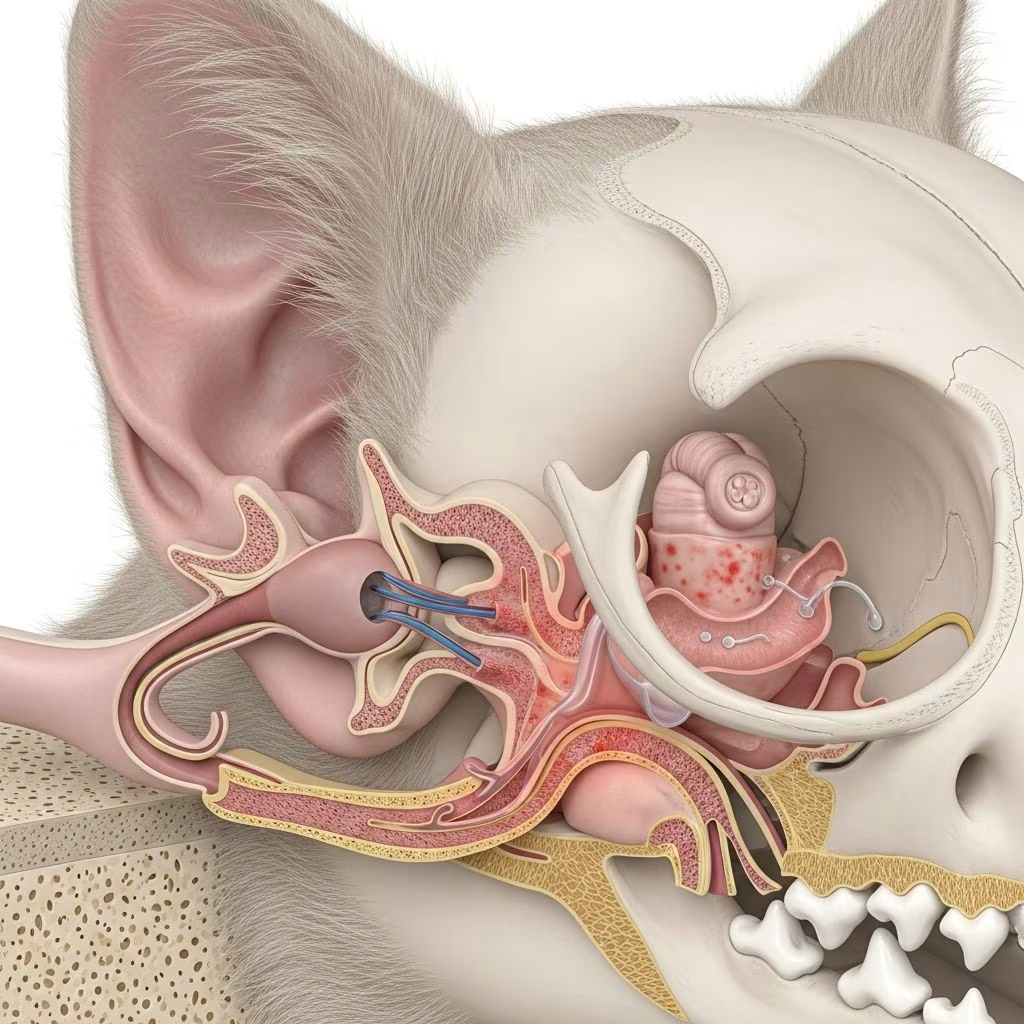
Inflammation affecting the middle and inner ear structures poses significant health challenges for various animals, leading to pain, balance issues, and potential hearing impairment. These conditions, known as otitis media and otitis interna, demand prompt veterinary attention to prevent chronic complications.
Understanding the Anatomy of the Ear
The ear in animals consists of three main parts: the outer ear for sound collection, the middle ear housing the tympanic membrane and ossicles for sound transmission, and the inner ear responsible for balance and advanced hearing. Disruptions in the middle ear, such as fluid accumulation or infection, can extend to the inner ear, disrupting vestibular functions.
In dogs and cats, the auditory tube connects the middle ear to the throat, aiding pressure equalization and drainage. Blockages or infections here exacerbate issues, while in livestock like cattle, anatomical differences influence disease patterns.
Common Causes Across Species
Otitis media often arises as a secondary complication from untreated outer ear infections, where bacteria migrate past a ruptured tympanic membrane. Primary cases include secretory fluid buildup, notably in specific dog breeds, or infectious agents like Mycoplasma bovis in calves.
- Dogs: Chronic otitis externa progression, foreign bodies, or breed-specific secretory otitis.
- Cats: Linked to upper respiratory infections or nasopharyngeal polyps.
- Livestock: Bacterial outbreaks, especially in young calves fed contaminated milk.
Inner ear involvement typically follows middle ear pathology, with bacterial agents predominating, though fungal or yeast infections occur less frequently.
Recognizing Clinical Signs
Early detection hinges on observing subtle behavioral changes. Animals may shake their heads excessively, paw at ears, or exhibit pain upon touch. Advanced signs include head tilting toward the affected side, abnormal eye movements (nystagmus), and circling.
| Species | Key Symptoms | Severity Indicators |
|---|---|---|
| Dogs | Head tilt, hearing loss, facial droop | Ataxia, vomiting from nausea |
| Cats | Ear droop, balance loss | Polyp-related nasal discharge |
| Cattle | Fever, anorexia, ear pain | Bilateral involvement, arthritis |
Unlike outer ear issues, middle ear pain might cause a non-neurological head position preference, while inner ear damage leads to true vestibular deficits.
Diagnostic Approaches
Veterinarians start with a thorough history and physical exam, including otoscopy to visualize the tympanic membrane. If intact but bulging, it signals fluid presence. Advanced imaging like CT or MRI reveals bulla thickening or abscesses, crucial for surgical planning.
Video otoscopy allows precise sampling for cytology and culture, identifying pathogens. In calves, endoscopy confirms middle ear involvement. Hearing tests, such as brainstem auditory evoked response, assess auditory function.
Species-Specific Diagnostics
- Small Animals: Myringotomy for fluid analysis if membrane intact.
- Large Animals: Focus on systemic signs like fever for bacterial etiology.
Treatment Strategies
Success depends on early intervention. Initial management controls inflammation with anti-inflammatories and nausea meds. Antibiotics target identified bacteria, often requiring 4-12 weeks of therapy.
For middle ear flushing, sedation enables thorough cleaning post-myringotomy. Chronic cases may need bulla osteotomy for drainage. In resistant infections, total ear canal ablation is considered in dogs.
In calves, protocols combining tulathromycin, oxytetracycline, and carprofen yield improvements within weeks, though some deteriorate.
Supportive Care
- Hospitalization for IV fluids if vestibular signs cause anorexia.
- E-collar to prevent self-trauma.
- Follow-up imaging to monitor resolution.
Prognosis and Long-Term Management
Acute cases often resolve fully with treatment, restoring balance in 2-6 weeks. Chronic or severe infections risk permanent hearing loss or neurological deficits. Owners of breeds like Cavalier King Charles Spaniels should anticipate recurrences, necessitating regular check-ups.
Preventive measures include managing chronic outer ear disease, vaccinating livestock against key pathogens, and avoiding unpasteurized waste milk in dairy operations.
Preventive Measures for Pet Owners
Regular ear inspections, especially in floppy-eared breeds like Spaniels and Hounds, catch issues early. Clean ears gently, avoiding overzealous cotton swab use that risks membrane rupture. Address allergies or conformational issues promptly.
FAQs
What breeds are prone to primary secretory otitis media?
Cavalier King Charles Spaniels are particularly susceptible due to genetic predisposition leading to glue ear.
Can otitis interna cause permanent damage?
Yes, delayed treatment may result in lasting balance or hearing deficits, even post-infection clearance.
Is surgery always necessary?
No, medical therapy succeeds in most acute cases; surgery is for refractory or chronic bulla disease.
How do I know if my pet has middle ear involvement?
Signs like head tilt without outer ear debris, confirmed by otoscopy or imaging.
What about cats with polyps?
These often require surgical removal alongside infection treatment.
References
- Otitis Media and Interna in Animals — Merck Veterinary Manual. 2023. https://www.merckvetmanual.com/ear-disorders/otitis-media-and-interna/otitis-media-and-interna-in-animals
- Inner Ear Infection (Otitis Interna) in Dogs — VCA Animal Hospitals. 2023. https://vcahospitals.com/know-your-pet/inner-ear-infection-otitis-interna-in-dogs
- Clinical-pathological findings of otitis media and media-interna in calves — PMC (PubMed Central). 2015-10-29. https://pmc.ncbi.nlm.nih.gov/articles/PMC4669636/
- Otitis Media and Interna in Dogs — Merck Veterinary Manual (Dog Owners). 2023. https://www.merckvetmanual.com/dog-owners/ear-disorders-of-dogs/otitis-media-and-interna-in-dogs
- Otitis Media and Interna in Dogs — MSD Veterinary Manual. 2023. https://www.msdvetmanual.com/dog-owners/ear-disorders-of-dogs/otitis-media-and-interna-in-dogs
- Otitis Media/Interna and Neurologic Deficits — MSPCA-Angell. 2023. https://www.mspca.org/angell_services/otitis-media-interna-and-neurologic-deficits/



