
Middle And Inner Ear Infections In Cats: Signs And Treatment
Discover causes, symptoms, diagnosis, and treatments for otitis media and interna in cats to help your feline recover swiftly.
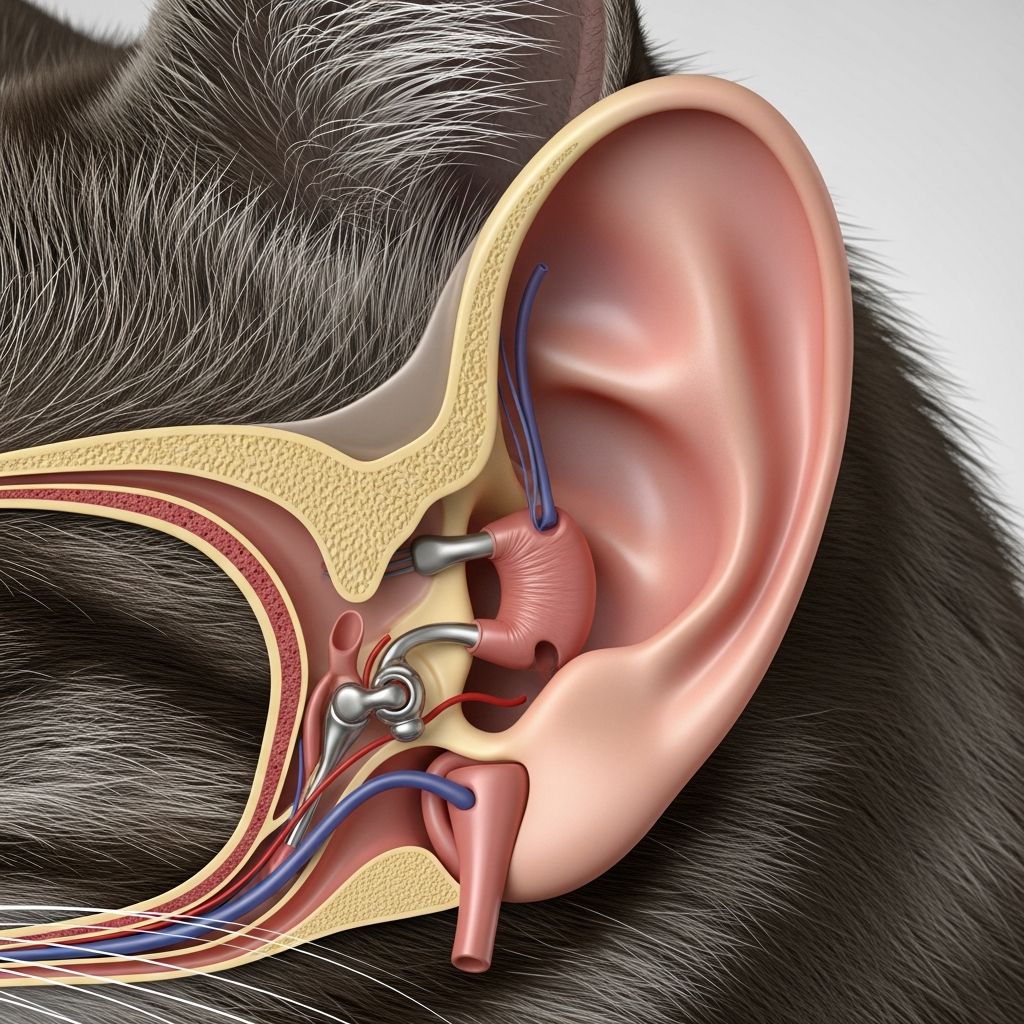
Middle ear infections, known as otitis media, and inner ear infections, or otitis interna, represent serious conditions in felines that can impair hearing, balance, and overall well-being. These infections often arise from bacterial spread, viral agents, or structural issues like polyps, demanding prompt veterinary intervention to avert permanent damage.
Understanding the Anatomy of a Cat’s Ear
A cat’s ear consists of three main parts: the outer ear for sound collection, the middle ear housing the tympanic membrane and ossicles for vibration transmission, and the inner ear responsible for balance and advanced sound processing. Disruptions in the middle ear cavity, or bulla, frequently lead to complications extending to the inner ear structures.
The eustachian tube connects the middle ear to the nasopharynx, enabling pressure equalization but also serving as a pathway for ascending infections from respiratory illnesses. In cats, this tube’s dysfunction heightens vulnerability to inflammatory processes.
Primary Causes of Middle Ear Inflammation
Otitis media in cats primarily stems from ascending infections via the eustachian tube, often linked to upper respiratory viruses, Mycoplasma, or Bordetella organisms. Unlike dogs, where chronic outer ear disease predominates, feline cases more commonly originate internally without prior external involvement.
Inflammatory polyps, benign growths from the eustachian tube lining, obstruct drainage and foster bacterial overgrowth, affecting young cats predominantly. Chronic ear mite infestations (Otodectes cynotis) can erode the tympanic membrane, permitting pathogen migration. Rarely, hematogenous spread from distant infections occurs.
Progression to Inner Ear Involvement
When middle ear inflammation breaches the fragile barriers to the inner ear, otitis interna ensues, inflaming the labyrinth and vestibular apparatus. This escalation happens via direct bacterial invasion or toxin diffusion post-tympanic rupture. Vigorous ear cleaning or pressure shifts during air travel can exacerbate risks if the membrane is compromised.
Inner ear disease disrupts the facial and vestibular nerves, yielding profound neurological effects. Bacterial agents like Pseudomonas or Staphylococcus, alongside yeast, thrive in this environment, complicating resolution.
Recognizing Early Warning Signs
- Head shaking or tilting: Cats persistently tilt toward the affected side, indicating vestibular disturbance.
- Balance loss: Circling, falling, or reluctance to jump signal inner ear compromise.
- Facial abnormalities: Drooping eyelids, lips, or nostrils; constricted pupils; or third eyelid protrusion denote facial nerve paralysis and Horner’s syndrome.
- Pain indicators: Reluctance to chew, drooling, or pawing at the ear.
- Discharge and odor: Foul-smelling exudate from the ear canal, often with swelling.
- Eye issues: Nystagmus (rapid eye flicking), dry eye from impaired blinking, or discharge.
- Behavioral shifts: Lethargy, head bobbing, or hiding due to discomfort.
Subclinical cases exist where owners notice no signs until advanced diagnostics reveal issues, emphasizing routine ear checks.
Advanced Neurological Manifestations
Otitis interna frequently induces peripheral vestibular syndrome, mimicking more severe central disorders. Differentiating requires veterinary expertise, as brain involvement portends graver outcomes. Chronic cases may cause permanent facial twisting or deafness on the affected side.
| Symptom | Middle Ear (Otitis Media) | Inner Ear (Otitis Interna) |
|---|---|---|
| Head Position | Tilt toward affected side | Severe tilt, circling |
| Eye Movement | Occasional nystagmus | Persistent, rapid nystagmus |
| Nerve Signs | Facial droop possible | Horner’s syndrome common |
| Hearing | May be preserved | Unilateral deafness |
| Coordination | Mild ataxia | Marked falling/rolling |
Diagnostic Approaches for Accurate Assessment
Veterinarians begin with otoscopy to visualize the ear canal and tympanic membrane integrity. Video otoscopy enhances detail, allowing bullar effusion sampling. Imaging via CT or radiography confirms bulla thickening or fluid, outperforming standard X-rays for subtle changes.
Microbiology cultures from deep swabs guide antibiotic selection, crucial given biofilm-forming pathogens. Myringotomy, a membrane puncture, flushes the bulla therapeutically. Advanced cases warrant MRI to rule out central extension or neoplasia.
Comprehensive Treatment Strategies
Therapy targets infection clearance, inflammation reduction, and underlying causes. Topical and systemic antibiotics (e.g., fluoroquinolones, clindamycin) penetrate bullae effectively post-myringotomy. Steroids manage swelling, while analgesics alleviate pain.
- Polyp removal: Surgical extraction via bulla osteotomy for curative results.
- Ear cleaning: Gentle, vet-guided protocols avoiding ototoxicity.
- Supportive care: Anti-nausea meds for vestibular signs, fluids for dehydrated cats.
- Chronic management: Long-term cultures to combat resistance.
Total ear canal ablation suits refractory outer ear disease contributing to media.
Preventive Measures for Feline Ear Health
Regular ear inspections detect mites or debris early. Vaccinate against respiratory viruses minimizing eustachian tube issues. Avoid home cleaning of visibly infected ears to prevent iatrogenic interna. Monitor post-travel for pressure-related symptoms.
Breeds like Persians with narrow canals face elevated risks; tailored grooming aids prevention.
Prognosis and Long-Term Outlook
Early otitis media boasts excellent prognosis with full resolution. Inner ear involvement risks persistent vestibular deficits or deafness, though many cats adapt remarkably. Untreated progression invites abscesses or meningitis. Follow-up imaging ensures clearance.
Recurrence drops with polyp excision; antibiotic stewardship curbs resistance.
Frequently Asked Questions (FAQs)
Can cat ear infections resolve without treatment?
Rarely; most progress, risking irreversible damage. Seek vet care promptly.
Is otitis interna contagious to other pets?
No, though mites or respiratory causes may spread.
How long does recovery take?
Weeks with compliant therapy; vestibular signs may linger months.
Will my cat regain full hearing?
Possible if unilateral and treated early; bilateral cases vary.
Are home remedies safe?
No—improper use worsens conditions. Consult professionals.
References
References
- Otitis Media/Interna and Neurologic Deficits — MSPCA-Angell. 2023. https://www.mspca.org/angell_services/otitis-media-interna-and-neurologic-deficits/
- Inner Ear Infection (Otitis Interna) in Cats — VCA Animal Hospitals. 2024. https://vcahospitals.com/know-your-pet/inner-ear-infection-otitis-interna-in-cats
- Otitis Media and Interna in Cats — MSD Veterinary Manual. 2025-02-01. https://www.msdvetmanual.com/cat-owners/ear-disorders-of-cats/otitis-media-and-interna-in-cats
- Inner Ear Infection (Otitis Interna) in Cats — Kingsbrook Animal Hospital. 2022. https://kingsbrookvet.com/pdf/Inner%20Ear%20Infection%20(Otitis%20Interna)%20in%20Cats.pdf
- Diagnostic and Therapeutic Approach to Otitis Media in Cats — Today’s Veterinary Practice. 2023. https://todaysveterinarypractice.com/dermatology/diagnostic-and-therapeutic-approach-to-otitis-media-in-cats/
- Nonpolyp‐associated otitis media in cats: The little we know — PMC (PubMed Central). 2022-06-15. https://pmc.ncbi.nlm.nih.gov/articles/PMC9514504/
Similar Articles








Read full bio of medha deb




