

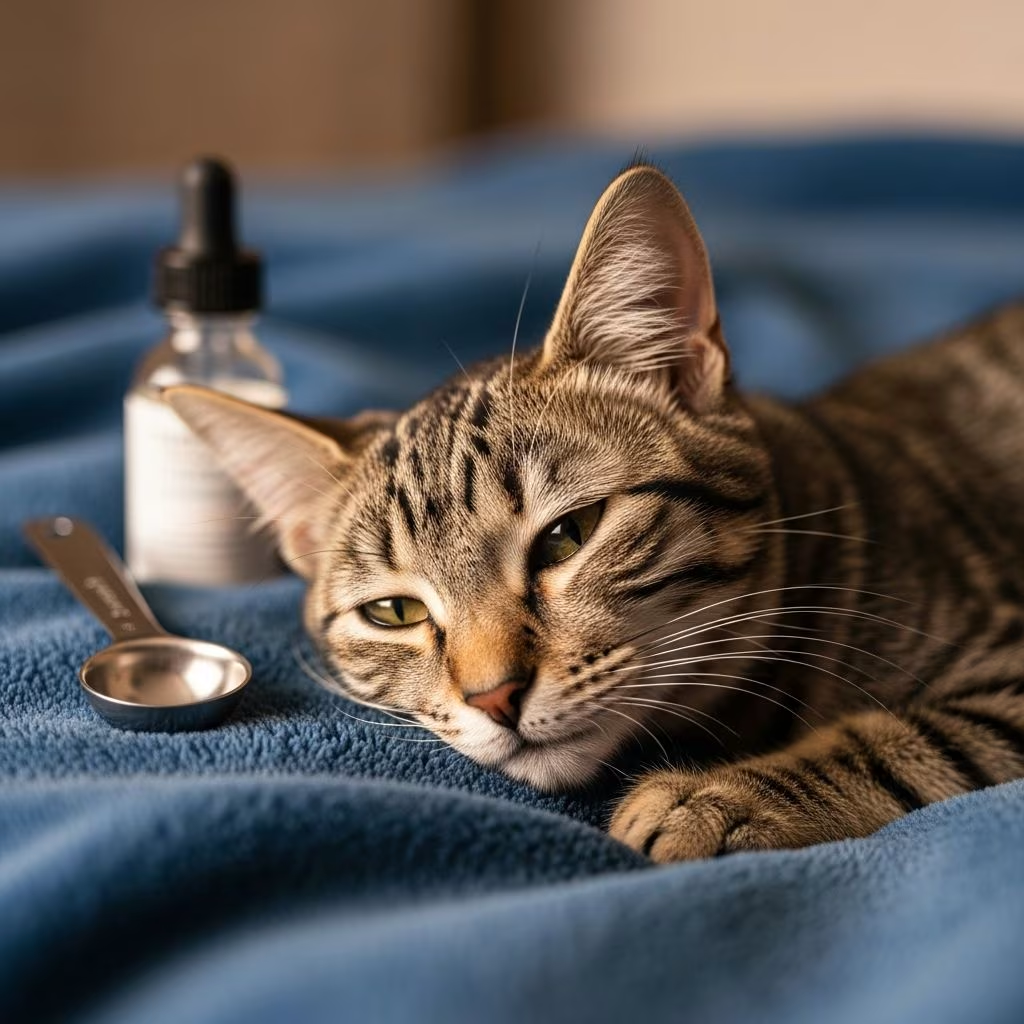
Understanding Midazolam: A Veterinary Sedative for Your Pet
Midazolam is a benzodiazepine medication widely used in veterinary medicine for its powerful sedative, anti-anxiety, and muscle relaxant properties. As a short-acting benzodiazepine, it has become an essential tool in veterinary practice, offering veterinarians a reliable option for managing anxiety, facilitating medical procedures, and ensuring patient comfort during surgical interventions. This comprehensive guide explores how midazolam works, its applications in veterinary medicine, proper dosing protocols, potential side effects, and important safety considerations pet owners should understand.
What Is Midazolam and How Does It Work?
Midazolam is an imidazobenzdiazepine that acts as an agonist on the GABAA receptor, a neurotransmitter in the brain responsible for producing calming effects. This mechanism of action produces multiple therapeutic effects including anticonvulsant properties, anxiolytic (anti-anxiety) effects, sedative and hypnotic actions, amnesic effects, and centrally mediated muscle relaxation. Unlike opioid analgesics, midazolam itself is not considered analgesic, meaning it does not directly relieve pain, though it is frequently used in combination with pain management medications.
The drug is known for causing minimal cardiovascular changes at clinically relevant veterinary doses, making it a safer option for pets with certain health conditions. However, it is associated with dose-related centrally mediated respiratory depression, which veterinarians carefully monitor during administration.
Primary Uses of Midazolam in Veterinary Medicine
Pre-Surgical Sedation
One of the most common applications of midazolam in veterinary practice is as a pre-operative sedative. Veterinarians administer midazolam before surgical procedures to help pets relax, reduce anxiety, and facilitate the induction of general anesthesia. This premedication approach reduces the overall anesthetic requirements needed during surgery. Research demonstrates that midazolam administration results in approximately a 14.3% decrease in isoflurane requirements during surgical procedures, representing a modest but clinically significant reduction in anesthetic concentration needed for surgical maintenance.
Seizure Management
Midazolam has proven highly effective for controlling seizures in veterinary patients, particularly in emergency situations. Studies comparing different routes of midazolam administration for seizure control demonstrate its superiority over traditional options. Intranasal midazolam appears safe and effective for achieving seizure control in canine patients, with efficacy and speed of onset comparable to intravenous administration. When compared to intravenous midazolam at the same dose, intranasal midazolam shows no significant difference in efficacy, with seizure cessation occurring in comparable timeframes. This is particularly valuable in emergency settings where obtaining intravenous access may be challenging during active seizure activity.
Anti-Anxiety and Behavioral Management
Veterinarians prescribe midazolam to manage anxiety in pets experiencing stress related to veterinary visits, hospitalization, or thunderstorms. The anxiolytic properties of midazolam help calm anxious pets, making them more manageable for veterinary examination and treatment. The medication’s amnesic effects also help pets forget stressful experiences, which can be beneficial for animals with anxiety-related behaviors.
Muscle Relaxation
The centrally mediated muscle relaxant effects of midazolam make it useful for pets experiencing muscle tension or spasticity. This property is particularly valuable when combined with other medications for comprehensive pain and anxiety management.
Routes of Administration
Midazolam can be administered through several different routes, each with specific advantages depending on the clinical situation:
– Intravenous (IV) administration: Provides rapid onset of action and is commonly used in emergency situations or during anesthesia induction. This route offers the quickest therapeutic effect when immediate sedation is required.- Intramuscular (IM) administration: Used when IV access is not immediately available or practical. This route provides a reliable alternative for pre-operative medication.- Intranasal administration: Increasingly recognized as an effective alternative, particularly for seizure management in dogs. This non-invasive route is especially valuable in emergency situations where obtaining IV access may delay treatment during active seizure activity.- Oral administration: May be used in some situations for mild anxiety management, though onset is slower than parenteral routes.
Dosage and Administration Guidelines
Veterinarians determine midazolam dosing based on the individual pet’s weight, age, health status, and the specific indication for use. The dose varies significantly depending on whether midazolam is used alone for premedication, combined with other medications, or administered for emergency seizure control. Pet owners should never attempt to estimate or adjust dosages themselves, as improper dosing can lead to inadequate sedation or overdose complications.
Your veterinarian will establish the appropriate dose for your pet’s specific situation and provide clear instructions regarding administration. It is critical to follow these instructions precisely and report any concerns about your pet’s response to the medication.
Potential Side Effects and Considerations
Common Side Effects
While midazolam is generally well-tolerated, certain side effects may occur:
– Drowsiness and sedation (the intended effect in many cases)- Reduced alertness and coordination- Mild changes in blood pressure- Respiratory depression at higher doses or prolonged use- Amnesia around the time of administration
Important Safety Considerations
Several factors warrant careful consideration when midazolam is prescribed for your pet:
– Liver and kidney function: Pets with hepatic or renal impairment may eliminate midazolam more slowly, increasing the risk of drug accumulation and prolonged effects.- Obesity: Overweight pets may have altered drug distribution due to midazolam’s high lipid solubility and large volume of distribution, potentially affecting dosing requirements.- Age considerations: Elderly pets may have extended half-lives (up to three times longer than younger animals) and may require dose adjustments or extended monitoring periods.- Cumulative effects: With prolonged or continuous administration, midazolam can accumulate in body tissues due to its pharmacokinetic properties, potentially extending recovery time.- Cardiovascular compromised patients: While midazolam causes less hypotension than some alternatives, pets with certain cardiac conditions require careful monitoring during administration.- Respiratory conditions: The dose-related respiratory depression associated with midazolam necessitates careful monitoring in pets with existing respiratory compromise.
Drug Interactions and Contraindications
Midazolam may interact with certain other medications and substances. Alcohol and other central nervous system depressants can potentiate midazolam’s effects. Pet owners must inform their veterinarian about all medications, supplements, and herbal products their pet is currently taking before midazolam administration.
Certain medical conditions may contraindicate midazolam use or require dose adjustments. These include severe liver disease, severe kidney disease, respiratory conditions, and certain cardiac conditions. Your veterinarian will conduct a thorough assessment of your pet’s health status before prescribing midazolam.
Comparison with Other Sedative Options
| Medication | Onset Time | Duration | Primary Advantages | Primary Disadvantages |
|---|---|---|---|---|
| Midazolam | Rapid (IV: <10 min; IN: 15 min) | 1.8-3 hours (extended in elderly) | Multiple routes; minimal cardiovascular effects; effective seizure control | Cumulative effects; respiratory depression; prolonged recovery in some patients |
| Propofol | Very rapid (IV) | Short (minutes) | Rapid recovery; minimal accumulation | Significant cardiovascular depression; requires IV administration; more expensive |
| Acepromazine | Moderate | Moderate to long | Inexpensive; multiple routes | Unpredictable effects; significant cardiovascular depression; cannot be reversed |
Recovery and Post-Administration Care
After midazolam administration, pets require appropriate monitoring and recovery time. The duration of recovery varies based on the dose administered, route of administration, and individual patient factors. Elderly pets and those with liver or kidney disease may experience prolonged recovery periods.
During recovery, pets should be monitored for proper breathing, maintained in a safe environment to prevent injury during disorientation, and kept warm as body temperature may drop slightly. Food and water should be withheld until the pet is fully alert and swallowing reflexes have returned to normal.
When to Contact Your Veterinarian
Contact your veterinarian immediately if your pet experiences:
– Difficulty breathing or shallow breathing- Unusual or excessive drowsiness lasting beyond expected recovery time- Signs of allergic reaction (facial swelling, hives, difficulty breathing)- Inability to stand or move after expected recovery time- Loss of consciousness beyond expected sedation- Any concerning behavioral changes
Frequently Asked Questions About Midazolam
Q: Can midazolam be used at home for anxious pets?
A: Midazolam can only be administered by a veterinarian or under direct veterinary supervision. Never attempt to give this medication to your pet without explicit veterinary guidance, as improper administration can be dangerous.
Q: How long does midazolam remain in a pet’s system?
A: The half-life of midazolam in healthy adult animals is typically 1.8 to 3 hours, though this can extend to three times longer in elderly pets and up to 6 hours with continuous infusion. Individual variation occurs based on age, liver function, kidney function, and body composition.
Q: Can midazolam be reversed if my pet has an adverse reaction?
A: Yes, midazolam can be reversed using flumazenil, a specific benzodiazepine antagonist. However, flumazenil reversal should only be administered by a veterinarian in a clinical setting. This is why proper veterinary supervision during midazolam administration is essential.
Q: Is midazolam safe for all pets?
A: While generally safe, midazolam is not appropriate for all pets. Pets with severe liver disease, kidney disease, respiratory conditions, or certain cardiac conditions may not be suitable candidates. Your veterinarian will determine if midazolam is appropriate for your pet after a thorough health evaluation.
Q: Can midazolam be combined with other medications?
A: Yes, midazolam is frequently combined with other medications for premedication protocols, anesthesia induction, and comprehensive pain management. Your veterinarian will determine the appropriate drug combinations based on your pet’s specific needs and health status.
Q: What should I do if I accidentally give my pet too much midazolam?
A: Contact your veterinarian or emergency veterinary clinic immediately. Provide information about the amount administered, time of administration, and your pet’s current condition. Do not wait for symptoms to develop; seek professional veterinary care immediately.
Conclusion
Midazolam is a valuable medication in modern veterinary practice, offering multiple therapeutic benefits for sedation, anxiety management, seizure control, and surgical premedication. Its multiple routes of administration, minimal cardiovascular effects at appropriate doses, and proven efficacy make it a popular choice for veterinarians. However, like all medications, midazolam requires proper veterinary oversight, appropriate dosing, and careful monitoring to ensure optimal safety and effectiveness for your pet. Always consult with your veterinarian regarding whether midazolam is appropriate for your pet’s specific situation and follow all administration instructions carefully.
References
- Current role of midazolam in the sedation of the ventilated critically ill patient — Medicina Intensiva. 2023. https://www.medintensiva.org/en-current-role-midazolam-in-sedation-articulo-S2173572723001856
- Intranasal midazolam as an alternative to rectal diazepam for seizure management in canine patients — Veterinary Evidence. 2023. https://veterinaryevidence.org/index.php/ve/article/download/689/1047
- Effects of midazolam on cardiovascular responses and isoflurane requirements during elective ovariohysterectomy in dogs — PubMed Central. 2019. https://pmc.ncbi.nlm.nih.gov/articles/PMC6297997/
- Addendum – Review midazolam – Sedation and premedication — European Commission. 2019-06. https://food.ec.europa.eu/document/download/55a7ea4b-990f-4370-b103-bca2dd7ef107_en
- The pharmacokinetics of midazolam after intravenous, intramuscular, and rectal administration in dogs — Journal of Veterinary Pharmacology and Therapeutics. https://onlinelibrary.wiley.com/doi/10.1111/jvp.12032



