

Understanding Cat Microchipping: A Permanent Solution for Pet Identification
In today’s world, pet owners face the constant worry of losing their beloved companions. Whether your cat slips out an open door or escapes during a move, the consequences can be devastating. While traditional identification methods like collars and ID tags have been the standard for decades, they come with significant limitations. Tags can fade, collars can break or slip off, and these methods offer no guarantee of reuniting lost pets with their owners. This is where microchipping emerges as a revolutionary solution—a safe, permanent, and reliable form of pet identification that has transformed the way animals are identified and recovered.
Microchipping technology represents a major advancement in pet safety. Unlike temporary forms of identification, a microchip provides lifelong protection for your feline friend. The procedure is quick, affordable, and backed by veterinary professionals worldwide as an essential component of responsible pet ownership.
What Is a Microchip and How Does It Work?
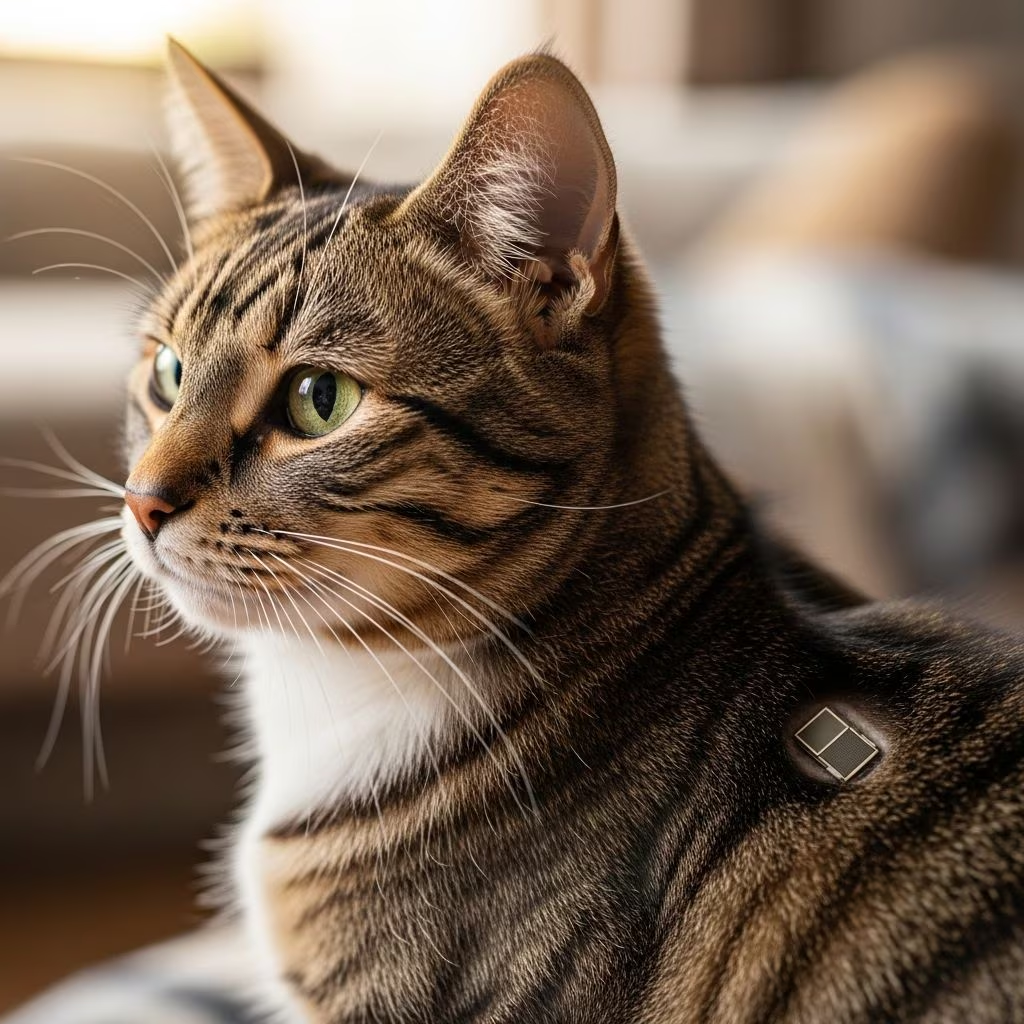
A pet microchip is a small, passive electronic device about the size of a grain of rice. It contains a unique identification number that is registered in a database containing your contact information. The microchip is implanted under the skin of your cat, typically between the shoulder blades, where it remains inert until it needs to be read.
The key feature that makes microchips so reliable is that they are completely passive devices. The microchip implanted in your cat has no battery and no internal power source; it sits inertly in the cat until it is read by a special microchip scanner. When a veterinary clinic, animal shelter, or rescue organization scans a microchipped pet, the scanner emits a radio frequency that activates the chip and retrieves its unique identification number. This number is then used to look up your contact information in the microchip registry database, allowing officials to contact you and arrange for your pet’s safe return.
This design offers several advantages over GPS trackers and other technology-based pet identification methods. Since microchips have no battery to replace or charge, they require absolutely no maintenance. They function reliably for the entire life of your pet without any degradation or need for updates to the physical device itself.
The Microchipping Procedure: What to Expect
Many pet owners worry about the microchipping procedure, but veterinarians consistently report that it is one of the simplest and quickest procedures performed in veterinary medicine. Understanding what happens during the procedure can help alleviate any concerns you might have about the process.
The Insertion Process
The microchip is inserted under the skin between the shoulder blades using a specialized needle loaded into an applicator syringe. The procedure itself takes only a few seconds. The sterile microchip is injected beneath the skin in a quick, straightforward motion. The chips are usually inserted without incident in awake animals, even in the tiniest kitten. Although the needle is large, it is sharp so that most animals do not even flinch when the chip is inserted.
The entire microchipping appointment typically takes just a few minutes. Your veterinarian will locate the appropriate spot between your cat’s shoulder blades, prepare the area, and inject the microchip. Many cats show minimal awareness that anything has occurred during the procedure.
Timing and Anesthesia Considerations
Microchipping can be performed during any wellness visit as soon as a kitten reaches about 8 weeks old. However, if your cat is already scheduled for another procedure—such as a dental cleaning or spay/neuter surgery—you can always add microchipping during that appointment. When your cat will be under anesthesia for another procedure, many pet owners opt to have the microchip implanted at the same time. In this scenario, your cat will be under anesthesia and won’t feel a thing, which further eases the procedure and eliminates any discomfort concerns.
Whether your cat receives the microchip while awake or under anesthesia for another procedure, the microchipping itself is equally effective. The choice between these options is largely a matter of personal preference and convenience.
Is Microchipping Painful?
The question of pain is one of the most common concerns pet owners express about microchipping. The good news is that discomfort is minimal and temporary. It hurts about as much as having blood drawn. The sensation your cat will experience during the actual implantation process is comparable to that of a vaccination or other injection. Most cats have no trouble receiving the microchip and show little to no reaction during the procedure.
The needle used for microchip insertion is designed to be sharp, which actually minimizes pain and tissue trauma. A sharp needle creates a cleaner injection tract than a duller needle would, reducing discomfort and the risk of complications. Many cat owners are surprised at how calmly their pets tolerate the procedure.
If you remain concerned about any potential discomfort, discuss your options with your veterinarian. They can address your specific concerns and help you decide whether you prefer to have your cat microchipped during a procedure where anesthesia is already planned.
Safety and Risks Associated with Microchipping
When considering any medical procedure for your pet, it is natural to think about potential risks. However, microchipping has an exceptional safety record and is recommended by veterinarians worldwide as a standard component of responsible pet ownership.
Safety Profile and Material Composition
Microchips are safe and have been designed to stay in place and work for the life of your pet. They are made from biocompatible materials that don’t cause allergic reactions or interfere with your pet’s health. These materials have been thoroughly tested and proven safe for implantation in animals. Microchips are inert devices with no battery or moving parts, meaning there is nothing inside the chip that can break down, leak, or cause harm to your pet.
The safety record of microchipping is impressive. The British Small Veterinary Association keeps track of reports of adverse reactions to microchips, and since 1996, only 391 adverse reactions have been reported out of over four million microchipped animals. This represents an adverse reaction rate of less than 0.01%, making microchipping one of the safest procedures in veterinary medicine.
Potential Complications
While complications are rare, it’s important to understand what risks exist so you can recognize them if they occur. The risks associated with microchipping are minimal. If done correctly by a professional veterinarian, the procedure is safe and risk-free.
Possible but uncommon complications include:
- Minor swelling or irritation: Some pets may experience minor discomfort, swelling, or irritation at the implantation site. This typically resolves within a few days without treatment.
- Infection: As with any injection or minor surgical procedure, there is a small risk of infection associated with the microchip injection. However, this risk is minimal when the procedure is performed by a licensed veterinarian using sterile technique and equipment.
- Chip migration: In rare cases, the microchip can migrate from its original location. However, within 24 hours, the pet’s subcutaneous tissues will bond to the microchip, holding it in place. It’s very rare for a microchip to migrate to other parts of the body. Even if migration occurs, it does not typically pose health risks, though it may complicate the scanning process.
- Lump formation: In very rare cases, a small lump may form around the implantation site. Serious complications like tumor formation are extremely uncommon.
If you notice any discharge or swelling at the implantation site that persists beyond a few days, contact your veterinarian immediately. In general, the benefits of microchipping your cat far outweigh the potential complications that may arise.
The Major Benefits of Microchipping Your Cat
The advantages of microchipping extend far beyond simple identification. This technology offers multiple layers of protection and peace of mind for cat owners.
Permanent Identification
Unlike collars and ID tags, microchips are not susceptible to wear and tear. Even if your pet manages to lose their collar, the microchip remains a reliable form of identification. The microchip will last your pet’s lifetime without degradation or need for replacement. This permanence ensures that your cat can be identified regardless of what happens to external identification methods.
Increased Chances of Reunification
According to the American Animal Hospital Association, microchipped pets are significantly more likely to be returned to their owners if lost. Veterinary offices and animal shelters are equipped to scan for microchips and identify the pet’s owner quickly. Studies have consistently shown that microchipped pets have substantially higher reunion rates compared to non-microchipped animals.
Proof of Ownership
Microchipping serves as proof of ownership in case of theft or disputes regarding pet ownership. The registration information in the microchip database establishes a clear timeline and documented ownership, which can be invaluable in legal disputes or if your cat is stolen.
Secure Information Storage
Your contact information is secure, and your privacy is protected in the microchip database. You can choose to provide your cell phone number or email address. The databases are safe, and the information is only visible when the chip is scanned. This means your personal information is not accessible to the public or to anyone without legitimate reason to access it.
Cost-Effectiveness
Microchipping is an inexpensive and durable procedure that lasts for the pet’s entire life. The initial microchipping procedure typically costs between $25 and $60, depending on your veterinarian and location. Registrations for the chip may involve a nominal fee. When compared to the emotional distress and potential costs associated with losing a pet, microchipping represents an excellent investment in your cat’s safety.
Maintaining Your Microchip Registration
The effectiveness of a microchip depends entirely on accurate, up-to-date registration information. A microchip is only useful if the database contains correct contact information that can be used to locate you.
It is essential to update your contact information regularly. If your contact information changes, you will need to update the microchip registry so that it is accurate. This includes updating your phone number, email address, or physical address whenever you move or change your contact details. Many pets are not reunited with their owners simply because the contact information on file is outdated.
To ensure maximum effectiveness, keep your microchip registration current by:
- Registering your chip immediately after the procedure
- Updating your information whenever you move
- Changing your contact details if you change phone numbers
- Reviewing your registration information annually
- Keeping a record of your microchip number in a safe place
Microchipping for Indoor and Outdoor Cats
While many cat owners assume microchipping is only necessary for outdoor cats, indoor cats also benefit from this protection. Even indoor cats can accidentally escape through an open door, during moves, or during veterinary emergencies. The unexpected can happen to any cat, regardless of lifestyle. For maximum security and peace of mind, many pet owners opt to use both a GPS tracker and an RFID microchip in conjunction, providing multiple layers of identification and recovery options.
Frequently Asked Questions About Cat Microchipping
Q: At what age can a kitten be microchipped?
A: Microchipping can be performed when a kitten reaches about 8 weeks old. However, microchipping can be done at any age, so even adult cats can be microchipped if they haven’t been already.
Q: Will a microchip set off metal detectors?
A: No, microchips are too small and contain no metal that would trigger standard metal detectors. They are passive devices that only respond to specific microchip scanners.
Q: How long does a microchip last?
A: A microchip will last for the entire life of your cat. Since it contains no battery or moving parts, it does not degrade or require replacement.
Q: Do all veterinary clinics and shelters scan for microchips?
A: The vast majority of veterinary clinics and animal shelters now have microchip scanners. The risk of a shelter or vet clinic not being able to scan the chip is low. The use of universal chips reduces this risk even further.
Q: What if my cat’s microchip migrates?
A: While chip migration is rare, most scanners can detect a microchip even if it has moved from its original location. If your chip does migrate, inform your veterinarian, and they can help ensure it remains functional and scannable.
Q: Is microchipping painful for cats?
A: No, microchipping is not painful. It causes discomfort comparable to a vaccination or blood draw. Most cats show minimal reaction to the procedure.
Q: Can a microchip be removed?
A: Microchips can technically be removed surgically, but this is rarely necessary and not recommended. Removal requires a surgical procedure and would eliminate your cat’s permanent identification protection.
Q: What happens if I don’t update my registration information?
A: If your contact information is not current in the microchip database, you may not be found if your cat is lost. Always maintain up-to-date registration information.
Conclusion: Making the Right Choice for Your Cat
Cat microchipping represents one of the most important decisions you can make for your pet’s safety and wellbeing. The procedure is quick, painless, affordable, and backed by extensive safety data. The benefits of microchipping far outweigh any risks. Complications are rare, and the benefits of having a microchip offer peace of mind knowing that your beloved feline has the best possible chance of being returned to you if lost.
Veterinarians worldwide recommend microchipping as an essential component of responsible pet ownership. By microchipping your cat and maintaining accurate registration information, you are taking a proactive step to protect one of your family’s most cherished members. Don’t wait until your cat is lost to consider this vital form of protection—microchip your cat today.
References
- Pet Microchipping FAQs — American Animal Hospital Association (AAHA). Accessed November 28, 2025. https://www.aaha.org/resources/pet-microchipping-faqs/
- Microchipping Your Cat — VCA Animal Hospitals. Accessed November 28, 2025. https://vcahospitals.com/know-your-pet/microchipping-your-cat
- 5 Things You Need to Know About Microchipping Your Pet — Virginia Tech College of Veterinary Medicine. 2023. https://vetmed.vt.edu/news/2023/microchipping-your-pet.html
- Microchipping Pets: Benefits and Risks — Coastal Sunrise Animal Hospital. Accessed November 28, 2025. https://coastalsunriseah.com/microchipping-pets-benefits-and-risks/
- Cat Microchipping — Horizon Veterinary Care. Accessed November 28, 2025. https://www.horizonvetcare.com/services/cat-microchip
- Microchipping for Pets: Benefits, Risks, and How It Works — Los Angeles Times. Accessed November 28, 2025. https://www.latimes.com/companion-animals/advice/care/story/pet-microchipping-guide



