

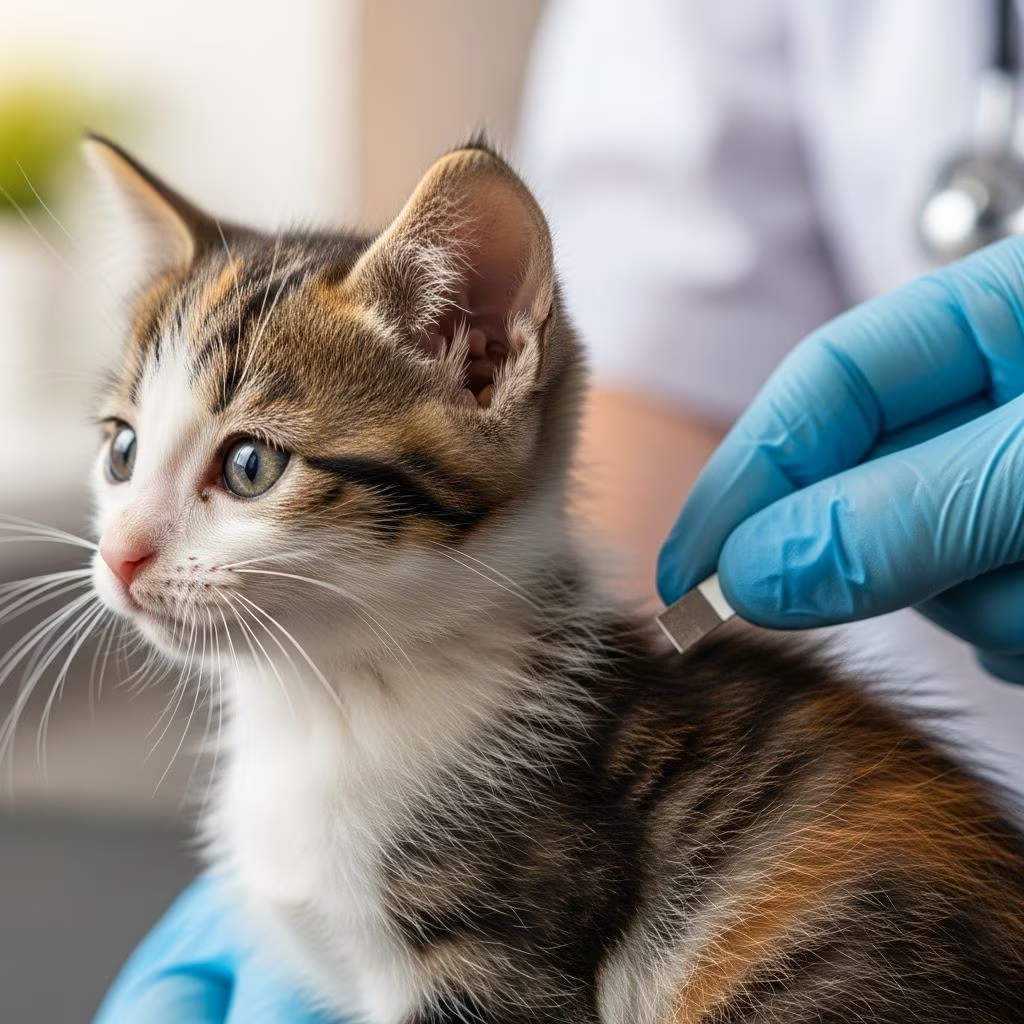
Microchipping kittens offers a permanent, reliable identification method that dramatically boosts the chances of reuniting lost pets with their owners. This tiny implant, no larger than a grain of rice, provides lifelong security without the risks associated with collars or tags.
Understanding Microchip Technology for Pets
Microchips are radio frequency identification devices designed specifically for animal use. Encased in biocompatible glass, they contain a unique serial number that can be scanned by compatible readers at veterinary clinics, shelters, and animal control facilities. Unlike GPS trackers, microchips do not transmit location data; they only reveal identification information when scanned.
The technology relies on passive RFID, meaning the chip activates only when a scanner passes over it, emitting the code without needing power. This makes it maintenance-free and ideal for kittens, as it integrates seamlessly into their bodies over time.
Key Advantages of Microchipping Your Kitten
Implementing microchipping early in your kitten’s life yields multiple benefits, far outweighing minor drawbacks.
- Higher Reunion Rates: Studies from the American Veterinary Medical Association show microchipped cats reunite with owners at 38.5% versus just 1.8% for non-chipped cats, highlighting its effectiveness even for indoor pets that escape unexpectedly.
- Permanent and Tamper-Proof: Unlike collars that slip off during frights like storms or fireworks, the subcutaneous implant stays put for life, unaffected by growth or activity.
- No Maintenance Required: With no battery or parts to fail, one procedure suffices for your kitten’s entire lifespan, offering cost-effective, hassle-free protection.
- Medical Information Access: Registries can store health details like allergies or vaccination history, aiding emergency care when you’re not present.
- Deterrence Against Theft: Thieves avoid chipped pets due to easy traceability, providing proof of ownership to authorities.
Potential Drawbacks and How to Address Them
While highly beneficial, microchipping has minor cons that informed owners can mitigate.
| Pros | Cons | Mitigation |
|---|---|---|
| Increased return rates for lost kittens | Small infection risk from insertion | Follow vet post-care; rare occurrence |
| Lifelong, battery-free ID | Requires scanning; not all facilities do routinely | Choose universal scanners; advocate for checks |
| Quick procedure | Registration updates needed if info changes | Set calendar reminders for updates |
| Peace of mind | Cost (typically $20-50) | One-time fee; often bundled with visits |
These factors make microchipping a net positive, especially since complications like migration or failure are exceedingly rare when done by professionals.
Ideal Timing for Microchipping Kittens
Veterinarians recommend microchipping kittens between 14-16 weeks old, aligning with routine wellness exams or spay/neuter surgeries. Younger implantation is possible—even in tiny kittens—as the sharp needle causes minimal discomfort akin to a vaccine. Delaying risks unexpected escapes before protection is in place.
For adopted or rescued kittens, check for existing chips first via scan. If none, proceed promptly, as indoor cats still face risks from open doors or windows.
Step-by-Step Microchipping Process
The procedure is straightforward, taking seconds in a vet’s office.
- Schedule Appointment: Contact your veterinarian; often done during puppy/kitten shots.
- Preparation: No fasting or anesthesia needed; calm handling suffices.
- Implantation: Vet uses a large-gauge needle to inject the chip under the skin, typically between shoulder blades. Feels like a routine shot.
- Verification Scan: Immediate scan confirms placement and readability.
- Registration: Owner receives serial number to register online or by phone with a national database like PetLink or AKC Reunite.
Post-procedure, monitor for swelling (rare); normal activity resumes instantly.
Registration: The Critical Next Step
Implantation alone isn’t enough—registration links the chip’s code to your contact details. Use manufacturer-provided info or universal registries supporting 15-digit ISO standards for global compatibility. Update promptly for moves or number changes to ensure rescuers reach you.
Multiple registries exist; some vets offer lifetime registration services. International travel benefits from compliant chips meeting country-specific standards.
Post-Microchipping Care Instructions
- Check site daily for first week: redness or discharge warrants vet call.
- Avoid excessive rubbing; e-collars rarely needed.
- Rescan at future visits to verify position.
- Combine with collar tags for layered ID—microchip as backup.
These steps ensure optimal function, with most kittens showing no signs of the chip.
Cost Analysis and Value Proposition
Microchipping costs $20-60, often discounted in vaccine packages. Compare to shelter fees or emotional toll of loss: reunion stats prove invaluable ROI. Lifetime registries may add $10-20 annually, but prevent irreplaceable heartache.
Common Myths About Kitten Microchipping Debunked
- Myth: It’s painful. Reality: Comparable to vaccination; no anesthesia required.
- Myth: Tracks location. Reality: Passive ID only, no GPS.
- Myth: Only for outdoor cats. Reality: Escapes happen indoors too; stats favor all pets.
- Myth: Chips cause cancer. Reality: Decades of use show no causal link; glass casing inert.
Frequently Asked Questions (FAQs)
Can I microchip my kitten at home?
No, professional vets ensure proper placement and sterility. DIY risks migration or infection.
What if my kitten loses the microchip?
Extremely rare; chips are designed to stay put. Rescanning locates issues early.
Does microchipping replace collars?
No—use both. Collars visible first; chip permanent backup.
Is it mandatory?
Not legally in most areas, but shelters increasingly require it. Highly recommended by AVMA.
How do I update registry info?
Online portals or phone; keep records handy.
Enhancing Protection with Complementary Measures
Pair microchipping with ID collars, leashes for walks, secure enclosures, and neighborhood alerts via apps like Nextdoor. Train recall commands and microchip all pets in multi-pet homes for comprehensive safety nets.
For travel, verify airline/shelter scanner compatibility. Educate family on chip location for quick checks if lost.
References
- Should I get my cat microchipped? — Dells Animal Hospital. 2024-02-15. https://www.dellsanimalhospital.net/site/blog/2024/02/15/get-cat-microchipped
- Microchipping Cats: Pros and Cons — Ponderosa Veterinary Clinic. N/A. https://ponderosavetclinic.com/microchipping-cats-pros-and-cons/
- The Long-Term Benefits of Microchipping Your Pet — Affordable Veterinary Services. N/A. https://www.affordableveterinaryservices.com/services/microchipping/benefits/the-long-term-benefits-of-microchipping-your-pet
- The Priceless Benefits of Microchipping Your Pet — American Animal Hospital Association (AAHA). N/A. https://www.aaha.org/resources/the-priceless-benefits-of-microchipping-your-pet/
- The Importance of Microchipping: Safeguarding Your Pet’s Future — Lone Oak Animal Clinic. N/A. https://www.loneoakanimalclinic.com/blogs/the-importance-of-microchipping-safeguarding-your-pets-future
- 3 Major Benefits of Pet Microchipping — Carolina Beach Animal Hospital. N/A. https://www.carolinabeachanimalhospital.com/blog/3-major-benefits-of-pet-microchipping
- Microchipping Your Cat — VCA Animal Hospitals. N/A. https://vcahospitals.com/know-your-pet/microchipping-your-cat



