

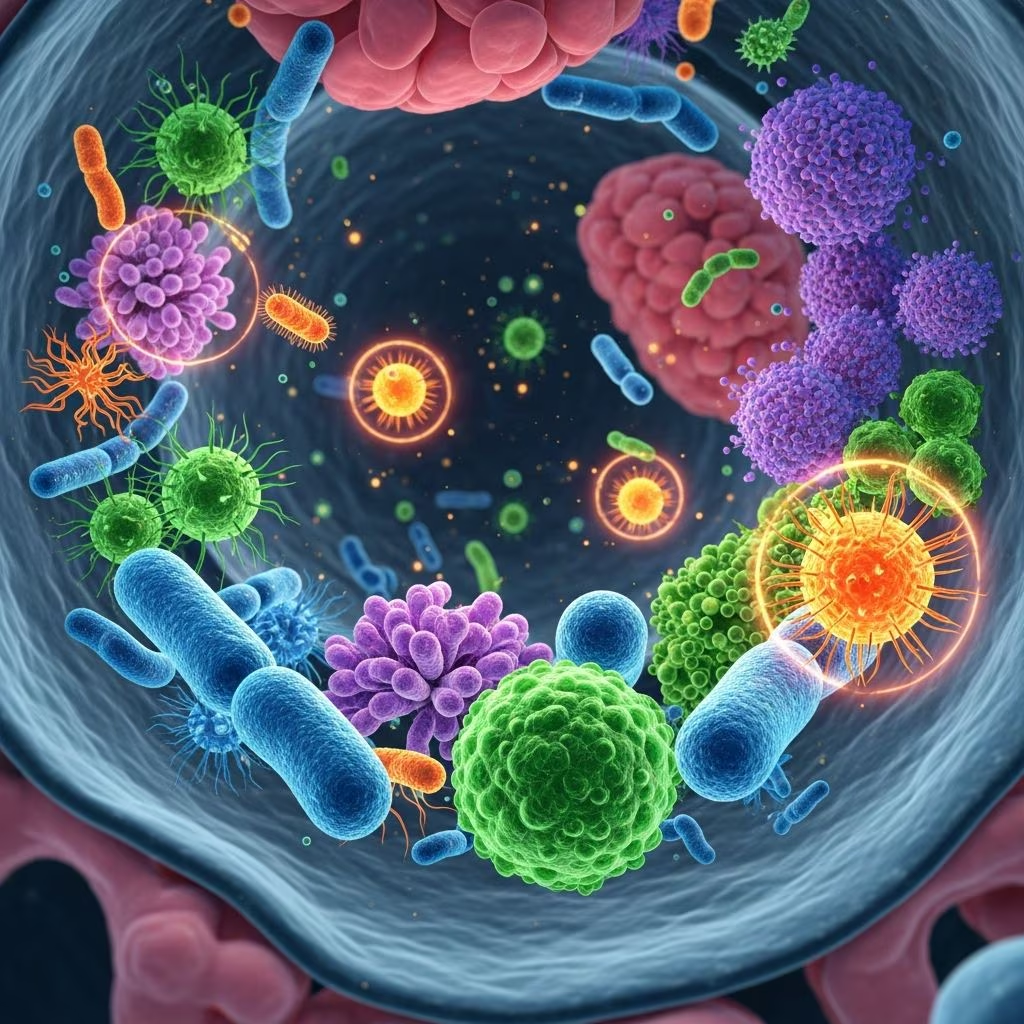
Every animal, from household pets to livestock, shares its body with trillions of microorganisms that form a complex ecosystem. These permanent microbial residents play a fundamental role in maintaining health, defending against disease, and supporting vital biological functions. Understanding this invisible community is essential for pet owners and veterinary professionals seeking to optimize animal wellness and recognize when microbial populations become problematic.
The Foundation of Animal Microbiology
Permanent microbial residents represent a distinct category of microorganisms that establish lasting relationships with their animal hosts. Unlike temporary visitors that may colonize the body for brief periods, these microorganisms occupy specific anatomical locations where they thrive and reproduce consistently throughout an animal’s life. The colonization process begins early, establishing foundational microbial communities that persist and evolve as the animal matures.
The sheer abundance of these microorganisms is remarkable. In most animals, microbial cells vastly outnumber the body’s own cells, creating a situation where the host harbors far more foreign DNA than its own genetic material. This dramatic numerical advantage underscores the significance of microbial communities in overall animal physiology and health maintenance.
Distribution and Habitat Preferences
Resident microorganisms are not uniformly distributed throughout animal bodies. Instead, they establish concentrated populations in specific anatomical regions where environmental conditions prove optimal for their survival and reproduction.
The skin represents one of the most densely colonized surfaces, with the outermost epidermal layer hosting approximately 80 percent of cutaneous microorganisms. Within the skin, concentrations vary dramatically by location. Areas rich in oil-producing glands—including the scalp, forehead, underarm regions, chest, and upper back—support significantly higher microbial populations than other skin sites. The remaining 20 percent of skin-dwelling microorganisms penetrate deeper, residing within sebaceous glands at depths up to 0.3 millimeters below the surface.
Beyond the skin, resident flora establish communities in:
- The oral cavity and nasopharynx, harboring diverse anaerobic bacteria
- The respiratory tract upper regions
- The gastrointestinal system, particularly the large intestine
- Mucosal surfaces throughout the body
- The reproductive tract
Each anatomical site supports distinct microbial species adapted to local environmental conditions, including pH levels, nutrient availability, temperature, and oxygen concentration.
Dominant Species and Their Characteristics
Certain bacterial species predominate in animal microbiota due to their physiological adaptation to specific body sites. Understanding these dominant organisms provides insight into normal microbial health.
On skin surfaces, Staphylococcus epidermidis comprises approximately 90 percent of resident bacteria in many animals. This gram-positive organism establishes robust populations across various skin regions and forms biofilms—protective matrix structures that shield bacterial communities from environmental threats. Despite its prevalence, S. epidermidis typically remains benign unless circumstances allow it to penetrate beneath intact skin barriers or establish infections through medical devices.
The skin also harbors propioni and corynebacteria, which maintain harmless relationships with their hosts under normal conditions. In oral cavities and nasopharyngeal regions, Streptococcus viridans emerges as the predominant species, followed by lactobacilli. The nasopharynx additionally hosts streptococci and neisseria species.
Gastrointestinal regions support extraordinarily diverse microbial communities, with some intestinal sites harboring several hundred different bacterial species. This complexity reflects the sophisticated ecological niche that the digestive system represents.
Protective Functions and Health Benefits
Resident flora provide multiple essential protective mechanisms that defend animals against pathogenic microorganisms and support overall health. These beneficial relationships extend far beyond mere coexistence.
The most fundamental protective function involves competitive exclusion. By occupying available ecological niches and consuming local nutrients, resident microorganisms prevent pathogenic bacteria and fungi from establishing footholds on animal tissues. Their metabolic byproducts actively inhibit the growth of non-resident organisms, creating biochemical barriers against infection.
Beyond direct competition, resident flora contribute to metabolic processes essential for host health:
- Facilitating food digestion and nutrient absorption
- Synthesizing essential vitamins that the host body cannot produce independently
- Supporting immune system development and function
- Maintaining appropriate inflammatory responses in mucosal tissues
The gastrointestinal tract exemplifies the sophisticated relationship between resident flora and immune function. The controlled inflammation maintained by normal gut bacteria plays a crucial role in developing local immune responses that protect against pathogens while preserving tissue integrity and function. This delicate balance demonstrates how resident microorganisms actively participate in immune education and tolerance mechanisms.
Factors Influencing Microbial Composition
The specific species comprising an animal’s resident flora varies considerably based on environmental, behavioral, and physiological factors. This variation reflects the dynamic nature of microbial ecosystems.
Dietary composition significantly influences which bacterial species thrive in the gastrointestinal tract and potentially on other mucosal surfaces. Age-related changes alter microbial communities throughout an animal’s lifespan, with young animals establishing initial populations and older animals supporting different species compositions. Antibiotic exposure dramatically restructures resident flora by selectively eliminating susceptible species while allowing resistant organisms to proliferate unchecked.
Additional influential factors include:
- Sanitary conditions and environmental hygiene
- Climate and atmospheric pollution exposure
- Hygienic practices and grooming behaviors
- Stress levels and general health status
- Genetic predisposition toward specific microbial communities
Despite this environmental sensitivity, resident flora demonstrate remarkable resilience. When temporarily disrupted through washing, grooming, or antibiotic treatment, these microbial communities characteristically reestablish themselves promptly, returning to their baseline composition and function.
When Resident Flora Become Problematic
Although resident microorganisms typically coexist peacefully with their hosts, specific circumstances can transform these beneficial residents into disease-causing pathogens. Understanding these conditions enables better prevention and management strategies.
Antimicrobial Therapy and Secondary Infections
Antibiotic administration fundamentally alters resident flora composition by killing susceptible bacterial species while leaving resistant organisms unaffected. This selective elimination creates ecological imbalance, allowing formerly suppressed species to proliferate explosively. A classic example occurs when antibiotic treatment for urinary tract infections eliminates resident vaginal bacteria, permitting opportunistic yeast species to multiply unchecked and cause secondary fungal infections.
Barrier Disruption and Invasive Infection
Intact skin and mucous membranes create barriers that confine resident flora to appropriate anatomical locations. When injuries, surgical procedures, or wounds breach these barriers, resident microorganisms gain access to sterile internal tissues where they were never meant to reside. Skin wounds may allow cutaneous bacteria to establish subcutaneous infections, while intestinal surgery can permit luminal bacteria to contaminate the normally sterile peritoneal cavity, causing severe abdominal infections.
Immunosuppression and Opportunistic Infection
Animals with compromised immune systems—whether from viral infections, malignancy, corticosteroid therapy, or chemotherapy—lose their ability to contain resident flora within appropriate boundaries. Opportunistic pathogens like Staphylococcus epidermidis, normally harmless on skin surfaces, become highly pathogenic in immunocompromised hosts, particularly when medical devices provide direct access to the bloodstream.
Clinical Significance in Veterinary Practice
Understanding resident flora provides veterinary professionals with diagnostic and prognostic tools for identifying infections and predicting disease patterns. The presence of specific bacterial species in culture samples helps clinicians distinguish between contamination from resident flora and genuine pathogenic infection.
For example, the isolation of Streptococcus pneumoniae from respiratory samples may indicate pneumonia, while Staphylococcus aureus recovery from skin or intravenous catheter sites suggests potential infection requiring intervention. Conversely, the unexpected isolation of typically sterile-site bacteria—such as intestinal Escherichia coli from blood cultures—indicates serious underlying abnormalities demanding investigation.
Recognition of normal flora helps veterinarians avoid misinterpreting colonization as infection, preventing unnecessary treatment while maintaining vigilance for genuine pathogens.
Maintaining Microbial Balance in Companion Animals
Pet owners can support healthy resident flora through several practical approaches. Appropriate grooming maintains skin health while allowing beneficial bacteria to persist. Balanced nutrition provides the dietary substrates that support optimal microbial communities throughout the gastrointestinal tract. Limiting unnecessary antibiotic exposure preserves resident flora integrity, while completing prescribed antimicrobial courses when medically necessary prevents the emergence of antibiotic resistance.
For animals receiving prolonged antibiotic therapy, veterinarians may recommend probiotic supplementation—the administration of beneficial living microorganisms intended to restore disrupted microbial communities. These interventions remain an area of active research, with mechanisms of action still requiring full elucidation.
The Future of Microbiome Science in Veterinary Medicine
Emerging research continues expanding our understanding of resident flora’s role in animal health and disease. Microbiome analysis—detailed characterization of microbial communities through advanced molecular techniques—is revealing previously unknown species and symbiotic relationships that influence everything from immune development to behavioral patterns.
This growing knowledge base promises improved diagnostic accuracy, more targeted therapeutic interventions, and enhanced preventive strategies that optimize natural microbial defenses rather than indiscriminately disrupting them.
References
- Resident Flora Definition – Microbiology Key Term — Fiveable. Accessed February 24, 2026. https://fiveable.me/key-terms/microbio/resident-flora
- Resident Skin Flora — HARTMANN SCIENCE CENTER. Accessed February 24, 2026. https://www.hartmann-science-center.com/en/hygiene-knowledge/glossary/glossary-18/
- Resident Flora — Merck Manual Consumer Version. Merck Manuals. https://www.merckmanuals.com/home/infections/biology-of-infectious-disease/resident-flora
- Normal & Transient Floras: Definition & Causes — Study.com. Accessed February 24, 2026. https://study.com/academy/lesson/sanitization-procedures-for-medical-asepsis.html
- Resident Bacterial Flora and Immune System — PubMed Central, National Center for Biotechnology Information. 2002. https://pubmed.ncbi.nlm.nih.gov/12408438/



