

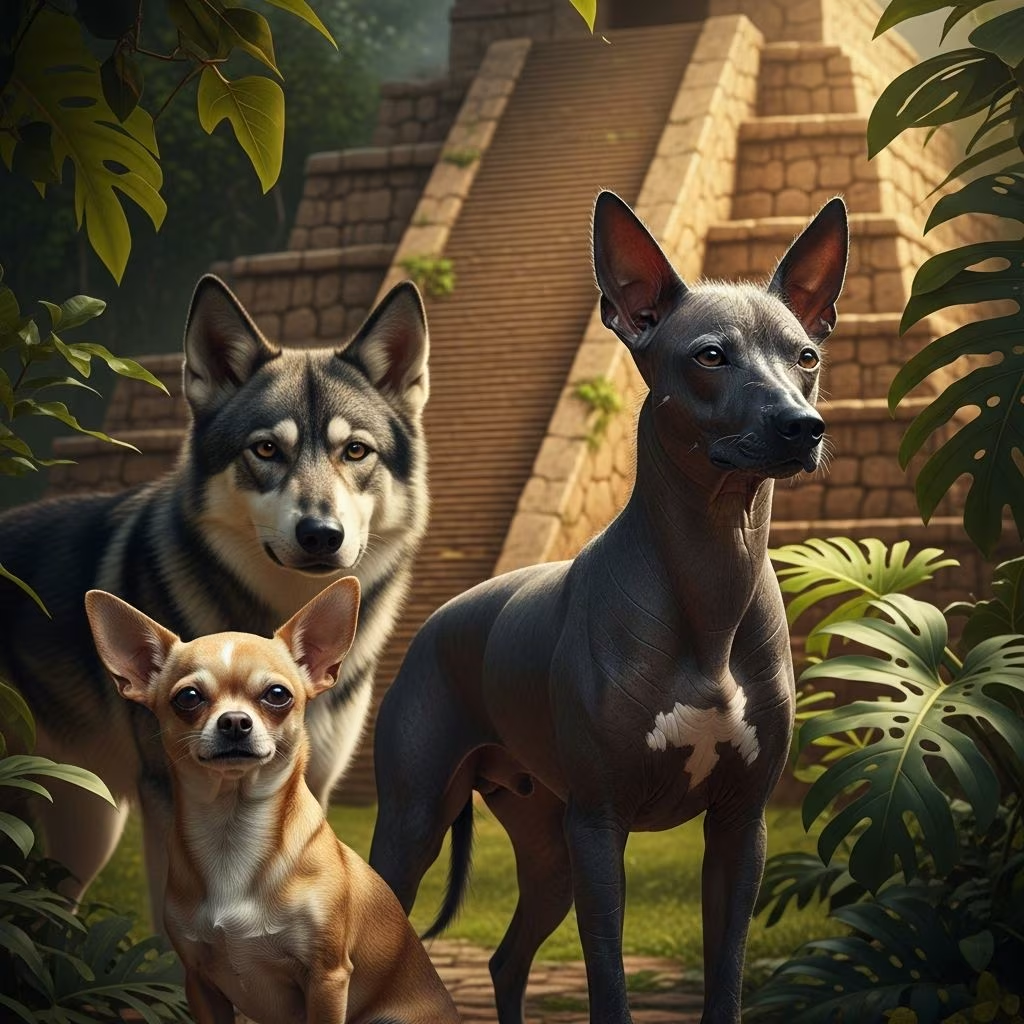
Mexico’s contribution to the world of canine companions extends far beyond the popular Chihuahua. The nation boasts a rich tapestry of dog breeds that reflect centuries of cultural evolution, indigenous traditions, and deep spiritual connections. From ancient Aztec times through the modern era, Mexican dog breeds have served as guardians, spiritual guides, and beloved family members. Understanding these breeds offers insight into Mexican heritage and the enduring bond between humans and their four-legged companions.
The Spiritual Roots of Mexican Canines
The relationship between Mexican civilizations and dogs dates back thousands of years. Archaeological evidence reveals that ancient Aztec and Mayan cultures held dogs in extraordinary reverence, viewing them not merely as pets but as spiritual entities with profound meaning. These ancient peoples believed certain dog breeds possessed the ability to ward off malevolent forces and guide souls through the afterlife. Dogs featured prominently in religious ceremonies, artistic expressions, and daily rituals, representing far more than simple companionship.
The Aztecs, in particular, developed a sophisticated understanding of canine genetics and selective breeding, deliberately cultivating specific dog types for various purposes including hunting, protection, and ceremonial use. This ancient knowledge forms the foundation of Mexico’s distinctive dog breeds, many of which have remained relatively unchanged for millennia despite the pressures of colonization and modernization.
The Xoloitzcuintli: Mexico’s Ancient Pride
Among all Mexican dog breeds, the Xoloitzcuintli (pronounced show-low-eats-queen-tlee) stands as the most historically significant and culturally emblematic. This remarkable breed represents one of humanity’s oldest domesticated dog varieties, with archaeological remains suggesting the breed dates back approximately 5,500 years. The name itself derives from Xolotl, the Aztec god of fire and the underworld, combined with Itzcuintli, the Nahuatl word for dog.
The Xoloitzcuintli exists in multiple variations, allowing potential owners to select the size best suited to their circumstances. The breed appears in three distinct size categories: toy (under 14 inches), miniature (14 to 18 inches), and standard (18 to 23 inches). Remarkably, the breed also comes in both hairless and fully coated varieties, with the hairless variant being the most recognized and celebrated form globally.
What makes the hairless Xolo particularly striking is its distinctive physical appearance. These dogs feature smooth, wrinkled skin that feels surprisingly warm to the touch, resembling human skin rather than typical fur-covered canines. Large, bat-like ears dominate their heads, providing exceptional hearing capabilities that ancestors relied upon for hunting and protection. Unfortunately, the breed is prone to dental abnormalities and tooth loss, with many individuals displaying the characteristic hanging tongue that has become iconic in popular culture representations.
Near Extinction and Remarkable Revival
The Xoloitzcuintli’s journey nearly ended tragically during the Spanish colonial period. As European dog varieties flooded Mexican territories, local breeds faced systematic replacement. More devastatingly, Spanish conquistadors and settlers developed an appetite for Xolo meat, viewing them as a food source rather than companions. This combination of cultural displacement and direct consumption pushed the breed toward extinction, with interbreeding further diluting the gene pool and erasing distinctive Xolo characteristics.
The breed’s revival represents one of the most inspiring rescue stories in canine history. During the 1950s, dedicated dog enthusiasts organized efforts to preserve the remaining Xolos. Through painstaking searches of remote Mexican regions, these conservationists managed to locate and identify just 10 surviving purebred individuals. These ten dogs became the foundation stock from which the modern Xolo population was rebuilt, demonstrating how a breed on the brink of complete extinction could be restored through determination and scientific breeding practices.
A pivotal figure in this revival was renowned Mexican artist Diego Rivera, who established the first official breeding kennel in 1925. Rivera and his wife, the acclaimed artist Frida Kahlo, not only bred Xolos but immortalized them in their groundbreaking artwork, bringing international attention to the breed during a critical period. Their efforts helped elevate the Xoloitzcuintli from obscurity back into cultural prominence, ultimately leading to official recognition by the Canófila Federación Mexicana (Mexican Canofile Federation) and the American Kennel Club.
The Chihuahua: Tiny Breed with Tremendous Personality
The Chihuahua holds the distinction of being one of the world’s smallest dog breeds while simultaneously ranking among the most recognizable. Originating from Mexico’s northern state of the same name, the Chihuahua weighs typically no more than six pounds despite possessing a personality that belies its diminutive size. This breed represents Mexico’s most famous canine export, serving as the nation’s beloved mascot worldwide.
Chihuahuas demonstrate remarkable intelligence combined with a somewhat independent streak that requires consistent, patient training from an early age. These dogs excel as agility competitors and excel at learning tricks, making them ideal for owners seeking an intelligent, trainable companion. Their combination of intelligence and undeniable cuteness has earned them a reputation for skillful manipulation, often successfully using charm and cleverness to negotiate favorable household arrangements with their human families.
The breed’s versatility across three size categories—toy, miniature, and standard—allows prospective owners to select the perfect companion regardless of living space constraints. Chihuahuas are known for their fierce loyalty, boundless confidence, and spirited personalities that transform them into engaging household members capable of both playfulness and protective behavior when circumstances demand it.
Lesser-Known Breeds Deserving Recognition
The Calupoh: Wolf-Dog Heritage
The Calupoh, alternatively called the Mexican Wolfdog, represents a fascinating intersection between domesticated canines and wild wolf ancestry. This rare breed emerged from intentional crossbreeding between indigenous Mexican dogs, including Xoloitzcuintli stock, and wolves inhabiting central Mexico’s wilderness areas. The resulting animals possess an impressive, wolf-like appearance combined with domesticated behavioral traits that make them suitable for experienced dog handlers.
Historically revered by native Mexican cultures as symbols of strength and resilience, Calupohs carry deep cultural significance reflecting their powerful lineage. The breed displays remarkable endurance, agility, and territorial instincts that traditionally made them invaluable as sheepdogs, cattle herding dogs, and property guardians. Their elongated legs enable impressive running speeds while their stable temperament facilitates training and socialization when handled by knowledgeable owners. Though rare today due to historical pressures against native species preservation following colonization, the Calupoh remains an emblematic symbol of indigenous Mexican dog culture.
The Chamuco: Mexico’s Powerful Guardian
The Chamuco, commonly referred to as the Mexican Pit Bull, represents a distinctly different breed from the American Pit Bull Terrier despite both sharing guard dog characteristics. Distinguished by a more compact and muscular frame than their American counterparts, Chamucos project fierce confidence and protective instincts that have earned them prominent placement in Mexican folklore and urban legends.
Chamucos are renowned for their bravery, confidence, and protective nature, though their naturally aggressive temperament requires proper training to safely integrate into household environments. When raised in loving homes with appropriate socialization and guidance, these powerful dogs reveal their capacity for genuine affection toward family members, particularly children. Regrettably, the breed faces near-extinction today due to historical involvement in illegal dog fighting operations where they were bred specifically for combat rather than companionship. Modern efforts focus on promoting responsible breeding practices and highlighting the Chamuco’s positive qualities as a loyal family protector.
Common Characteristics Uniting Mexican Breeds
Despite their diversity in size, temperament, and appearance, Mexican dog breeds share several distinctive characteristics shaped by centuries of selective breeding and cultural interaction:
- Exceptional Intelligence: Mexican breeds consistently demonstrate rapid learning capacity and excel when provided proper training and mental stimulation
- Distinctive Ear Structure: Many Mexican breeds feature notably large, expressive ears that support enhanced auditory capabilities evolved during hunting and protective duties
- Dual Coat Options: Several breeds, most notably the Xoloitzcuintli, offer both hairless and fully coated varieties, providing flexibility for different environmental preferences and allergy considerations
- Rich Historical Narratives: Each breed carries stories spanning hundreds or even thousands of years, with traditions deeply embedded in Mexican cultural identity
- Loyalty and Devotion: Mexican breeds consistently display remarkable loyalty to their families and demonstrate protective instincts rooted in their ancestral roles as guardians and companions
Modern Recognition and Global Appreciation
Contemporary recognition of Mexican dog breeds has expanded significantly, particularly through entertainment and cultural representation. The Pixar animated film Coco featured the Xoloitzcuintli prominently, introducing millions of viewers to this ancient breed’s spiritual significance and visual distinctiveness. This mainstream exposure has contributed to increased international interest in Mexican breeds and greater appreciation for their unique qualities.
The Xoloitzcuintli’s unusual appearance has also generated notice in competitions celebrating unconventional canine aesthetics, with several individuals appearing in the running for various “World’s Ugliest Dog” competitions. Rather than diminishing the breed’s appeal, this playful recognition has endeared them to dog enthusiasts who appreciate their distinctive charm and historical importance beyond conventional beauty standards.
Genetic Studies and Modern Understanding
Recent genomic research has provided fascinating insights into the evolutionary development of modern Mexican breeds. Sequencing of ancient dog genomes revealed that contemporary Mexican breeds including the Chihuahua and Xoloitzcuintli derive surprisingly modest amounts of ancestry from pre-colonial dogs, with the Chihuahua showing approximately 4% and the Xoloitzcuintli only 3% pre-Columbian genetic contribution. This scientific finding suggests that modern Mexican breeds represent more recent reconstructions based on selective breeding principles rather than direct genetic continuations of ancient populations.
The hairless characteristic observed in Xoloitzcuintli and certain other Mexican breeds results from canine ectodermal dysplasia, a condition caused by mutation on the FOXI3 autosomal gene. Understanding this genetic mechanism has enabled breeders to maintain the distinctive hairless trait while managing associated health considerations such as dental abnormalities.
Choosing a Mexican Breed: Considerations for Prospective Owners
Potential owners interested in Mexican breeds should understand that each variety demands specific care approaches and living situations. Hairless Xolos require protection from extreme temperatures and sun exposure due to their lack of protective fur coating. Chihuahuas, despite their small size, need consistent training and socialization to prevent behavioral issues stemming from their independent nature. Rarer breeds like the Calupoh and Chamuco require experienced handlers capable of managing their protective instincts and providing appropriate outlets for their energy and territorial drives.
All Mexican dog breeds benefit tremendously from owners who appreciate their cultural heritage and historical significance, viewing them as living connections to ancient civilizations rather than mere pets. This deeper understanding fosters appreciation for their unique physical characteristics, behavioral traits, and the remarkable survival stories that have defined their journey through human history.
Frequently Asked Questions
What makes the Xoloitzcuintli unique among dog breeds?
The Xoloitzcuintli stands as one of humanity’s oldest domesticated dog breeds, dating back approximately 5,500 years. Its distinctive hairless variety, spiritual significance in Aztec culture, and remarkable revival from near-extinction make it uniquely important to Mexican heritage.
Are Chihuahuas truly from Mexico?
Yes, Chihuahuas originated from Mexico’s northern state of the same name and represent Mexico’s most famous canine export globally. Despite their small size, they possess remarkable personality, intelligence, and competitive abilities.
Can Calupohs make good family pets?
Calupohs can make excellent family dogs when raised by experienced owners capable of providing proper training and socialization. Their stable temperament, intelligence, and loyalty make them suitable for families with adequate space and understanding of their wolf heritage.
How did Xolos nearly go extinct?
Xoloitzcuintlis faced extinction due to Spanish colonizers’ preference for European dog varieties and their practice of consuming the dogs as food. Additionally, interbreeding diluted distinctive breed characteristics, nearly erasing the population entirely.
Are hairless Xolos hypoallergenic?
While hairless Xolos produce fewer allergens due to lacking traditional fur coats, they are not completely hypoallergenic as allergens can still be present in saliva and skin.
References
- Mexico’s Legendary Xoloitzcuintli, the Hairless Dog — National Museum of the American Indian Magazine. 2024. https://www.americanindianmagazine.org/story/Xoloitzcuintli-the-Hairless-Dog
- Xoloitzcuintle — Wikimedia Foundation. 2025. https://en.wikipedia.org/wiki/Xoloitzcuintle
- Mexican Dog Breeds: Exploring Mexico’s Iconic Canines — Holistapet. 2024. https://www.holistapet.com/blogs/dog-breeds/mexican-dog-breeds
- 5 Fascinating Dog Breeds from Mexico — Oradell Animal Hospital. 2024. https://www.oradell.com/services/dogs/blog/5-fascinating-dog-breeds-mexico
- Man’s Best Friend: The ancient history of Mexico’s national dog — Aztec Reports. 2024. https://aztecreports.com/mans-best-friend-the-ancient-history-of-mexicos-national-dog/1825/
- Mexican Dog Breeds — Oreate AI Blog. 2025. https://www.oreateai.com/blog/mexican-dog-breeds/
- 3 Mexican Dog Breeds You Should Know About — Wisdom Panel. 2024. https://www.wisdompanel.com/en-us/blog/mexican-dog-breeds



