
Merkel Cell Carcinoma in Pets and Humans
Exploring the rare but aggressive skin cancer affecting humans and pets, with insights on detection, risks, and veterinary parallels.
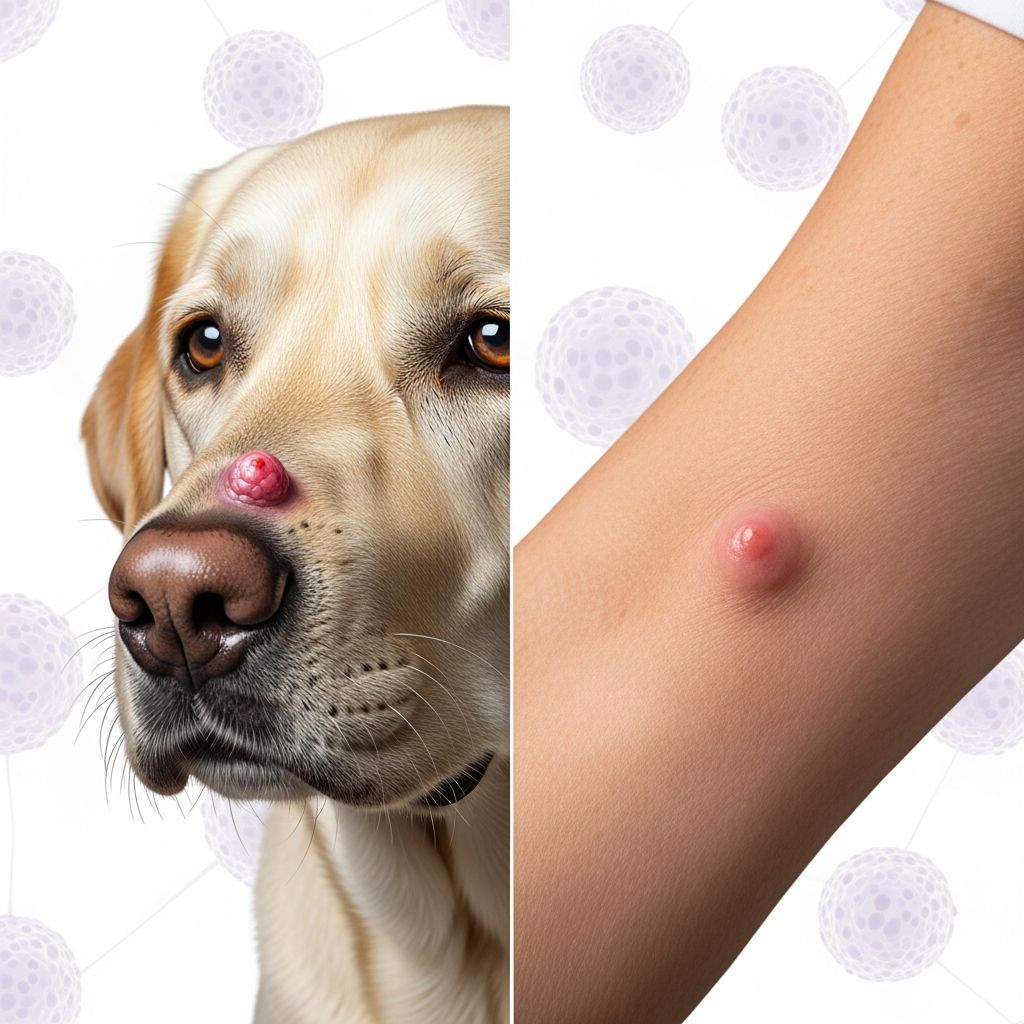
Merkel cell carcinoma (MCC) represents a rare yet highly aggressive form of skin cancer that originates from Merkel cells, specialized touch receptors in the skin’s basal layer. In humans, it typically manifests as a fast-growing, firm, painless nodule on sun-exposed areas, while similar tumors in dogs and cats pose unique challenges in veterinary medicine. Understanding this disease across species highlights shared risk factors and diagnostic approaches.
Understanding the Biology of Merkel Cell Tumors
Merkel cells are neuroendocrine cells located near nerve endings in the epidermis, responsible for fine-touch sensation. When these cells undergo malignant transformation, they form MCC, also known as neuroendocrine carcinoma of the skin. The tumor’s aggressive nature stems from its high mitotic rate and propensity for lymphatic spread.
In humans, the Merkel cell polyomavirus (MCV) plays a role in about 80% of cases, integrating into host DNA and driving oncogenesis, particularly in immunocompromised individuals. UV radiation acts synergistically, damaging DNA in sun-exposed sites. Veterinary parallels exist, though MCV involvement in pets remains understudied; canine and feline Merkel-like tumors often arise on haired skin, suggesting environmental triggers beyond sunlight.
Clinical Presentation and Early Warning Signs
The hallmark of MCC in humans is a solitary, dome-shaped nodule, often 0.5-5 cm in diameter, with a shiny, violaceous hue. Growth is rapid, sometimes doubling in size within weeks, and lesions are typically non-tender. Common sites include the head, neck, arms, and legs—areas with cumulative UV damage.
The AEIOU mnemonic aids recognition: Asymptomatic (painless, 88% of cases), Expanding rapidly (63%), Immunosuppressed (8-33%), Older than 50 (90%), and UV-exposed skin (81%). Three or more features warrant urgent biopsy.
- Firm, red-to-purple bump on sun-damaged skin
- Quick enlargement over 1-3 months
- Possible itchiness or asymmetry
- Rare bleeding or ulceration in advanced stages
In pets, Merkel cell tumors mimic these traits but occur on trunk, limbs, or digits. Dogs, especially older breeds like Golden Retrievers, show firm nodules that grow swiftly, often misdiagnosed as histiocytomas or mast cell tumors. Cats exhibit similar lesions on sparsely haired areas, with rapid metastasis to lymph nodes.
Risk Factors Across Species
| Risk Factor | Humans | Dogs | Cats |
|---|---|---|---|
| Age | >50 years (90%) | >8 years | >10 years |
| UV Exposure | High (fair skin) | Moderate (short-haired breeds) | Low (indoor exposure) |
| Immune Status | Weakened (transplant, HIV) | Immunosuppressive drugs | FIV/FeLV positive |
| Virus | MCV (80%) | Possible polyomavirus | Understudied |
| Genetics | Fair skin types | Golden Retriever predisposition | Siamese breeds |
Humans face elevated risks from chronic sun exposure and immunosuppression. Pets share age-related susceptibility, with dogs in sunny climates showing higher incidence.
Diagnostic Pathways for Accurate Identification
Diagnosis begins with a full skin exam by a dermatologist or veterinary oncologist. Suspicious lesions require excisional biopsy for histopathology: small round blue cells with high mitotic activity, positive CK20 staining (dot-like pattern), and negative TTF-1/CK7.
Staging involves sentinel lymph node biopsy (SLNB), PET-CT imaging, and lymph node ultrasound. In humans, AJCC staging classifies as localized (Stage I-II), nodal (III), or metastatic (IV). Pets undergo similar fine-needle aspirates and imaging, though SLNB is less routine due to technical challenges.
- Clinical evaluation using AEIOU criteria
- Biopsy with immunohistochemistry
- Imaging (PET-CT preferred for spread detection)
- Lymph node assessment
Treatment Strategies: From Surgery to Immunotherapy
Surgery remains the cornerstone, aiming for wide excision (2 cm margins) and SLNB. Adjuvant radiotherapy reduces local recurrence by 40-50%. For advanced cases, immunotherapy like pembrolizumab targets PD-1, yielding 50-60% response rates in virus-positive tumors.
Chemotherapy (platinum-etoposide) offers palliation but high toxicity. In pets, surgery with clean margins is ideal; radiation or tyrosine kinase inhibitors (e.g., toceranib) are used for metastatic disease, mirroring human protocols adapted for veterinary use.
Prognosis and Survival Outcomes
Early-stage MCC in humans has 5-year survival of 60-80%, dropping to 20-40% with nodal involvement and <10% for distant mets. Pets fare similarly: localized tumors >70% survival at 1 year, but metastasis halves prognosis.
- Stage I: Excellent with excision
- Stage III: Multimodal therapy boosts survival
- Stage IV: Palliative focus
Veterinary Perspectives: MCC in Dogs and Cats
While rarer than in humans, Merkel-like tumors in dogs present as dermal masses with neuroendocrine features, confirmed via CK20. Breeds like Labradors show predisposition. Cats develop them on extremities, often with ulceration.
Treatment mirrors humans: wide excision, lymph node dissection. Immunotherapy trials in pets are emerging, offering hope for aggressive cases. Owners should monitor for rapid lumps, especially in seniors.
Prevention and Self-Examination Tips
Minimize UV exposure with sunscreen, protective clothing, and shade. Immunosuppressed individuals need vigilant skin checks. Monthly self-exams cover all body areas, including genitals and between toes.
- Check head/neck monthly
- Inspect arms, legs, trunk
- Monitor pets’ skin during grooming
- Biopsy any new firm nodule
Frequently Asked Questions (FAQs)
What is the most common symptom of Merkel cell carcinoma?
A painless, rapidly growing firm nodule on sun-exposed skin.
How quickly does MCC grow?
Often within weeks to months, distinguishing it from slower benign growths.
Is MCC curable if caught early?
Yes, localized disease has high cure rates with surgery and radiation.
Can pets get Merkel cell carcinoma?
Yes, dogs and cats develop similar neuroendocrine skin tumors, requiring prompt veterinary evaluation.
What role does the immune system play?
Weakened immunity increases risk and worsens prognosis in both humans and pets.
Emerging Research and Future Directions
Ongoing trials explore PD-L1 inhibitors and viral-targeted vaccines. Veterinary studies lag but benefit from human data, with cross-species immunotherapy promising. Early detection via AI skin scanners may revolutionize screening.
References
- Merkel Cell Carcinoma Symptoms and Signs — Fred Hutchinson Cancer Center. 2023. https://www.fredhutch.org/en/diseases/merkel-cell-carcinoma/symptoms.html
- Merkel cell carcinoma – Symptoms and causes — Mayo Clinic. 2025-01-10. https://www.mayoclinic.org/diseases-conditions/merkel-cell-carcinoma/symptoms-causes/syc-20351030
- Understanding Merkel Cell Carcinoma: Symptoms, Diagnosis, and Treatment — Neuroendocrine Cancer UK. 2023. https://www.neuroendocrinecancer.org.uk/understanding-merkel-cell-carcinoma-symptoms-diagnosis-and-treatment/
- Merkel Cell Carcinoma (MCC) Diagnosis & Treatment — Professional Skin Dermatology Group. 2023. https://www.psdermgroup.com/merkel-cell-carcinoma-treatment
- Burden of Disease, Early Diagnosis, and Treatment of Merkel Cell Carcinoma — PMC (NCBI). 2018-11-01. https://pmc.ncbi.nlm.nih.gov/articles/PMC6223512/
- Merkel Cell Carcinoma Facts, Stages and Symptoms — Dana-Farber Cancer Institute. 2023. https://www.dana-farber.org/cancer-care/types/merkel-cell-carcinoma
Similar Articles








Read full bio of Sneha Tete


