

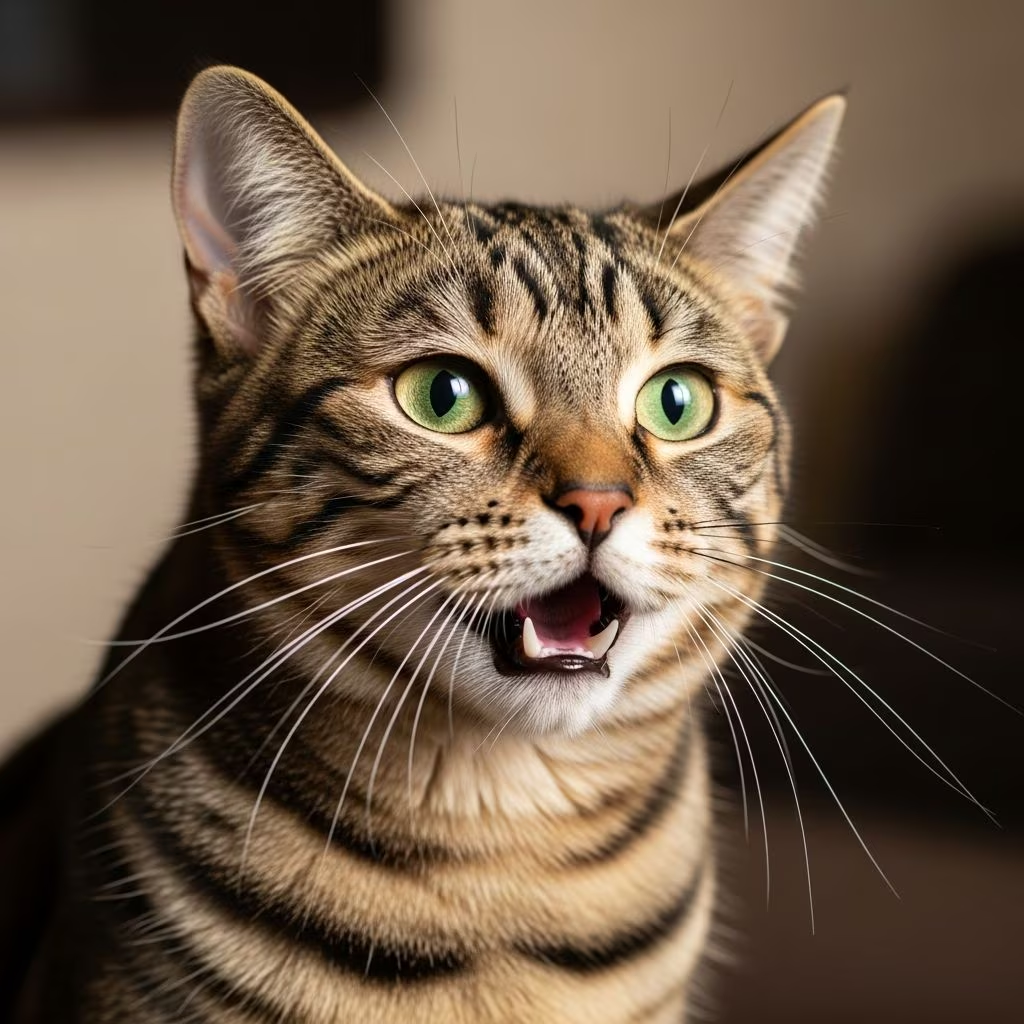
The cat’s meow serves as her primary way of communicating with people. Cats meow for various reasons—to say hello, to ask for things like food or access to doors, and to alert us when something’s wrong. Interestingly, adult cats rarely meow at each other; this vocalization is mostly reserved for interactions with humans. Kittens meow to their mothers when cold or hungry, but as they mature, they stop meowing to fellow felines and continue directing it toward people because it effectively gets our attention and prompts action.
Cats also produce yowls—a prolonged, melodic sound distinct from the standard meow. Unlike meows, adult cats do yowl at one another, particularly during breeding seasons when females signal receptivity and males respond to gain access.
When Does Meowing Become Excessive?
Determining when meowing crosses into excessive territory is subjective and depends on your cat’s baseline behavior and your tolerance. All cats vocalize to some degree as normal communication, but incessant meowing can frustrate pet parents. Certain breeds, such as **Siamese**, are genetically predisposed to more vocal natures, making louder or more frequent sounds their norm.
Excessive vocalization often stands out when it’s louder, longer, more frequent than usual, or paired with changes like reduced appetite, litter box avoidance, lethargy, or disrupted sleep patterns—for your cat or you. If your typically quiet cat suddenly yowls a lot, it may signal stress, illness, or pain, warranting a vet visit.
Why Cats Meow
Cats employ meowing strategically to interact with humans. Here are the most common triggers:
- To greet people: Expect a meow when you return home, encounter her in the house, or speak to her. This friendly vocalization reinforces social bonds.
- To demand attention: Cats crave human interaction and may meow persistently to solicit petting, play, or companionship. Some learn to vocalize upon kitchen entry in hopes of treats, or to rouse you for breakfast.
- To ask for food: A classic reason—cats meow at empty bowls to demand kibble or wet food. Feeding on demand reinforces this; scheduled meals help break the cycle.
- To request in/out access: Indoor-outdoor cats meow at doors to exit or enter. Transitioning to fully indoor life may provoke temporary protests.
- Because they’re in heat: Unspayed females yowl melodically to attract males; intact males respond similarly. Spaying or neutering eliminates this and offers health benefits like lower cancer risk.
- When stressed or frustrated: Changes like new pets, moves, or absences trigger anxious meows. Territorial threats, even seen through windows (e.g., birds or squirrels), prompt yowling.
- Due to medical issues: Pain from arthritis, dental disease, hyperthyroidism, or urinary problems causes increased vocalizing. Sudden changes demand veterinary evaluation.
- Cognitive dysfunction: Senior cats with feline cognitive dysfunction (akin to Alzheimer’s) meow from disorientation, especially at night. Symptoms worsen with age.
Helping Your Cat Quiet Down
Before curbing vocalization, pinpoint the cause by observing patterns. Keep a log noting time, context, what stops the noise, and accompanying behaviors (e.g., pacing, hiding). Rule out medical causes first—a vet exam is essential for sudden or senior-onset meowing.
Once health is confirmed, apply targeted strategies:
- For attention-seeking: Ignore meows; reward silence with affection. Turn away or leave the room during vocalizing, returning only when quiet. Consistency teaches that quietness gains attention.
- For food demands: Feed at set times daily, ignoring bowl-side serenades. It may take weeks, but cats adapt to routines.
- For door access: Discourage outdoor roaming with indoor enrichments like window perches, toys, and scratching posts to redirect energy.
- For loneliness: If you’re away often, provide puzzle feeders, automated toys, or a companion cat (after compatibility checks). Increase interactive play.
- For seniors/cognitive issues: Boost daytime activity with play and puzzles to reset sleep cycles. Nightlights reduce disorientation; vets may prescribe anxiety meds.
- General tips: Enrich environment with vertical spaces, hiding spots, and daily 10-15 minute play sessions. Strict feeding/play schedules promote calm nights.
| Cause | Symptoms | Solutions |
|---|---|---|
| Attention/Food | Meows at specific times/locations | Ignore demands; reward quiet; scheduled meals |
| Heat Cycle | Melodic yowling, rolling, spraying | Spay/neuter |
| Medical Pain | Sudden increase, lethargy, appetite loss | Vet exam/treatment |
| Cognitive Dysfunction | Nighttime disoriented meows (seniors) | Activity increase, meds, vet consult |
What NOT to Do
Avoid counterproductive responses that worsen behavior:
- Don’t ignore need-based meows: Check litter, water, food, and safety first. Assuming demand without verifying risks missing issues like urinary blockage.
- Don’t punish: Scolding or hitting instills fear, not learning, and may heighten anxiety.
- Don’t reward vocalizing: Even negative attention reinforces it; stay neutral until silent.
Could This Be an Emergency?
Yes—seek immediate vet care if meowing accompanies:
- Labored/open-mouth breathing
- Litter box straining without output
- Hind-leg weakness/paralysis
- Vomiting/diarrhea
- Seizures/collapse
These signal urinary obstruction, heart issues, or toxicity—time-sensitive threats.
Frequently Asked Questions (FAQs)
Why does my cat meow at night?
Night meowing often stems from hunger, loneliness, cognitive dysfunction in seniors, or disrupted sleep cycles. Increase daytime play and use nightlights.
Will spaying stop my cat’s yowling?
Yes, for heat-related vocalizing in females; neutering helps males. It also prevents health issues.
Is excessive meowing always a problem?
No, for talkative breeds like Siamese. Monitor for changes indicating stress or illness.
How do I stop door-meowing?
Provide indoor alternatives; ignore until quiet, then open.
When should I see a vet for meowing?
Immediately for sudden changes or with other symptoms; otherwise, if behavior persists post-management.
This comprehensive guide empowers you to decode your cat’s vocalizations, fostering a harmonious home. Patience and consistency yield results.
References
- 5 Cat Behavior Problems and How to Solve Them — ASPCA Pet Insurance. 2023. https://www.aspcapetinsurance.com/resources/5-cat-behavior-problems-and-how-to-solve-them/
- Meowing and Yowling — ASPCA. 2020-01-01. https://spcawake.org/wp-content/uploads/2021/04/Meowing-and-Yowling.pdf
- Older Cats with Behavior Problems — ASPCA. 2024. https://www.aspca.org/pet-care/cat-care/common-cat-behavior-issues/older-cats-behavior-problems
- The Cat’s Meow! Caterwauling in Cats — VCA Animal Hospitals. 2024. https://vcahospitals.com/know-your-pet/the-cats-meow-caterwauling-in-cats
- All That Meowing: What’s Your Cat Really Saying? — West Side Veterinary Hospital. 2024. https://wsvh.net/all-that-meowing-whats-your-cat-really-saying/
- Why does my cat meow so much? — Animal Humane Society. 2024. https://www.animalhumanesociety.org/resource/why-does-my-cat-meow-so-much



