

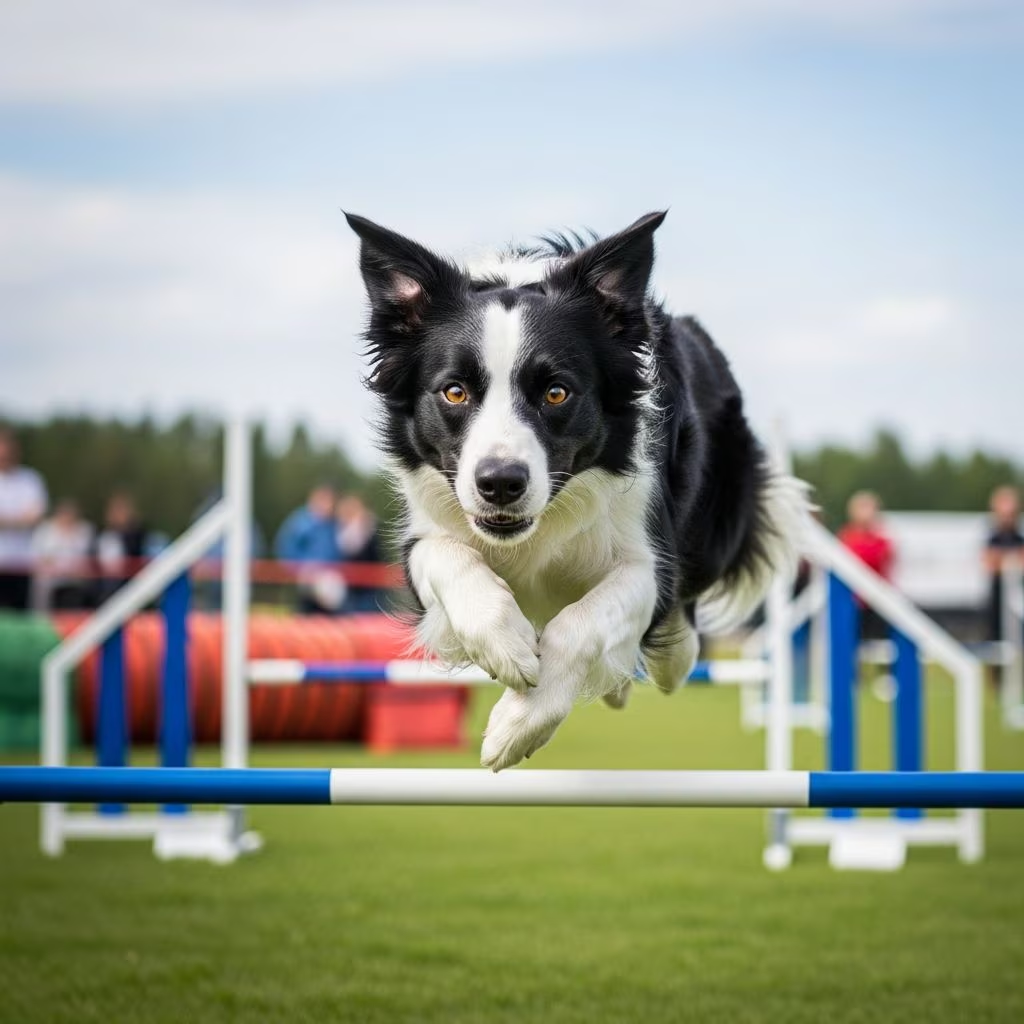
Competitive dog sports demand more than physical prowess; they require a sharp mental edge for both handler and dog to excel under pressure. Applying sports psychology principles helps teams achieve synchronized focus, resilience, and confidence, turning potential into podium finishes.
Why Mental Preparation Matters in Dog Competitions
In high-stakes environments like agility trials or obedience rings, mental conditioning separates top performers from the pack. Handlers who master psychological tools report calmer dogs, smoother routines, and faster recovery from errors. This preparation fosters a trusting partnership where the dog senses the handler’s steady leadership.
Physical training builds skills, but mental work ensures their reliable execution amid distractions. Studies in sports psychology show that visualization and positive routines enhance muscle memory and reduce anxiety, directly translating to better runs. Dogs, highly attuned to human cues, mirror this composure, performing at their best when their handler exudes control.
- Reduces performance anxiety for handlers entering the ring.
- Boosts dog’s responsiveness by minimizing handler stress signals.
- Improves adaptability to unexpected competition variables like crowd noise or course changes.
Core Mental Skills for Handlers
Handlers must cultivate self-awareness to lead effectively. Key skills include focus zoning, emotional regulation, and positive self-talk, drawn from human athletic training adapted for dog sports.
| Mental Skill | Description | Benefit in Dog Sports |
|---|---|---|
| Focus Zoning | Tuning out external distractions to concentrate on the run plan. | Allows precise cueing despite ring-side chaos. |
| Emotional Control | Using breathing to stay calm during faults or knockouts. | Prevents escalating tension to the dog. |
| Positive Self-Talk | Replacing doubt with affirmations like “We’ve got this.” | Builds unshakeable confidence mid-performance. |
Practice these daily: Before sessions, spend 5 minutes visualizing flawless sequences while deep breathing. Over time, this rewires neural pathways for automatic calm.
Building Your Dog’s Psychological Resilience
Dogs aren’t immune to stress; competitions can trigger hesitation or errors. Confidence-building exercises mimic ring pressures, teaching dogs to push through challenges independently.
Start with low-stakes simulations: Set up mini-courses with distractions like toys or helpers. Reward bold attempts, not just perfection, to instill perseverance. Socialization in varied environments prevents overload, ensuring dogs view arenas as fun playgrounds.
- Obstacle familiarization: Gradually add complexities to build problem-solving.
- Handler-independent tasks: Teach stays amid movement to foster self-reliance.
- Play-based recovery: After “faults,” restart with high-value toys to associate errors with positivity.
Consistent exposure creates mentally tough dogs that thrive on adrenaline, not fear.
Visualization: A Power Tool for Team Sync
Visualization involves mentally rehearsing entire routines, engaging all senses. Top competitors use it to prime success, as it activates the same brain areas as physical practice.
For handlers: Close eyes, picture the course, feel leash tension, hear applause. Include dog’s joyful responses. For dogs: Pair sessions with calm petting and cues, associating imagery scents/sounds with relaxation.
Evidence from sports science confirms this boosts execution by 20-30% under stress. Teams practicing weekly report fewer off-courses and tighter heeling.
Overcoming Common Competition Mind Traps
Negative loops like “Don’t drop the bar” sabotage runs by priming failure. Reframe to “Clean jumps ahead.” Bounce-back protocols turn faults into learning: Pause, breathe, reset cue positively.
Audit post-run: What triggered doubt? Adjust training to target weak spots. Track progress in a journal to visualize improvement, reinforcing growth mindset over perfectionism.
Goal Setting for Long-Term Excellence
Structured goals anchor mental training. Use SMART framework: Specific, Measurable, Achievable, Relevant, Time-bound.
| Goal Type | Example | Mental Benefit |
|---|---|---|
| Process Goal | Execute 10 clean serpentines daily. | Shifts focus from scores to controllables. |
| Performance Goal | Qualify in 80% of novice runs this season. | Builds momentum without overwhelm. |
| Outcome Goal | Earn championship title by year-end. | Motivates while prioritizing fun. |
Review weekly, celebrating micro-wins to sustain motivation. This prevents burnout, common in intense sports.
Nutrition and Rest: Mental Performance Foundations
Mental sharpness relies on physical basics. Balanced diets with omega-3s support brain health; adequate sleep consolidates training gains. Pre-trial routines include light play, hydration, and quiet downtime to prime peak states.
Avoid sugar crashes; opt for protein-rich meals 4 hours prior. Handlers should mirror this for synced energy.
Advanced Techniques from Elite Competitors
Elite teams integrate biofeedback: Heart-rate monitors signal over-arousal for breathing resets. Partner drills enhance non-verbal sync, vital when words fail mid-run.
Mindfulness apps tailored for athletes teach present-moment awareness, reducing pre-run jitters. Group seminars foster shared strategies, normalizing mental hurdles.
FAQs
How often should I practice mental conditioning?
Daily 10-15 minute sessions yield best results, integrated into warm-ups. Consistency trumps intensity.
Can puppies benefit from these techniques?
Yes, start with play-based exposure from 8 weeks to build lifelong resilience without pressure.
What if my dog freezes in competition?
Use patterned resets: Familiar cue + reward pattern to reboot focus. Simulate in training.
Does handler anxiety affect the dog?
Absolutely; dogs read body language. Prioritize your calm to lead effectively.
Are there apps for dog sport mental training?
Human sports psych apps like Calm or Headspace adapt well; pair with dog-specific routines.
Integrating Mental and Physical Training
Holistic programs blend 70% physical, 30% mental for balance. Weekly cycles: 3 skill days, 2 mental sims, 1 rest/review, 1 fun run. Track via apps for data-driven tweaks.
This synergy yields resilient teams ready for any venue. Persistence in mental work unlocks genetic potential, proving success stems from preparation, not innate talent.
References
- Unleashing Success: Mental Conditioning Tips For Competitive Dog Sports — Dog Trainers Milwaukee. 2023-06-15. https://dogtrainersmilwaukee.com/unleashing-success-mental-conditioning-tips-for-competitive-dog-sports/
- Canine Athletic Competition and Sports Psychology — Whole Dog Journal. 2019-02-05. https://www.whole-dog-journal.com/training/tricks_games_sports/canine-athletic-competition-and-sports-psychology/
- Focus! It’s not just for dogs: Mindset Skills for Dog Sports Competitors — Fenzi Dog Sports Academy. 2022-04-12. https://www.fenzidogsportsacademy.com/blog/focus-it-s-not-just-for-dogs-mindset-skills-for-dog-sports-competitors
- Psychology of Competition in Dog Shows — ShowSight Magazine. 2021-09-20. https://showsightmagazine.com/psychology-of-competition-in-dog-shows/
- Sport Psychology & How It Affects Dog Sport Training & Competition — American Kennel Club (AKC). 2023-11-10. https://www.akc.org/expert-advice/training/dog-sport-psychology-an-alternative-approach/
- Who Participates in Dog-sporting Events and Why? — Psychology Today. 2015-03-15. https://www.psychologytoday.com/us/blog/canine-corner/201503/who-participates-in-dog-sporting-events-and-why



