

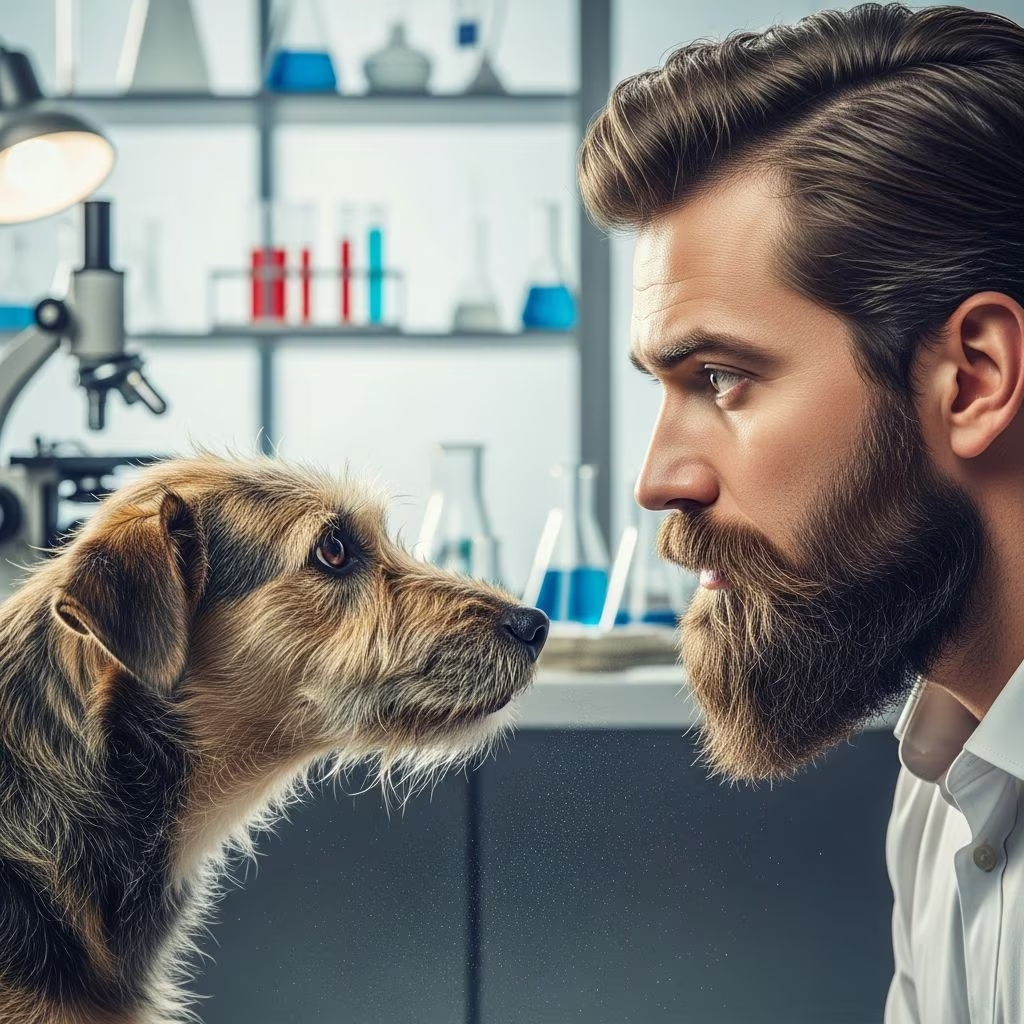
A startling 2019 study revealed that men’s beards harbor significantly more harmful bacteria than even the dirtiest parts of dogs’ fur, challenging common hygiene assumptions and sparking debates on microbial loads in humans versus pets.
The Study That Shook Hygiene Perceptions
Published in the February 2019 issue of European Radiology, this research emerged from a practical question: Can dogs safely share MRI scanners with humans in hospitals? Researchers at European hospitals, including the Hirslanden Clinic near Zurich, Switzerland, compared bacterial contamination from 18 bearded men (ages 18-76) and 30 dogs (breeds from schnauzer to German shepherd). Samples included skin, saliva, fur from dogs’ shoulder blades—a notoriously unhygienic spot prone to infections—and post-scan scanner swabs.
The findings were eye-opening: All 18 men’s beards and saliva showed high microbial counts, while only 23 of 30 dogs did. Seven men and four dogs carried human-pathogenic bacteria like Enterococcus faecalis (linked to urinary tract infections) and Staphylococcus aureus (a skin colonizer that causes severe infections if it enters the bloodstream). Human-used scanners had substantially higher bacterial loads than those cleaned after dog scans, highlighting humans as greater contamination sources.
Why Beards? The Science Behind the Germs
Beards trap moisture, food particles, and skin oils, creating a warm, nutrient-rich environment for bacteria growth. Unlike smooth-shaven skin, facial hair provides hiding spots that regular washing struggles to reach fully. The study selected bearded men possibly due to their higher surface area for microbes, but authors noted no evidence women or clean-shaven men carry less bacterial load—humans generally shed more pathogens.
- Key Bacterial Culprits: Enterococcus faecalis thrives in guts and causes infections; Staphylococcus aureus colonizes up to 50% of adults but turns dangerous in hospitals.
- Dog Fur Comparison: Even from ‘unhygienic’ shoulder blades, dogs showed lower pathogenic counts, possibly due to grooming behaviors or different microbiomes.
- Saliva Factor: Both groups had oral bacteria, but humans dominated in quantity and pathogenicity.
This doesn’t mean shave immediately—beards aren’t inherently dirtier than heads of hair—but it underscores rigorous cleaning needs.
Hospital Hygiene: Humans vs. Pets
The study’s core goal was assessing MRI scanner safety. Veterinary clinics rarely afford dedicated scanners, so dogs visit human hospitals for brain/spine imaging amid rising pet lifespans and diseases. Post-dog scans, cleaners reduced bacteria effectively, but human patients—bearded or not—left scanners far germier.
Healthcare-associated infections (HAIs) affect ~1.7 million US patients yearly, with ~100,000 deaths, often from surfaces harboring pathogens. The research urges refocusing hygiene protocols: Not banning dogs, but enhancing human contamination controls like advanced disinfection beyond routine wipes.
| Aspect | Humans (Bearded Men) | Dogs |
|---|---|---|
| High Microbial Counts | 18/18 | 23/30 |
| Human-Pathogenic Bacteria | 7 cases | 4 cases |
| Scanner Contamination | High post-use | Low post-cleaning |
Debunking Myths: Are Dogs Really Cleaner?
Popular headlines screamed ‘beards dirtier than dogs,’ but context matters. Dogs roll in dirt, yet their fur microbiome differs—less human-pathogenic, more canine-adapted. Humans constantly touch faces, eat, cough, seeding beards with diverse germs. The study doesn’t claim all dog fur beats all beards; it samples specific ‘dirty’ dog spots against untreated beards.
Myth: Pets are hygiene hazards in hospitals. Reality: Data shows humans pose greater risks, prompting better protocols.
Practical Hygiene Tips for Bearded Men and Dog Owners
Armed with this knowledge, maintain cleanliness:
- Beard Care: Wash daily with antibacterial shampoo; use beard oil with tea tree oil; trim regularly; sanitize combs/brushers.
- Dog Grooming: Bathe bi-weekly; brush fur to remove debris; clean paws post-walks; vet-check skin issues.
- Shared Spaces: Disinfect high-touch areas; use pet-safe cleaners; avoid face-rubbing with pets if immunocompromised.
- Hospital Visits: Follow protocols; consider pre-scan wipes for pets/humans.
Women and clean-shaven folks: Don’t relax—hand hygiene and surface cleaning remain key, as microbiomes vary individually.
Broader Implications for Pet-Human Health
This research spotlights the human microbiome’s complexity. Beards, like armpits or scalps, host ecosystems; imbalance leads to issues. For pets, it validates hospital sharing with proper cleaning. Future studies could expand samples, include women/shaven men, and test long-term risks.
In pet-friendly homes, good habits prevent zoonotic crossovers. Regular vet/dental care for dogs mirrors human needs.
Frequently Asked Questions (FAQs)
Is it true men’s beards are dirtier than dogs’ fur?
Yes, per the 2019 European Radiology study: Beards showed higher microbial counts and more human-pathogenic bacteria than dogs’ fur samples from unhygienic areas.
Should bearded men shave because of bacteria?
No—the study doesn’t recommend shaving; focus on hygiene. Clean beards can be healthy.
Can dogs safely use human MRI scanners?
Yes, with routine cleaning; they contaminate less than humans.
What bacteria were found in beards and dog fur?
Enterococcus faecalis and Staphylococcus aureus, potentially harmful if entering bloodstream or wrong body sites.
Does this mean dogs are cleaner than humans overall?
Not broadly; humans leave more pathogens in clinical settings due to shedding and behaviors.
How can I keep my beard clean?
Wash daily, condition, trim, use clean tools, and avoid touching your face excessively.
Should I worry about kissing my dog vs. a bearded partner?
Hygiene in both matters more than the study suggests; all mouths carry bacteria.
(Word count: 1678)
References
- Men’s Beards Contain More Harmful Bacteria Than Dogs’ Fur, Small Study Finds — Live Science. 2019-02-06. https://www.livescience.com/65293-beards-are-super-germy.html
- Men’s Beards Carry More Bacteria Than Dogs’ Fur, Study Suggests — HowStuffWorks. 2019-02-12. https://science.howstuffworks.com/life/cellular-microscopic/more-bacteria-mens-beards-dogs-fur.htm
- Beards Have More Germs Than Dog Hair According to Study — Michigan Humane. 2019-02-14. https://www.michiganhumane.org/beards-have-more-germs-than-dog-hair-according-to-study/



