Meloxidyl Oral Suspension for Dogs and Cats
Complete guide to Meloxidyl oral suspension dosing and pain management for pets.
Meloxidyl Oral Suspension: Veterinary Pain Management for Your Pet
Meloxidyl oral suspension is a veterinary prescription medication containing meloxicam, a nonsteroidal anti-inflammatory drug (NSAID) formulated specifically for dogs and cats. This liquid medication provides effective pain relief and reduces inflammation associated with various musculoskeletal conditions and post-operative discomfort. Meloxidyl comes in a 1.5 mg/mL concentration for dogs and a 0.5 mg/mL formulation for cats, making it convenient for accurate dosing based on your pet’s weight and condition.
What Is Meloxidyl?
Meloxidyl is a prescription oral suspension designed to alleviate mild to moderate pain and inflammation in companion animals. The medication works by inhibiting prostaglandin synthesis, reducing pain signals and inflammatory responses in the body. As a liquid formulation, Meloxidyl offers advantages over tablet forms, particularly for pets that are difficult to pill or for precise weight-based dosing in smaller animals.
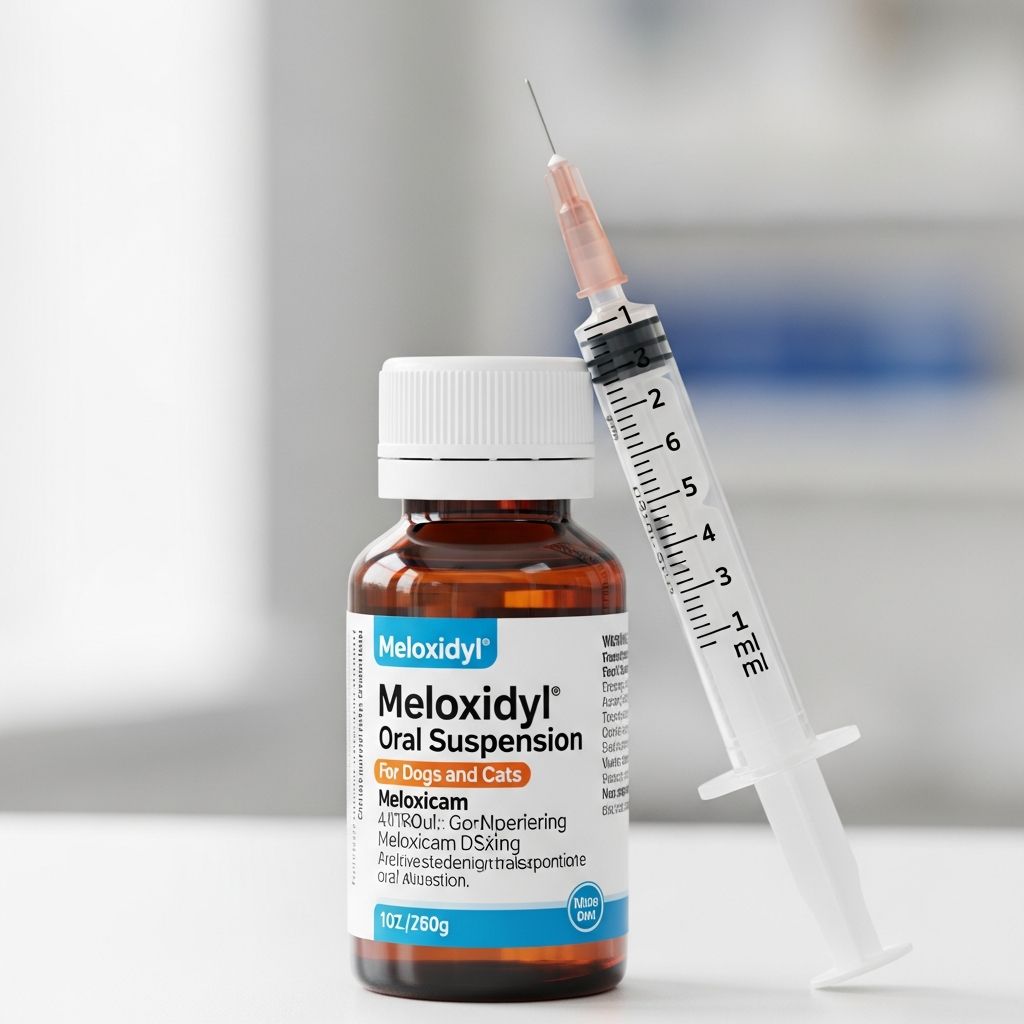
The suspension comes in convenient bottles with calibrated dosing syringes that are specifically designed to match your pet’s weight. Each bottle includes two types of syringes: a small blue-print syringe for lighter pets and a large green-print syringe for heavier animals, ensuring accurate medication administration.
Indications for Use
Veterinarians prescribe Meloxidyl for several conditions in dogs and cats:
- Osteoarthritis and Chronic Musculoskeletal Disorders: Meloxidyl provides long-term pain management for aging pets or those with degenerative joint conditions.
- Post-operative Pain and Inflammation: Following surgical procedures such as orthopedic surgery or soft tissue operations, Meloxidyl helps control discomfort and reduces inflammation during the recovery period.
- Rheumatoid Arthritis: The anti-inflammatory properties help manage chronic inflammatory conditions affecting joints.
- General Pain Management: For mild to moderate pain associated with various conditions requiring NSAIDs.
Dosing Information
Standard Dosing for Dogs
Meloxidyl oral suspension for dogs is dosed based on body weight. The medication requires a loading dose on the first day of treatment, followed by maintenance dosing:
- Day 1 Loading Dose: 0.09 mg/lb (0.2 mg/kg) body weight administered as a single dose
- Maintenance Dose (Day 2 onwards): 0.045 mg/lb (0.1 mg/kg) body weight once daily
The loading dose on the first day is twice the maintenance dose, which helps achieve therapeutic levels of the medication more quickly. After the initial treatment day, your dog should receive the lower maintenance dose each subsequent day.
Dosing for Cats
Meloxidyl for cats uses a different concentration (0.5 mg/mL) and dosing schedule based on the condition being treated:
- Post-operative Pain: After initial injection therapy, continue with 0.05 mg/kg bodyweight once daily for up to four days
- Chronic Musculoskeletal Conditions: Initial dose of 0.1 mg/kg on day one, then 0.05 mg/kg once daily for maintenance
Weight-Based Dosing Chart
| Dog Weight | Day 1 Loading Dose | Daily Maintenance Dose (0.045 mg/lb) ||———–|——————-|————————————–|| 5 lbs | 0.45 mg | 0.225 mg || 10 lbs | 0.9 mg | 0.45 mg || 25 lbs | 2.25 mg | 1.125 mg || 50 lbs | 4.5 mg | 2.25 mg || 75 lbs | 6.75 mg | 3.375 mg || 100 lbs | 9 mg | 4.5 mg |
Administration Guidelines
Using the Dosing Syringes
Meloxidyl bottles come equipped with two calibrated dosing syringes for accurate administration:[10]
- Small Blue Syringe: For dogs weighing less than 15 lbs, with marks for weights from 0.5 lb up to 14 lbs in 1-lb increments
- Large Green Syringe: For dogs weighing 15 lbs or greater, with marks for weights in 5-lb increments up to 140 lbs
When using either syringe, always round your pet’s weight down to the nearest increment to ensure accurate dosing. For example, if your dog weighs 12.8 lbs, use the 12-lb mark on the small syringe. After each use, replace and tighten the cap securely.
Proper Administration Technique
Before each use, shake the Meloxidyl bottle well to ensure proper suspension of the medication. You can administer Meloxidyl in two ways:
- Mixed with Food: Mix the prescribed dose with your pet’s regular food or treats for easier administration
- Direct Oral Administration: Place the dose directly into your pet’s mouth if preferred
Ensure your pet receives the complete dose by confirming they consume all medication mixed with food. The medication should be given consistently at the same time each day to maintain steady therapeutic levels.
Important Precautions and Considerations
When to Use Meloxidyl
Before administering Meloxidyl, your veterinarian will carefully evaluate the potential benefits versus risks and compare this medication to other available treatment options. Always use the lowest effective dose for the shortest duration consistent with your pet’s individual response and condition.
Contraindications
Meloxidyl is not appropriate for all pets. Your veterinarian will review your pet’s medical history to ensure this medication is safe. Pets with certain conditions should not receive NSAIDs like Meloxidyl, including those with:
- Severe renal (kidney) disease
- Hepatic (liver) dysfunction
- Gastrointestinal ulcers or bleeding disorders
- Hypersensitivity to NSAIDs
- Severe dehydration
Dosing Accuracy
Particular care should be taken to ensure accurate dosing of Meloxidyl. Never exceed the recommended dose prescribed by your veterinarian. Overdosing can increase the risk of adverse effects, while underdosing may result in inadequate pain relief.
Potential Side Effects
While Meloxidyl is generally well-tolerated in dogs and cats when prescribed appropriately, some pets may experience side effects. Common adverse effects associated with NSAIDs include:
- Gastrointestinal upset, including vomiting or diarrhea
- Decreased appetite
- Lethargy or behavioral changes
- Increased thirst and urination
More serious but less common side effects may include gastrointestinal ulceration, kidney damage, or liver complications. Contact your veterinarian immediately if you notice any concerning symptoms or behavioral changes in your pet while taking Meloxidyl.
Storage and Handling
Store Meloxidyl oral suspension at room temperature, away from direct sunlight and moisture. Keep the bottle tightly capped when not in use. Always shake the bottle well before each use to ensure the medication is properly suspended. Check the expiration date on the bottle and do not use expired medication. Store the dosing syringes with the bottle for easy access during administration.
Drug Interactions
Meloxidyl may interact with other medications, particularly other NSAIDs, corticosteroids, or anticoagulants. Always inform your veterinarian about any other medications, supplements, or treatments your pet is currently receiving before starting Meloxidyl. Your veterinarian will review potential interactions and adjust your pet’s treatment plan accordingly.
Monitoring Your Pet
While your pet is taking Meloxidyl, your veterinarian may recommend periodic monitoring through physical examinations and bloodwork, particularly if long-term use is anticipated. This helps ensure the medication is working effectively and not causing any adverse effects on organ function. Report any changes in your pet’s condition, appetite, water consumption, or behavior to your veterinarian promptly.
Frequently Asked Questions
Q: How quickly does Meloxidyl work?
A: Many pets show improvement in pain and inflammation within a few days of starting Meloxidyl. However, the full therapeutic benefit may take up to two weeks of consistent daily administration.
Q: Can I use the same dose for my dog’s weight category consistently?
A: Yes, once you determine your pet’s weight category for the syringe markings, you can use the same mark daily for maintenance dosing. Always round down to the nearest weight increment for accuracy.
Q: What should I do if I miss a dose?
A: If you miss a dose, give it as soon as you remember. However, if it is almost time for the next scheduled dose, skip the missed dose and resume your regular dosing schedule. Do not double-dose.
Q: Is Meloxidyl safe for long-term use?
A: Meloxidyl can be used long-term for chronic conditions like osteoarthritis under veterinary supervision. Your veterinarian will determine the appropriate duration and monitor your pet’s response to the medication.
Q: Can Meloxidyl be given with food?
A: Yes, Meloxidyl can be mixed with food to improve compliance. Administering it with food may also help reduce the potential for gastrointestinal upset in some pets.
Q: Are there alternative pain management options to Meloxidyl?
A: Yes, your veterinarian may recommend other NSAIDs, different medication classes, physical therapy, weight management, or other complementary pain management strategies. Your veterinarian will help determine the best option for your pet’s specific condition.
Q: How long does one bottle of Meloxidyl last?
A: The duration depends on your pet’s weight and the daily maintenance dose. A 10 mL bottle contains multiple days’ worth of medication. Your veterinarian can calculate the expected duration based on your pet’s specific dose.
Conclusion
Meloxidyl oral suspension represents an effective option for managing pain and inflammation in dogs and cats suffering from osteoarthritis, post-operative discomfort, and other musculoskeletal conditions. The convenient liquid formulation with calibrated dosing syringes makes accurate administration straightforward for pet owners. By following your veterinarian’s dosing instructions carefully and monitoring your pet for any adverse effects, Meloxidyl can significantly improve your pet’s quality of life and mobility. Always maintain open communication with your veterinary care team regarding your pet’s response to treatment and any concerns that arise during therapy. When used appropriately under veterinary supervision, Meloxidyl can be a valuable component of a comprehensive pain management plan for your beloved companion.
References
- Meloxicam (oral route) – Description, Side effects & Dosage — Mayo Clinic. 2024. https://www.mayoclinic.org/drugs-supplements/meloxicam-oral-route/description/drg-20066928
- Meloxidyl® (meloxicam oral suspension) 1.5 mg/mL – Full Prescribing Information — National Library of Medicine DailyMed. 2024. https://dailymed.nlm.nih.gov/dailymed/fda/fdaDrugXsl.cfm?setid=3bb654ae-558d-42d9-9a0d-640a86ab3046
- Meloxidyl® (meloxicam) 1.5 mg/mL Oral Suspension Consumer Brochure — Ceva Animal Health. 2019. https://www.cevaconnect.com/cms/wp-content/uploads/2020/04/Meloxidyl_ConsumerBrochure_2019.pdf
- Meloxidyl 0.5 mg/ml Anti-inflammatory Oral Suspension for Cats — Zone for Pets. 2019. https://zoneforpets.com/2019/04/17/meloxidyl-0-5-mgml-anti-inflammatory-oral-suspension-for-cats/
- Meloxidyl 1.5 mg/ml Oral Suspension for Dogs – Professional Information — Evans Pharmacy. 2024. https://www.evanspharmacy.com/downloads/1527596388Meloxidyl_Susp_for_Dogs.pdf
- Why Meloxidyl: Dosing Syringes and Administration — Meloxidyl Official. 2024. https://www.meloxidyl.com/why-meloxidyl/1000/
- Meloxidyl Dosing Chart and Administration Guidelines — Ceva Connect. 2022. https://www.cevaconnect.com/cms/wp-content/uploads/2022/07/Meloxidyl-Dosing-Chart-0622-Press-Ready.pdf
Similar Articles






Read full bio of medha deb