

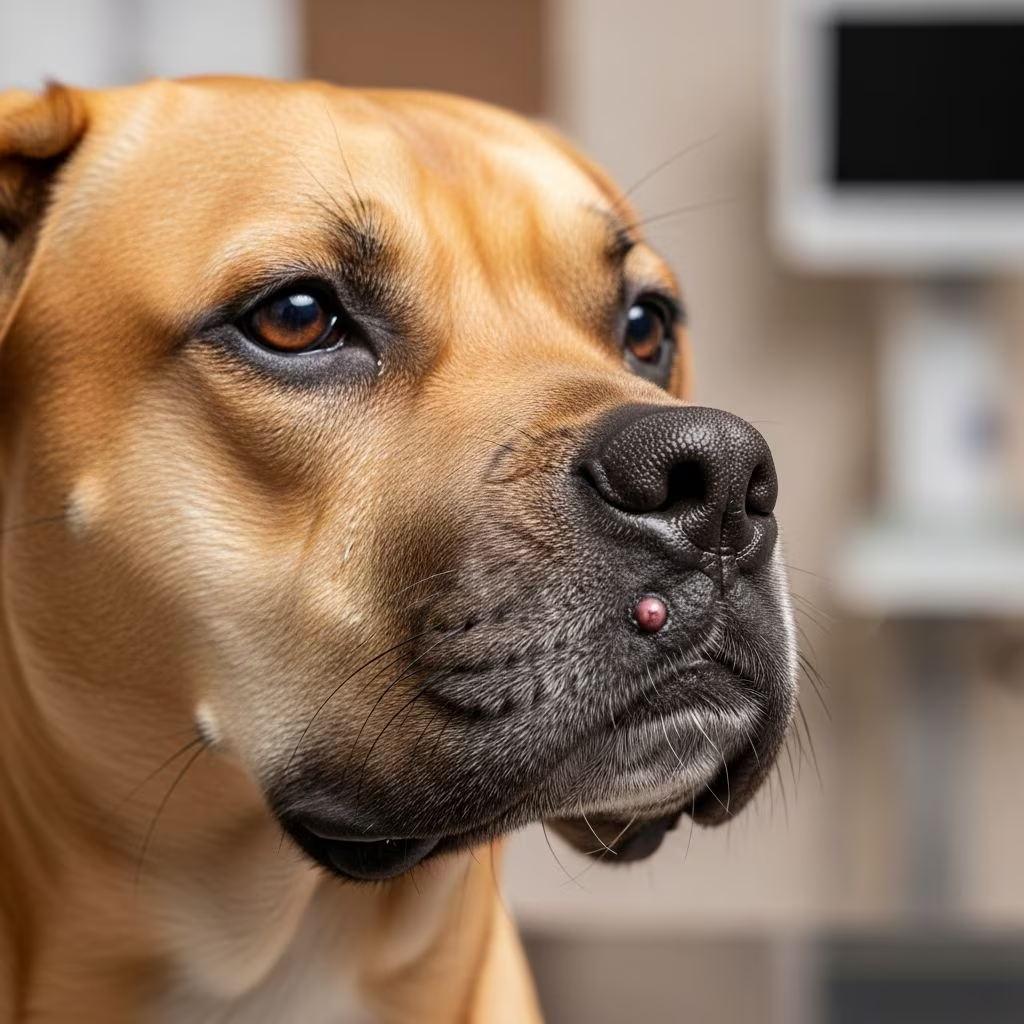
Melanoma is one of the most aggressive cancers affecting dogs, often originating in the mouth, skin, eyes, or toes, and capable of rapid metastasis to lungs, lymph nodes, and other organs. Early detection through regular veterinary checkups is crucial, as this cancer can appear as dark or pink masses that bleed or ulcerate, demanding immediate attention to improve outcomes.
What Is Melanoma in Dogs?
Melanoma in dogs arises from melanocytes, the pigment-producing cells, forming tumors that are typically dark-colored but can also be pink or amelanotic. Unlike human melanoma, which is strongly linked to UV exposure, canine melanoma occurs primarily in non-sun-exposed areas like the mouth (oral melanoma), digits (subungual), eyes (ocular), or skin. Oral melanoma accounts for over 80% of malignant cases in dogs, making it the most common and deadly form due to its invasive nature and high metastasis rate.
These tumors can be benign or malignant, but malignant melanomas are highly aggressive, with a high likelihood of spreading via lymphatics or bloodstream. Breeds like Golden Retrievers, Labrador Retrievers, Scottish Terriers, and Cocker Spaniels show higher predisposition, possibly due to genetic factors. The condition is more prevalent in older dogs over 10 years, with anecdotal evidence suggesting males may be at greater risk.
Symptoms of Melanoma in Dogs
Symptoms vary by tumor location but often include visible or palpable masses. Key signs include:
- Oral melanoma: Discolored (black, brown, or red) masses on gums, tongue, lips, or hard palate; bad breath (halitosis), excessive drooling, difficulty eating or swallowing, loose teeth, facial swelling, or bleeding from the mouth.
- Digital (toe/nailbed) melanoma: Swollen or discolored toe, limping, excessive paw licking, nail loss, or ulceration.
- Ocular melanoma: Eye bulging, vision loss, redness, squinting, or a pigmented mass on the iris or sclera.
- Skin melanoma: Raised lumps, often pigmented, that may ulcerate or bleed; less common and sometimes less aggressive.
- Advanced/metastatic signs: Weight loss, coughing, difficulty breathing, swollen lymph nodes, lethargy, or lameness.
Any unusual pigmented lesion or oral growth warrants a vet visit, as early symptoms can mimic benign issues like gingivitis or infections.
Causes and Risk Factors of Melanoma in Dogs
No single cause exists for canine melanoma; it results from a combination of genetic mutations and environmental influences. Genetic predisposition is evident in certain breeds, with older age (typically >9 years) being the strongest risk factor. Unlike humans, UV light exposure plays minimal role, as most tumors develop internally.
Research indicates mutations in genes controlling cell growth, such as those involving tyrosinase protein, contribute to tumor formation. Males may have slightly higher incidence rates based on clinical observations. Environmental triggers remain unclear, but chronic inflammation or trauma to pigmented areas might promote malignant transformation. Regular spay/neuter status or lifestyle factors do not appear directly linked.
Diagnosis of Melanoma in Dogs
Diagnosis begins with a thorough physical exam, including oral inspection and fine-needle aspiration (FNA) of the mass and nearby lymph nodes to assess malignancy. Cytology provides initial clues, but histopathology via biopsy confirms melanoma and grades its aggressiveness.
Staging involves three-view chest X-rays to check for lung metastasis (common in 50-70% of oral cases at diagnosis), abdominal ultrasound for liver/spleen involvement, and lymph node cytology or sentinel lymph node biopsy. Advanced imaging like CT or MRI aids surgical planning, especially for jaw-invasive oral tumors. Bloodwork evaluates overall health, while ocular cases may require tonometry or ultrasound.
Staging system (1-4): Stage I (tumor <2cm, no spread), II (>2cm), III (lymph node involvement), IV (distant metastasis). Accurate staging guides prognosis and treatment.
Treatment Options for Melanoma in Dogs
Treatment focuses on local control, metastasis prevention, and quality of life preservation. Surgery is the cornerstone, tailored to location:
- Oral: Wide excision, often with partial mandibulectomy/maxillectomy for clean margins.
- Digital: Toe amputation (ray amputation).
- Ocular: Enucleation or cryotherapy for limbal melanomas.
- Skin: Wide surgical excision.
Adjuvant therapies enhance outcomes:
- Radiation: Coarse fractionated (15-21 sessions) or stereotactic (SRS, 1-3 sessions) for incomplete resections or inoperable tumors. Effective for local control.
- Chemotherapy: Agents like carboplatin (every 3 weeks), lomustine, or toceranib; used palliatively due to resistance, with modest survival extension.
- Melanoma vaccine (Oncept): DNA vaccine targeting tyrosinase; administered post-surgery (4 initial doses, then boosters). Studies show median survival >15 months in stage II/III vs. 3-6 months without.
- Other: Cryotherapy, photodynamic therapy, laser ablation for small lesions; pain management with gabapentin or NSAIDs.
For advanced cases, palliative care or euthanasia may be considered if quality of life declines. Multimodal therapy (surgery + radiation + vaccine) offers best results.
Prognosis for Dogs with Melanoma
Prognosis varies widely by stage, location, and treatment:
| Stage/Location | Median Survival (Surgery Alone) | With Adjuvant Therapy |
|---|---|---|
| Stage I Oral | 5-17 months | 18+ months |
| Stage II Oral | 3-6 months | 12-15 months (w/ vaccine) |
| Stage III/IV | 2-4 months | 6-10 months |
| Digital/Skin | 12-24 months | Improved w/ amputation |
Clean surgical margins, early stage, and vaccine use significantly improve survival. Oral melanomas carry worst prognosis due to metastasis risk.
Prevention and Early Detection of Melanoma in Dogs
True prevention is challenging absent known causes, but monthly home oral exams, dental hygiene, and annual vet checkups enable early detection. Monitor for pigmented lesions, promptly biopsy suspicious growths. No vaccines prevent onset, but lifestyle factors like balanced diet and avoiding trauma may help indirectly.
Frequently Asked Questions (FAQs)
Is melanoma in dogs painful?
Yes, especially oral tumors causing eating difficulties or ulceration; pain meds are standard in treatment.
How fast does melanoma spread in dogs?
Oral melanoma metastasizes rapidly; up to 70% have lung involvement at diagnosis.
Can dogs survive melanoma?
Many do with early intervention; stage I cases have good outcomes with surgery and vaccine.
Is there a cure for melanoma in dogs?
No definitive cure, but multimodal therapy controls it long-term in early stages.
What breeds are prone to melanoma?
Golden Retrievers, Labs, Spaniels, Terriers, and large breeds.
Recovery and Aftercare for Dogs with Melanoma
Post-surgery, dogs need soft food, e-collars, pain control, and rest. Radiation/chemo may cause mild GI upset. Regular rechecks (every 1-3 months) monitor recurrence via imaging and cytology. The Oncept vaccine requires ongoing boosters. Maintain nutrition, monitor weight, and watch for metastatic signs to optimize quality of life.
References
- Melanoma in Dogs: Common Symptoms, Causes, and Treatment — PetMD. 2023. https://www.petmd.com/dog/conditions/cancer/melanoma-dogs-common-symptoms-causes-and-treatment
- Medical Oncology: Canine Oral Melanoma — NC State Veterinary Hospital. 2024. https://hospital.cvm.ncsu.edu/services/small-animals/cancer-oncology/oncology/canine-oral-melanoma/
- Melanoma of the dog and cat: consensus and guidelines — PMC/NIH. 2024-04-15. https://pmc.ncbi.nlm.nih.gov/articles/PMC11026649/
- Melanomas of the Skin and Toes — VCA Animal Hospitals. 2023. https://vcahospitals.com/know-your-pet/melanomas-of-the-skin-and-toes
- Melanoma in Dogs — PetCure Oncology. 2024. https://petcureoncology.com/melanoma-in-dogs/



