

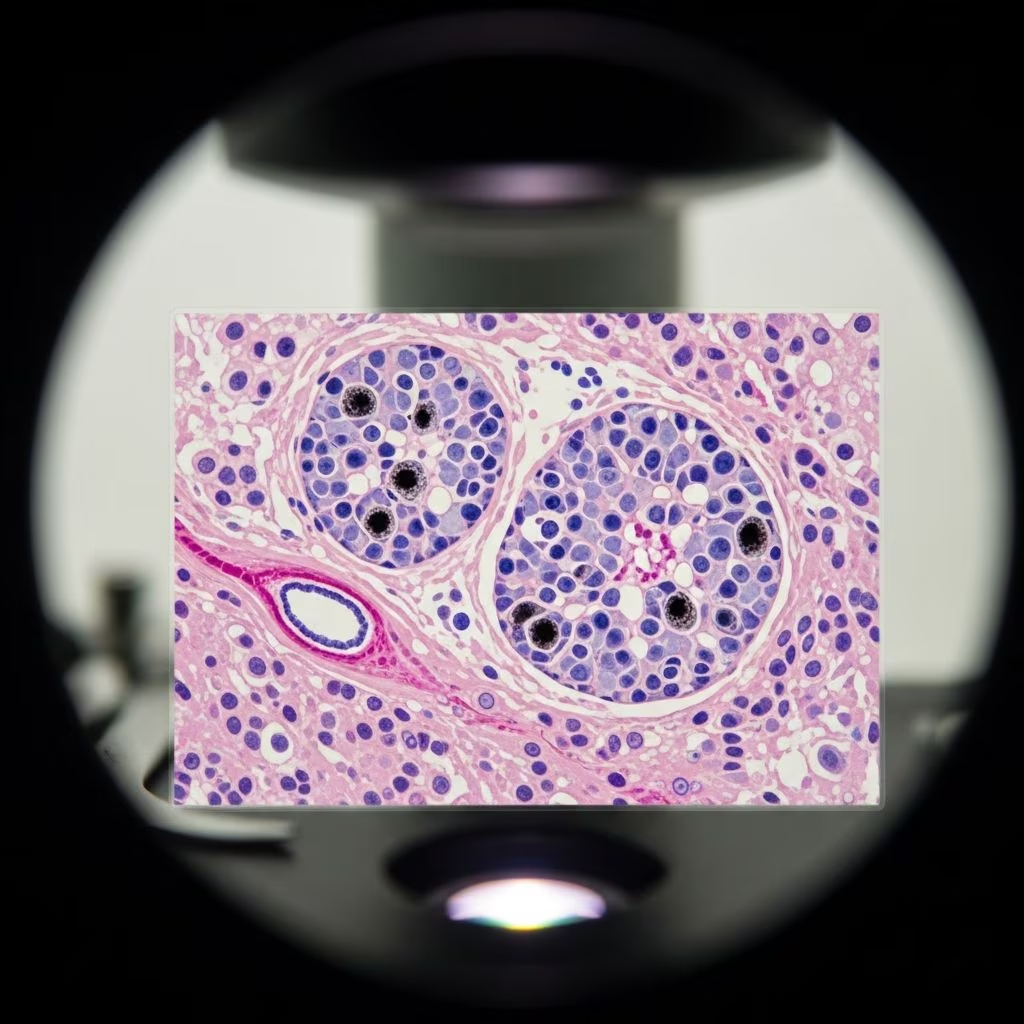
Melanocytic tumors arise from pigment-producing cells called melanocytes and are a significant concern in veterinary dermatology and oncology. These neoplasms vary widely in behavior across species, with some presenting as benign growths and others exhibiting aggressive malignancy and metastatic potential. Understanding species-specific patterns is crucial for timely diagnosis and intervention.
Overview of Melanocytic Neoplasms
Melanocytes are responsible for skin and mucosal pigmentation. When these cells proliferate uncontrollably, they form tumors ranging from harmless nodules to life-threatening cancers. Unlike human melanomas often linked to UV exposure, animal cases typically occur in non-sun-exposed areas like oral cavities or digits. Prevalence differs markedly: dogs face high incidence, especially malignant forms, while cats experience rarity.
Key distinctions include benign **melanocytomas** (well-differentiated, low metastasis risk) versus malignant **melanomas** (invasive, high spread potential). Pigmentation levels vary; heavily melanized tumors are easier to identify, but amelanotic variants challenge diagnosis.
Prevalence and Risk Factors by Species
Melanocytic tumors show species-specific distributions:
- Dogs: Most common site for melanomas, accounting for 7% of malignant tumors. Oral and subungual (toe) locations predominate.
- Horses: Frequent in gray breeds; often benign but numerous.
- Cattle: Uncommon, mostly benign in young Angus cattle.
- Sheep: Rare, malignant in breeds like Suffolks.
- Cats: Infrequent, with benign skin or ocular forms typical.
Breeds at higher risk include Schnauzers, Dobermans, Golden Retrievers in dogs, and gray horses. Age factors vary: middle-aged dogs and young cattle are prone.
Clinical Presentation in Companion Animals
Dogs: Cutaneous and Mucocutaneous Forms
In dogs, skin melanocytomas appear as raised, pigmented masses on the head, legs, or digits, more in males and seniors. Toe lesions mimic infections, necessitating radiographs and biopsies. Oral melanomas present as dark, ulcerated growths with rapid local invasion. Subungual tumors cause nail loss and lameness.
Malignant cases metastasize to lungs, lymph nodes, and liver. Survival post-surgery: ~511 days (stage I), dropping for advanced stages.
Cats: Rare but Notable Cases
Feline melanocytic tumors are sparse, often digit or skin-based. They may be benign or malignant, with pigment cells originating from melanoblasts. Ocular uveal forms cause iris thickening or glaucoma but rarely kill.
| Species | Common Sites | Benign/Malignant Ratio | Key Signs |
|---|---|---|---|
| Dogs | Oral, digits, skin | More malignant | Pigmented masses, ulceration |
| Cats | Digits, eyes | Mostly benign | Small nodules, eye changes |
| Horses | Under tail, lips | Mostly benign | Multiple black nodules |
Livestock Melanocytic Tumors
Horses: Gray Coat Predisposition
Gray horses develop multifocal melanocytomas, increasing in size and number with age. Located ventrally (perineum, udder, lips), they are black internally. Lymph node pigmentation raises metastasis questions, but most remain benign. Young non-gray horses rarely get solitary trunk nodules, usually benign.
Cattle: Nodular Benign Growths
Bovine cases, 5-6% of skin tumors, appear as large, oily black masses anywhere. Congenital in young Angus; excision often cures benign forms. Malignant rares metastasize distantly.
Sheep: Aggressive Subcutaneous Masses
In Suffolks and Angoras, multiple dermal/subcutaneous pigmented lumps signal malignancy with common spread.
Diagnostic Approaches
Diagnosis starts with fine-needle aspiration or biopsy. Radiographs for digit lesions; full staging (TNM: tumor, nodes, metastasis) for orals. Amelanotic tumors require immunohistochemistry (IHC): Melan-A, PNL-2, TRP-1/2 cocktail confirms melanocytic origin. Prognostic IHC assesses Ki67 (proliferation), atypia, mitoses.
- Histology: Spindle/round melanized cells.
- Genetics: Dogs show chromosome gains (CFA13/17), losses (CFA22); mucosal link to c-MYC, CDKN2A.
Treatment Strategies
Treatment hinges on benignity, location, stage.
Surgical and Local Therapies
Excision is primary for accessible tumors. Cryosurgery suits equine multiples. For inoperable horse masses, electrochemotherapy or cisplatin injections post-debulking.
Advanced Options for Canines
Oral melanomas demand aggressive surgery + lymph node dissection. Radiation improves local control. Vaccines: USDA-licensed DNA vaccine targets tyrosinase, with trials combining masitinib or doxorubicin showing promise. Emerging: CSPG4 immunotherapy targets.
Median survivals improve with multimodality: surgery + vaccine/radiation.
Livestock Management
Cattle/sheep: Surgical removal if feasible. Horses: Monitor benign; intervene for cosmetics/function.
Prognosis and Monitoring
- Benign Melanocytomas: Excellent post-excision across species.
- Malignant Melanomas: Dogs: Poor for oral/subungual (months); ocular better. Horses/cattle: Guarded if invasive.
Regular imaging, sentinel node cytology essential.
FAQs
What breeds of dogs are prone to melanomas?
Schnauzers, Dobermans, Golden Retrievers, Irish Setters.
Are horse melanomas always cancerous?
No, most in grays are benign despite numbers.
How is amelanotic melanoma diagnosed?
Via specialized IHC panels.
Is there a vaccine for dog melanoma?
Yes, conditionally licensed DNA vaccine; adjunct trials ongoing.
Do cattle melanomas metastasize?
Rarely; most benign.
Prevention and Owner Advice
No UV link, but monitor pigmented lesions, especially in at-risk breeds/ages. Early biopsy prevents progression. Consult veterinary oncologists for staging.
References
- Tumors of Melanocytic Origin in Animals — Merck Veterinary Manual. 2023. https://www.merckvetmanual.com/integumentary-system/tumors-of-the-skin-and-soft-tissues/tumors-of-melanocytic-origin-in-animals
- Melanoma of the dog and cat: consensus and guidelines — Frontiers in Veterinary Science. 2024-03-15. https://www.frontiersin.org/journals/veterinary-science/articles/10.3389/fvets.2024.1359426/full
- Diagnosis and Prognosis of Canine Melanocytic Tumors — Michigan State University College of Veterinary Medicine. 2023. https://cvm.msu.edu/vdl/laboratory-sections/anatomic-surgical-pathology/biopsy-service/diagnosis-and-prognosis-of-canine-melanocytic-tumors
- Melanocytic tumors in cattle — Texas A&M Veterinary Medical Diagnostic Laboratory. 2022. https://tvmdl.tamu.edu/case-studies/melanocytic-tumors-in-cattle/
- Ophthalmic Melanocytic Neoplasms — VetHive. 2023. https://www.vethive.com/blog/ophthalmic-melanocytic-neoplasms-what-is-scary-and-what-is-no-big-deal



