

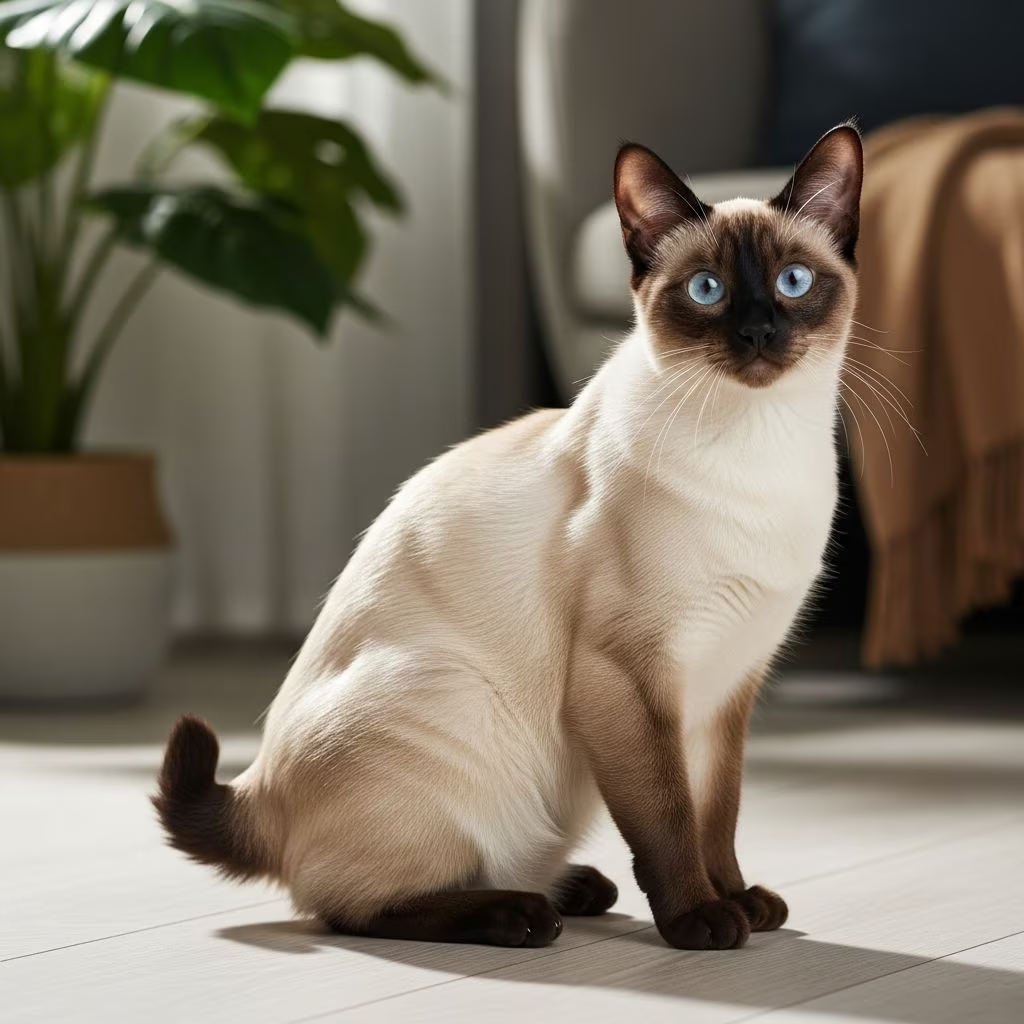
The Mekong Bobtail stands out as a captivating feline breed originating from Southeast Asia, renowned for its naturally short, kinked tail and lively disposition that echoes canine traits. This medium-sized cat combines elegance with playfulness, making it a delightful companion for active households.
Origins and Historical Background
Mekong Bobtails trace their roots to the regions along the Mekong River, encompassing countries like Thailand, Laos, and Cambodia, where they emerged as a natural landrace breed long before formal recognition. Unlike many modern cats developed through selective breeding, these felines developed their signature features organically in their native environment. In the late 20th century, enthusiasts in Russia began refining the breed by crossing them with Siamese cats, enhancing their pointed coat patterns and vivid eye color while preserving the distinctive bobbed tail. This hybridization resulted in the standardized Mekong Bobtail seen today, officially acknowledged by organizations like the World Cat Federation (WCF). Their history reflects resilience, as these cats thrived in diverse Southeast Asian settings, adapting to both rural and urban life with ease.
Distinctive Physical Appearance
Mekong Bobtails possess a sleek, muscular build that balances grace and athleticism, typically weighing between 7 to 12 pounds and standing 7 to 9 inches tall at the shoulder. Their bodies feature a rectangular frame with a higher rump than shoulders, slender yet sturdy legs—hind legs slightly longer and more developed for agile leaps—and a wedge-shaped head accented by high cheekbones. The most iconic trait is the short tail, genetically kinked and containing at least three vertebrae, never exceeding a quarter of the body length, often resembling a pom-pom or curly stub.
Coat-wise, they sport a glossy, short, silky fur in pointed patterns: lighter bodies contrasting with darker points on ears, face, paws, and tail, available in colors like seal, chocolate, blue, and even tabby or tortoiseshell variations without white markings. Eyes are large, almond-shaped, and vividly blue or green, exuding an alert, expressive gaze. This combination creates an enchanting, regal look that turns heads.
| Physical Trait | Description |
|---|---|
| Size | Medium (7-12 lbs, 7-9 inches tall) |
| Body Type | Muscular, semi-cobby, higher rump |
| Tail | Short, kinked (≤1/4 body length) |
| Coat | Short, glossy, pointed colors |
| Eyes | Almond-shaped, blue or green |
Temperament and Behavioral Traits
Owners often describe Mekong Bobtails as dog-like in their devotion and enthusiasm, forming deep bonds with family members and craving interaction. These cats are sociable, curious, and intelligent, thriving on mental stimulation through play, puzzles, and even leash training or fetch games. Their moderately high energy levels demand daily activity, yet they adapt well to apartments if provided with climbing structures and toys. Vocal and talkative, they communicate with chirps and meows to demand attention, food, or play. Exceptionally friendly toward children and other pets, they excel in multi-pet homes or families with kids, displaying patience and gentleness. While independent enough for alone time, they dislike prolonged isolation, potentially becoming mischievous if bored.
- Affectionate: Greets owners at the door and follows them room-to-room.
- Playful: Loves chasing balls, laser pointers, and climbing cat trees.
- Trainable: Responds to commands, walks on leashes.
- Social: Harmonizes with dogs, cats, and kids.
Care and Grooming Essentials
Low-maintenance grooming suits the Mekong Bobtail’s short coat; a weekly brush removes loose fur and distributes natural oils, fostering bonding. Bathing is rare, as they self-groom efficiently. Dental care, nail trims every 2-3 weeks, and ear checks prevent common issues. Provide scratching posts to maintain paw health and furniture peace. Nutrition requires high-quality, protein-rich food supporting their active lifestyle, with portion control to prevent obesity. Fresh water and occasional wet food aid hydration, especially in warm climates where shade is crucial.
Health Considerations and Lifespan
Generally robust, Mekong Bobtails boast a lifespan of 12-18 years, benefiting from their natural origins. Potential concerns include tail-related spinal issues from the bobbed gene, similar to Manx cats, alongside hypertrophic cardiomyopathy (HCM) or dental problems common in pointed breeds. Reputable breeders screen for genetic conditions; regular vet check-ups, vaccinations, and parasite prevention ensure longevity. Their adaptability to indoor life reduces injury risks, though spaying/neutering mitigates reproductive cancers.
| Health Aspect | Recommendations |
|---|---|
| Lifespan | 12-18 years with proper care |
| Common Issues | Tail kinking effects, HCM, dental disease |
| Preventive Care | Annual vet exams, dental cleanings |
| Diet | High-protein, balanced kibble/wet food |
Ideal Living Environments
Versatile Mekong Bobtails flourish in apartments, houses, or even outdoor setups with supervision, provided they have vertical spaces for exploration. They prefer interactive homes over solitary ones, excelling with families, singles who play daily, or multi-pet households. Interactive toys, puzzle feeders, and windows for bird-watching satisfy their curiosity. In colder climates, their short coat necessitates cozy beds; in heat, cooling mats and hydration stations are vital.
Bringing Home a Mekong Bobtail
Acquire from ethical breeders adhering to standards like WCF, or check rescues/shelters where purebreds occasionally appear. Kittens cost $800-$2000, varying by lineage and location. Prepare with essentials: litter box, tower, toys, and carrier. Early socialization enhances their outgoing nature. Adoption supports population control and gives these charismatic cats loving homes.
Fun Facts and Unique Quirks
- Their tail’s kinks form unique patterns, like fingerprints.
- Often mistaken for Siamese until the tail reveals their identity.
- Exceptional jumpers, reaching impressive heights effortlessly.
- Some learn door-opening or treat-fetching tricks.
Frequently Asked Questions (FAQs)
Are Mekong Bobtails good with children?
Yes, their gentle, playful nature makes them excellent with kids.
How do I groom a Mekong Bobtail?
Weekly brushing suffices for their short coat.
Do they get along with dogs?
Typically yes, due to their social, dog-like temperament.
What is the tail like on a Mekong Bobtail?
Short, kinked, and flexible, with at least three vertebrae.
Are they vocal cats?
Moderately; they meow to communicate needs.
Why Choose a Mekong Bobtail?
This breed offers unmatched companionship: intelligence, affection, and entertainment in a striking package. Their rarity adds exclusivity, but their loyalty rewards dedicated owners profoundly.
References
- Mekong Bobtail – Wikipedia — Wikipedia. 2023-10-15. https://en.wikipedia.org/wiki/Mekong_Bobtail
- Mekong Bobtail | Pet Premium — Pet Premium. 2024-05-20. https://www.petpremium.com/breed/mekong-bobtail/
- Mekong Bobtail Cat Breed Information & Characteristics – CatTime — CatTime. 2024-08-12. https://cattime.com/cat-breeds/mekong-bobtail
- Mekong Bobtail – GoofyTails — GoofyTails. 2023-11-05. https://goofytails.com/pages/mekong-bobtail
- Mekong Bobtail Cats | Cat Breeds – Omlet — Omlet. 2024-02-28. https://www.omlet.us/breeds/cats/mekong_bobtail/



