

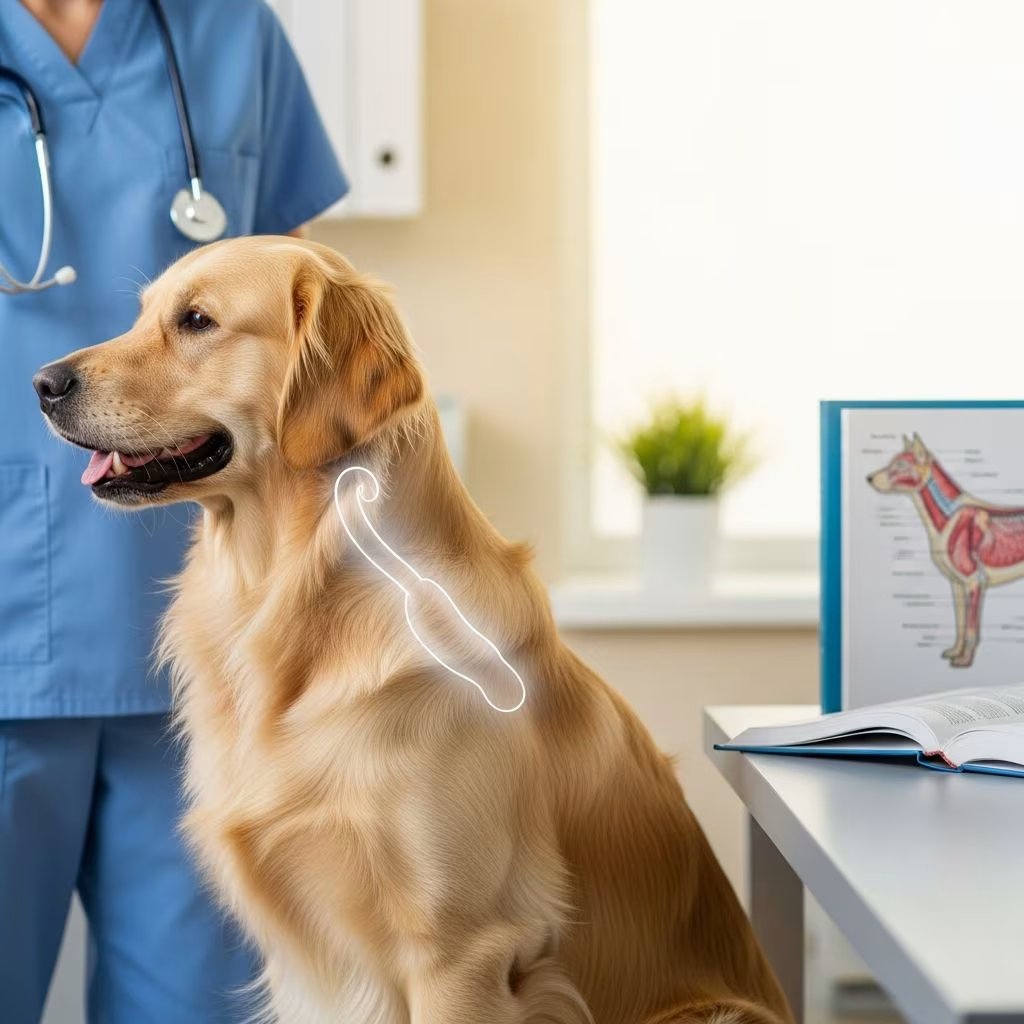
Megaesophagus is a serious condition in dogs where the esophagus enlarges and loses its ability to effectively transport food and water to the stomach, often leading to regurgitation and related health risks. This guide explores the condition in depth, offering pet owners practical knowledge to support their dogs’ well-being.
Understanding the Esophagus and Its Role
The esophagus serves as a muscular tube connecting the mouth to the stomach, using wave-like contractions called peristalsis to push food downward. In dogs with megaesophagus, this process fails, causing the esophagus to dilate and food to pool, which can result in frequent regurgitation rather than vomiting. Regurgitation is passive, where undigested food simply flows back up, distinguishing it from active vomiting.
Primary Causes of Megaesophagus
Megaesophagus can be congenital, present from birth, or acquired later in life. Congenital cases often stem from developmental anomalies like vascular ring anomalies, where blood vessels encircle and constrict the esophagus during growth. Acquired megaesophagus has numerous triggers, with myasthenia gravis being the most prevalent, accounting for up to 30% of cases. This autoimmune disorder disrupts nerve-muscle communication by attacking acetylcholine receptors.
Other notable causes include:
- Neuromuscular disorders: Such as laryngeal paralysis combined with hind leg weakness from nervous system degeneration.
- Endocrine issues: Hypoadrenocorticism (Addison’s disease) or suspected hypothyroidism.
- Infections and toxins: Botulism, tetanus, lead poisoning, organophosphates, or snake bites.
- Obstructions: Foreign objects like bones lodged in the esophagus.
- Systemic conditions: Dysautonomia, myopathies, central nervous system trauma, esophagitis, or gastric dilatation-volvulus (bloat).
In many instances, no clear cause is identified, labeling it as idiopathic megaesophagus.
Recognizing Key Symptoms
Early detection is crucial. The hallmark symptom is regurgitation, especially after meals, leading to weight loss, dehydration, and malnutrition in affected dogs. Puppies and small breeds are particularly vulnerable, showing signs soon after weaning.
Additional symptoms include:
- Excessive drooling or hypersalivation.
- Difficulty swallowing, with gulping, head tossing, or extended neck positions.
- Bad breath (halitosis), ptyalism, or occasional vomiting.
- Signs of aspiration pneumonia: coughing, fever, rapid breathing, nasal discharge, lethargy, or runny nose.
Aspiration pneumonia occurs when regurgitated material enters the lungs, potentially causing severe respiratory distress.
Diagnostic Approaches
Veterinarians diagnose megaesophagus through a combination of history, physical exams, and imaging. Radiographs (X-rays) are primary, often taken in upright positions to visualize esophageal dilation filled with food or fluid. Contrast studies using barium highlight motility issues. Endoscopy inspects for obstructions or inflammation, while blood tests screen for underlying conditions like myasthenia gravis via acetylcholine receptor antibody levels.
| Method | Purpose | Advantages |
|---|---|---|
| Plain Radiographs | Detect dilation | Quick, non-invasive |
| Barium Swallow | Assess motility | Visualizes food movement |
| Endoscopy | Check for strictures | Direct visualization |
| Blood Tests | Identify causes like MG | Screens systemic issues |
Management and Treatment Strategies
Treatment prioritizes addressing root causes when possible and providing supportive care to minimize regurgitation and pneumonia risks. For myasthenia gravis, anticholinesterase drugs like pyridostigmine enhance muscle contractions, with immunosuppressants (prednisone, azathioprine) added cautiously post-pneumonia resolution. Dogs with MG should be spayed/neutered to avoid exacerbation during heat cycles.
Promising therapies include sildenafil (Viagra), which a 2022 study showed reduced regurgitation frequency and supported weight gain in dogs. Botox injections into the lower esophagus or prokinetic agents like bethanechol, cisapride, or metoclopramide may improve sphincter tone and motility, though efficacy varies in dogs.
Surgical intervention for congenital vascular rings can alleviate compression but fully resolves symptoms in only about 30% of cases. Severe cases may require esophagostomy or gastrostomy tubes for direct stomach feeding.
Essential Home Care Techniques
Daily management focuses on feeding practices to promote gravity-assisted swallowing. Elevate dogs in a vertical ‘Bailey chair’ position during and 10-30 minutes post-meals. Experiment with food textures: some thrive on slurries (blended canned food with water), others on meatballs or soaked kibble.
- Feed small, frequent meals (4-6 daily).
- Use raised bowls or chairs for upright posture.
- Monitor weight and hydration closely.
- Administer medications as prescribed, including antacids or anti-nausea drugs.
Prevent aspiration by clearing foam from the mouth pre-feeding and restricting exercise post-meals. Regular vet check-ups track progress and detect pneumonia early.
Complications and Emergency Warning Signs
The gravest risk is recurrent aspiration pneumonia, signaled by coughing, fever, rapid heart rate, lethargy, or blue gums. Fluid in lungs demands immediate hospitalization with antibiotics, oxygen, and fluids. Weight loss exceeding 10% rapidly or inability to retain any food also warrants urgent care.
Prognosis varies: congenital cases managed well can live normally, but acquired forms depend on the cause. Idiopathic cases often require lifelong care, with euthanasia considered if quality of life declines.
Nutritional Support and Diet Optimization
Adequate calories prevent malnutrition. High-calorie, easily digestible diets like prescription gastrointestinal formulas work best. Hydrolyzed proteins reduce allergies, and vertical feeding minimizes reflux. Track intake with logs to adjust as needed.
Frequently Asked Questions (FAQs)
What breeds are prone to megaesophagus?
Common in German Shepherds, Great Danes, Irish Setters, Newfoundlands, and Greyhounds, but any breed can be affected.
Can megaesophagus be cured?
Congenital surgical fixes may help partially; acquired cases improve with cause treatment, but full reversal is rare.
How do I make a Bailey chair at home?
Use crates or PVC frames to hold dogs upright safely; consult vets for designs ensuring stability.
Is aspiration pneumonia always fatal?
No, prompt treatment with antibiotics and supportive care often resolves it, though recurrence is common.
Can puppies outgrow megaesophagus?
Some congenital cases improve by 6-12 months, but many persist lifelong.
References
- Megaesophagus in Dogs — ASPCA Pet Health Insurance. 2023. https://www.aspcapetinsurance.com/resources/megaesophagus-in-dogs/
- Megaesophagus in Dogs: Causes, Symptoms, Treatment — ToeGrips. 2023. https://toegrips.com/megaesophagus-in-dogs/
- What Is Megaesophagus in Dogs? — WebMD. 2023. https://www.webmd.com/pets/dogs/what-is-megaesophagus-dogs
- Diagnosis and Management of Megaesophagus in Dogs — dvm360. 2023. https://www.dvm360.com/view/diagnosis-and-management-megaesophagus-dogs-proceedings
- Megaesophagus in Dogs: Urgent Signs, Emergency Care — GSVS. 2023. https://gsvs.org/blog/megaesophagus-dogs-urgent-care/
- Megaoesophagus in Dogs – Fact Sheet — Vet Specialists. 2023. https://www.vetspecialists.co.uk/fact-sheets-post/megaoesophagus-megaesophagus-mo-me-in-dogs-fact-sheet/
- Megaesophagus — VCA Animal Hospitals. 2023. https://vcahospitals.com/know-your-pet/megaesophagus



