

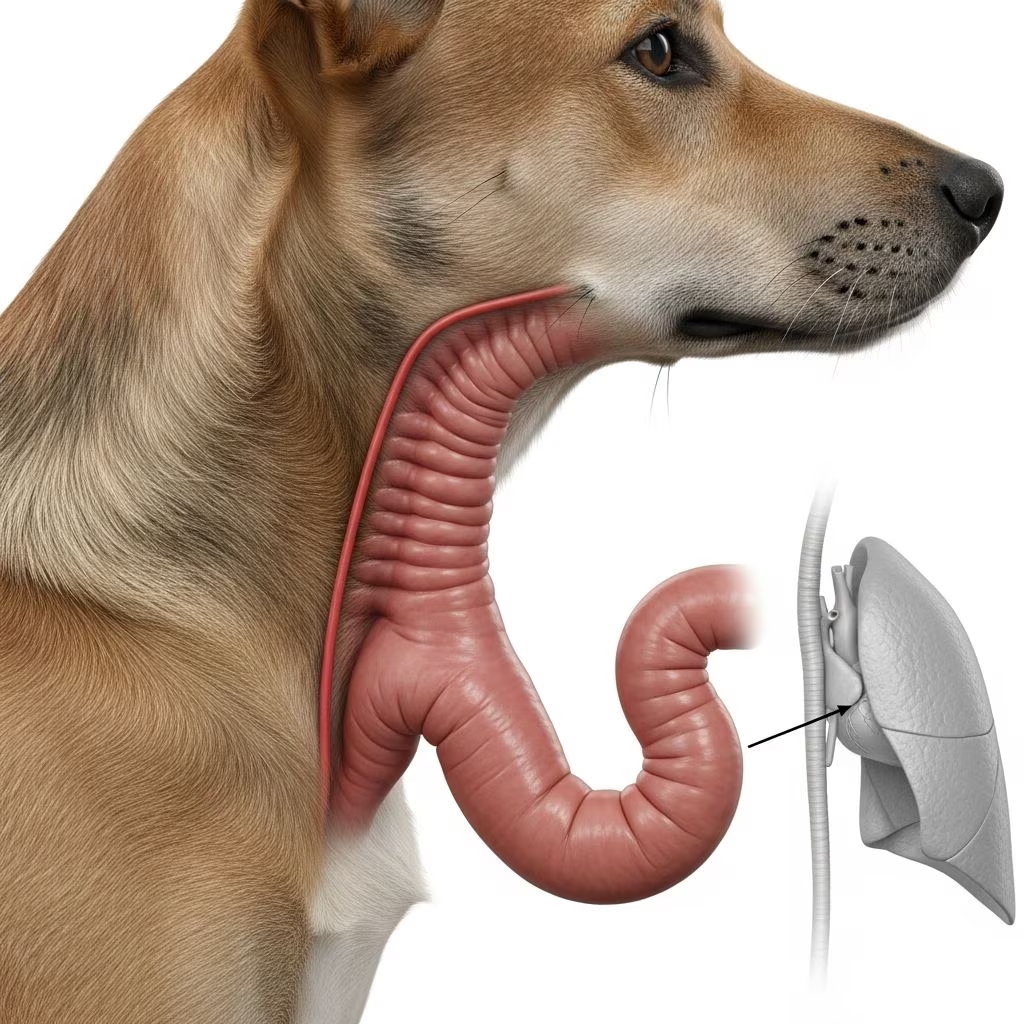
The esophagus serves as a vital muscular conduit in dogs, transporting food and water from the mouth to the stomach through coordinated wave-like contractions known as peristalsis. In megaesophagus, this tube enlarges and loses effective motility, causing food and liquids to pool rather than progress normally, often resulting in regurgitation and serious health risks.
Understanding the Esophageal Function and Dysfunction
Normally, the canine esophagus features layers of skeletal muscle controlled by the vagus nerve, enabling precise swallowing triggered by pharyngeal sensors. This process ensures efficient nutrient delivery to the stomach. When megaesophagus develops, the esophagus dilates diffusely, impairs peristalsis, and fails to propel contents downward, leading to accumulation and passive expulsion upon position changes.
Dogs affected by this condition frequently exhibit a voracious appetite yet suffer from malnutrition due to poor nutrient absorption, manifesting as weight loss and muscle wasting despite eagerness to eat.
Types of Megaesophagus: Congenital vs. Acquired
Megaesophagus manifests in two primary forms: congenital, present from birth, and acquired, developing later in life.
Congenital Megaesophagus
This form arises due to underdeveloped esophageal nerves or genetic factors, particularly in breeds like Wire-Haired Fox Terriers, Smooth-Haired Fox Terriers, Springer Spaniels, Long-Haired Miniature Dachshunds, and Samoyeds. It often links to congenital myasthenia gravis, a neuromuscular disorder disrupting nerve-muscle communication. Puppies may show symptoms shortly after weaning, with regurgitation during or post-feeding.
Acquired Megaesophagus
More common in adults, especially large breeds, this type stems from underlying issues such as:
- Myasthenia gravis (autoimmune neuromuscular disease affecting 25% of cases)
- Vascular ring anomalies (congenital vessels constricting the esophagus)
- Hormonal imbalances like hypothyroidism or hypoadrenocorticism
- Toxins including lead, thallium, snake venom, or botulism
- Esophageal obstructions from tumors, strictures, or foreign bodies
- Severe esophagitis or generalized diseases
Acquired cases demand investigation into root causes for targeted therapy.
Recognizing Key Symptoms
Early detection hinges on observing hallmark signs:
- Regurgitation: Passive expulsion of undigested food, water, or mucus without retching, often hours after eating and worsened by lowering the head
- Bad breath (halitosis) from fermenting esophageal contents
- Gurgling or wet sounds during swallowing
- Excessive salivation and neck bulging from distension
- Weight loss, lethargy, and poor body condition despite hunger
- Coughing, fever, breathing difficulties signaling aspiration pneumonia
Regurgitation differs from vomiting: it lacks abdominal effort and involves unprocessed material. Prompt veterinary attention is crucial if respiratory distress appears.
Diagnostic Approaches
Veterinarians suspect megaesophagus from history and signs, confirming via:
| Method | Description | Purpose |
|---|---|---|
| Plain Radiographs (X-rays) | Chest images revealing dilated esophagus filled with air, fluid, or food; checks for pneumonia | Primary diagnostic tool, often sufficient alone |
| Fluoroscopy | Real-time video X-ray with contrast liquid to assess motility | Evaluates peristalsis dynamics at specialty centers |
| Esophagoscopy | Endoscope visualization under anesthesia | Inspects for obstructions or inflammation |
| Bloodwork/Urinalysis | Systemic health screening | Rules out underlying diseases like myasthenia gravis |
Imaging typically visualizes the esophagus as a widened thoracic structure, distinguishing it from normal invisibility on X-rays.
Management and Treatment Strategies
Megaesophagus lacks a cure, but proactive management enhances quality of life significantly. Core tactics include:
- Elevated Feeding: Position dogs vertically (Bailey Chair or upright stand) during and 10-30 minutes post-meals to leverage gravity
- Dietary Modifications: Small, frequent meals of high-calorie, semi-liquid textures like meatball-consistency blends or soaked kibble to minimize residue
- Medications: Prokinetics (e.g., metoclopramide) for motility; treat underlying conditions like myasthenia gravis with immunosuppressants
- Surgical Options: Rare, for vascular rings (e.g., persistent right aortic arch thoracotomy) or esophagostomy tubes for nutrition
Owners must monitor weight, regurgitation frequency, and lung sounds daily, seeking immediate care for pneumonia signs like cough or fever.
Preventing and Handling Complications
Aspiration pneumonia, from inhalations during regurgitation, poses the gravest threat, causing fever, cough, lethargy, and dyspnea. Prevention involves:
- Strict upright feeding protocols
- Post-meal positioning
- Antibiotics and nebulization for infections
- Avoiding toys that encourage rapid gulping
Regular veterinary check-ups track progression and adjust plans.
Prognosis and Long-Term Care
With diligent management, many dogs enjoy normal lifespans, though congenital cases may face weaning challenges. Acquired forms improve if causes resolve. Pet insurance aids costly diagnostics and treatments. Owners report success with consistency, noting happy, active pets despite adaptations.
Frequently Asked Questions (FAQs)
What causes regurgitation in megaesophagus?
Food pools in the dilated esophagus and exits passively due to gravity, without digestive processing.
Can megaesophagus be cured in dogs?
No outright cure exists, but management via feeding adjustments and medications yields excellent outcomes.
Which breeds are prone to megaesophagus?
Great Danes, German Shepherds, Irish Setters for acquired; Fox Terriers, Dachshunds for congenital forms.
How do I feed a dog with megaesophagus?
Use elevated bowls or chairs for 15-30 minutes per meal with slurried, calorie-dense food.
Is aspiration pneumonia fatal?
It can be life-threatening untreated but responds well to early antibiotics and supportive care.
This guide equips owners with tools for informed care, emphasizing veterinary partnership for optimal results.
References
- Megaesophagus in Dogs: Signs, Causes, and How to Manage — PetMD. 2023-2025. https://www.petmd.com/dog/conditions/digestive/megaesophagus-dogs
- Megaesophagus in Dogs and Cats — VetSpecialists.com. 2020-04-08. https://www.vetspecialists.com/vet-blog-landing/animal-health-articles/2020/04/08/megaesophagus
- Diagnosis and management of megaesophagus in dogs (Proceedings) — DVM360. Recent proceedings. https://www.dvm360.com/view/diagnosis-and-management-megaesophagus-dogs-proceedings
- Megaesophagus — VCA Animal Hospitals. Recent update. https://vcahospitals.com/know-your-pet/megaesophagus
- Megaesophagus in Dogs — ASPCA Pet Health Insurance. Recent. https://www.aspcapetinsurance.com/resources/megaesophagus-in-dogs/
- Megaesophagus — Clinician’s Brief. Recent clinical article. https://www.cliniciansbrief.com/article/megaesophagus



