

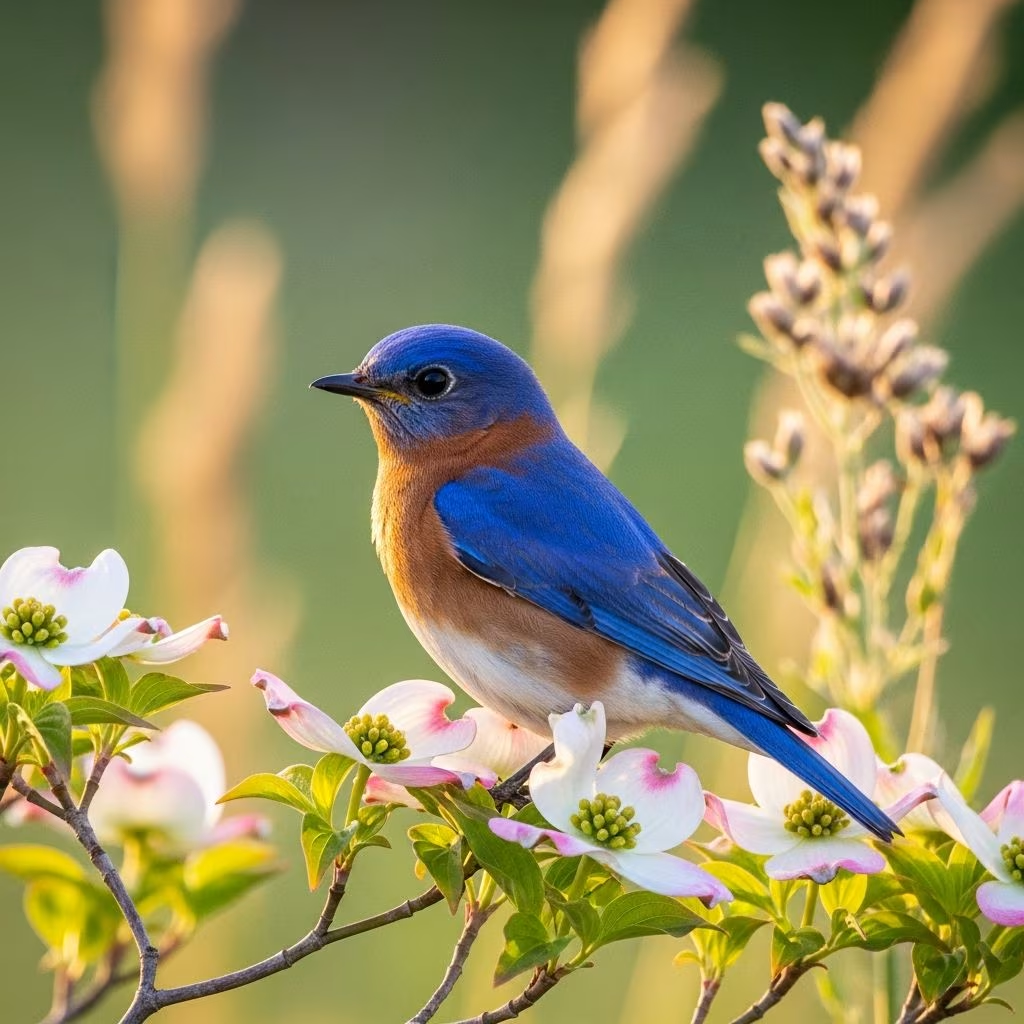
Meet the Eastern Bluebird: A Beautiful Symbol of Spring
The Eastern bluebird is one of North America’s most beloved songbirds, instantly recognizable by its vibrant plumage and delightful song. These medium-sized thrushes have captured the hearts of birdwatchers and nature enthusiasts for generations, symbolizing hope and renewal as they return from their winter migrations. With their striking blue coloring and warm rufous-orange breasts, Eastern bluebirds are a visual treat in any landscape. Understanding these remarkable birds and their specific needs is the first step toward creating environments where they can flourish.
Understanding Eastern Bluebird Characteristics
Physical Description and Size
Eastern bluebirds are small thrushes measuring approximately 16 to 21 centimeters in length, with a wingspan of around 33 centimeters. Males display the most striking coloration, featuring a bright blue back, head, wings, and tail, contrasting beautifully with their rufous-orange breast and underparts. Females are more subdued in appearance, displaying grayish-blue tones on their backs and wings with a paler orange-buff on the breast. This sexual dimorphism helps distinguish males and females in the field, though both sexes are unmistakably beautiful birds.
Behavioral Traits
Eastern bluebirds are diurnal birds, meaning they are active during the day and rest at night. They are highly territorial during breeding season, with nesting territories typically ranging from 1.1 to 2.0 hectares in size. These territories often decrease as the nesting season advances, possibly due to increased food availability or the need for parents to protect nestlings more closely. Eastern bluebirds are also migratory in many parts of their range, though the extent of migration varies geographically. Interestingly, bluebirds rarely winter in areas where nighttime temperatures routinely fall below 20 degrees Fahrenheit.
The hunting behavior of Eastern bluebirds is distinctive and observable. They typically sit in the open on power lines, fence posts, or elevated perches with an alert, vertical posture. When targeting insects on the ground, they make a dramatic descent with fluttering wings and a relatively slow approach, followed by a quick return to their perch. This behavior makes them relatively easy to spot and observe in suitable habitats.
Ideal Habitat Requirements for Eastern Bluebirds
Primary Habitat Preferences
Eastern bluebirds thrive in open and semi-open habitats with specific structural characteristics. Their ideal environment includes sparse ground cover, minimal understory vegetation, and scattered trees or perches that aid in locating insects. These birds prefer open land with scattered trees suitable for perching, nesting, and feeding, and are frequently seen in parks, gardens, hedges, and areas that provide elevated vantage points. They are commonly found sitting on fences and utility wires, using these strategic locations to survey the landscape for food.
Natural and Human-Modified Habitats
Before European settlement, Eastern bluebirds likely occupied open or semi-open woodlands, marshes, open pinewoods, and xeric forests, as well as clearings created by natural disturbances like landslides. Today, their range has expanded to include human-created habitats. Eastern bluebirds are remarkably adaptable birds and do exceptionally well in lawns, golf courses, power line rights-of-way, roadsides, and backyards in rural areas. They appear to tolerate and sometimes even thrive in disturbed habitats, making them well-suited to suburban environments. Summer habitats commonly include grasslands with scattered trees, farmland, and backyards, while winter habitats may shift to other suitable areas.
Breeding Habitat Specifics
Optimal breeding habitat for Eastern bluebirds consists of open areas with adequate perches, such as snags and trees containing cavities suitable for nesting and roosting. An ideal breeding habitat depends on proximity between foraging grounds and available nesting sites. Many highly productive open expanses with short ground cover exist but lack perches and nearby nesting cavities, rendering them largely unoccupied by breeding bluebirds. Research has determined that optimal bluebird breeding habitat contains approximately seven natural cavities per acre.
Home Range and Territory Size
Home ranges for Eastern bluebirds vary considerably by season. During the breeding season, home ranges are relatively compact at approximately 1.1 hectares, but expand dramatically during winter to as much as 120.8 hectares as birds range more widely searching for food resources. This seasonal variation reflects the birds’ adaptive strategies for maximizing food availability throughout the year.
Nesting Behavior and Requirements
Natural Nesting Cavities
Eastern bluebirds are secondary cavity nesters, meaning they utilize existing cavities rather than excavating their own holes. They typically select old woodpecker holes in dead pine or oak trees, which can be located up to 50 feet off the ground. The ideal natural nesting cavity is positioned at a height of 12 to 15 feet on average, though when ideal cavities are unavailable, bluebirds will accept cavities as low as three feet above the ground and higher than 20 feet. This flexibility in cavity selection allows them to utilize available resources across various habitats.
Nest Box Preferences
When given the choice between different nest box designs, bluebirds demonstrate clear preferences. Research indicates that bluebirds favor snugger nest boxes measuring 4 inches square on the bottom rather than the larger 6-inch square boxes, and they prefer entrance holes with a diameter of 1.75 inches rather than 1.4 inches. Interestingly, older bluebirds are more likely than younger ones to nest in nest boxes, though individual birds often switch their preferences between nesting attempts. Bluebirds are known to prefer nesting boxes that are at least 100 yards apart from other bluebird nests.
Nest Structure and Breeding Patterns
Eastern bluebirds construct nests primarily through female effort, creating loosely constructed cups of weeds, twigs, and dry grass, lined with finer grass, sometimes incorporating animal hair or feathers. These birds typically have 1-3 broods per breeding season, with clutch sizes ranging from 2-7 eggs. Nests are usually located relatively low, between 2-20 feet above the ground, though occasionally reaching heights up to 50 feet.
Diet and Foraging Behavior
Primary Food Sources
Eastern bluebirds are primarily insectivorous, though they supplement their diet with fruit, particularly in fall and winter. They are ground foragers that hunt insects by dropping from elevated perches onto prey detected on or near the ground. Their reliance on insects for food, combined with their need for open ground where they can spot prey, explains their preference for habitats with sparse vegetation and multiple vantage points.
Seasonal Diet Variations
Food preferences vary between breeding and non-breeding seasons, which influences habitat selection during different times of year. During breeding season when protein demands are high, bluebirds focus heavily on insects to feed themselves and their growing nestlings. In fall and winter, as insect availability declines, bluebirds increasingly consume fruits and berries, particularly from dogwood, sumac, and juniper plants. This dietary flexibility allows them to persist through seasons when their preferred insect prey is scarce.
Conservation Challenges and Historical Decline
Threats to Eastern Bluebird Populations
Eastern bluebird populations declined significantly during the last century due to multiple threats working in concert. Habitat loss represents the primary challenge, as open lands have been converted to farmland, suburban development, and commercial property, greatly reducing food and shelter resources. Additionally, widespread pesticide use eliminated many insects that bluebirds depend upon for food. Competition from aggressive non-native species, particularly house sparrows and European starlings, intensified as these species also compete for limited nesting cavities.
Conservation Success Through Community Effort
The Eastern bluebird’s remarkable recovery demonstrates the power of coordinated conservation efforts. Conservationists rescued the species in large part through widespread efforts to erect and protect special bluebird nest boxes. This simple yet effective intervention provided alternative nesting sites when natural cavities became scarce, allowing populations to rebound in many regions. Today, competition from invasive species remains a concern, but actively managed nest box programs continue to support healthy bluebird populations across their range.
How You Can Help Eastern Bluebirds Thrive
Install and Maintain Nest Boxes
One of the most impactful actions individuals can take is installing properly designed nest boxes. Following established specifications—4-inch square bases with 1.75-inch entrance holes—maximizes bluebird occupancy. Boxes should be positioned 5-15 feet high in open areas with good visibility, spaced at least 100 yards apart. Regular monitoring and maintenance throughout the breeding season, including removal of competitor nests and parasites, significantly improves nesting success rates.
Create Suitable Habitat
Landscaping choices profoundly influence bluebird populations. Maintain open lawn areas with scattered trees and shrubs that provide both perching and foraging opportunities. Reduce chemical pesticide and herbicide use to preserve the insect populations that bluebirds depend upon. Plant native trees and shrubs that produce fruits and berries, particularly species like dogwood, sumac, and juniper, which provide important winter food sources.
Provide Food and Water
During winter or when natural food is scarce, consider offering mealworms—a preferred supplemental food source. Provide fresh water through shallow bird baths or ground-level water sources, as bluebirds prefer drinking and bathing in open areas where they can maintain visibility. Keep water sources clean and refilled regularly.
Minimize Threats
Protect nesting bluebirds from predators by positioning nest boxes away from dense shrubs where predators hide, and by using appropriate predator guards on mounting poles. Manage competition from house sparrows and starlings by removing their nests and monitoring box occupancy regularly. Avoid using rodenticides and pesticides that can poison bluebirds directly or deplete their food sources.
Understanding Bluebird Differences: Eastern vs. Other Species
While multiple bluebird species exist in North America, each has adapted to different ecological niches. Mountain bluebirds possess the unique ability to hover above the ground while searching for insects, enabling them to thrive in areas with few trees or shrubs. In contrast, both Eastern and Western bluebirds require trees to provide the elevated perches from which they hunt insects on the ground. This behavioral difference explains why Eastern bluebirds cannot occupy the more open, treeless habitats that mountain bluebirds readily utilize.
Locating Eastern Bluebirds in Your Area
Finding Eastern bluebirds requires visiting appropriate habitats. Search in open country with patchy vegetation and large trees or nest boxes, such as meadows, old fields, and golf courses. Bluebirds typically sit in the open on power lines or along fences with an alert, vertical posture, making them relatively conspicuous once you know what to look for. Early morning hours often provide the best viewing opportunities, as birds are most active during feeding times. Spring migration periods typically offer excellent opportunities to observe these birds as they return to breeding territories.
Frequently Asked Questions About Eastern Bluebirds
Q: What is the ideal temperature range for Eastern bluebirds?
A: Eastern bluebirds rarely winter in areas where nighttime temperatures routinely fall below 20 degrees Fahrenheit, indicating their preference for milder climates or their migration patterns to warmer regions during winter months.
Q: How large should my nest box entrance hole be?
A: Research shows that Eastern bluebirds prefer entrance holes with a diameter of 1.75 inches rather than smaller 1.4-inch holes, though these dimensions can vary slightly based on specific recommendations from local conservation organizations.
Q: What spacing is recommended between multiple bluebird nest boxes?
A: Eastern bluebirds are territorial and prefer nesting boxes that are at least 100 yards apart from other bluebird nests, reducing territorial conflicts and competition for resources.
Q: Can Eastern bluebirds use nest boxes instead of natural cavities?
A: Yes, Eastern bluebirds readily use nest boxes and artificial refuges. In fact, older birds show greater preference for nest boxes than younger birds, and widespread nest box programs have been crucial to the species’ conservation success.
Q: What do Eastern bluebirds eat in winter?
A: In winter, when insects are scarce, Eastern bluebirds supplement their diet heavily with fruits and berries from native plants like dogwood, sumac, and juniper. Some individuals also accept mealworms offered as supplemental food.
Q: How many broods do Eastern bluebirds have per year?
A: Eastern bluebirds typically have 1-3 broods per breeding season, with clutch sizes ranging from 2-7 eggs, allowing them to raise multiple generations throughout spring and summer.
References
- Sialia sialis (Eastern Bluebird) Information — Animal Diversity Web, University of Michigan Museum of Zoology. Accessed 2025-11-28. https://animaldiversity.org/accounts/Sialia_sialis/
- Eastern Bluebird Habitat — Avian Report. Accessed 2025-11-28. https://avianreport.com/eastern-bluebird-habitat/
- Eastern Bluebird Life History — All About Birds, Cornell Lab of Ornithology. Accessed 2025-11-28. https://www.allaboutbirds.org/guide/Eastern_Bluebird/lifehistory
- Eastern Bluebird Field Guide — National Audubon Society. Accessed 2025-11-28. https://www.audubon.org/field-guide/bird/eastern-bluebird
- Eastern Bluebird Species Detail — Montana Field Guide, Montana Natural Heritage Program. Accessed 2025-11-28. https://fieldguide.mt.gov/speciesDetail.aspx?elcode=ABPBJ15010
- Eastern Bluebird Habitat and Conservation — Missouri Department of Conservation. Accessed 2025-11-28. https://mdc.mo.gov/discover-nature/field-guide/eastern-bluebird
- Eastern Bluebird Overview — All About Birds, Cornell Lab of Ornithology. Accessed 2025-11-28. https://www.allaboutbirds.org/guide/Eastern_Bluebird/overview



