

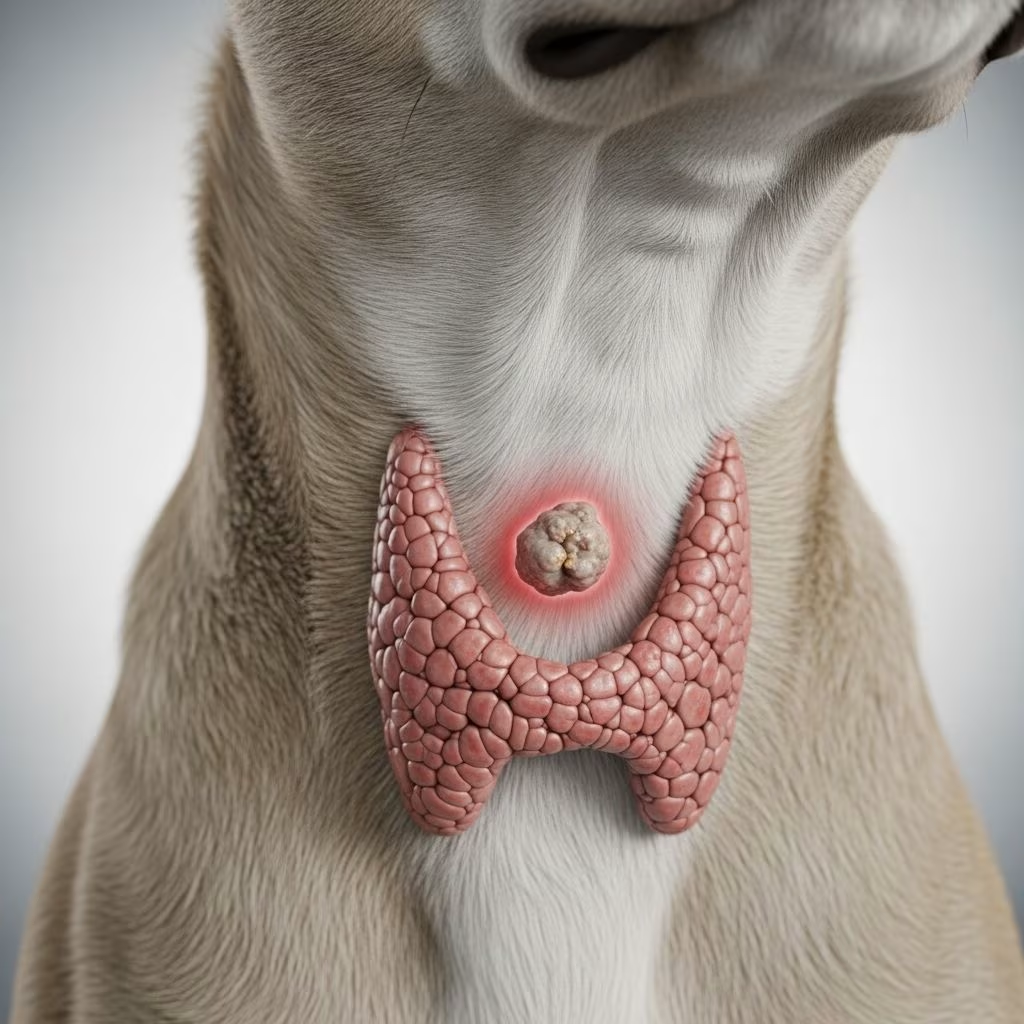
The thyroid gland represents one of the body’s most vital endocrine organs, responsible for regulating metabolism, growth, and thermoregulation across multiple species. While follicular tumors originating from the primary hormone-producing cells dominate discussions of thyroid neoplasia, a distinct category of malignancy arises from the parafollicular cells—commonly referred to as C-cells—that line the thyroid follicles. These neuroendocrine cells produce calcitonin, a hormone involved in calcium homeostasis, and when they undergo malignant transformation, they give rise to medullary thyroid carcinomas. This article explores the unique characteristics, diagnostic challenges, and therapeutic approaches to managing these specialized tumors in dogs and cats.
Cellular Origins and Tumor Classification
The thyroid gland comprises multiple functional cell populations, each with distinct embryologic origins and biological behaviors. The follicular cells, derived from endoderm, synthesize and release thyroid hormones (T3 and T4) that regulate systemic metabolism. Conversely, parafollicular C-cells originate from the neural crest and become incorporated into the thyroid during development. These neuroendocrine cells possess the capacity to synthesize calcitonin and various peptide hormones, establishing them as part of the broader neuroendocrine system.
When C-cells undergo malignant transformation, they form medullary carcinomas—a classification distinct from the more common follicular adenocarcinomas that account for the majority of thyroid malignancies in companion animals. This distinction carries substantial clinical significance because medullary and follicular carcinomas exhibit different growth patterns, metastatic behaviors, and responsiveness to therapeutic interventions. The ability to differentiate between these tumor types requires careful histological and immunohistochemical examination, as compact cellular variants of follicular carcinomas may superficially resemble medullary lesions under light microscopy.
In dogs, while follicular carcinomas represent the predominant histologic type, up to one-third of thyroid malignancies may originate from C-cells. This relatively substantial proportion underscores the importance of accurate diagnostic classification, as treatment decisions and prognostic counseling depend critically on identifying the tumor’s cellular source.
Epidemiologic Patterns and Risk Factors
Thyroid tumors in dogs comprise approximately 1.2% to 4.0% of all canine malignancies, with the vast majority being carcinomas rather than benign adenomas. The disease typically emerges in older animals, with a median age of presentation around 9 to 10 years. Certain dog breeds—including Boxers, Beagles, and Golden Retrievers—demonstrate increased susceptibility, suggesting possible genetic predisposition, though the precise heritable factors remain incompletely characterized.
The etiology of medullary and other thyroid carcinomas remains largely unknown in companion animals. However, radiation exposure represents an established risk factor; dogs exposed to sufficient ionizing radiation demonstrate significantly elevated incidence of thyroid malignancy, paralleling observations in human populations. Thyroid-stimulating hormone (TSH) may contribute to tumor development through chronic stimulation of follicular elements, though this mechanism is better characterized in follicular rather than medullary pathology.
Cats, by contrast, rarely develop primary thyroid carcinomas. Thyroid disease in felines typically manifests as hyperthyroidism due to benign hyperplasia or adenomas, rather than malignant transformation. This species difference reflects distinct endocrinologic vulnerabilities and has important implications for diagnostic strategies and treatment selection.
Clinical Presentation and Diagnostic Recognition
Dogs with medullary and other thyroid carcinomas often present with a chief complaint of cervical swelling or a palpable mass in the neck region. In more than 75% of cases, either the visible enlargement prompted the owner to seek veterinary care, or the mass was discovered incidentally during physical examination for an unrelated concern. The tumors tend to be large, firmly fixed within surrounding cervical soft tissues, and not freely movable—characteristics that distinguish them from the smaller, more mobile thyroid masses occasionally found in cats.
Most dogs with thyroid carcinomas (approximately 75%) are euthyroid, meaning they maintain normal thyroid hormone balance despite the presence of malignancy. Some tumors (up to 10%) become hyperfunctional, releasing excessive thyroid hormone and producing clinical signs such as tachycardia, weight loss despite increased appetite, and hyperactivity. Conversely, extensive tumor infiltration may destroy sufficient normal thyroid parenchyma to precipitate secondary hypothyroidism, requiring lifelong hormone supplementation.
The nonspecific nature of initial clinical signs—neck enlargement without associated systemic manifestations—can delay diagnosis. Owners may attribute a gradually enlarging mass to simple weight gain or aging, while veterinarians may need to differentiate thyroid masses from lymphadenopathy, salivary gland tumors, or other cervical pathology.
Advanced Diagnostic Modalities
Accurate diagnosis of medullary thyroid carcinomas requires integration of multiple diagnostic approaches. Physical examination and palpation provide initial assessment but cannot definitively establish tumor type or extent of invasion.
Imaging Studies
Thyroid imaging using technetium-99m pertechnetate (99m-Tc) scans aids in identifying abnormal thyroid tissue and determining if suspicious masses are truly of thyroid origin. These scans visualize functional, differentiated thyroid tissue but do not directly assess thyroid hormone production or provide detailed anatomic information regarding tumor size or local invasion. Computed tomography (CT) imaging of the neck, chest, and abdomen offers superior anatomic detail, allowing precise delineation of primary tumor boundaries, assessment of laryngeal and vascular involvement, and evaluation for thoracic metastases. CT imaging also facilitates surgical and radiation treatment planning when these modalities are being considered.
Laboratory Assessment
Serum thyroid hormone concentrations (free T4 and TSH) should be measured to determine functional status. Calcitonin measurement, while theoretically valuable for detecting C-cell proliferation, is not routinely performed in veterinary practice due to technical limitations and the lack of established reference intervals for companion animals. Blood work additionally screens for concurrent metabolic derangements and general health status before treatment initiation.
Tissue Diagnosis
Fine-needle aspiration (FNA) cytology can support a diagnosis of malignancy but often cannot reliably differentiate between medullary and follicular subtypes. Definitive classification requires histopathologic examination of surgical specimens or biopsy samples. Immunohistochemical staining for calcitonin and chromogranin A helps confirm the neuroendocrine nature and C-cell origin of medullary carcinomas, distinguishing them from follicular variants.
Metastatic Burden Assessment
A critical component of staging involves detecting metastatic disease. Approximately 33% of dogs have detectable distant metastases at the time of diagnosis, with this proportion rising to 65% to 90% over the course of disease progression. Regional lymph nodes (submandibular and retropharyngeal) represent the most common sites of metastatic involvement, but distant metastases may occur in the lungs, adrenal glands, brain, kidneys, heart, liver, and bone.
Thoracic radiographs or CT imaging should be performed to assess for pulmonary metastases, while abdominal imaging evaluates organ involvement. Despite comprehensive staging efforts, the inability to detect metastatic disease does not exclude its presence, necessitating careful discussion of prognosis and realistic treatment expectations with pet owners.
Therapeutic Approaches and Treatment Selection
Treatment decisions for medullary and other thyroid carcinomas must consider multiple factors: primary tumor size, extent of local soft tissue invasion, presence or absence of metastatic disease, functional status of the tumor, patient age and overall health, and owner preferences regarding treatment intensity.
Surgical Intervention
Surgery represents the gold standard therapeutic approach for thyroid carcinomas, offering the potential for cure when tumors are completely excised before metastatic dissemination. Complete removal of the primary tumor with clean margins, when achievable, may result in survival times exceeding three years, with some patients experiencing long-term disease-free intervals. However, the large, invasive nature of many canine thyroid carcinomas frequently necessitates removal of surrounding structures (portions of the larynx, trachea, or major blood vessels) to achieve complete resection, substantially increasing surgical complexity and morbidity.
Even when complete surgical removal is accomplished, dogs may require lifelong thyroid hormone supplementation if both thyroid lobes or substantial parenchyma are removed. Additionally, incomplete tumor removal (which occurs in many cases due to extensive local invasion) substantially reduces survival benefit, emphasizing the importance of accurate staging and realistic assessment of surgical feasibility before proceeding.
Radiation Therapy
For dogs in which surgery is not feasible, declined by owners, or insufficient to achieve complete tumor removal, external beam radiation therapy offers a palliative alternative. Hypofractionated protocols (9 Gy administered weekly for four weeks) have achieved complete remission in 11% of cases and partial remission in 89%, with median survival times approaching 96 weeks in one series. Notably, radiation therapy showed no survival difference between dogs with and without metastatic disease at the time of treatment, suggesting that distant metastases do not necessarily preclude benefit from local tumor control.
Less intensive palliative radiation protocols provide shorter survival times (5 to 6 months) but may be appropriate for older or infirm patients unable to tolerate aggressive treatment. Radiation can also be used as a neoadjuvant (pre-operative) modality to downstage invasive tumors, potentially rendering them more amenable to subsequent surgical resection.
Chemotherapy
Chemotherapy is typically reserved for dogs with metastatic disease or those with high-risk features identified on histopathology. Doxorubicin and cisplatin are the most commonly employed agents, with partial remission rates of 30% to 50%. Cisplatin therapy has yielded complete remission in 9% of treated dogs and partial remission in 54%, though median survival for all treated dogs was relatively short (98 days), with responders achieving approximately 322 days. The modest efficacy of chemotherapy suggests that it functions best as an adjuvant to surgical or radiation therapy rather than as monotherapy.
Radioactive Iodine Therapy
Radioactive iodine (I-131) therapy is commonly employed in feline hyperthyroidism but sees limited use in canine thyroid carcinoma. Dogs require substantially higher doses than cats to achieve therapeutic effect, making treatment expensive and restricting availability to specialized facilities. This modality remains an option for select cases but is not widely accessible.
Prognostic Considerations
Prognosis for dogs with medullary and other thyroid carcinomas depends heavily on stage at diagnosis and treatment choice. Dogs with completely resected, localized tumors may achieve survival times exceeding three years or longer. Those with metastatic disease at diagnosis generally have shorter survival expectations, though some patients with slow-growing tumors may experience months of relatively good quality of life even with documented distant metastases.
The high propensity for distant metastasis—occurring in two-thirds to three-quarters of dogs eventually—indicates that even apparently localized tumors carry substantial risk of systemic dissemination. This reality necessitates honest communication with pet owners about disease trajectory and treatment goals, distinguishing between curative approaches (appropriate for highly selected cases) and palliative management (the more common scenario).
Long-Term Management and Follow-up
Dogs treated surgically require periodic reassessment via physical examination, imaging, and thyroid hormone monitoring to detect local recurrence or distant metastases. Thyroid hormone supplementation, when required, demands regular dosage adjustment based on clinical response and serum hormone concentrations.
Dogs receiving radiation or chemotherapy similarly require ongoing monitoring for treatment efficacy, tumor response, and adverse effects. Quality of life should remain a central consideration in treatment planning, with willingness to shift toward comfort-focused care as disease progresses.
Comparison of Treatment Modalities
| Treatment Modality | Best-Case Scenario | Median Survival Time | Primary Indication |
|---|---|---|---|
| Surgical Resection | Complete removal with clean margins; possible cure | >3 years with complete resection | Localized tumors without extensive invasion |
| Hypofractionated Radiation | 11% complete remission; 89% partial remission | ~96 weeks | Unresectable or incompletely resected tumors |
| Palliative Radiation | Symptom relief; local tumor control | 5-6 months | Older patients or those unable to tolerate aggressive therapy |
| Chemotherapy (Cisplatin) | 9% complete remission; 54% partial remission | 98 days overall; 322 days for responders | Metastatic disease; adjuvant to surgery/radiation |
| Radioactive Iodine | Targeted destruction of functional tissue | Variable; limited data in dogs | Hyperfunctional tumors; specialized facilities only |
Distinguishing Medullary from Follicular Carcinomas
Accurate differentiation between medullary C-cell carcinomas and follicular carcinomas is essential because these tumors exhibit distinct biologic behaviors and treatment responses. Medullary carcinomas originate from parafollicular cells and typically do not produce excessive thyroid hormone, regardless of tumor burden. Their growth pattern tends toward invasive local expansion and distant metastasis.
Follicular carcinomas, by contrast, arise from the hormone-producing follicular epithelium and may become hyperfunctional, releasing excess thyroid hormone. Compact (solid) follicular carcinomas—the least differentiated variant—can cytologically resemble medullary tumors, creating diagnostic confusion. Immunohistochemical demonstration of calcitonin production and chromogranin positivity confirms the neuroendocrine, C-cell origin of medullary lesions, settling this distinction definitively.
Special Considerations in Feline Thyroid Disease
Cats rarely develop primary thyroid carcinomas, whether medullary or follicular. Feline thyroid pathology overwhelmingly involves benign hyperplasia or adenomas causing hyperthyroidism. When thyroid masses do occur in cats, they tend to be smaller and more freely movable than their canine counterparts. Cystic thyroid lesions in cats, while uncommon, may be managed surgically or with radioactive iodine, with long-term medical management generally not recommended due to progressive enlargement.
Emerging Research and Future Perspectives
Modern investigations into canine thyroid carcinomas increasingly employ genetic and molecular characterization to refine tumor classification, predict treatment response, and identify novel therapeutic targets. Understanding the genetic basis of breed predisposition may eventually enable preventive strategies in high-risk populations. Similarly, immunologic approaches and targeted molecular therapies represent emerging directions that may improve outcomes beyond those achievable with conventional surgery, radiation, and chemotherapy.
The recognition that medullary carcinomas represent a distinct neoplastic entity with different cell biology than follicular tumors has stimulated interest in developing treatment strategies specifically tailored to C-cell malignancies, potentially improving efficacy and reducing adverse effects.
Conclusion
Medullary thyroid carcinomas arising from parafollicular C-cells represent an important subset of thyroid malignancies in companion animals, particularly dogs. Their insidious presentation, propensity for extensive local invasion and distant metastasis, and variable response to available therapies necessitate careful diagnostic characterization, realistic prognostic assessment, and individualized treatment planning. While complete surgical resection offers the best opportunity for extended survival or cure, many cases present with advanced disease requiring multimodal or palliative approaches. Ongoing advances in diagnostic imaging, surgical technique, radiation delivery, and molecular understanding continue to refine management strategies and may ultimately improve outcomes for affected animals.
References
- Challenging Case Studies: Hyper- and Hypothyroidism and Thyroid Tumors in Dogs and Cats — American Veterinary Medical Association. Accessed February 24, 2026. https://www.avmi.net/information/hyperthyroid-hints/challenging-case-studies-hyper-and-hypothyroidism-and-thyroid-tumors-in-dogs-and-cats/
- Canine Thyroid Carcinomas: A Review with Emphasis on Follicular and Medullary Subtypes — PubMed/National Center for Biotechnology Information. 2023. https://pubmed.ncbi.nlm.nih.gov/37306003/
- Thyroid Tumors Canine — Veterinary Society of Surgical Oncology. Accessed February 24, 2026. https://vsso.org/thyroid-tumors-canine
- Canine Thyroid Carcinoma — NC State University College of Veterinary Medicine. Accessed February 24, 2026. https://hospital.cvm.ncsu.edu/services/small-animals/cancer-oncology/oncology/canine-thyroid-carcinoma/
- Thyroid Tumors in Dogs — Atlantic Veterinary Internal Medicine & Oncology. Accessed February 24, 2026. https://www.avim.us/blog/thyroid-tumors-in-dogs
- Thyroid Tumor — Animal Cancer and Imaging Center. Accessed February 24, 2026. http://www.veterinarycancer.com/thyroid-tumor
- Thyroid Tumors — VCA Animal Hospitals. Accessed February 24, 2026. https://vcahospitals.com/know-your-pet/thyroid-tumors



