

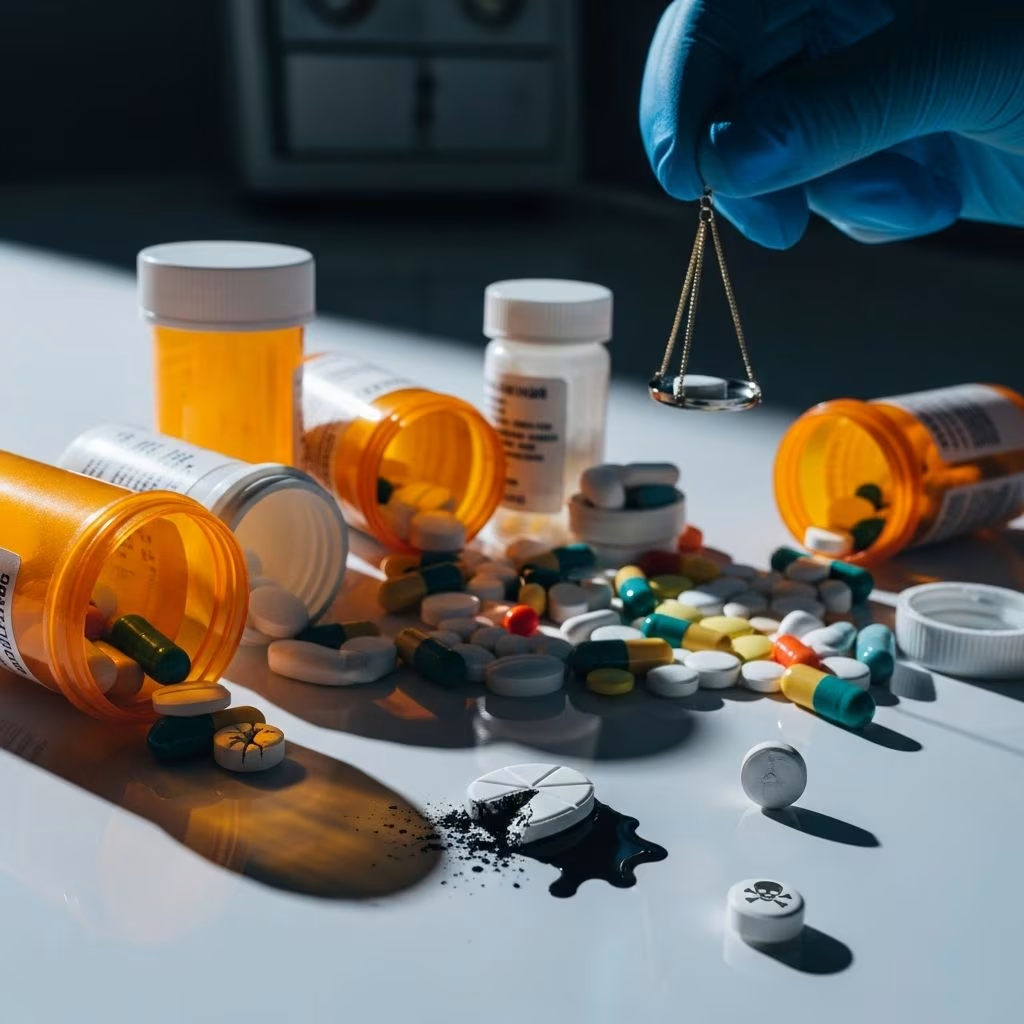
Medication toxicity arises when excessive amounts of drugs enter the body, leading to harmful physiological effects that can range from mild discomfort to life-threatening emergencies. Common household remedies like pain relievers and antidepressants are frequent culprits, affecting millions annually through accidental or intentional overdoses.
Defining Overdose and Toxicity
An overdose occurs when someone ingests more than the safe dose of a substance, resulting in toxicity—the degree of harm it inflicts on bodily systems. This disrupts normal functions in the nervous, cardiovascular, hepatic, and renal systems, often requiring immediate medical intervention. Factors like narrow therapeutic indices in drugs such as lithium amplify risks, where minor concentration changes can trigger severe reactions.
Common Causes of Medication Toxicity
Several scenarios contribute to toxicity: unintentional misuse by combining medications, failing to adhere to dosing instructions, or interactions with other substances. Populations at higher risk include the elderly, children, and those with renal impairments, as reduced clearance prolongs drug exposure. For instance, NSAIDs and ACE inhibitors can impair lithium elimination, escalating toxicity levels.
Anticholinergic Toxicity: A Widespread Concern
Anticholinergics, found in medications like atropine, scopolamine, antihistamines (e.g., loratadine), and tricyclic antidepressants (TCAs) such as amitriptyline, block acetylcholine receptors in the peripheral and central nervous systems. This inhibition leads to a classic symptom cluster: flushed, dry skin and mucous membranes, anhidrosis (reduced sweating), blurred vision, mydriasis (dilated pupils), and cycloplegia (impaired eye focus).
Patients may exhibit agitation, hallucinations, fever, urinary retention, and in severe cases, coma. The toxidrome table highlights these signs alongside vital sign changes like tachycardia.
Symptoms Breakdown
- Skin and Mucous Membranes: Dryness and flushing due to sweat gland inhibition.
- Ocular Effects: Dilated pupils and vision impairment from ciliary muscle paralysis.
- Neurological: Confusion, delirium, or seizures in advanced stages.
Acetaminophen Overdose: Silent Liver Threat
Acetaminophen (paracetamol), a staple for pain and fever, inhibits central COX enzymes to reduce prostaglandins without peripheral anti-inflammatory action. Toxicity emerges from its metabolite NAPQI overwhelming glutathione stores, causing centrilobular hepatic necrosis.
Initial gastrointestinal symptoms—nausea, vomiting, abdominal pain—give way to jaundice, coagulopathy, hepatic encephalopathy, and renal failure if untreated. Early intervention with N-acetylcysteine restores glutathione, while activated charcoal prevents absorption.
Salicylate Toxicity from Aspirin
Salicylates like aspirin irreversibly inhibit COX enzymes centrally and peripherally, curbing pain, fever, inflammation, and platelet activity. Overdose prompts vomiting, tinnitus, nausea, and hyperventilation-driven respiratory alkalosis (pH >7.45, low pCO2). Later, metabolic acidosis dominates with agitation, lethargy, diaphoresis, and potential multi-organ failure.
Tricyclic Antidepressant Dangers
TCAs like amitriptyline pose cardiac risks via sodium channel blockade, prolonging QRS intervals, inducing arrhythmias, hypotension, and convulsions. Initial agitation progresses to coma, with dilated pupils and tachycardia. Management includes sodium bicarbonate for arrhythmia prevention, activated charcoal, and ECG monitoring.
Lithium: Narrow Window to Toxicity
Lithium treats bipolar disorder but has a tight therapeutic range. Toxicity stems from dosage hikes, renal issues, or interactions with thiazides, NSAIDs, or ACE inhibitors. Key signs: nausea, vomiting, slurred speech, seizures, hyperreflexia, ataxia, and nephrogenic diabetes insipidus (polyuria, polydipsia).
Opioid and Sedative Risks
Opioids cause pinpoint pupils, coma, respiratory depression, hypotension, and hypothermia. Sedatives induce similar CNS depression with unsteady gait, slurred speech, and memory issues. Stimulants contrast with hypertension, hyperthermia, and paranoia.
Recognizing Toxicity Through Vital Signs and Toxins
A systematic approach uses toxidromes for diagnosis:
| Toxin Class | Mental Status | Heart Rate | Pupils | Other Signs |
|---|---|---|---|---|
| Anticholinergic | Agitation/coma | Increased | Dilated | Fever, dry skin, urinary retention |
| Opioid | Coma | Decreased | Pinpoint | Track marks, hypothermia |
| Salicylate | Agitation/lethargy | Increased | Midsize | Tinnitus, alkalosis/acidosis |
| TCA | Coma/agitation | Decreased | Dilated | Arrhythmias, convulsions |
| Sedative | Coma | Decreased | Midsize/small | Hypotension, hyporeflexia |
This table, adapted from clinical reviews, aids rapid identification.
Emergency Response Protocols
Suspected toxicity demands ABC stabilization: airway, breathing, circulation. Administer antidotes like N-acetylcysteine for acetaminophen or atropine for bradycardic agents. Activated charcoal binds toxins, while fluids combat dehydration. Hospital care may involve hemodialysis for severe cases.
Prevention Strategies for Safe Medication Use
Educate on dosing limits, avoid polypharmacy, monitor renal function, and store drugs securely. Childproof packaging and poison control hotlines (e.g., 1-800-222-1222 in the US) are vital. Regular reviews with pharmacists prevent interactions.
Long-Term Consequences and Recovery
Survivors may face chronic liver damage from acetaminophen, nephrogenic issues from lithium, or cognitive deficits from sedatives. Rehabilitation focuses on monitoring, therapy, and lifestyle adjustments to restore health.
Frequently Asked Questions (FAQs)
What should I do if I suspect a medication overdose?
Call emergency services immediately, provide the substance details, and do not induce vomiting unless advised. Activated charcoal may be used early.
Can acetaminophen toxicity be reversed?
Yes, N-acetylcysteine is highly effective if given within 8-10 hours, replenishing glutathione to detoxify NAPQI.
How does aspirin overdose affect breathing?
It stimulates the respiratory center, causing hyperventilation and initial alkalosis, progressing to acidosis.
Who is most at risk for lithium toxicity?
Those with kidney disease or on interacting drugs like NSAIDs; maintain hydration and regular blood tests.
Are over-the-counter drugs safe from toxicity?
No, common ones like acetaminophen and aspirin can cause severe harm in excess; always follow labels.
References
- Medication overdoses and toxicities: Pathology review — Osmosis. 2023. https://www.osmosis.org/learn/Medication_overdoses_and_toxicities:_Pathology_review
- Emergency Management of Poisoning — PMC – NIH. 2020-06-15. https://pmc.ncbi.nlm.nih.gov/articles/PMC7315350/
- Prescription drug abuse – Symptoms and causes — Mayo Clinic. 2023-10-13. https://www.mayoclinic.org/diseases-conditions/prescription-drug-abuse/symptoms-causes/syc-20376813
- Poisoning — NHS. 2023. https://www.nhs.uk/conditions/poisoning/
- Drug overdose — Better Health Channel (Victorian Government). 2022. https://www.betterhealth.vic.gov.au/health/healthyliving/drug-overdose



