

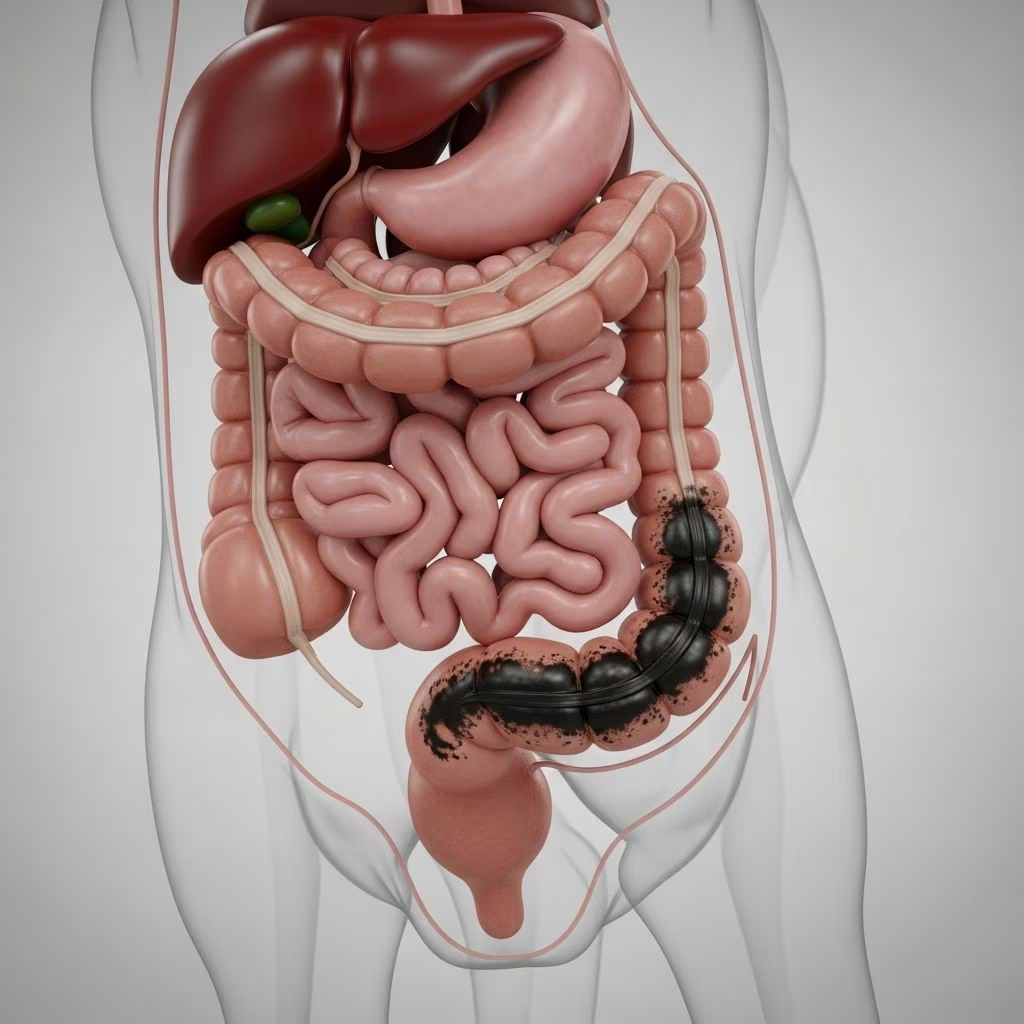
Meconium impaction represents a critical health challenge in the early life of foals, often emerging as the primary trigger for colic in neonates. This condition arises when the foal’s initial stool, known as meconium—a thick, sticky mixture of intestinal secretions, amniotic fluid, and debris—fails to pass normally, leading to intestinal blockage and distress. Understanding this issue is vital for horse breeders, veterinarians, and owners to intervene promptly and improve survival rates, which exceed 90% with appropriate care.
What is Meconium and Why Does It Matter?
Meconium forms in the foal’s gut during gestation and is expelled shortly after birth. Composed of materials ingested in utero, it weighs about 1% of the foal’s body mass and should be passed within the first 9-12 hours of life under normal circumstances. When retention occurs, it hardens in the small colon, particularly at the pelvic inlet, causing obstruction. This not only provokes pain but can escalate to severe complications if untreated.
The significance lies in its frequency: studies indicate it affects roughly 1.5% of all foals, making it the leading colic cause in this age group. Early detection hinges on knowing that healthy foals pass it effortlessly, while impacted ones show distress by 12-36 hours.
Risk Factors for Meconium Retention
Several elements predispose foals to this condition. Colt foals face higher risks due to narrower pelvic canals, restricting passage. Prolonged gestation beyond 340 days also correlates with increased incidence, as does dehydration from dystocia or inadequate nursing.
- Gender disparity: Males more affected owing to anatomy.
- Gestational length: Foals from extended pregnancies vulnerable.
- Maternal factors: Weak contractions or placental issues may delay expulsion.
- Environmental influences: Cold stress or poor hydration exacerbates stickiness.
These factors underscore the need for vigilant monitoring post-foaling, especially in high-risk scenarios.
Recognizing Clinical Signs Early
Subtle cues often precede overt colic. Foals may nurse less frequently, lie down excessively, or display restlessness like limb stretching or neck twisting. As impaction worsens, signs intensify:
| Early Signs | Advanced Signs |
|---|---|
| Reduced suckling | Abdominal distension |
| Prolonged recumbency | Tail swishing and rolling |
| Mild straining | Persistent tachycardia (>100 bpm) |
| Restlessness | Tachypnea (>40 breaths/min) |
Physical exams reveal normal temperature unless sepsis intervenes, with tachycardia, tachypnea, and palpable firm masses on rectal palpation. Urachal reopening from straining leads to urine dribbling, a common secondary issue.
Distinguishing normal straining—brief during healthy passage—from impaction is key; the latter persists beyond 12 hours with escalating pain.
Diagnostic Approaches
Veterinarians employ a mix of history, clinical assessment, and imaging. Key steps include:
- Review birth history for risk factors like colt gender or long gestation.
- Observe behavior: frequent squatting, tail flagging, or colic post-nursing.
- Perform rectal exam to feel impaction in pelvic flexure.
- Abdominal ultrasound or radiographs confirm gas patterns and blockages.
- Check hydration and bloodwork for dehydration or sepsis markers.
Digital rectal findings often pinpoint the issue directly, while deep palpation detects proximal firm ingesta. Co-morbidities like failure of passive transfer (14%) or hypoxia (12%) complicate 20-25% of cases.
Medical Treatment Strategies
Over 90% of cases resolve medically, emphasizing fluid therapy, laxatives, and enemas. Protocols prioritize rehydration via IV polyionic fluids to soften meconium.
- Initial enema: Warm soapy water or sodium phosphate within 3 hours routinely or if delayed passage.
- Advanced options: Acetylcysteine retention enemas for refractory impactions, softening viscous meconium effectively.
- Oral laxatives: Dioctyl sodium sulfosuccinate or mineral oil to lubricate.
- Supportive care: Analgesics like flunixin meglumine for pain, ensuring nursing for colostrum.
Breeding operations often administer prophylactic enemas to all newborns or selectively to those not passing by 2 hours, averting complications.
Surgical Interventions
Reserved for 5-10% of severe cases with unrelenting pain, distension, or HR >120 bpm, surgery involves small colon enterotomy to extract impaction. Survival post-op is 75-94%, though adhesions pose long-term risks, prompting delayed decisions.
Indications include failed medical therapy or rapid deterioration. Post-surgical care focuses on antibiotics, fluids, and monitoring for peritonitis.
Prevention Best Practices
Proactive measures yield high success. Routinely check meconium passage within 3 hours; intervene early.
- Administer enema to at-risk foals (colts, post-340d gestation).
- Ensure mare-foal bonding for nursing and hydration.
- Monitor environment: Maintain warmth to prevent dehydration.
- Post-dystocia vigilance for compromised neonates.
Farms report fewer cases with protocolized enemas, boosting immunoglobulin transfer by curbing nursing interruptions.
Potential Complications and Prognosis
Untreated impaction risks colonic edema, bacterial translocation, sepsis (23%), pneumonia (23%), or urachal rupture. Yet, prognosis shines: 93% survive to discharge, 93% of those medically.
Long-term, surgically treated foals thrive 80-94%, though adhesions may cause future colics. Early action minimizes these, affirming excellent outcomes overall.
Frequently Asked Questions (FAQs)
What if my foal hasn’t passed meconium by 12 hours?
Consult a vet immediately for enema; delay risks colic escalation.
Is meconium impaction more common in colts?
Yes, due to narrower pelvis; monitor males closely.
Can I give an enema at home?
Warm soapy water is safe routinely, but vet oversight advised for signs of distress.
How long do symptoms last with treatment?
Most resolve within hours of enema; persistent cases need further intervention.
What’s the survival rate?
93% overall, higher with prompt medical care.
References
- ARS – Meconium Impaction in Newborn Foals — ARS Sales. Accessed 2026. https://www.arssales.com/meconium.html
- Meconium Impaction in Foals — MSD Veterinary Manual. Accessed 2026. https://www.msdvetmanual.com/management-and-nutrition/management-of-the-neonate/meconium-impaction-in-foals
- Meconium impaction in foals: clinical signs, diagnosis and treatment — dvm360. Accessed 2026. https://www.dvm360.com/view/meconium-impaction-foals-clinical-signs-diagnosis-and-treatment
- Characteristics of meconium impaction/retention in newborn foals — PubMed (NCBI). 2024. https://pubmed.ncbi.nlm.nih.gov/40810138/
- Characteristics of meconium impaction/retention in newborn foals — University of Illinois Experts. 2024. https://experts.illinois.edu/en/publications/characteristics-of-meconium-impactionretention-in-newborn-foals-f/



