

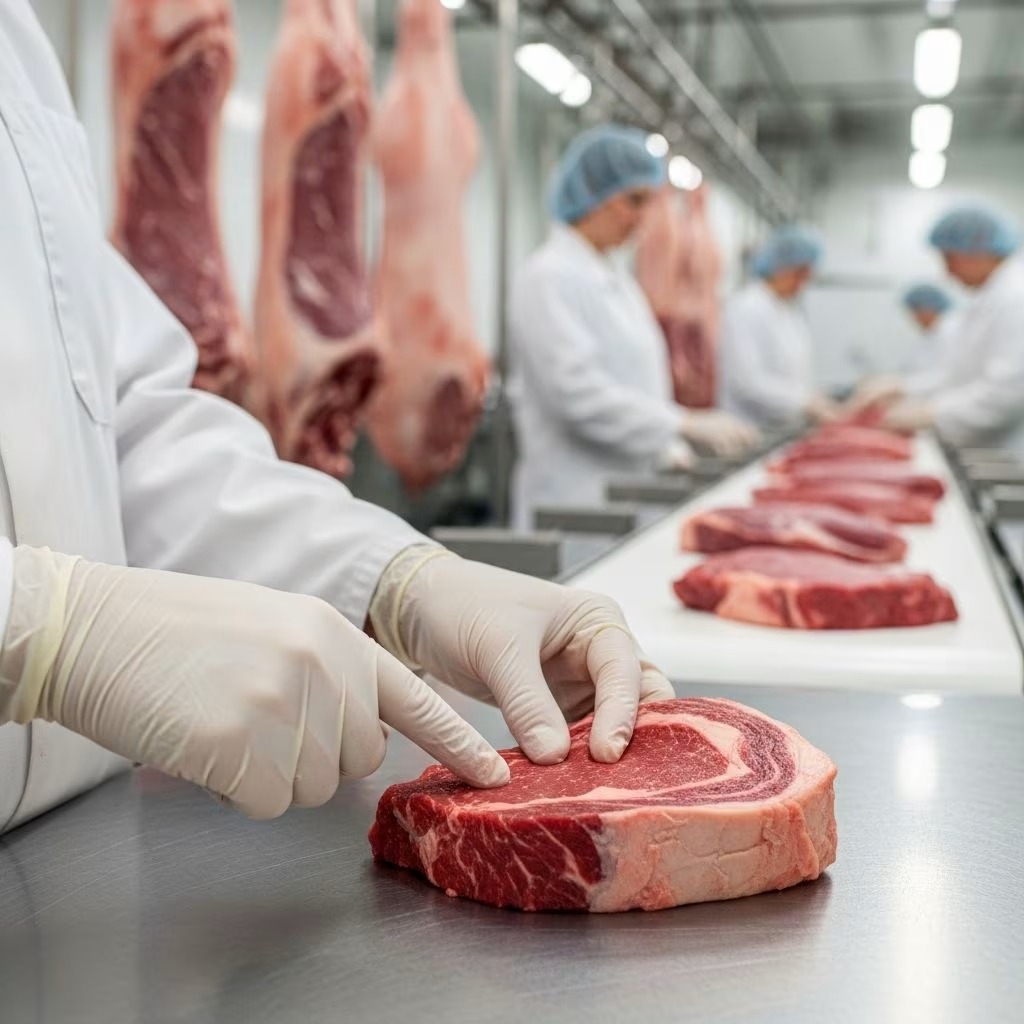
Meat inspection serves as the cornerstone of food safety in the livestock industry, protecting consumers from health risks associated with diseased or contaminated products. This process involves systematic evaluations before and after slaughter to detect abnormalities, ensuring only safe meat enters the food supply chain.
The Importance of Rigorous Meat Evaluation
Effective inspection prevents the spread of zoonotic diseases, verifies animal welfare, and maintains economic stability in meat production. By identifying issues early, authorities can condemn unfit carcasses, minimizing public health threats like bacterial infections or parasitic contaminations. Globally, standardized procedures align with risk-based approaches, adapting to regional disease prevalences.
Pre-Slaughter Health Assessments
Antemortem inspections occur within 24 hours before slaughter, examining animals at rest and in motion from both sides. Inspectors observe behavior for signs of illness, injury, or distress, such as lameness, abnormal respiration, or lethargy. Animals showing clinical symptoms are segregated as suspects, with detailed records of disease history and management practices documented for veterinary review.
- Verify identification tags and records to trace origins.
- Ensure humane handling during herding to avoid stress-induced defects.
- Isolate emergency cases like severely bruised or fractured animals for special handling.
This stage sets the foundation for postmortem checks, allowing for informed decisions on fitness for slaughter.
Detailed Post-Slaughter Carcass Examination
Postmortem inspection scrutinizes the entire carcass, organs, and viscera for pathological changes. Inspectors palpate and incise key areas to uncover hidden lesions, emphasizing efficiency of bleeding, tissue color, and membrane conditions.
Head and Neck Regions
The head undergoes thorough scrutiny: lymph nodes like retropharyngeal ones are incised multiple times. Tongues are viewed and palpated, except in young calves where visual checks suffice. For cattle, the esophagus is detached and inspected; horses in glanders-prone areas have heads split for nasal septum examination. Pigs at risk for cysticercosis require incisions in masticatory muscles, diaphragm, and tongue roots.
Thoracic and Abdominal Organs
Hearts are examined post-pericardium removal, with lengthwise incisions from base to apex revealing internal issues. Lungs, if present, are exposed via rib cuts for visual and tactile assessment. Livers, spleens, and kidneys are checked for bile duct abnormalities, parasites, or abscesses.
| Organ | Inspection Method | Common Findings |
|---|---|---|
| Heart | Multiple incisions base to apex | Vascular anomalies, endocarditis |
| Lungs | Visual, palpation after rib cuts | Pneumonia, abscesses |
| Liver | Incisions, palpation | Cirrhosis, flukes |
| Kidneys | Visual, sectional cuts | Nephritis, hydronephrosis |
Carcass Surface and Skeletal Checks
External and internal carcass surfaces are probed for bruises, hemorrhages, fractures, or odors. Joints, tendons, and bones receive attention for arthritis or infections. Poultry requires suspension at multiple points, exposing viscera for fecal or bile contamination detection.
Regulatory Frameworks Governing Inspections
In the U.S., the Federal Meat Inspection Act (FMIA) and Poultry Products Inspection Act (PPIA) mandate continuous oversight. Facilities pursue federal, state, custom exempt, or retail exempt statuses, with federal granting interstate commerce privileges.
- Federal Inspection: Daily USDA presence, HACCP plans, SSOPs, and recall protocols. Inspectors verify humane slaughter, sanitation, and post-slaughter fitness.
- State Inspection: Limited to intrastate sales, similar standards but local enforcement.
- Custom/Retail Exempt: For non-commercial or direct-to-consumer operations, with relaxed but sanitary requirements.
Canada employs primary product inspectors under veterinary supervision, stamping approved carcasses with official marks. Internationally, HACCP principles integrate risk assessment tailored to local disease spectra.
Species-Specific Protocols
Cattle and Calves
Beyond standard checks, older cattle require esophageal views. Specified risk materials like brains and spinal cords are segregated to prevent BSE transmission.
Pigs and Swine
Focus on trichinosis and cysticercosis risks prompts muscle incisions. Diaphragmatic and heart inspections are intensified.
Poultry and Birds
Carcasses hang from 2-3 points; inspectors use both hands to probe for airsacculitis, peritonitis, or salpingitis. Heads, if attached, reveal sinus swelling or discharges.
Horses and Other Equines
Glanders-endemic areas demand sagittal head splits for thorough mucosal exams.
Judgment Criteria and Condemnation
Inspectors classify findings as passed, suspect, or condemned. Localized lesions may allow partial passes, but systemic diseases lead to total rejection. Veterinary oversight finalizes poultry or complex cases. Non-pathological issues like aesthetic defects or contamination also prompt disposal.
Hygiene and Contamination Prevention
Hygienic dressing minimizes cross-contamination. Inspectors monitor for feces, bile, or ingesta spills, ensuring prompt trimming. Facilities maintain SSOPs, with OSHA guidelines covering slaughterhouse safety under NAICS 3116.
Advanced Tools and Future Directions
While traditional visual and manual methods dominate, emerging tech like imaging aids detection. Risk-based inspections prioritize high-prevalence hazards, enhancing efficiency. PubMed guidelines stress comprehensive veterinary protocols in developing contexts.
Frequently Asked Questions (FAQs)
What is antemortem inspection?
It’s a pre-slaughter health check within 24 hours, observing animals for disease signs and segregating suspects.
How does federal inspection differ from state?
Federal allows interstate sales with daily USDA oversight; state is intrastate-only.
Why incise organs during postmortem?
To reveal internal lesions invisible externally, like abscesses or parasites.
What happens to condemned meat?
It’s destroyed or diverted from human consumption to prevent health risks.
Are poultry inspections different?
Yes, they emphasize viscera exposure and airsac checks due to unique pathologies.
Mastering these protocols ensures meat’s wholesomeness, supporting global food security.
References
- Chapter 1. Meat Inspection Procedures — FAO. 2005-01-01. https://www.fao.org/4/t0756e/t0756e01.htm
- 2.2: The Meat Inspection Process — Workforce LibreTexts. 2023-01-01. https://workforce.libretexts.org/Bookshelves/Food_Production_Service_and_Culinary_Arts/Meat_Cutting_and_Processing_for_Food_Service_(BC_Campus)/02:_Inspection_and_Grading_of_Meats_and_Poultry/2.02:_The_Meat_Inspection_Process
- Explained: 4 Types of Inspection for Meat Processors — Friesla. 2023-01-01. https://friesla.com/blog/4-types-inspection-meat-processors/
- Meat Inspection — Niche Meat Processor Assistance Network. 2023-01-01. https://www.nichemeatprocessing.org/meat-inspection/
- Inspection Guidance for Animal Slaughtering and Processing — OSHA. 2024-10-15. http://www.osha.gov/laws-regs/standardinterpretations/2024-10-15
- 9 CFR Chapter III Subchapter E — eCFR (USDA FSIS). 2026-02-01. https://www.ecfr.gov/current/title-9/chapter-III/subchapter-E
- Guidelines for animal and meat inspection procedures — PubMed/NCBI. 2006-11-01. https://pubmed.ncbi.nlm.nih.gov/17094716/



