

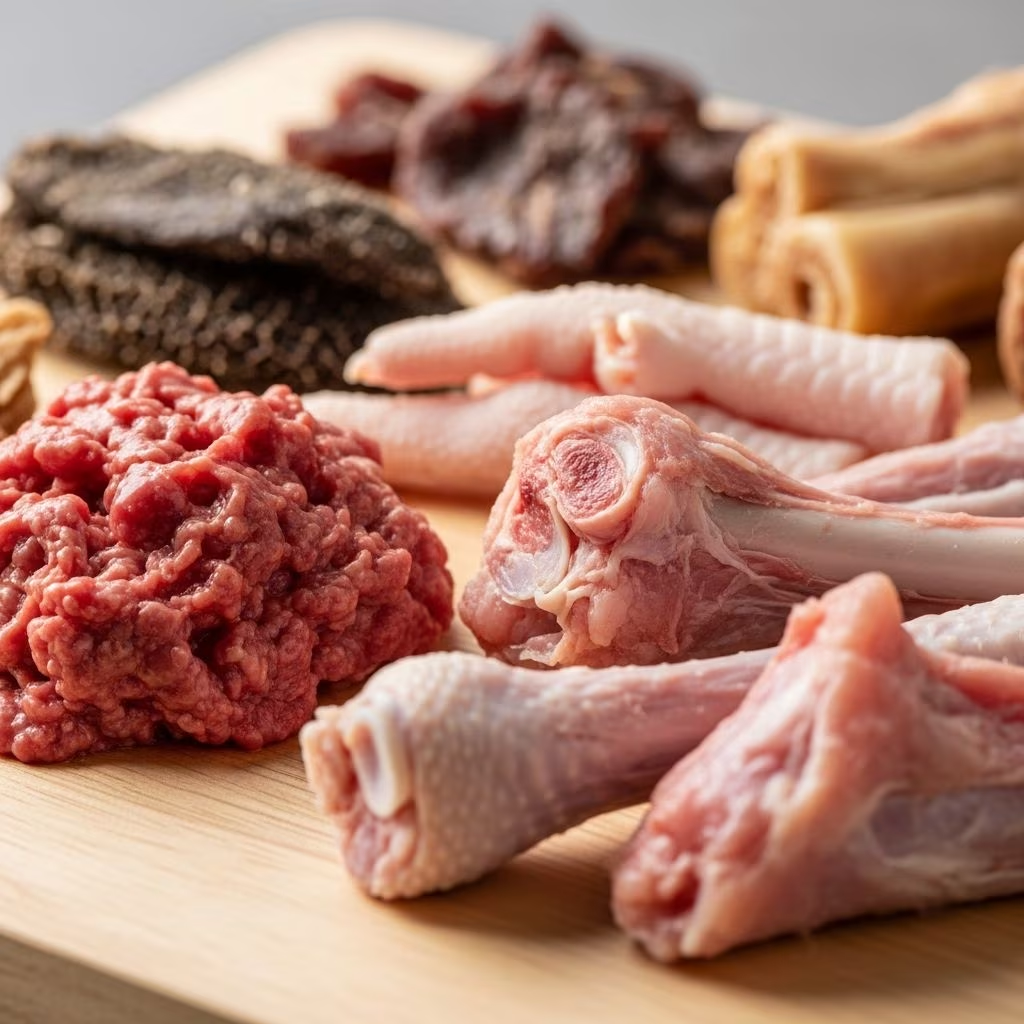
Meat by-products represent a vital component in modern dog nutrition, offering high-quality protein and essential nutrients derived from animal processing. These ingredients, often misunderstood, provide sustainable and nutrient-dense options that align with a dog’s natural dietary needs.
Defining Meat By-Products and Their Role
Meat by-products consist of non-muscle tissues from slaughtered animals, including organs like liver, heart, kidneys, lungs, spleen, and sometimes bones or connective tissues. According to AAFCO guidelines, these are clean parts excluding hair, horns, teeth, and hooves, ensuring they meet strict quality standards for pet food use.
In dog food formulations, by-products serve as concentrated sources of protein, fats, vitamins, and minerals. For instance, poultry by-products can contain 60-70% protein, surpassing many muscle meats in nutrient density. This makes them ideal for complete and balanced diets, mimicking what wild canines consume by prioritizing nutrient-rich organs.
Nutritional Advantages for Dogs
Dogs thrive on diets rich in animal-derived proteins, and by-products excel here. Organ meats provide superior levels of vitamin A, B vitamins, iron, copper, and phosphorus compared to skeletal muscle. Liver, for example, is packed with bioavailable nutrients that support vision, immune function, and energy metabolism.
- Protein Quality: Rendered by-product meals offer highly digestible amino acids essential for muscle maintenance and repair.
- Fatty Acids: They deliver balanced omega-3 and omega-6 profiles, promoting skin health and coat shine.
- Minerals and Vitamins: Bones contribute calcium and phosphorus for bone health, while organs supply trace minerals often deficient in muscle meat alone.
Research confirms that poultry carcass meals maintain excellent nutrient digestibility, with crude protein absorption rates of 92.8-95.1%, well above the 80% industry standard set by FEDIAF.
Processing Methods Explained
By-products undergo rendering, a process involving cooking under heat and pressure to eliminate pathogens, remove moisture, and separate proteins from fats. This results in ‘meals’ – ground, uniform particles ideal for kibble integration.
Particle size variations, such as coarse versus fine grinding, have been studied extensively. A study on dogs fed poultry by-product diets found no significant differences in organic matter, protein, or fat digestibility across grind sizes. Fecal quality remained firm, with increased dry matter content indicating efficient nutrient utilization.
| Grind Size | Protein Digestibility (%) | Fat Digestibility (%) | Fecal Dry Matter |
|---|---|---|---|
| Coarse | 95.1 | 99.0 | Increased |
| Fine | 94.2 | 98.9 | Increased |
| Very Fine | 92.8 | 98.7 | Increased |
This table summarizes findings from a peer-reviewed study, highlighting consistent performance regardless of processing granularity.
Safety Standards and Regulatory Oversight
Safety is paramount, with by-products sourced exclusively from USDA-inspected facilities. Rendering destroys bacteria, and final products must be free of contaminants. AAFCO prohibits materials from non-slaughtered animals unless further processed to eliminate risks.
Pet Nutrition Alliance affirms that these ingredients are excellent nutrient sources when handled properly. No evidence links approved by-products to health issues in dogs; instead, they enhance diet completeness.
By-Products Versus Whole Meat and Meals
Distinguishing terms is key: ‘Meat’ refers to skeletal muscle and skin; ‘meat meal’ is rendered muscle; ‘meat by-product meal’ includes organs and tissues. By-product meals may have slightly variable protein due to diverse sources but remain superior in micronutrients.
Many premium foods list specific organs (e.g., chicken liver) to avoid the ‘by-product’ label, yet these are classified as such under AAFCO. This transparency aids informed choices without compromising nutrition.
Impact on Digestive Health and Fecal Quality
Dogs fed by-product-inclusive diets exhibit high palatability and digestibility. Studies show no adverse effects on short-chain fatty acid production or fecal moisture, with coarser particles even promoting firmer stools.
High-fat by-product diets achieve near-99% fat digestibility, supporting energy needs without loose stools. Increased fecal dry matter correlates with better mineral balance, particularly calcium and phosphorus.
Sustainability and Economic Benefits
Utilizing by-products reduces food waste, turning co-products from human meat production into valuable pet feed. This supports sustainable animal agriculture by maximizing resource use, as noted in research on rendered proteins.
Economically, they lower costs without sacrificing quality, allowing affordable, nutrient-complete foods for all pet owners.
Common Myths Debunked
Myths portray by-products as ‘leftovers’ or inferior. Reality: Wild dogs preferentially eat organs for nutrition. Processing enhances safety and concentration. ‘Human-grade’ claims often include by-products under different names.
- Myth: By-products are unhealthy scraps.Fact: They are nutrient-dense and regulated.
- Myth: Only muscle meat is premium.Fact: Organs provide essential vitamins muscle lacks.
- Myth: Rendering destroys nutrients.Fact: Digestibility exceeds 90% post-processing.
Choosing Dog Foods with By-Products
Look for AAFCO statements ensuring complete nutrition. Prioritize named sources (e.g., ‘poultry by-product meal’) from reputable brands. Balance with whole ingredients for optimal health.
Frequently Asked Questions (FAQs)
Are meat by-products safe for my dog?
Yes, when from inspected sources and properly rendered, they meet rigorous safety standards.
Do by-products cause digestive issues?
No, studies show excellent digestibility and firm stools.
What’s the difference between meat meal and by-product meal?
Meat meal is muscle-derived; by-product meal includes organs for broader nutrition.
Can puppies eat by-product-based foods?
Absolutely, they provide growth-supporting proteins and minerals.
Are by-products sustainable?
Yes, they repurpose edible animal parts, reducing waste.
References
- Impact of Animal By-Products on Diet Digestibility and Fecal Quality — PMC/NCBI. 2023-03-15. https://pmc.ncbi.nlm.nih.gov/articles/PMC10052969/
- What are Animal By-Products in Dog Food? — Purina. 2023. https://www.purina.com/articles/dog/health/nutrition/what-are-animal-by-product
- By-Products Vs Meals — Corey Nutrition Company. 2023. https://corey.ca/byproducts-vs-meals
- By Products in Pet Food — North Town Veterinary Hospital. 2024-03. https://www.northtownvethospital.com/resources/blog/march-2024/by-products-in-pet-food
- Byproducts — AAFCO. 2023. https://www.aafco.org/consumers/understanding-pet-food/byproducts/
- Nutritional Benefits of By-Products — VCA Animal Hospitals. 2023. https://vcahospitals.com/know-your-pet/nutritional-benefits-of-by-products



