

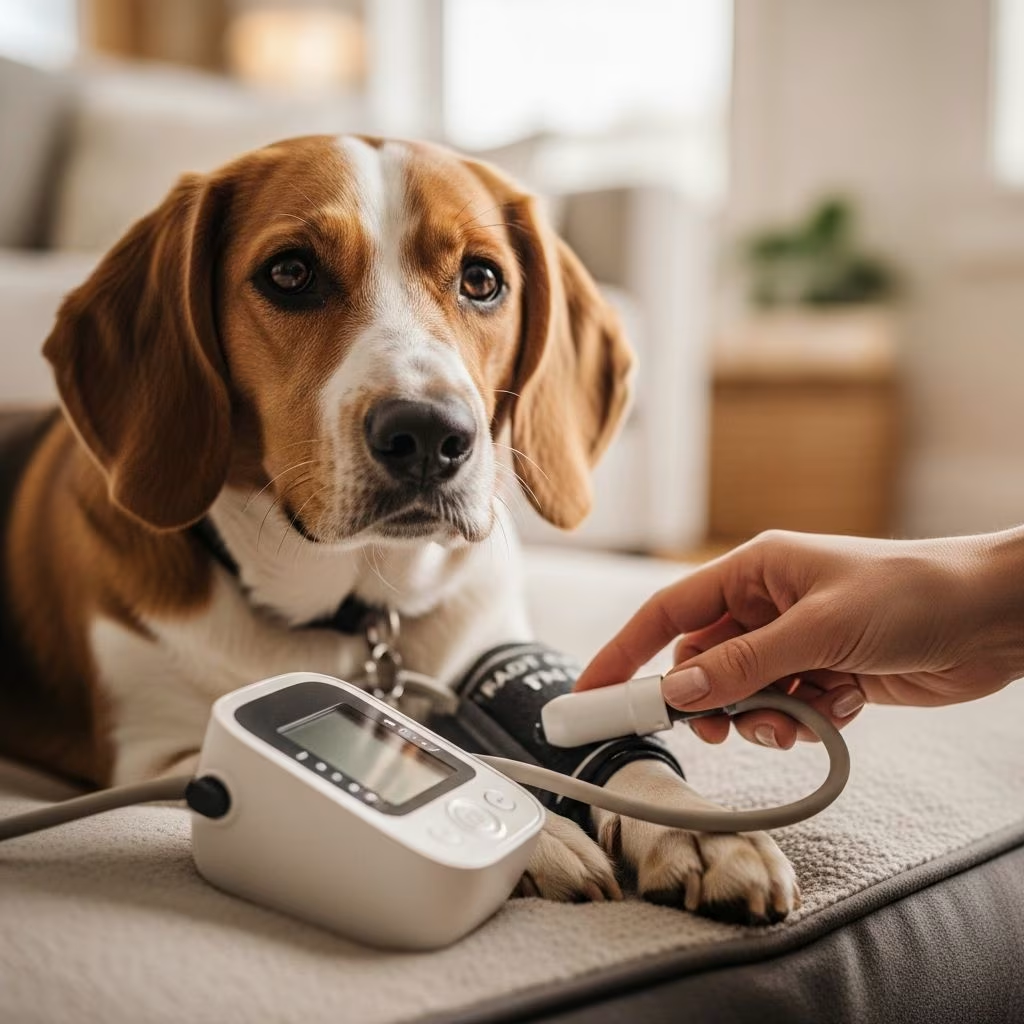
Accurately assessing a dog’s arterial blood pressure is vital for detecting conditions like hypertension or hypotension early, enabling timely veterinary intervention to protect heart health and organ function.
Why Monitor Blood Pressure in Dogs?
Blood pressure measurement helps identify risks associated with kidney disease, hyperthyroidism, or Cushing’s syndrome, which often elevate readings in canines. Low pressure can signal shock, dehydration, or heart issues. Regular checks, especially in senior dogs or those with chronic illnesses, allow owners to track trends and collaborate with vets effectively.
Non-invasive methods are preferred for home use due to their safety and accessibility, though they require proper technique for reliability. Veterinary guidelines emphasize consistent monitoring to catch subtle changes before symptoms appear.
Understanding Blood Pressure Basics
Canine blood pressure comprises systolic pressure (peak during heart contraction), diastolic pressure (lowest during relaxation), and mean arterial pressure (average). Normal systolic values range from 100-160 mmHg in awake dogs, varying by breed, age, and stress levels.
Hypertension exceeds 160-180 mmHg systolic, risking organ damage, while hypotension below 90 mmHg may indicate critical illness. Factors like excitement or recent exercise can temporarily skew results, so measurements should occur in a calm environment.
Essential Equipment for Home Measurement
- Doppler Ultrasonic Device: Detects arterial blood flow via ultrasound waves, ideal for small breeds and accurate systolic readings.
- Oscillometric Monitor: Automatically inflates cuffs to capture systolic, mean, and diastolic pressures; best for larger dogs.
- Appropriate Cuffs: Sized to 30-40% of limb circumference; too narrow overestimates, too wide underestimates pressure.
- Sphygmomanometer: Manual gauge for precise inflation control with Doppler setups.
- Ultrasonic Gel: Ensures probe-skin contact for clear signals.
Invest in veterinary-grade devices validated for canine use to minimize errors. Conical cuffs may not align well with direct readings, so stick to standard cylindrical ones.
Step-by-Step: Doppler Technique
The Doppler method excels in smaller patients where oscillometry falters, providing audible pulse detection.
- Clip fur over the measurement site (mid-radius on forelimb, coccygeal artery on tail, or metatarsal on hindlimb).
- Select a cuff fitting 40% of limb circumference; position inflatable bladder over the artery at heart level.
- Apply ultrasonic gel to the probe; place it distal to the cuff over the artery.
- Inflate cuff 20-30 mmHg above expected systolic until pulse sound vanishes.
- Slowly deflate while listening; note pressure when sharp pulse reappears—that’s systolic BP.
- Record after 3-5 stable readings, averaging them.
Motion or vasoconstriction can mute signals, so soothe the dog first. This technique yields systolic only but correlates well with invasive gold standards in hypotensive cases.
Mastering Oscillometric Measurement
Oscillometry automates the process by detecting arterial wall oscillations during cuff deflation, suiting medium-to-large breeds under calm conditions.
| Aspect | Doppler | Oscillometric |
|---|---|---|
| Best For | Small dogs, cats | Large/medium dogs |
| Measurements | Systolic only | Systolic, mean, diastolic |
| Accuracy Issues | Motion sensitivity | Hypotension, arrhythmias |
| Cost | Lower | Higher, automated |
Position the limb at heart level, secure the cuff snugly, and allow 3-5 minutes acclimation. Devices adjust deflation based on pulse rate in advanced models like high-definition oscillometry, improving precision up to 600 bpm. Mean arterial pressure is most reliable here.
Optimal Sites for Accurate Readings
- Forelimb (Antebrachium): Over median artery; most common, reliable site.
- Hindlimb (Metatarsal): Suitable for larger dogs; watch for panting interference.
- Tail Base: Coccygeal artery; good alternative for dyschondroplastic breeds like Dachshunds.
Maintain the site at heart height to avoid gravitational errors. Rub probe wires through interdigital spaces for stability in small paws.
Tips for Reliable Home Readings
Minimize variables: measure in a quiet room after 5-10 minutes rest, same time daily, same limb. Average 3-5 consecutive readings, discarding outliers. White coat effect from handler stress can elevate values by 20-30 mmHg.
For obese or brachycephalic dogs, tail or alternate limbs work best. High-definition oscillometry visualizes arrhythmias in real-time, enhancing trust in data. If no reading after 3 tries, suspect equipment issues or severe vasoconstriction—consult a vet.
Interpreting Your Dog’s Results
Compare against norms: Systolic 110-160 mmHg ideal; >180 mmHg warrants vet evaluation for target organ damage. Track trends over weeks, not single readings. Hypotension (<90 mmHg) signals emergency.
Breeds like Greyhounds naturally run higher (up to 180 mmHg), so breed-specific baselines matter. Pair with physical exams for context.
Common Pitfalls and How to Avoid Them
- Incorrect Cuff Size: Measure limb circumference accurately; err toward wider for safety.
- Patient Stress: Use treats, gentle restraint; avoid if panting heavily.
- Movement Artifacts: Secure limbs without compression; retry calmly.
- Site Positioning: Always heart-level; elevate desks if needed.
- Device Calibration: Annual vet checks ensure accuracy.
Oscillometry falters in hypotension or small patients, defaulting to Doppler.
When to Consult a Veterinarian
Persistent highs (>160 mmHg systolic over multiple sessions) or lows (<90 mmHg) need professional assessment, possibly direct invasive monitoring via arterial catheter for precision. Symptoms like lethargy, blindness, or seizures alongside abnormal BP demand immediate care.
Vets may recommend amlodipine for hypertension or fluids for hypotension after diagnostics. Home data aids tailored treatments.
Advanced Options: High-Definition Oscillometry
Emerging high-definition oscillometry detects wider pressure ranges (0-450 mmHg) and pulse waves up to 600 bpm, directly computing all values without algorithms. It visualizes artifacts, boosting reliability in arrhythmias—evaluated promisingly in veterinary trials.
FAQs
How often should I check my dog’s blood pressure?
Weekly for at-risk dogs (seniors, kidney disease); monthly for healthy adults. Consult your vet for a schedule.
Can I use human blood pressure cuffs on dogs?
No—sizing differs; veterinary cuffs ensure 30-40% limb width for accuracy.
What’s more accurate, Doppler or oscillometric?
Doppler for small dogs/hypotensive cases; oscillometric for large, normotensive ones. Both validated against direct methods variably.
Does breed affect normal blood pressure?
Yes—sighthounds higher; use breed-adjusted norms and vet baselines.
Is tail measurement reliable?
Yes, especially for limb-challenged breeds; position cuff at base over coccygeal artery.
References
- Non-invasive blood pressure measurement in animals: Part 1 — NIH/PMC. 2020-02-28. https://pmc.ncbi.nlm.nih.gov/articles/PMC7074114/
- Blood Pressure Management in Small Animals: A Technician’s Guide — CVCA Vets. 2023. https://www.cvcavets.com/blog/blood-pressure-management-in-small-animals-a-technicians-guide
- An instructional video on Oscillometric and Doppler techniques — JAVMA/YouTube. 2022. https://www.youtube.com/watch?v=J7MuTW0Prxg
- Blood Pressure Monitoring From a Veterinary Nursing Perspective — Today’s Veterinary Practice. 2023. https://todaysveterinarypractice.com/cardiology/todays-technician-blood-pressure-monitoring-from-a-nursing-perspective-part-2-blood-pressure-monitoring-techniques/
- Measurement of systemic BP in cats & dogs — Cardiac Education Group. 2024-09. https://cardiaceducationgroup.org/wp-content/uploads/2024/09/CEG-Circulations-Systemic-BP-Measurement.pdf
- Tips for accurate blood pressure measurement — DVM360. 2023. https://www.dvm360.com/view/tips-for-accurate-blood-pressure-measurement



