

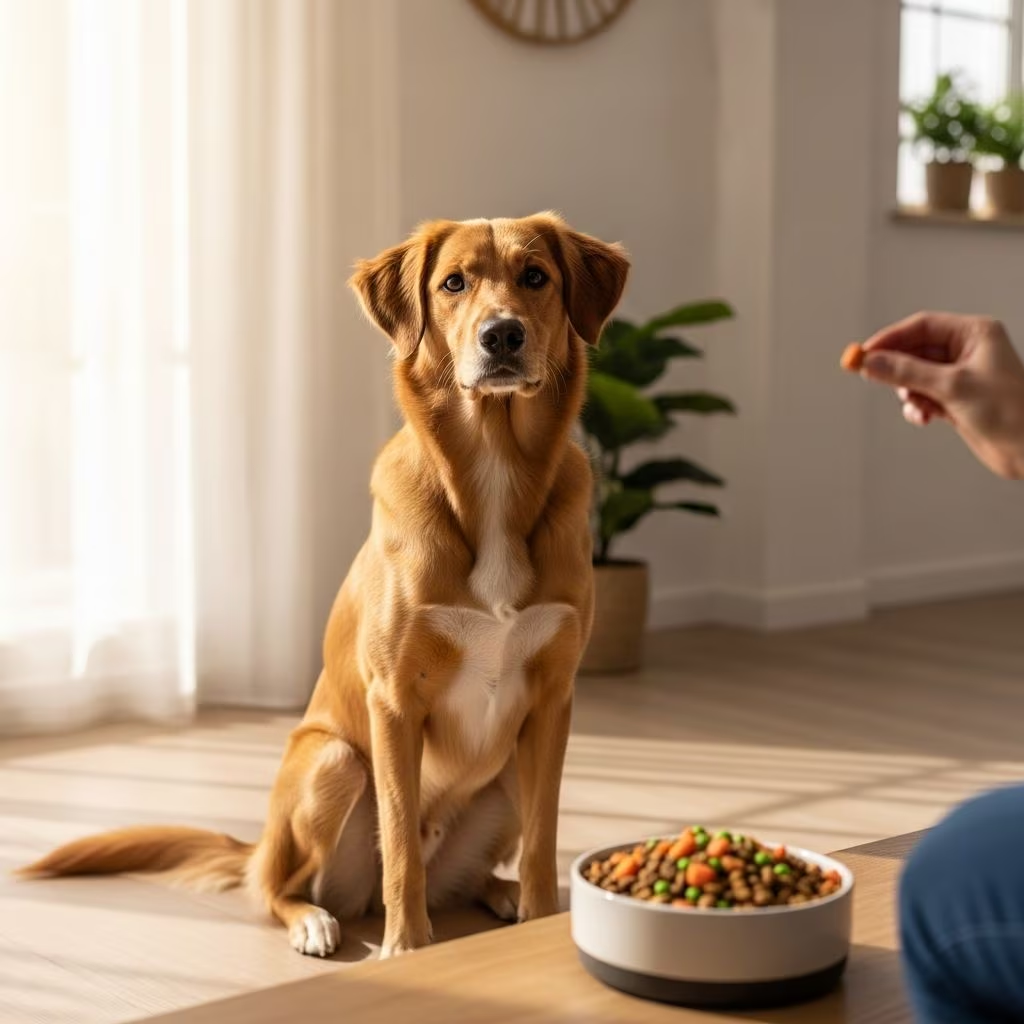
Every dog owner knows the excitement that builds around feeding time. But what if those daily meals could do more than just nourish your canine companion? By strategically incorporating training exercises into mealtimes, you can teach essential skills like patience, recall, and polite behavior while reinforcing your role as a calm leader. This approach leverages your dog’s natural motivation for food, making learning sessions engaging and efficient.
Why Feeding Routines Are Perfect for Skill Building
Structured mealtimes offer unique advantages over free-feeding or constant snacking. When you divide your dog’s daily kibble or wet food into 2-3 scheduled meals, you gain precise control over their intake, allowing you to monitor health changes quickly—such as a sudden drop in appetite that might signal illness. This method also reduces resource guarding tendencies, as the bowl is removed once empty, keeping the feeding area neutral.
Most importantly, meals create high-value training moments. Dogs are highly motivated during hunger, responding eagerly to positive reinforcement where desired actions earn tasty rewards. Veterinary guidelines recommend at least two meals per day for adult dogs to support digestion and prevent bloat, aligning perfectly with twice-daily practice opportunities.
Core Principles of Food-Based Training
Effective mealtime training relies on operant conditioning: positive reinforcement (good behavior brings rewards) and negative punishment (unwanted actions remove access to food without force). Key markers like “Yes!” or a clicker signal correct behavior instantly, followed by a food piece. Timing is critical—reward as the behavior begins, not after completion, to build precise associations.
Always start with a small portion (e.g., 25% of the meal) to prevent excessive hunger that hinders focus. Feed the rest only after successful reps, storing uneaten food for later to emphasize earning meals. Vary feeding times slightly daily to prevent clock-watching and reinforce your control over resources.
Impulse Control: The Sit-and-Wait Protocol
Teaching your dog to wait patiently before eating fosters lifelong manners and prevents bolting or jumping. This exercise builds on sit-stay using progressive bowl placement.
- Position your dog in a sit at their eating spot with the full meal on a counter. Say “Wait!”
- If they hold, mark with “Yes!” and deliver one piece from the bowl.
- Lower the bowl 1-2 feet in front while repeating “Wait!” Reward stillness; if they break, lift it with a neutral “Oops!” and retry higher up.
- Gradually lower fully to the floor. Once stable, release with “Okay!” or “Eat!”
Practice at every meal. Within days, your dog learns deference behaviors earn access to food, strengthening your benevolent leadership.
Hand-Feeding for Advanced Bonding and Precision
For puppies, rescues, or high-energy dogs, hand-feeding the entire meal transforms feeding into a full-body training session. Hold kibble in one hand (or use a spoon for soft foods) and cue behaviors like sit, down, or eye contact.
- Mark and reward as the dog’s rear touches ground for sits.
- Progress to downs, spins, or targeting your hand.
- If using kibble, feed 100% this way initially; end sessions if food remains uneaten.
This method clarifies you as the food source, reducing guarding and building trust. Do it once or twice daily, especially for shy dogs needing confidence boosts.
Recall Training During Meals: Come When Called
Boost reliability on recall by integrating it into feeding. Divide the meal into portions and practice short distances.
| Step | Action | Treat Value |
|---|---|---|
| 1 | Sit 5 feet away, call name + “Come!” Feed 1/3 meal on arrival. | Regular kibble |
| 2 | Increase distance; add distractions like toys. | Mix high-value bits |
| 3 | Call from behind or around corners; reward heavily. | Top-shelf treats |
Limit to 5 reps per meal to keep it fun. This makes coming to you predictably rewarding, even in real-world scenarios.
Eliminating Jumping and Over-Excitement
Jumpy eaters disrupt households. Counter this with a lure-and-lift method.
- Feed 25% meal first to curb desperation.
- Sit dog at arm’s length. Hold kibble at shoulder height straight out.
- Slowly lower while silently counting to three. Reward if seated; lift if jumping, resetting silently.
- After 20 reps, release remainder.
Progress by speeding up or adding movement. Consistency curbs jumping fast.
Building Food Bowl Trust and Calmness
Resource guarders benefit from approach-and-toss drills. Divide meal into thirds.
- Give first portion; approach while eating and toss superior treats (e.g., chicken) into the bowl, then retreat.
- Repeat for each third, varying approach angles.
- For settling, split into four mini-meals. Wait for relaxed posture (soft eyes, loose body), mark, and deliver.
Phase in interruptions like petting or adding toys. This desensitizes dogs to human proximity, promoting calm.
Adapting for Puppies, Seniors, and Special Needs
Puppies thrive on hand-feeding for bite inhibition and focus. Seniors or picky eaters benefit from scheduled meals to track intake. For anxious dogs, start slow with three smaller meals to avoid hunger spikes. Vary times within windows (e.g., morning within an hour) to maintain flexibility.
High-drive breeds may need full hand-feeding daily; low-energy ones suffice with one session. Always prioritize welfare—consult vets for medical issues.
Sample Weekly Mealtime Training Schedule
| Day | Morning Focus (Meal 1) | Evening Focus (Meal 2) |
|---|---|---|
| Mon-Wed | Sit-Wait progression | Hand-feed basics |
| Thu-Sat | Recall reps | No-jump drill |
| Sun | Bowl trust tosses | Settling practice |
Rotate to prevent boredom. Track progress in a journal.
Common Mistakes and Fixes
- Releasing too soon: Hold waits 5+ seconds before progressing.
- Inconsistent timing: Mark precisely; delay rewards for sloppy behavior.
- Overfeeding treats: Use meal kibble only.
- Ignoring body language: Reward relaxation over mere stillness.
Long-Term Benefits and Outcomes
Consistent practice yields polite diners who wait calmly, recall eagerly amid distractions, and trust human interventions. Health monitoring improves, guarding fades, and your bond deepens as the reliable provider. Dogs view you as leader without intimidation, offering voluntary deference.
Frequently Asked Questions
How often should I train during meals?
Every meal initially (2-3x daily), then taper to once daily for maintenance.
What if my dog ignores cues when hungry?
Pre-feed 25% portion first to ensure focus.
Can this work for multi-dog homes?
Yes; train one at a time, using crates or barriers.
Is hand-feeding messy?
Minimally so; use a mat and pouch for efficiency.
What about raw or homemade diets?
Same principles; use spoons for portions.
References
- Utilize Feeding Time as Training Time — Whole Dog Journal. 2023-10-15. https://www.whole-dog-journal.com/training/utilize-feeding-time-as-training-time/
- Feeding Techniques — DogSpeak 101. 2022-05-20. http://dogspeak101.com/feeding-techniques/
- Session 40: How to Settle Your Dog More at Feeding Time — The Dogs Way. 2024-01-12. https://thedogsway.com/session-40-how-to-settle-your-dog-more-at-feeding-time/
- Easy Training with Your Dog’s Mealtime — Positive Partners Dog Training. 2023-08-05. https://positivepartnersdogtraining.com/easy-training-with-your-dogs-mealtime/
- Teaching Your Dog Good Food Manners — The Honest Kitchen. 2023-11-18. https://www.thehonestkitchen.com/blogs/pet-tips-training/teaching-your-dog-good-food-manners
- Feeding Times and Frequency for Your Dog — VCA Animal Hospitals. 2025-02-14. https://vcahospitals.com/know-your-pet/feeding-times-and-frequency-for-your-dog



