

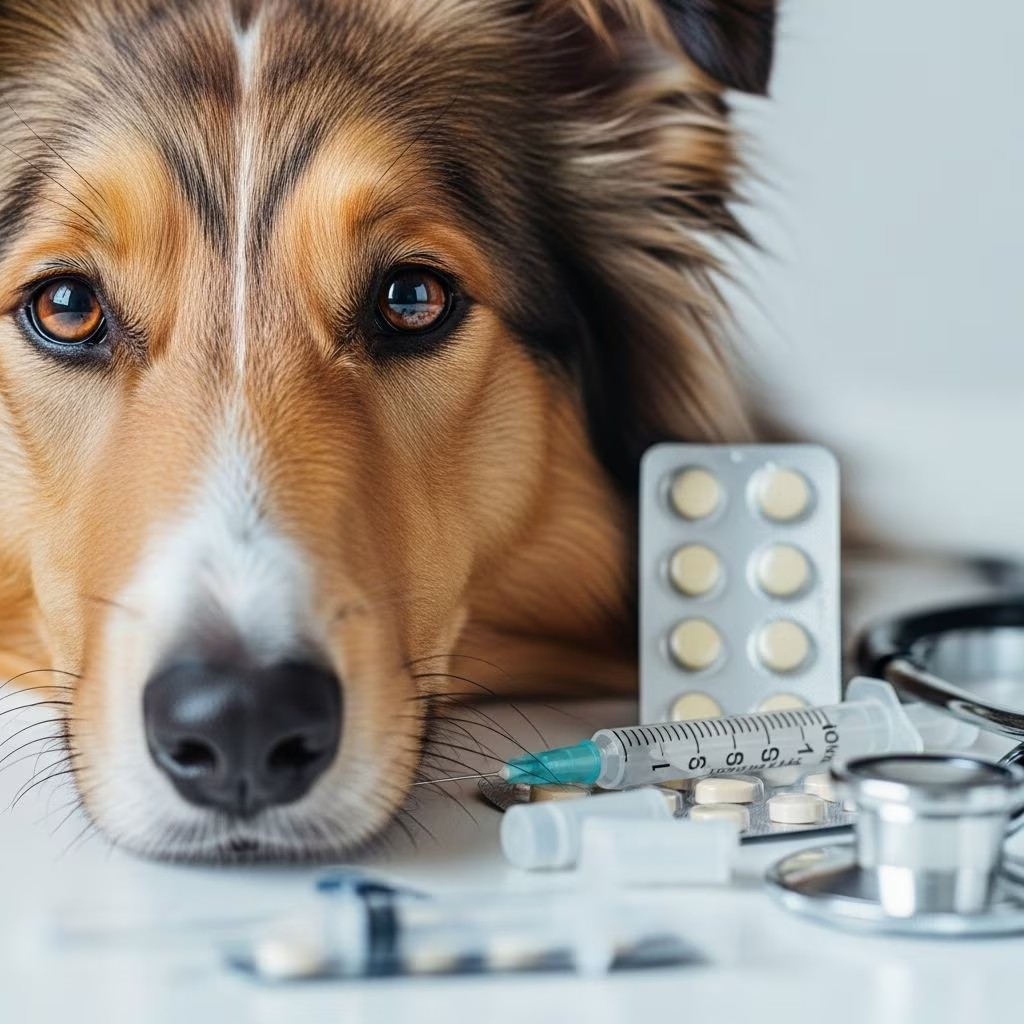
The MDR1 mutation, also known as the ABCB1 gene variant, significantly impacts how certain dogs process medications, leading to potentially life-threatening reactions even at standard doses. This genetic condition disrupts a critical protective mechanism in the body, allowing drugs to accumulate in the brain and cause neurotoxicity.
Understanding the Genetic Basis
At the heart of this issue is a specific alteration in the ABCB1 gene, which codes for P-glycoprotein (P-gp), a transporter protein essential for pumping toxins and drugs out of sensitive areas like the brain. A 4-base pair deletion in this gene results in a non-functional protein, preventing effective drug clearance. Dogs homozygous for the mutation (two copies) face the highest risk, but even heterozygous dogs (one copy) can show sensitivities, warranting caution in all cases.
This mutation was first linked to ivermectin sensitivity in Collies but has since been identified across numerous breeds and mixed dogs. The defective P-gp fails to maintain the blood-brain barrier, allowing substances to enter the central nervous system unchecked.
Breeds Most Commonly Affected
While the MDR1 mutation can appear in any dog, it predominates in herding breeds due to shared ancestry. Key breeds include:
- Australian Shepherds
- Collies (rough and smooth)
- Border Collies
- Shetland Sheepdogs (Shelties)
- English Shepherds
- German Shepherds
- Old English Sheepdogs
Mixed breeds with herding lineage are also at risk. Prevalence varies: up to 70% of Collies may carry the mutation, emphasizing the need for testing in susceptible lines.
Drugs That Pose Serious Dangers
Dogs with the MDR1 mutation cannot safely tolerate many common medications. Exposure leads to rapid accumulation in the brain, triggering severe neurological effects. High-risk drugs include:
| Drug Category | Examples | Risk Level |
|---|---|---|
| Antiparasitics | Ivermectin, Moxidectin, Selamectin (high doses) | Very High – Avoid except low-dose heartworm prevention |
| Antidiarrheals | Loperamide (Imodium) | Extremely High – Toxic at any therapeutic dose |
| Sedatives/Tranquilizers | Acepromazine, Butorphanol | High – CNS depression at standard doses |
| Antibiotics/Antifungals | Erythromycin, Ketoconazole | High – Neurotoxicity risk |
| Others | Doxorubicin, Cyclosporine (variable), Emodepside/Praziquantel | High – Monitor closely or avoid |
Even heartworm preventives containing ivermectin are safe only at FDA-approved micro-doses (typically 6 mcg/kg); higher amounts for mange or mites can be fatal.
Recognizing Symptoms of Toxicity
Reactions onset quickly, often within hours of administration. Common signs include:
- Tremors and muscle weakness
- Disorientation and ataxia (loss of coordination)
- Blindness or dilated pupils
- Seizures or convulsions
- Coma, respiratory failure, or death in severe cases
Heterozygous dogs may exhibit milder symptoms but still require immediate veterinary intervention. Symptoms mimic epilepsy but are distinctly drug-induced and resolve with supportive care if caught early.
Importance of Genetic Testing
A simple cheek swab test detects the MDR1 mutation with high accuracy. Results categorize dogs as:
- Normal/Normal: No copies – fully tolerant.
- Normal/Mutant: One copy – use caution, monitor.
- Mutant/Mutant: Two copies – extreme sensitivity, avoid listed drugs.
Testing is affordable (around $50-100) and available through labs like UC Davis Veterinary Genetics Laboratory. Vets recommend it for all herding breeds, rescues, or dogs on long-term meds.
Safe Alternatives and Management Strategies
Not all drugs are off-limits. Some are tolerated even by affected dogs:
- Cyclosporin, Digoxin, Doxycycline
- Morphine, Buprenorphine, Fentanyl (under vet supervision)
- Spinosad (Comfortis) at low doses for some
For parasites, alternatives include milbemycin (Interceptor) or non-ivermectin options. Always disclose MDR1 status to your vet for tailored prescriptions. Regular heartworm preventives remain safe at approved levels.
Veterinary Guidelines and Prevention
Proactive communication is key. Inform your vet of breed, lineage, or test results before any treatment. In emergencies, mention MDR1 suspicion to avoid triggering drugs. Pharmacogenetic screening is increasingly standard, reducing adverse events.
Breeding programs screen sires and dams to reduce mutation frequency, though it’s not eradicated due to no associated health detriment otherwise.
Real-World Impact and Case Studies
Untreated MDR1 dogs have suffered tragic outcomes from routine deworming or pain meds. A Collie given standard ivermectin for fleas developed seizures and blindness, surviving only with intensive ICU care. Testing post-incident revealed homozygous status, preventing future issues.
In mixed breeds, symptoms can be overlooked as ‘idiosyncratic reactions,’ underscoring testing’s value.
Frequently Asked Questions (FAQs)
What breeds need MDR1 testing?
Primarily herding breeds like Collies, Australian Shepherds, Shelties, and mixes thereof. Test any dog of unknown origin on certain meds.
Is heartworm prevention safe?
Yes, at standard low doses (e.g., 6 mcg/kg ivermectin). Avoid higher doses for other parasites.
Can heterozygous dogs be treated normally?
With caution – some react, so monitor and prefer alternatives.
How do I get my dog tested?
Order a kit from UC Davis VGL or similar labs; swab and mail.
Are there treatments if toxicity occurs?
Supportive: IV fluids, anti-seizure meds, respiratory support. Prognosis good if prompt.
Arming yourself with MDR1 knowledge protects your dog from preventable crises. Routine testing and vet collaboration ensure safe care.
References
- Multidrug Sensitivity (MDR1) — Veterinary Genetics Laboratory, UC Davis. 2023. https://vgl.ucdavis.edu/test/multidrug-sensitivity-mdr1
- Multiple Drug Sensitivity (MDR1) — Orthopedic Foundation for Animals (OFA). 2024. https://ofa.org/multiple-drug-sensitivity/
- MDR1 Gene in Dogs — PetMD. 2023-10-15. https://www.petmd.com/dog/general-health/mdr1-gene-in-dogs
- Is your pet at risk of an adverse reaction to common drugs? — Washington State University Veterinary Hospital. 2021-08-05. https://hospital.vetmed.wsu.edu/2021/08/05/is-your-pet-at-risk/
- White feet don’t treat: Considerations for dogs with MDR1 mutations — American Animal Hospital Association (AAHA). 2023. https://www.aaha.org/newstat/publications/white-feet-dont-treat-considerations-for-dogs-with-mdr1-mutations/



