

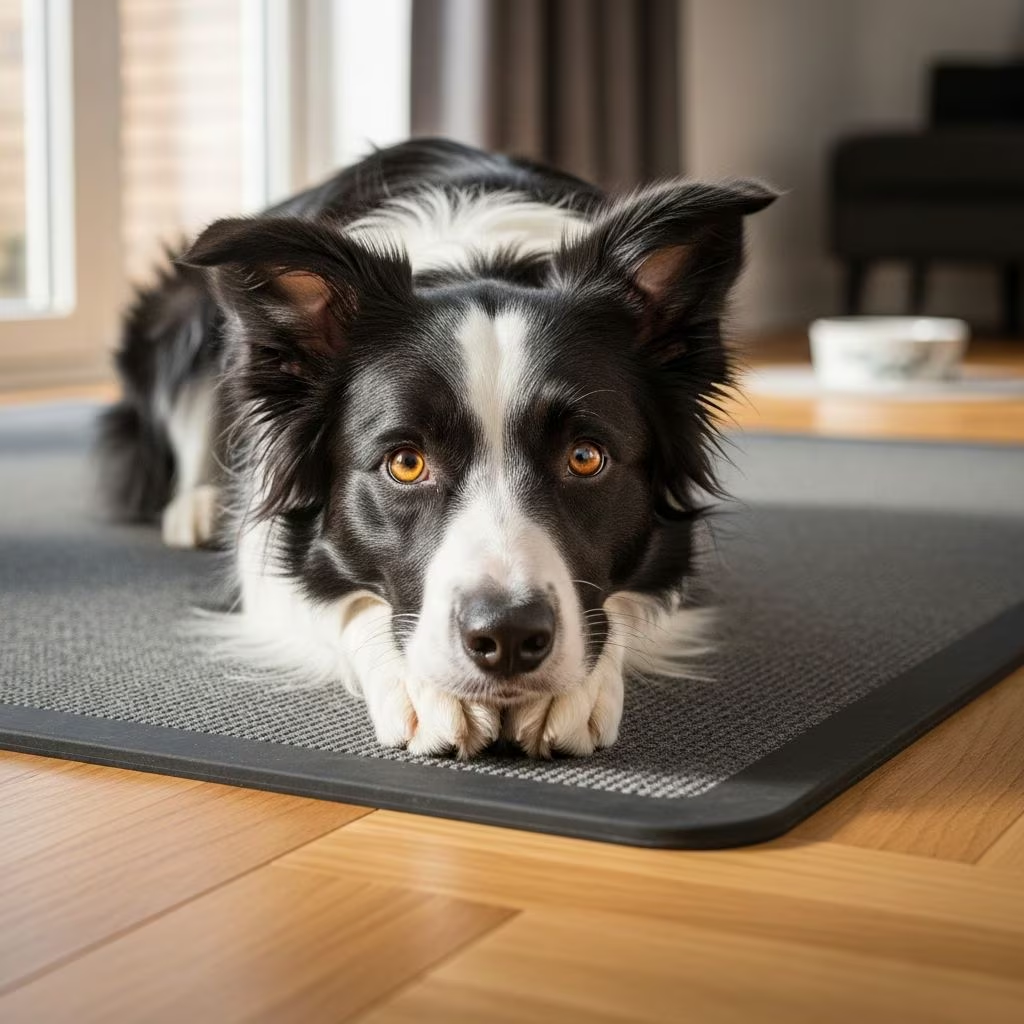
Mat training, also known as “go to mat” or “place training,” is one of the most versatile and powerful skills you can teach your dog. This simple yet profound behavior teaches dogs to go to a designated mat or bed and remain there calmly while you eat, work, entertain guests, or relax. It’s particularly valuable for high-energy puppies, anxious dogs, and breeds prone to reactivity, helping them develop self-control and emotional regulation.
Rooted in positive reinforcement principles, mat training leverages science-based methods to create a positive association with relaxation. As promoted by professional trainers like those at Kinship Dog Training, this technique fits seamlessly into daily routines, addressing common challenges like jumping, begging, and restlessness.
What Is Mat Training and Why Does It Work?
Mat training involves conditioning your dog to view a specific mat as their “safe zone” where good things happen. The dog learns to lie down and stay relaxed on command, regardless of distractions. This isn’t just a trick—it’s a foundational behavior that builds impulse control and reduces stress.
- Core Benefits:
- Promotes relaxation during family meals or when guests arrive.
- Reduces door darting, jumping, and counter surfing.
- Supports crate training transitions and alone time.
- Helps manage reactivity by providing a predictable routine.
- Enhances overall focus for other training like recall and leash skills.
Research from animal behaviorists shows that dogs trained on mats exhibit lower cortisol levels during stressful events, proving its efficacy in real-world scenarios. It’s included in puppy classes worldwide because the socialization window (up to 16 weeks) is ideal for establishing these habits.
Benefits of Mat Training for Puppies and Adult Dogs
For **puppies** (8-20 weeks), mat training integrates with essential skills like potty training, bite inhibition, and socialization. It teaches them to “hang out” calmly, preventing mouthing and play-biting during busy times.
Adult dogs benefit from behavior modification: dogs with separation anxiety or resource guarding learn boundaries without punishment. Trainers note that mat work is key for multi-dog households and reactive pups, fostering polite greetings and leash manners.
| Life Stage | Key Advantages | Example Applications |
|---|---|---|
| Puppies (8-16 weeks) | Builds foundation for manners; aids crate/handling tolerance | During meals, grooming sessions |
| Adolescents (4-12 months) | Manages energy surges; improves recall/stay | Walk check-ins, family gatherings |
| Adults/Seniors | Reduces anxiety; supports health routines | Guest arrivals, vet visits prep |
In group classes like Puppy One/Two at Kinship, mat skills are taught alongside attention and targeting, ensuring puppies generalize the behavior.
Equipment Needed for Successful Mat Training
Keep it simple and accessible:
- Mat/Bed: Non-slip, comfortable (e.g., yoga mat, cooling bed, or elevated cot for larger breeds). Size: Large enough for full stretch-out.
- High-Value Treats: Soft, smelly rewards like chicken, cheese, or commercial treats.
- Clicker (optional): For precise marking of calm behavior.
- Leash/Tether: For initial sessions to prevent wandering.
- Timer: To gradually increase stay duration.
Pro tip: Use the same mat everywhere to build strong associations, but start in low-distraction areas like living rooms.
Step-by-Step Guide to Mat Dog Training
Train in short, daily 5-10 minute sessions. Consistency is key—practice 3-5 times daily.
Step 1: Introduce the Mat (Days 1-3)
Place the mat in a quiet spot. Scatter treats on it randomly. Let your dog discover and eat them. Praise calmly: “Good mat!” Repeat until they approach voluntarily.
Step 2: Add a Cue (Days 4-7)
Say “mat” or “place” as their paws touch it, then toss a treat onto the mat. Fade tossing; reward only on-mat stays. Goal: Dog goes to mat on cue within 3 seconds.
Step 3: Build the Stay (Week 2)
Once on mat, feed treats for lying down. Use a hand signal (open palm). Increase duration: 5 seconds, then 30, using a release cue like “free” or “okay.”
Step 4: Add Distance and Distractions (Weeks 3-4)
Step back 1-2 feet, return to reward. Gradually increase to leaving the room. Introduce mild distractions (e.g., doorbells, toys). Tether if needed for focus.
Step 5: Generalize and Proof (Ongoing)
Practice in new locations: kitchen, car, classes. Vary rewards (jackpot for tough scenarios). Combine with walks: “Check-in” to mat post-exercise.
Progress table:
| Week | Duration Goal | Distractions | Success Metric |
|---|---|---|---|
| 1 | 10 seconds | None | Goes on cue 90% |
| 2 | 1 minute | Family movement | Stays during greetings |
| 3+ | 15+ minutes | Guests, noises | Relaxes independently |
Troubleshooting Common Mat Training Problems
Even with science-based methods, challenges arise. Here’s how to fix them:
- Dog ignores cue: Lower criteria; reward any interaction. Increase treat value. Practice when hungry.
- Leaves mat prematurely: Prevent with tether. No attention off-mat. Use “four on the floor” rules.
- Anxious/pacing: Pair with calming aids (e.g., stuffed Kong). Build slowly; consult pros for fear-based issues.
- High-energy breeds: Exercise first. GSPs/Labs need extra proofing due to independence.
- Plateaus: Vary routines. Enroll in classes for accountability.
For severe reactivity, combine with private behavior lessons focusing on emotional responses.
Advanced Mat Training Techniques
Once basics are solid:
- Cooperative Care: Mat for grooming/vet prep. Reward handling tolerance.
- Multi-Dog Integration: Each dog gets a mat; teach boundaries.
- Trick Layering: Add “settle” for tricks like roll-over on mat.
- Real-Life Proofing: Use during holidays, travel. Day training for busy families.
Instructors like Dyllan Freeburg (KPA CTP) specialize in enrichment-enhanced mat work for shelter dogs and guardian overwhelm.
Integrating Mat Training into Daily Routines
Make it habitual:
- Mornings: Mat during breakfast prep.
- Evenings: Mat for TV time with chew toy.
- Walks: Post-exercise mat settle.
- Guests: Pre-greet mat time for calm intros.
Puppy classes emphasize this integration with socialization and polite greetings.
Frequently Asked Questions (FAQs)
Q: How long until my dog masters mat training?
A: Most puppies see results in 2-4 weeks with daily practice. Adults may take 4-6 weeks, especially if anxious.
Q: Can any dog breed learn mat training?
A: Yes, though independent breeds like GSPs need more patience. Tailor to individual needs.
Q: Is a clicker necessary?
A: No, but it speeds learning by marking exact moments. Marker words like “yes” work too.
Q: What if my dog is reactive?
A: Start privately; focus on emotional modification before group classes. Pros recommend veterinary collaboration.
Q: How to maintain the skill long-term?
A: Random rewards, ongoing practice. Classes like Manners Two reinforce it.
References
- North Bend – Kinship Dog and Puppy Training — Kinship Dogs. Accessed 2026. https://www.kinshipdogs.com/puppy
- About Us – Kinship Dog Training — Kinship Dogs. Accessed 2026. https://www.kinshipdogs.com/about-us
- Private Lessons – Kinship Dog Training — Kinship Dogs. Accessed 2026. https://www.kinshipdogs.com/private-lessons
- How to Integrate Training Into Your Puppy’s Daily Life — Kinship. Accessed 2026. https://www.kinship.com/dog-behavior/daily-puppy-training
- What to Expect at Puppy Socialization Classes — Kinship. Accessed 2026. https://www.kinship.com/dog-behavior/puppy-classes
- How to Train Against a Dog’s Nature — Kinship. Accessed 2026. https://www.kinship.com/dog-behavior/working-dog-training



