

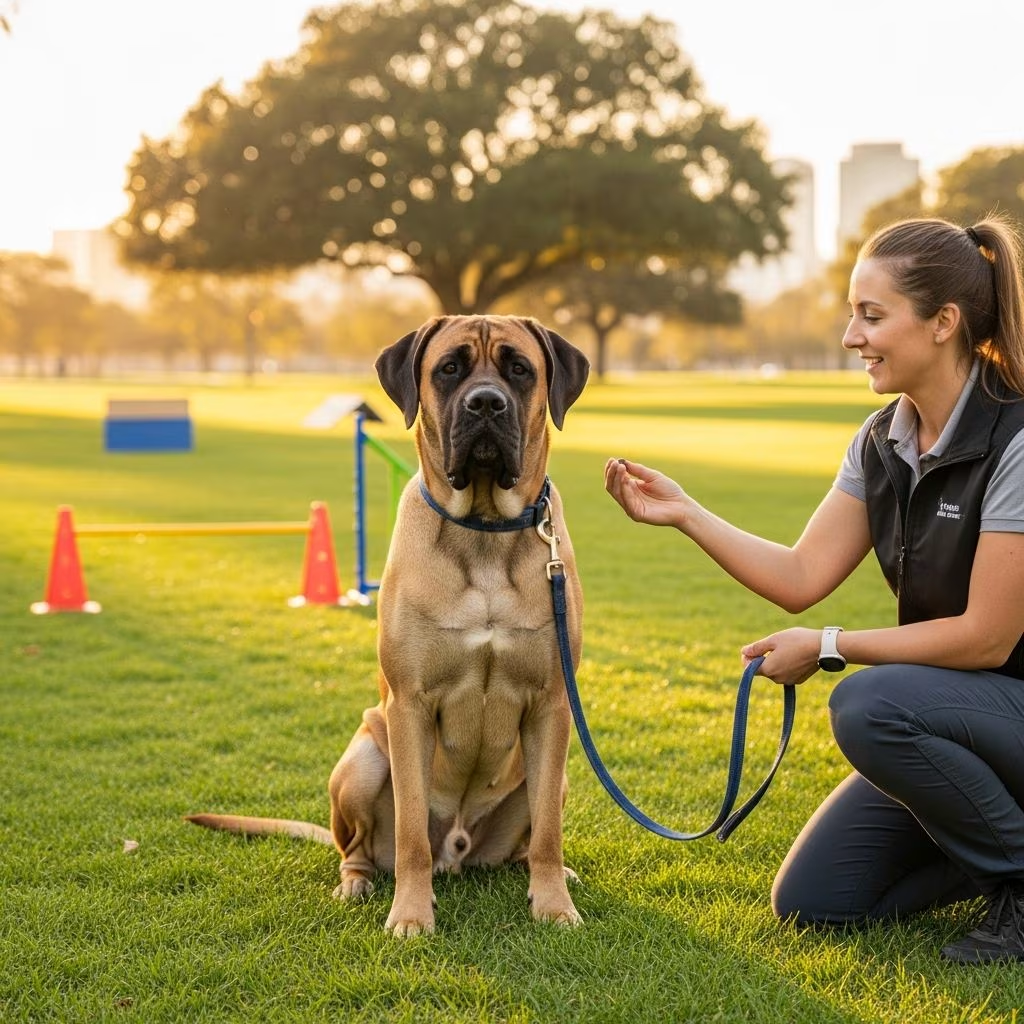
Training a Mastiff represents a unique challenge and rewarding opportunity for dog owners. These magnificent giants possess intelligence and gentle temperaments, yet their size and strength demand a structured, thoughtful approach to training. Unlike smaller breeds, Mastiffs require training methods that account for their independent nature, sensitivity, and learning preferences. This comprehensive guide explores the essential principles and practical strategies for successfully training your Mastiff at any life stage.
Establishing the Foundation: When to Begin Training
The timing of when you introduce training dramatically influences your Mastiff’s receptiveness and long-term behavioral patterns. Starting training between eight and ten weeks of age provides optimal results, as puppies at this developmental stage absorb information quickly and haven’t yet established stubborn habits. During these early weeks, young Mastiffs are naturally curious and responsive to guidance, making this period crucial for laying groundwork in obedience and household expectations.
For those who acquire adult or rescued Mastiffs, training should commence immediately after your dog settles into the new environment. Adult dogs bring established behaviors and potential gaps in their education, but they remain capable of learning when introduced to consistent, patient instruction. The foundation-building process takes slightly longer with mature dogs, yet the principles remain identical.
The Role of Early Socialization in Training Success
Socialization operates as a critical component of effective training rather than a separate endeavor. Exposing your Mastiff to diverse environments, people, sounds, and other animals during the critical socialization window—typically between three and sixteen weeks—shapes their confidence and behavioral responses throughout life.
A well-socialized Mastiff distinguishes between normal household occurrences and genuine threats, reducing anxiety-driven or defensive behaviors. This exposure creates a foundation upon which obedience training builds more effectively. Consider introducing your Mastiff to:
- Varied indoor and outdoor environments
- Diverse groups of people representing different ages and appearances
- Other well-behaved dogs and animals
- Common household sounds and activities
- Different surface textures and terrain types
Regular, controlled exposure during these formative weeks significantly decreases fear-based aggression and increases your dog’s comfort in public settings, which enhances their responsiveness to commands in various situations.
Understanding Mastiff Temperament and Training Implications
Mastiffs possess what many trainers describe as a sensitive disposition, meaning they respond emotionally to their handler’s demeanor and tone of voice. This sensitivity necessitates understanding how different training approaches affect their psychological state and willingness to learn.
Unlike breeds that require firm, assertive handling, Mastiffs thrive under encouraging, supportive instruction. Their natural desire to please their owners means that positive recognition often motivates compliance more effectively than correction. Additionally, Mastiffs demonstrate independent thinking—a trait that served them well in their historical roles as guardians and estate dogs. This independence means they occasionally question commands rather than following them blindly, requiring trainers to provide clear reasoning through repetition and positive association.
Positive Reinforcement: The Most Effective Training Philosophy
Positive reinforcement training strengthens the bond between handler and dog while accelerating learning. This approach rewards desired behaviors immediately, establishing clear associations between actions and beneficial outcomes. For Mastiffs specifically, positive reinforcement prevents the defensive responses that can emerge when they feel threatened or misunderstood by harsh correction methods.
Effective positive reinforcement strategies include:
- High-value treats: Identify rewards your individual Mastiff values most—perhaps chicken, cheese, or specific commercial treats—and reserve these for training sessions
- Verbal praise: Use consistent, enthusiastic language that conveys genuine approval
- Physical affection: Many Mastiffs respond powerfully to petting, ear scratches, and close contact
- Play opportunities: Brief play sessions or access to favorite toys serve as powerful motivators
- Environmental rewards: Allowing your dog to interact with something they find naturally rewarding reinforces compliance
The key principle involves delivering rewards within seconds of the desired behavior, establishing the clear cause-and-effect relationship necessary for learning. Mastiffs quickly connect actions with outcomes when reinforcement timing proves accurate and consistent.
Structuring Training Sessions for Optimal Learning
The architecture of individual training sessions significantly impacts retention and motivation. Mastiffs possess limited attention spans during structured learning, partly due to their naturally calm, laid-back temperament. Sessions lasting longer than fifteen minutes typically result in diminished focus and reduced training effectiveness.
Optimal session structure follows this framework:
| Session Component | Duration | Purpose |
|---|---|---|
| Warm-up engagement | 1-2 minutes | Build excitement and focus attention |
| Primary skill practice | 5-8 minutes | Focus on one or two commands |
| Reinforcement of known commands | 3-5 minutes | Maintain previously learned skills |
| Cool-down and positive conclusion | 1-2 minutes | End on success and maintain enthusiasm |
Conducting two brief sessions daily proves more effective than one extended session. Morning sessions often produce superior results when your Mastiff is rested and mentally fresh. Afternoon sessions can reinforce morning learning but may encounter resistance if your dog has exerted energy during the day.
Creating Consistency Across All Training Contexts
Mastiffs require unwavering consistency in commands, expectations, and reward delivery to minimize confusion and accelerate learning. Inconsistent responses to identical behaviors create cognitive dissonance that impedes training progress.
Establishing consistency requires:
- Standardized verbal commands with identical pronunciation and tone
- Unified expectations across all household members
- Consistent daily schedules for feeding, exercise, and training
- Regular reward placement in identical locations
- Predictable consequences for unwanted behaviors
Family members often inadvertently undermine training by using variations of commands (“sit” versus “Sit,” “down” versus “lie down”) or rewarding behaviors inconsistently. A family meeting establishing training protocols prevents these common pitfalls and accelerates progress significantly.
Managing Emotional State During Training Sessions
Your emotional state during training directly influences your Mastiff’s receptiveness and performance. These perceptive animals detect frustration, impatience, and negative emotions, responding with decreased engagement or stress behaviors. Maintaining composure, patience, and positive energy throughout training sessions creates psychological safety that enhances learning.
Before beginning a training session, assess your own mindset. If you feel frustrated, tired, or irritable, postpone the session to a time when you can approach it with genuine patience and positivity. Dogs, particularly sensitive breeds like Mastiffs, perform significantly better with handlers in positive mental states.
Introducing Essential Commands and Behavioral Expectations
Training progression should follow a logical sequence that builds competence progressively. Beginning with foundational commands establishes success and confidence before introducing more complex behaviors.
Recommended training sequence:
- Establishing household respect and leadership through consistent boundaries
- Housebreaking and toilet training basics
- Fundamental obedience commands (sit, stay, come)
- Leash walking and external behavior management
- Advanced commands and behavioral refinement
This progression ensures each new skill builds upon previously mastered foundations, creating a comprehensive behavioral framework.
Housebreaking Your Mastiff: Practical Strategies
Successful housebreaking requires understanding your Mastiff’s biological rhythms and consistent environmental management. Young puppies typically require outdoor elimination opportunities following meals, water consumption, playtime, and sleep.
Effective housebreaking incorporates:
- Establishing predictable feeding schedules with measured portion sizes
- Immediately following meal times with outdoor potty breaks
- Consistent outdoor elimination areas that retain familiar scents
- Enthusiastic positive reinforcement immediately upon successful outdoor elimination
- Accidents addressed only when caught in the act; delayed corrections prove ineffective
- Containment strategies such as crate training for unsupervised periods
Patience during housebreaking prevents the development of anxiety-based elimination behaviors. Most Mastiff puppies achieve reliable housebreaking by four to six months when trained consistently and compassionately.
Addressing Common Training Challenges
Mastiffs occasionally demonstrate specific behavioral challenges that require thoughtful approaches:
Stubborn non-compliance: Rather than interpreting refusal as defiance, consider whether your dog understands the command clearly. Providing additional repetitions, clearer hand signals, or higher-value rewards often addresses apparent stubbornness.
Leash reactivity: Mastiffs may pull or become reactive on leash despite advanced age. Implementing loose-leash walking techniques and redirecting attention to the handler improves control and safety during walks.
Jumping or excessive greeting behaviors: Avoid rewarding jumping by withholding attention until your dog displays calm behavior. Redirecting to an appropriate behavior such as sitting before greeting ensures that greeting activities don’t reinforce undesirable habits.
Building Positive Training Relationships
The human-canine relationship fundamentally shapes training outcomes. Mastiffs invest emotionally in their handlers and respond to relationship quality. Spending non-training time bonding through play, casual interaction, and companionship strengthens the foundation upon which formal training builds.
This relationship investment includes:
- Regular play sessions that your dog initiates and controls
- Casual physical affection without demanding obedience
- Varied activities that showcase your dog’s personality
- Recognition of individual preferences and personality quirks
- Celebrating small successes and incremental progress
Frequently Asked Questions About Mastiff Training
- At what age can I safely correct my Mastiff for misbehavior?
- Positive redirection works more effectively than correction throughout all life stages. If necessary, verbal cues such as “no” or “uh-uh” used immediately upon observing misbehavior suffice; harsh physical correction proves counterproductive and risks creating defensive behaviors in sensitive Mastiffs.
- How long does it typically take to train a Mastiff?
- Basic obedience typically requires four to six weeks of consistent daily practice. However, reliable compliance in varied environments and situations often requires several months of reinforcement and generalization across contexts.
- Can adult Mastiffs learn as effectively as puppies?
- Absolutely. Adult dogs possess established patterns that require longer to modify, yet they often learn more quickly than puppies due to enhanced focus and longer attention spans. Age alone doesn’t prevent successful training.
- What should I do if my Mastiff refuses to engage with training?
- Refusal typically indicates either insufficient motivation (wrong reward type), poor timing, or training sessions occurring at non-optimal times. Experiment with different rewards, shorter sessions, or different times of day to reignite engagement.
Conclusion: Creating Your Training Success Plan
Training a Mastiff demands commitment, patience, and understanding of their unique psychological makeup, but yields tremendous rewards in behavioral compliance and deepened human-canine relationships. Success depends upon consistent application of positive principles, realistic expectations, and genuine appreciation for your dog’s individual personality.
Begin with realistic goals, celebrate incremental progress, and maintain flexibility as you discover what motivates your individual dog. The effort invested during these training phases establishes the foundation for years of harmonious cohabitation with your magnificent gentle giant.
References
- Mastiff Training Tips — Canna-Pet. Accessed January 2026. https://canna-pet.com/articles/mastiff-training-tips/
- How to Train a Tibetan Mastiff: Temperament, Training Tips, and Expert Guidance — Lyka. Accessed January 2026. https://lyka.com.au/blog/how-to-train-a-tibetan-mastiff



