

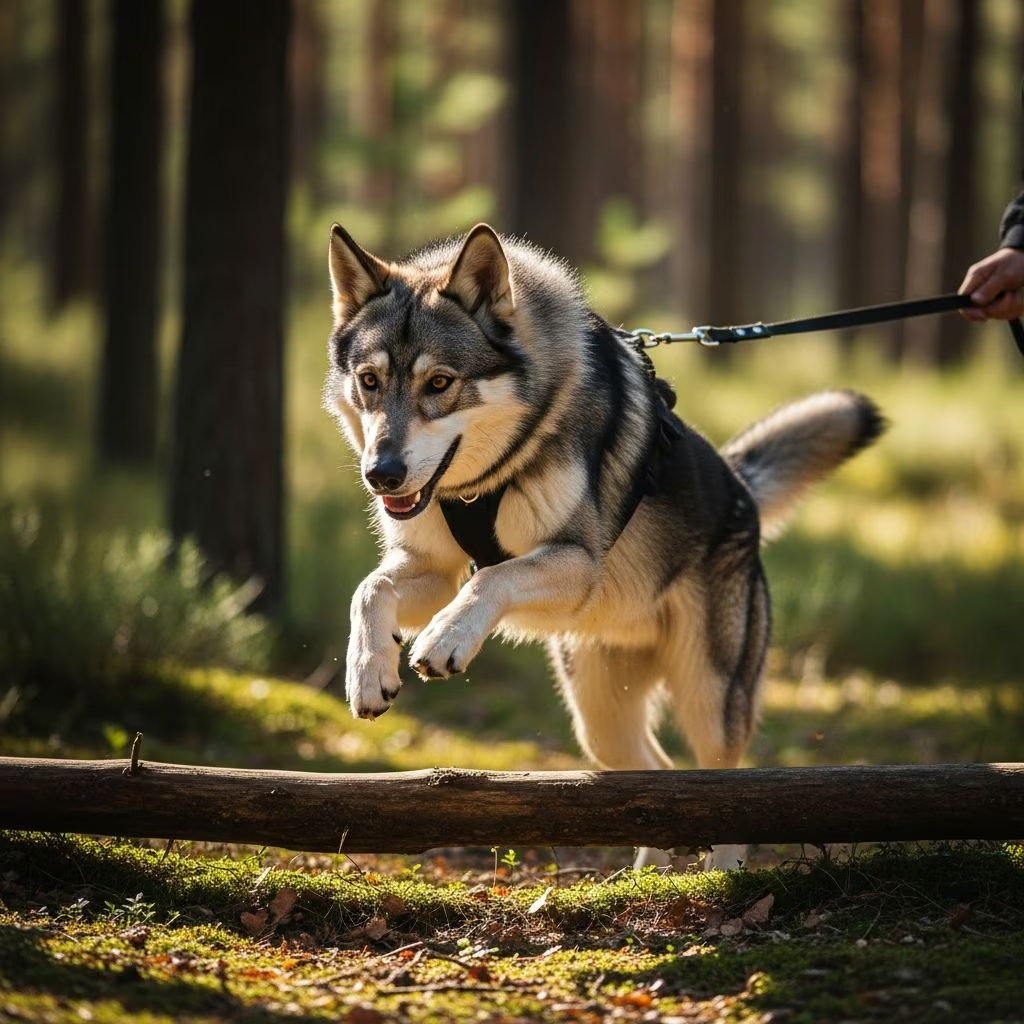
Wolfdogs, hybrids between domestic dogs and wolves, demand specialized training approaches that respect their primal drives while fostering obedience and safety. These animals combine high intelligence, independence, and strong predatory instincts, making standard dog training insufficient. Success hinges on understanding their biology, committing to daily short sessions, and using progressive positive reinforcement to build trust and control.
Grasping the Unique Biology of Wolf Hybrids
Before starting any training, owners must delve into the genetic makeup of wolfdogs. These hybrids inherit wolves’ carnivorous tendencies, heightened flight responses, and pack-oriented social structures, blended with varying degrees of domestic dog pliability. Unlike pure dogs, wolfdogs often exhibit lower tolerance for restraint and higher sensitivity to environmental changes, requiring handlers to prioritize mental stimulation over physical dominance.
Key biological traits include exceptional food motivation, which trainers leverage for rewards, and a natural wariness of strangers that necessitates gradual exposure. Recognizing these elements prevents frustration and sets realistic expectations—wolfdogs rarely achieve off-leash reliability in high-distraction public areas without extensive foundational work.
Foundational Socialization and Habituation Strategies
Early intervention forms the bedrock of wolfdog training. Begin socialization between 8-16 weeks, exposing puppies to diverse stimuli like household noises, gentle handling, and neutral interactions with people and animals. Habituation reduces fear responses, making future commands more effective.
- Introduce novel objects daily, rewarding calm curiosity with high-value meats to associate unknowns with positivity.
- Practice gentle touch on paws, ears, and mouth to prepare for veterinary care and grooming.
- Controlled outings to varied environments build resilience without overwhelming the hybrid.
Consistency in these exposures prevents defensive behaviors, as wolfdogs with poor early socialization often develop aggression or evasion tactics.
Establishing Daily Training Routines
Short, frequent sessions outperform lengthy ones for wolfdogs, whose attention spans mirror wild counterparts. Aim for 10-15 minutes twice daily, focusing on one skill per session to maintain engagement.
| Session Time | Frequency | Focus Areas | Expected Duration |
|---|---|---|---|
| 10-15 min | 2x daily | Basic cues, recall basics | 4-6 weeks initial phase |
| 5-10 min | 3x daily | Retrieve, targeting | Ongoing refinement |
| 15 min | 1x daily | Distraction training | After 8 weeks |
This structure promotes bonding and reinforces the handler as a reliable leader, crucial for hybrids prone to testing boundaries.
Positive Reinforcement: Food and Verbal Bridging
Harness wolfdogs’ intense food drive with meat-based treats like raw chunks or commercial high-protein options. Pair rewards with clear verbal cues or clickers to mark desired actions precisely.
- Start stationary: Say “come” enthusiastically while the dog faces you, rewarding immediately to link word and benefit.
- Progress to short distances using a long line (3-5 meters), reeling gently if needed, then praising arrival.
- Extend line to 6 meters, introducing mild distractions like toys, rewarding swift compliance.
Clickers provide emotion-neutral markers, ideal for consistent signaling without tonal variations that might confuse sensitive hybrids.
Progressive Recall Development
Recall training unfolds in deliberate stages to ingrain reliability. Initial phases condition association in confined spaces; later ones test autonomy.
- Phase 1 (Days 1-3): Stationary command with instant rewards, 3-5 minutes per session.
- Phase 2 (Days 4-10): Short line drags, rewarding approach without physical pull.
- Phase 3 (Weeks 2-3): Full long-line freedom within boundaries, phasing out reels as response strengthens.
- Phase 4 (Week 4+): Off-leash in secure areas, maintaining 100% rewards initially.
If delays occur, avoid chasing; instead, use environmental pressure to encourage return, reinforcing only prompt obedience.
Retrieve Training: Building Hold and Release
Teach fetching as a multi-step process, capitalizing on natural mouthing instincts while curbing destructiveness.
- Interest Building: Present toys in small areas; reward nose touches or paw contact.
- Pickup Conditioning: Reward mouthing or voluntary grabs, gradually requiring full mouth grasp.
- Hold Duration: Withhold treats for quick drops, extending hold time over sessions until 10-15 seconds.
- Release on Cue: Extend hand with visible treat, praising handover to foster voluntary surrender.
This method transforms playful nipping into purposeful utility, enhancing control during play.
Incorporating Targeting and Stationing
Targeting introduces focus: Use a stick with a soft ball tip, rewarding nose contacts to guide position and attention. Stationing pairs this with a fixed object like a mat or spool, teaching “place” for calm downtime.
- Combine with clicker: Mark touch, deliver meat reward.
- Progress to following target across rooms, then fading the prop for verbal cues alone.
These tools prove invaluable for vet visits or managing high-energy bursts common in young wolfdogs.
Handling Distractions and Advanced Proofing
Once basics solidify, introduce variables: other people, sounds, or movement in enclosed yards. Resort to long lines temporarily for laggards.
- Mild distractions first (e.g., clapping), scaling to realistic scenarios like joggers.
- Maintain handler confidence—hybrids mirror anxiety, undermining authority.
Proofing ensures commands hold amid chaos, vital for safe public integration.
Handler Mindset: Confidence and Leadership
Project assured leadership; hesitation invites hybrid independence. Use body language—firm posture, direct gaze—to convey control without force. Daily commitment forges respect, turning potential defiance into partnership.
Common Pitfalls and Avoidance Tactics
Avoid over-reliance on treats long-term; fade to verbal praise. Never use punishment, as it erodes trust in flight-prone animals. Steer clear of prong collars or dominance rolls, favoring reward-based progression.
Legal and Safety Considerations for Wolfdog Owners
Research local laws—many areas ban or restrict hybrids due to strength and unpredictability. Secure fencing (6+ feet, dig-proof) and liability insurance are non-negotiable. Professional evaluation pre-adoption assesses suitability.
Frequently Asked Questions
Can all wolfdogs be trained reliably?
High wolf-content hybrids (over 50%) pose greater challenges; success varies by individual genetics and early handling.
What if my wolfdog ignores recall?
Revert to prior phase with long line; ensure rewards outcompete distractions and sessions remain engaging.
Are clickers better than voice cues?
Clickers offer precision without emotional inflection, suiting analytical wolfdog minds, though voice works with consistency.
How young should socialization start?
Ideally by 8 weeks; older dogs require slower desensitization to rebuild eroded trust.
Do wolfdogs need more exercise than dogs?
Yes, 2+ hours daily of mental/physical activity prevents boredom-driven issues.
References
- A Sample Approach to Training with Czechoslovakian Wolfdog — Wolfdog.org. Accessed 2026. https://www.wolfdog.org/node/37
- Wolf Dog Training: 10 Vet-Approved Tips & Tricks — Dogster. Accessed 2026. https://www.dogster.com/dog-training/wolf-dog-training
- Training Wolf Hybrids — A Good Feeling Dog Training. Accessed 2026. https://www.agoodfeelingdogtraining.com/blog/working-with-wolves
- Training a Wolfdog — Top Tier K9. 2018-03-25. https://www.toptierk9.com/single-post/2018/03/25/training-a-wolfdog



