

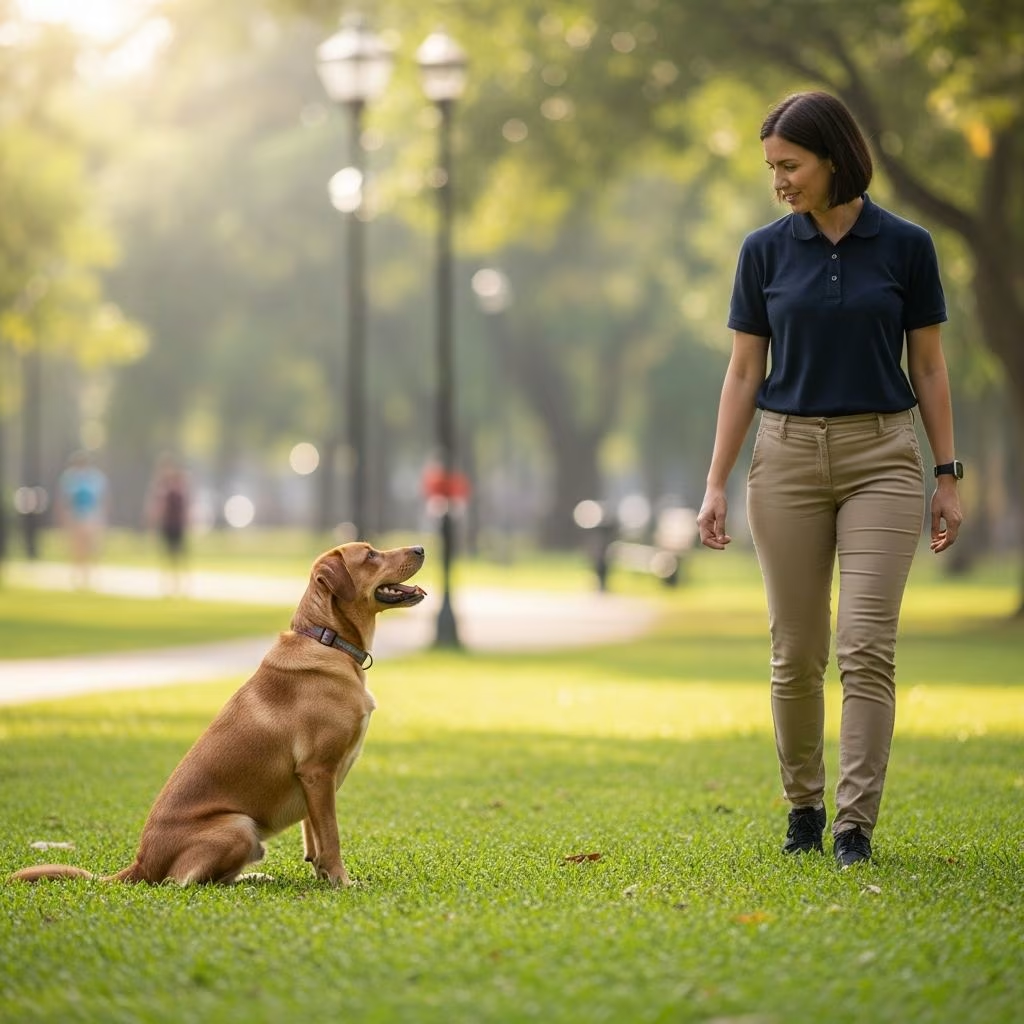
Teaching your dog to disengage from distractions and follow your “Walk Away” cue is a game-changer for enjoyable outings. This skill fosters impulse control, prevents reactive behaviors, and ensures safer interactions in busy environments. By using positive reinforcement and gradual exposure, you can build a reliable response that works across various scenarios.
Why Impulse Control Matters in Dog Training
Dogs naturally explore their world through sniffing, chasing, and investigating, but urban life demands restraint. Without boundaries, walks become frustrating battles. The ‘Walk Away’ command empowers dogs to choose compliance over temptation, strengthening your bond and reducing stress.
Impulse control training aligns with modern positive reinforcement methods, rewarding desired behaviors rather than punishing unwanted ones. This approach boosts confidence and long-term retention, as dogs learn that leaving distractions leads to better rewards.
Foundational Principles Before Starting
Success hinges on preparation. Use high-value treats like small pieces of chicken or cheese that your dog finds irresistible. Practice in low-distraction areas first, such as your living room or backyard. Sessions should last 5-10 minutes, multiple times daily, to keep engagement high.
- Timing is key: Deliver the cue just as your dog notices the distraction, pairing it instantly with rewards.
- Cheerful delivery: Use an upbeat tone to make the command fun and non-threatening.
- Consistency: Everyone in the household must use the same cue and protocol.
Equip with a standard 6-foot leash and comfortable collar or harness. Avoid retractable leashes, as they undermine control.
Step-by-Step Training Progression
Build the skill incrementally, repeating each phase 10-15 times per session until your dog responds eagerly before advancing. Aim for 80-90% success rate per step.
Phase 1: Basic Disengagement Without Distractions
Start simple to teach the core concept. Stand with your leashed dog in a quiet space.
- Say “Walk Away” happily and scatter 4-6 treats 6-10 feet behind them.
- Gently guide a quick 180-degree turn toward the treats, praising lavishly.
- Repeat until your dog spins voluntarily on cue, turning it into a joyful game.
This establishes the cue as a predictor of good things from you, not the environment.
Phase 2: Introducing Neutral Items
Place a boring object like a plastic cup or sock on the floor. Walk toward it casually.
- As your dog leans to investigate, say “Walk Away” brightly.
- Toss treats behind them 5-8 feet away, pivoting quickly together.
- Practice with 10+ variations of neutral items to generalize the response.
Transition to hand-feeding treats while retreating, keeping movement brisk and celebratory.
Phase 3: Low to Medium Value Temptations
Escalate to mildly appealing items like a tennis ball or stuffed toy.
- Cue “Walk Away” at sniff attempt, rewarding from your hand during retreat.
- Repeat extensively until instant compliance.
- Vary objects to prevent fixation on specifics.
For medium-value distractions (e.g., a chew toy), amp up rewards and enthusiasm to outcompete interest.
Phase 4: High-Value Challenges
Test with favorites like a squeaky toy or rawhide.
- Position item, cue on contact, feed superior treats while exiting.
- Mastery here shows strong impulse control; practice widely.
Extend to food bowls: empty first, then add kibble, progressing to wet food mixtures. The goal is seamless disengagement even from meals.
Integrating with Loose Leash Walking
Combine ‘Walk Away’ with leash etiquette for seamless strolls. Use a “red light, green light” method: stop on tension, resume on slack, rewarding check-ins.
| Technique | Description | Benefits |
|---|---|---|
| Attention Check-Ins | Reward voluntary eye contact during walks. | Builds focus on handler over surroundings. |
| Leash Gathering Cue | Slightly gather leash before stops or turns. | Predicts pauses, encouraging anticipation. |
| Environmental Management | Start at controlled distances from triggers. | Prevents overwhelm, ensures success. |
Practice in patterns like squares: walk, cue turns with ‘Walk Away’ if needed, reinforcing position.
Common Pitfalls and Fixes
Owners often rush phases or use insufficient rewards. If progress stalls:
- Revert steps: Drop back to easier distractions.
- Increase value: Use jackpot rewards (multiple treats) sporadically.
- Shorten sessions: End on success to maintain motivation.
Avoid corrections; they erode trust. If pulling persists, incorporate front-clip harnesses temporarily to redirect naturally.
Real-World Application and Proofing
Once indoors solid, venture outside. Begin near home with mild scents or squirrels at distance.
- Use cue preemptively before engagement.
- Gradually close proximity to real distractions.
- Practice in parks, streets, and vet visits.
Proof against motion: joggers, bikes. Fade treats to intermittent, then verbal praise alone.
Advanced Variations for Expert Control
For reactive dogs, pair with desensitization: expose sub-threshold, cue ‘Walk Away,’ reward heavily.
Incorporate heeling: teach position with lures, transitioning to ‘Walk Away’ for breaks.
Group classes or distractions from other dogs accelerate generalization.
Frequently Asked Questions (FAQs)
How long until my dog masters ‘Walk Away’?
Typically 2-6 weeks with daily practice, varying by age, breed, and history. Puppies learn faster than adults.
What if my dog ignores high-value food?
Use even better rewards or train when hungry. Ensure cue timing precedes full commitment.
Can this help fearful dogs?
Yes, it builds confidence by giving an ‘out’ from stressors, but consult a professional for severe cases.
Is this suitable for all breeds?
Absolutely; hounds may need more reps for scent, herders for movement, but principles are universal.
What equipment do I need?
6-foot leash, high-value treats, optional clicker for precision marking.
Long-Term Maintenance
Randomize practice to prevent fading. Praise lavishly even without treats. Track progress in a journal to celebrate milestones.
This command not only improves walks but enhances overall obedience, making your dog a joy in any setting.
References
- Training Tips: Loose Leash Walking — San Diego Humane Society. 2023. https://sdhumane.org/resources/training-tips-loose-leash-walking/
- How to train your dog to walk nicely on the lead — RSPCA. 2024-01-15. https://www.rspca.org.uk/adviceandwelfare/pets/dogs/training/walknicely
- Teach your dog to walk on a loose leash — Animal Humane Society. 2023-05-10. https://www.animalhumanesociety.org/resource/teach-your-dog-walk-loose-leash
- Behavior Solutions for the Real World: Impulse Control — Association of Professional Dog Trainers (referenced via APDT guidelines). 2022. https://apdt.com/resource-center/
- Positive Reinforcement in Canine Training — American Veterinary Society of Animal Behavior. 2015 (authoritative standard). https://avsab.org/wp-content/uploads/2018/03/AVSAB-Position-Statement-on-the-Use-of-Dominance-Theory-in-Behavior-Modification-of-Dogs.pdf



